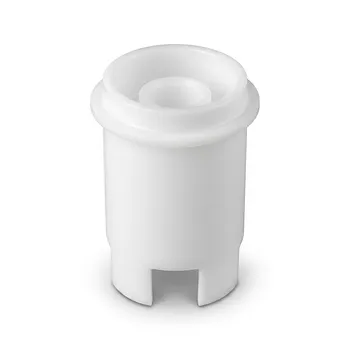
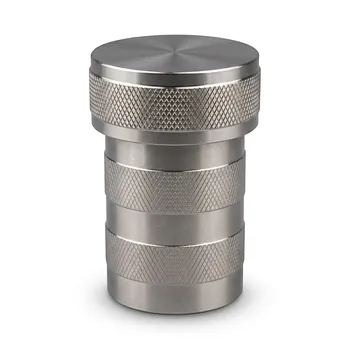
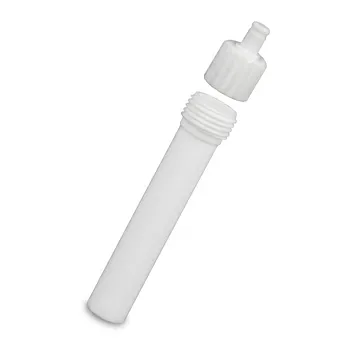
The synthesis of Nickel Ferrite nanoparticles requires a PTFE-lined high-pressure autoclave to provide a chemically inert, pressurized environment that facilitates the crystallization of the spinel structure. This specific setup allows the reaction to reach temperatures between 130°C and 200°C, where the resulting autogenous pressure increases reactant solubility and promotes rapid, uniform nucleation. The PTFE (Teflon) liner is indispensable because it protects the metal vessel from corrosive alkaline solutions and prevents metallic impurities from leaching into the final product.
Core Takeaway: A PTFE-lined autoclave is the essential "pressure cooker" for hydrothermal synthesis, enabling high-purity crystallization by combining extreme physical conditions with total chemical isolation from the reactor's metal walls.
The Role of High Pressure and Temperature
The hydrothermal method relies on physical conditions that cannot be achieved in an open-air laboratory setting.
Reaching Subcritical States
By sealing the reaction in an autoclave, solvents can be heated far beyond their normal boiling points. This creates subcritical or supercritical states that significantly increase the solubility of nickel and iron precursors.
Driving Crystal Growth
The high autogenous pressure generated within the vessel provides the necessary kinetic energy for "in-situ" nucleation. This environment is critical for the formation of high-crystallinity spinel-structured nickel ferrite, ensuring the nanoparticles achieve the desired magnetic and structural properties.
The Necessity of the PTFE Liner
While the metal autoclave provides the structural strength to hold pressure, the PTFE liner provides the chemical environment necessary for purity.
Resistance to Alkaline Corrosion
The synthesis of Nickel Ferrite often involves strong alkaline solutions (such as sodium hydroxide) to adjust pH levels. PTFE is exceptionally inert and prevents these corrosive bases from attacking the stainless steel outer shell of the reactor.
Preventing Metal Ion Leaching
Without a liner, the reaction environment would cause metal ions from the autoclave walls to leach into the solution. This would introduce unwanted metallic impurities, compromising the chemical purity and performance of the nickel ferrite nanoparticles.
Anti-Adhesion and Stability
PTFE offers anti-adhesion properties that prevent highly active precursors from sticking to the container walls. Its thermal stability ensures it remains structurally sound and chemically inactive throughout long-duration reactions at temperatures up to 200°C.
Understanding the Trade-offs
While PTFE-lined autoclaves are the industry standard for this process, they are not without technical limitations that must be managed.
Temperature Thresholds
PTFE has a strict upper temperature limit, typically around 250°C. Exceeding this temperature can lead to the deformation of the liner or the release of toxic fluorinated vapors, necessitating precise temperature control.
Thermal Expansion Mismatch
PTFE and stainless steel expand at different rates when heated. If the autoclave is cooled too rapidly, the liner can lose its shape or develop cracks, potentially exposing the metal shell to corrosive reactants in future runs.
Making the Right Choice for Your Goal
Choosing the right autoclave configuration depends on the specific requirements of your nanoparticle synthesis.
- If your primary focus is Maximum Purity: Always use a high-quality PTFE or PFA liner to ensure zero contamination from the reactor's metallic housing.
- If your primary focus is High-Crystallinity: Ensure your autoclave is rated for at least 200°C and 10MPa to allow for the autogenous pressure required for the spinel phase.
- If your primary focus is Scalability: Invest in "digestive" style autoclaves with thicker PTFE walls to withstand repeated cycles of high-pressure alkaline reactions.
By maintaining a sealed, inert, and high-energy environment, the PTFE-lined autoclave transforms raw chemical precursors into precise, high-performance Nickel Ferrite nanoparticles.
Summary Table:
| Feature | Role in Synthesis | Key Benefit |
|---|---|---|
| PTFE (Teflon) Liner | Chemical Isolation | Prevents metal leaching and resists alkaline corrosion |
| Autogenous Pressure | Solubility Enhancement | Facilitates uniform nucleation and spinel structure formation |
| High Temperature | Kinetic Driver | Reaches subcritical states for rapid crystallization |
| Anti-adhesion Property | Surface Stability | Prevents precursors from sticking to reactor walls |
Elevate Your Synthesis Purity with KINTEK
Are you looking for the ultimate in chemical inertness for your nanoparticle synthesis? KINTEK is your premier partner for high-performance fluoropolymer laboratory solutions. We manufacture virtually all imaginable laboratory supplies crafted from PTFE and PFA, ensuring your high-purity trace analysis remains free from contamination.
From everyday basic labware (beakers, crucibles, and reagent bottles) to comprehensive fluid transfer components and advanced reaction apparatus—including hydrothermal synthesis liners, microwave digestion vessels, and custom electrochemical cells—our products are designed to withstand the most demanding chemical environments.
Why choose KINTEK?
- End-to-End Customization: Backed by custom CNC fabrication, we deliver everything from complex non-standard machined parts to high-volume orders.
- Material Expertise: Our absolute focus on fluoropolymers ensures maximum durability and chemical resistance for your lab.
- Comprehensive Range: We supply everything from simple O-rings and stirring bars to bespoke laboratory setups.
Contact us today to discuss your custom project or high-volume needs!
References
- Reshma S Babu, Prasaanth Ravi Anusuyadevi. Effect of synthesis conditions on morphology, surface chemistry and electrochemical performance of nickel ferrite nanoparticles for lithium-ion battery applications. DOI: 10.1007/s10854-025-14886-w
This article is also based on technical information from Kintek Knowledge Base .
Related Products
- PTFE Lined High Pressure Digestion Vessel 50ml High Temperature Hydrothermal Synthesis Tank
- Custom TFM Reaction Vessel with Stainless Steel Jacket and PTFE Inner Cup for High Corrosion Resistance
- High Pressure Custom TFM Reactor Stainless Steel Outer Vessel PTFE Inner Cup for Corrosive Synthesis
- High Pressure PTFE Digestion Vessel Inner Cup Holder Custom Corrosion Resistant Low Background Teflon
- High Temperature Corrosion Resistant Hydrothermal Synthesis Reactor with TFM Inner Liner and Straight Cylinder Design
People Also Ask
- What are the benefits of using a PTFE-lined vessel for carbon-sulfur cathode treatment? Maximize Purity & Performance
- Why are PTFE-lined pressure digestion vessels required for the preparation of Ag/CeO2 catalysts? Purity & Performance
- What safety features are typically incorporated into high-pressure PTFE digestion vessel designs? Ensure Lab Safety
- What is the function of PTFE lined high-pressure vessels in g-C3N4 synthesis? Achieve High-Purity Material Growth
- Role of High-Pressure Digestion Tanks in Perovskite Synthesis: Achieve Superior Stability and Latent Heat