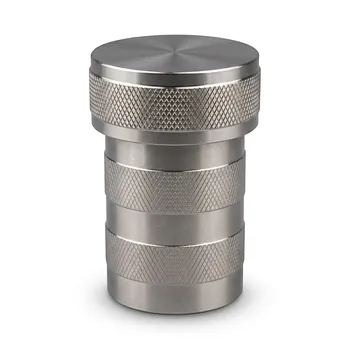
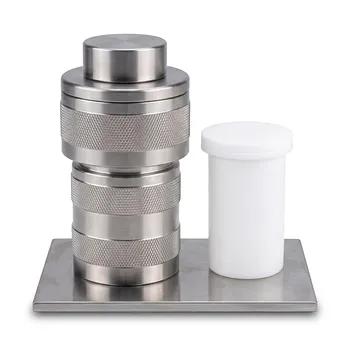
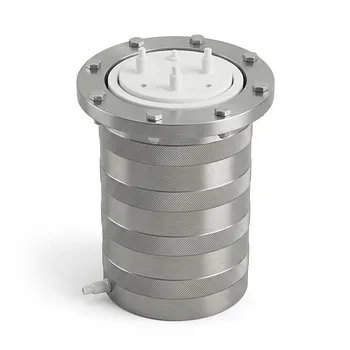
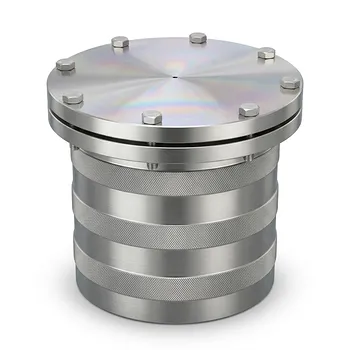
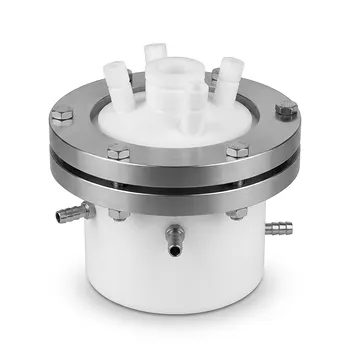
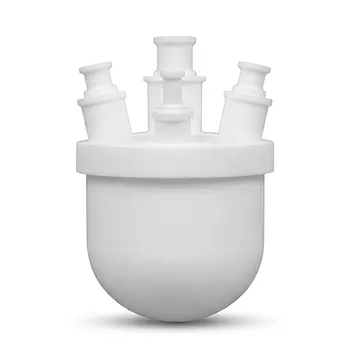
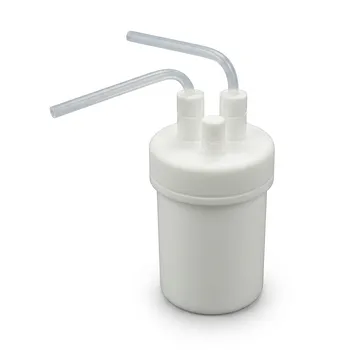
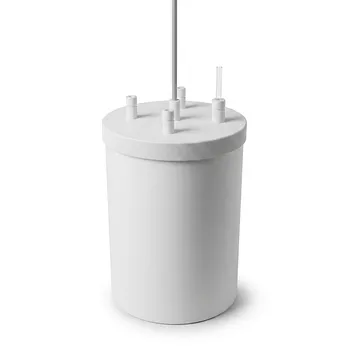
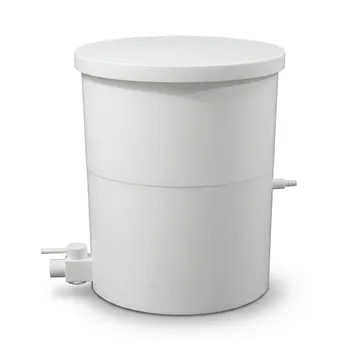
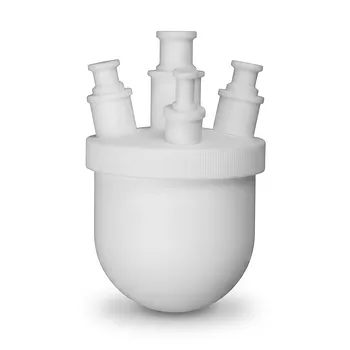
The PTFE-lined hydrothermal synthesis reactor is the indispensable "clean room" for biomass carbonization.
This specialized equipment is required because it provides a chemically inert, high-pressure environment necessary for converting organic precursors into Carbon Quantum Dots (CQDs). The PTFE (Polytetrafluoroethylene) liner acts as a critical barrier that prevents corrosive reagents from attacking the stainless steel reactor body and stops metal ions from leaching into the solution, which would otherwise quench the dots' fluorescence and compromise their structural purity.
Core Takeaway: A PTFE liner is essential for biomass CQD synthesis to prevent metal contamination and ensure chemical stability. By isolating harsh acidic or basic reagents from the steel reactor walls, it protects the optical properties and reproducibility of the resulting nanomaterials.
Maintaining Chemical Purity and Optical Integrity
Prevention of Metal Ion Leaching
During the synthesis process, even trace amounts of metal ions from a stainless steel reactor can leach into the reaction medium. These impurities can bind to the surface of the carbon quantum dots, effectively quenching their fluorescence and altering their electronic properties.
Protection of Surface Functional Groups
The PTFE liner ensures that the surface functional groups (such as carboxyl or hydroxyl groups) remain uncontaminated. This purity is vital because these groups determine the CQDs' solubility, their ability to be "doped" with other elements, and their sensitivity in subsequent sensing applications.
Resistance to Corrosive Precursors
Biomass synthesis often requires the use of strong acids (like Nitric or Phosphoric acid) or strong bases (like Sodium Hydroxide) to break down complex organic structures. PTFE is uniquely resistant to these corrosive agents, preventing the "digestion" of the reactor's outer steel jacket.
Facilitating the Carbonization Process
Achieving High-Pressure Pyrolysis
The reactor creates a sealed environment that allows for hydrothermal carbonization at temperatures typically reaching 180°C to 220°C. This high-pressure state accelerates the dehydration and polymerization of biomass, turning raw waste into structured nanocarbons.
Simultaneous Doping and Functionalization
The stable environment provided by the PTFE liner allows for precise in-situ doping, such as phosphorus or nitrogen integration. This simultaneous core formation and surface modification are critical for tailoring the CQDs for specific uses in imaging or energy storage.
Ensuring Reproducible Results
Because PTFE is non-reactive and easy to clean, it minimizes cross-contamination between batches. This consistency is essential for maintaining the quantum yield and size distribution of the dots across multiple synthesis cycles.
Understanding the Trade-offs and Limitations
Temperature Thresholds
While PTFE is highly durable, it has a functional limit generally between 180°C and 220°C. Exceeding these temperatures can cause the liner to soften or deform, potentially compromising the seal and leading to safety hazards or sample loss.
Thermal Expansion Mismatch
PTFE expands at a different rate than the stainless steel jacket surrounding it. If the reactor is heated or cooled too rapidly, the liner can develop stress cracks or become trapped inside the steel body, making it difficult to remove.
Pressure Limits
The liner itself does not provide structural strength; it relies on the steel autoclave to withstand high internal pressures. Users must ensure the fill degree (usually 60-80%) is strictly followed to prevent over-pressurization that could rupture the liner.
How to Apply This to Your Synthesis Goal
Choosing the Right Approach for Your Project
- If your primary focus is high-fluorescence yield: Use a high-purity PTFE liner to ensure zero metal contamination, as even parts-per-million of iron or chromium can significantly quench light emission.
- If your primary focus is acid-mediated oxidative cleavage: Ensure the PTFE liner is inspected for scratches or thinning, as strong acids like Nitric acid will rapidly corrode the outer steel jacket if the liner fails.
- If your primary focus is extreme temperature synthesis (above 220°C): Consider moving from PTFE to PFA or specialized quartz liners, as standard PTFE will begin to lose structural integrity and may release vapors.
The PTFE-lined reactor serves as the fundamental gateway for transforming raw biomass into high-value, high-purity fluorescent nanomaterials through controlled chemical isolation.
Summary Table:
| Feature | Impact on CQD Synthesis | Technical Consideration |
|---|---|---|
| Chemical Inertness | Prevents metal ion leaching and fluorescence quenching | Essential for high quantum yield |
| Corrosion Resistance | Withstands strong acids/bases (e.g., Nitric Acid, NaOH) | Protects outer stainless steel jacket |
| Thermal Stability | Enables carbonization at 180°C to 220°C | Do not exceed limits to avoid deformation |
| Sealed Environment | Facilitates high-pressure pyrolysis and in-situ doping | Recommended fill degree: 60-80% |
| Non-Stick Surface | Minimizes cross-contamination and ensures reproducibility | Easy cleaning between synthesis batches |
Elevate Your Nanomaterial Synthesis with KINTEK Precision
Achieving superior fluorescence in carbon quantum dots requires an environment free from contamination. KINTEK specializes in high-performance fluoropolymer solutions designed for the most demanding laboratory environments. From standard PTFE and PFA labware—including beakers, crucibles, and digestion tubes—to advanced custom-engineered components, we provide the tools you need for absolute chemical purity.
Our Expertise Includes:
- Core Labware: High-purity beakers, reagent bottles, and centrifuge tubes.
- Fluid Handling: Precision tubing, fittings, and comprehensive filtration tools.
- Advanced Apparatus: Custom electrochemical cells, microwave digestion vessels, and hydrothermal liners.
- Custom Fabrication: End-to-end CNC machining for bespoke non-standard parts tailored to your specific research setup.
Whether you need high-volume consumables or a one-of-a-kind reaction vessel, KINTEK’s exclusive focus on PTFE and PFA ensures your research is backed by material excellence.
Ready to optimize your synthesis? Contact us today to discuss your custom labware needs!
References
- Zihao Xie, Shaoqin Xia. Lotus seedpod-based carbon quantum dots: preparation, characterization and application for Fe(III) detection. DOI: 10.17222/mit.2020.160
This article is also based on technical information from Kintek Knowledge Base .
Related Products
- High Temperature Corrosion Resistant Hydrothermal Synthesis Reactor with TFM Inner Liner and Straight Cylinder Design
- PTFE Lined High Pressure Digestion Vessel 50ml High Temperature Hydrothermal Synthesis Tank
- High Pressure Custom TFM Reactor Stainless Steel Outer Vessel PTFE Inner Cup for Corrosive Synthesis
- Custom TFM Reaction Vessel with Stainless Steel Jacket and PTFE Inner Cup for High Corrosion Resistance
- Custom PTFE Reaction System with Hose Barb Fittings Corrosion Resistant High Sealing 2L 4L Lab Reactor with Separatory Funnel
People Also Ask
- What is the role of a corrosion-resistant reactor in the synthesis of lignin-based carbon dots? Ensure Maximum Purity
- What are the technical advantages of using hydrothermal synthesis reactors for advanced electronic & optical nanomaterials?
- How does a hydrothermal synthesis reactor facilitate the production of crystalline materials with tailored morphologies? Precision Crystal Growth
- Why is the sealing reliability of a hydrothermal synthesis reactor critical for 24-hour cycles? Ensure Nano-Precision
- What role do hydrothermal synthesis reactors play in CQD preparation? Achieve High-Purity Nanomaterial Synthesis