The use of a Polytetrafluoroethylene (PTFE)-lined high-pressure autoclave is critical for the hydrothermal conversion of black liquor because it provides a chemically inert barrier against extreme alkalinity. This specialized environment allows the reaction to reach the high temperatures and pressures necessary for carbonization without the corrosive black liquor (pH 12.66) damaging the vessel. By isolating the reaction, the PTFE liner prevents metal ions from leaching into the system, which ensures the high purity and specific optical properties of the resulting carbon dots.
The PTFE liner acts as a critical chemical shield that facilitates the dehydration, nucleation, and surface passivation of black liquor under extreme conditions. Without this inert barrier, the high alkalinity of the precursor would corrode the autoclave walls, contaminating the carbon dots with metal impurities and compromising their structural integrity.
Protecting the Reaction from Chemical Attack
Resisting Extreme Alkalinity
Black liquor is a byproduct of the pulping process and possesses a highly alkaline pH of approximately 12.66. Standard stainless steel reaction vessels can suffer from stress corrosion or surface degradation when exposed to such caustic environments at elevated temperatures. PTFE (Polytetrafluoroethylene) is uniquely suited for this application because it is chemically inert and does not react with strong bases or acids.
Preventing Metal Ion Contamination
If the black liquor were in direct contact with the metal walls of the autoclave, the corrosive nature of the fluid would cause metal ions to leach into the reaction mixture. These impurities can integrate into the carbon dots, inadvertently doping the material or quenching its fluorescence. The PTFE liner ensures that the purity of the surface functional groups and the reproducibility of the synthesis remain intact.
Creating the Necessary Thermochemical Environment
Facilitating the Carbonization Mechanism
The hydrothermal process requires a closed system to drive the integrated phases of dehydration, nucleation, and surface passivation. The PTFE-lined autoclave allows the mixture to be heated significantly above its boiling point, creating the thermal energy required to break chemical bonds in the black liquor and reform them into nanoscale carbon structures.
Harnessing Autogenous Pressure
As the temperature rises within the sealed PTFE chamber, autogenous pressure is generated. This high-pressure environment forces the precursors into closer proximity, promoting the polycondensation and carbonization of the organic matter. The PTFE liner maintains a tight seal, ensuring that the pressure remains consistent throughout the synthesis period.
Understanding the Trade-offs and Limitations
Thermal Constraints of PTFE
While PTFE is exceptionally inert, it has a lower thermal threshold than the metal shell that contains it. Most PTFE liners are limited to a maximum working temperature of approximately 220°C to 250°C. Exceeding these temperatures can cause the liner to soften, deform, or release toxic vapors, potentially leading to a vessel failure.
Structural Dependency
A PTFE liner cannot withstand high pressure on its own; it requires the mechanical strength of a stainless steel outer shell. The liner provides chemical protection, while the metal shell provides the structural integrity to contain the internal pressure. If the liner is improperly seated or damaged, the corrosive black liquor can seep behind it, causing "hidden" corrosion on the interior of the metal vessel.
How to Apply This to Your Project
When synthesizing carbon dots from caustic precursors like black liquor, the choice of vessel is as important as the chemical recipe.
- If your primary focus is high purity: Always use a fresh or thoroughly cleaned PTFE liner to ensure no cross-contamination from previous reactions occurs, preserving the carbon dots' optical properties.
- If your primary focus is high-temperature synthesis (above 250°C): Consider alternative liners, such as PPL (para-polyphenylene) or specialized gold-plated vessels, as PTFE may lose its structural integrity at these extremes.
- If your primary focus is vessel longevity: Inspect the PTFE liner for "crazing" or discoloration after every run with black liquor, as the extreme pH can eventually cause micro-cracks that allow fluid to reach the steel shell.
The PTFE-lined autoclave transforms a highly corrosive industrial byproduct into a controlled laboratory environment, enabling the precise bottom-up synthesis of high-value carbon nanomaterials.
Summary Table:
| Feature | Benefit in Hydrothermal Synthesis | Significance for Carbon Dots |
|---|---|---|
| Chemical Inertness | Resists extreme alkalinity (pH 12.66) | Prevents vessel corrosion and failure |
| Non-Leaching Surface | Blocks metal ion migration | Ensures high purity and optical performance |
| Pressure Stability | Maintains autogenous pressure | Promotes nucleation and carbonization |
| Thermal Resistance | Operates up to 220°C - 250°C | Facilitates necessary thermochemical bonds |
Partner with KINTEK for High-Performance Fluoropolymer Solutions
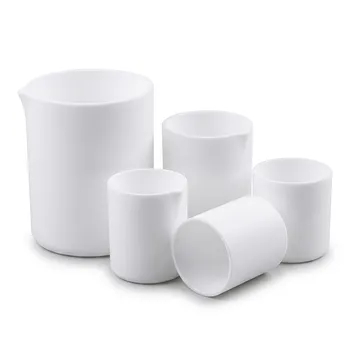
Are you handling corrosive precursors or sensitive trace analysis? KINTEK specializes in manufacturing high-performance laboratory supplies crafted exclusively from PTFE and PFA. From everyday basics like beakers, crucibles, and reagent bottles to advanced reaction apparatus such as hydrothermal synthesis liners and custom electrochemical cells, we provide the chemically inert environment your research demands.
Why Choose KINTEK?
- Unmatched Material Expertise: Absolute focus on high-performance fluoropolymers to prevent contamination and resist extreme pH.
- Custom Engineering: Backed by end-to-end custom CNC fabrication, we deliver everything from complex non-standard machined parts to high-volume orders.
- Comprehensive Range: We supply everything from fluid transfer components (tubing, valves) to sample prep tools and high-purity cleaning tanks.
Ensure the integrity of your results and the longevity of your equipment. Contact us today to discuss your custom laboratory setup or high-volume requirements!
References
- Muna E. Raypah, Mohd Faizal Jamlos. Sustainable upcycling of industrial black liquor into carbon dots via one-pot hydrothermal synthesis: the role of precursor concentration. DOI: 10.1007/s43939-025-00505-2
This article is also based on technical information from Kintek Knowledge Base .
Related Products
- PTFE Lined High Pressure Digestion Vessel 50ml High Temperature Hydrothermal Synthesis Tank
- Custom TFM Reaction Vessel with Stainless Steel Jacket and PTFE Inner Cup for High Corrosion Resistance
- High Pressure Custom TFM Reactor Stainless Steel Outer Vessel PTFE Inner Cup for Corrosive Synthesis
- High Pressure PTFE Digestion Vessel Inner Cup Holder Custom Corrosion Resistant Low Background Teflon
- High Temperature Corrosion Resistant Hydrothermal Synthesis Reactor with TFM Inner Liner and Straight Cylinder Design
People Also Ask
- What are the benefits of using a PTFE-lined vessel for carbon-sulfur cathode treatment? Maximize Purity & Performance
- Why are PTFE-lined pressure digestion vessels required for the preparation of Ag/CeO2 catalysts? Purity & Performance
- What safety features are typically incorporated into high-pressure PTFE digestion vessel designs? Ensure Lab Safety
- What is the function of PTFE lined high-pressure vessels in g-C3N4 synthesis? Achieve High-Purity Material Growth
- Role of High-Pressure Digestion Tanks in Perovskite Synthesis: Achieve Superior Stability and Latent Heat