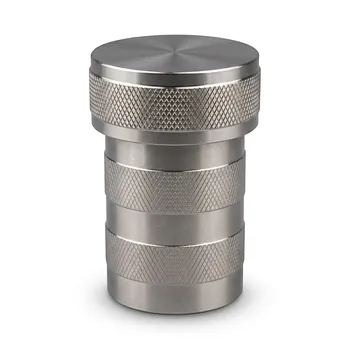
Hydrothermal autoclaves serve as specialized pressure vessels that fundamentally transform the chemical environment required for Graphitic Carbon Nitride (g-C3N4) synthesis. By utilizing water in a supercritical or near-critical state, these systems drastically increase the solubility and reactivity of precursors. This high-pressure setting allows researchers to achieve levels of crystalline quality and particle size uniformity that are impossible under standard atmospheric conditions.
Laboratory hydrothermal autoclaves influence g-C3N4 growth by creating a high-pressure, high-temperature environment that maximizes precursor solubility and allows for precise control over the material's final morphology and crystalline integrity.
The Mechanics of Hydrothermal Synthesis
The Role of Supercritical and Near-Critical Water
In the sealed environment of an autoclave, water is heated beyond its boiling point, reaching a supercritical or near-critical state. In this phase, the water acts as a powerful solvent with enhanced diffusion rates and lower surface tension. This allows the medium to interact more aggressively with precursors, facilitating a more efficient crystal growth process.
Enhancing Precursor Solubility and Reactivity
Many organic precursors used to create g-C3N4 exhibit poor solubility in standard conditions. The high-pressure environment within the autoclave forces these precursors into the liquid medium, increasing the concentration of reactive species. This increased reactivity is the primary driver for the formation of the carbon-nitride lattice.
Achieving Precision Through Process Parameters
Managing Temperature for Crystallinity
The reaction temperature within the autoclave provides the necessary kinetic energy for atoms to organize into a stable, ordered structure. Higher temperatures generally promote better crystalline quality by providing the energy needed to overcome structural defects during growth. Precise temperature regulation ensures the g-C3N4 achieves the desired electronic properties without thermal degradation.
The Impact of Pressure Holding Time on Particle Size
The duration for which the autoclave maintains high-pressure conditions, known as the holding time, directly dictates the size distribution of the nanoparticles. Longer holding times allow for continued crystal growth, leading to larger, more defined particles. Conversely, shorter holding times can be used to "freeze" the growth at the nucleation stage to produce smaller nanoparticles with higher surface areas.
Understanding the Trade-offs and Challenges
The Risk of Particle Agglomeration
While extended holding times can improve crystallinity, they also increase the risk of particle agglomeration. Over-processing can lead to the formation of large, irregular clusters that reduce the effective surface area of the g-C3N4. This is a critical concern for applications like photocatalysis, where a high surface-area-to-volume ratio is essential.
Safety and Equipment Limitations
Operating at near-critical states requires strict adherence to safety protocols regarding the "fill factor" of the autoclave. Exceeding the recommended volume of liquid can lead to exponential pressure spikes that may compromise the vessel's integrity. Furthermore, the high-energy environment is highly corrosive, necessitating the use of specialized liners, such as Teflon or PPL, which have their own specific temperature limits.
How to Apply This to Your Research Goal
When configuring your hydrothermal process for Graphitic Carbon Nitride, your parameters should align with your specific material requirements.
- If your primary focus is High Catalytic Activity: Prioritize shorter holding times and moderate temperatures to maintain a high surface area and prevent particle agglomeration.
- If your primary focus is Structural Purity: Increase the reaction temperature and extend the pressure holding time to ensure maximum crystallinity and a reduction in lattice defects.
- If your primary focus is Morphological Uniformity: Carefully control the heating and cooling rates of the autoclave to ensure consistent nucleation and growth throughout the medium.
By masterfully balancing temperature and pressure holding times, you can tailor the properties of g-C3N4 to meet the exacting demands of your specific application.
Summary Table:
| Parameter | Impact on g-C3N4 Growth | Key Benefit |
|---|---|---|
| High Pressure | Increases precursor solubility & reactivity | Facilitates efficient lattice formation |
| Temperature | Provides kinetic energy for molecular ordering | Enhances crystalline purity & integrity |
| Holding Time | Dictates growth duration and nucleation | Controls particle size & surface area |
| Specialized Liners | Protects vessel from corrosive precursors | Ensures high-purity, contaminant-free results |
Elevate Your Material Synthesis with KINTEK
Precision in Graphitic Carbon Nitride synthesis requires equipment that can withstand the most demanding hydrothermal environments. KINTEK specializes in high-performance fluoropolymer laboratory supplies, offering an exhaustive range of products from everyday basic labware—like PFA beakers, crucibles, and reagent bottles—to advanced reaction apparatus including custom hydrothermal synthesis liners and microwave digestion vessels.
Our expertise extends to high-purity trace analysis instruments, fluid transfer components (tubing, fittings, valves), and bespoke CNC-fabricated parts designed specifically for your unique research needs. Whether you require standard consumables or complex, non-standard machined components, KINTEK’s absolute focus on PTFE and PFA materials ensures maximum chemical resistance and thermal stability.
Ready to optimize your lab’s performance? Contact us today to discuss your custom requirements and discover how our end-to-end fabrication capabilities can support your next breakthrough.
References
- Muhammad Nabeel, Zulfiqar Ahmad Rehan. Tailoring Graphitic Carbon Nitride (g‐C <sub>3</sub> N <sub>4</sub> ) for Multifunctional Applications: Strategies for Overcoming Challenges in Catalysis and Energy Conversion. DOI: 10.1155/er/5599894
This article is also based on technical information from Kintek Knowledge Base .
Related Products
- High Temperature Corrosion Resistant Hydrothermal Synthesis Reactor with TFM Inner Liner and Straight Cylinder Design
- PTFE Lined High Pressure Digestion Vessel 50ml High Temperature Hydrothermal Synthesis Tank
People Also Ask
- What is the role of a corrosion-resistant reactor in the synthesis of lignin-based carbon dots? Ensure Maximum Purity
- What are the technical advantages of using hydrothermal synthesis reactors for advanced electronic & optical nanomaterials?
- How does a hydrothermal synthesis reactor facilitate the production of crystalline materials with tailored morphologies? Precision Crystal Growth
- Why is the sealing reliability of a hydrothermal synthesis reactor critical for 24-hour cycles? Ensure Nano-Precision
- What role do hydrothermal synthesis reactors play in CQD preparation? Achieve High-Purity Nanomaterial Synthesis