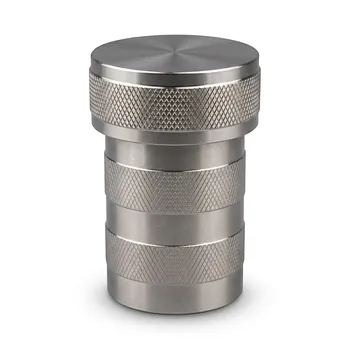
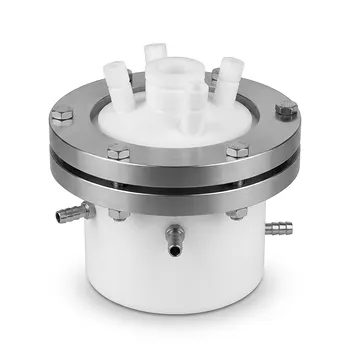
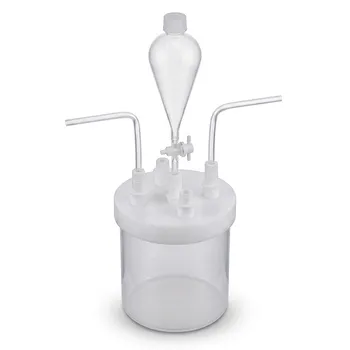
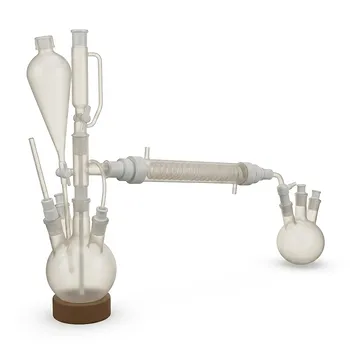
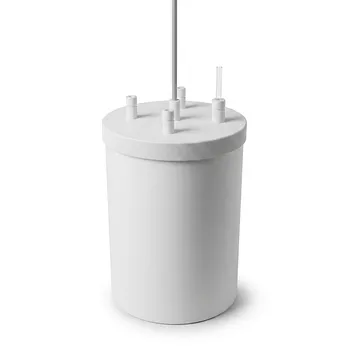
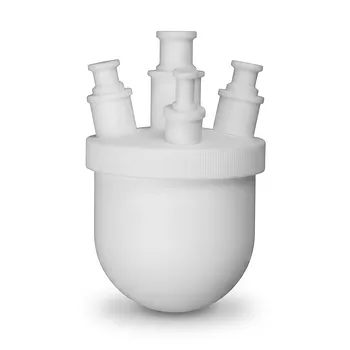
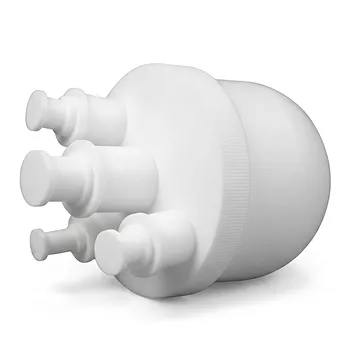
A high-pressure hydrothermal synthesis reactor creates a sealed, subcritical environment that facilitates the in-situ growth of manganese dioxide (MnO2) nanoneedles directly onto graphene and activated carbon (GR/AC) substrates. By maintaining a constant temperature—typically 140°C—and high internal pressure, the reactor drives a specific redox reaction between potassium permanganate and manganese sulfate. This process ensures that the resulting MnO2 structures are securely anchored within the interlaminar spaces of the graphene sheets, forming a robust three-dimensional network ideal for electrode materials.
The reactor acts as a high-energy crucible that enables precise chemical transformations and structural integration that are impossible at atmospheric pressure. Its primary value lies in its ability to force reagents into mesoporous channels and catalyze uniform crystal growth across a carbon framework.
Driving Chemical Transformations through Subcritical Conditions
The Role of Temperature and Pressure
At 140°C within a sealed vessel, water and solvents reach subcritical states, significantly increasing their reactivity and solubility. This environment provides the thermal energy required to overcome activation barriers for the redox reaction between potassium permanganate and manganese sulfate.
Facilitating In-Situ Nucleation
The high-pressure environment ensures that the manganese precursors do not merely precipitate as bulk powder. Instead, the reactor facilitates in-situ nucleation, where MnO2 crystals begin their life cycle directly on the functional sites of the graphene and activated carbon surfaces.
Enhancing Solvent Penetration
High pressure is critical for overcoming the capillary resistance of the mesoporous activated carbon and the narrow interlaminar spaces of graphene. This allows the metal salt solution to penetrate deep into the substrate's internal architecture, ensuring a uniform distribution of the active material.
Enabling Structural Integration and Morphological Control
Growth of MnO2 Nanoneedles
The hydrothermal process guides the directional growth of MnO2 into specific crystalline phases, such as nanoneedles. These needle-like structures increase the surface area of the composite, which is vital for the electrochemical performance of the final electrode.
Formation of the 3D Network
As the MnO2 nanoneedles grow, they interlock with the graphene sheets and activated carbon particles. This creates a stable three-dimensional network structure that prevents the carbon layers from restacking and maintains high structural integrity during use.
Improving Microstructural Quality
Compared to conventional co-precipitation methods, hydrothermal synthesis results in higher crystallinity and structural stability. The sealed environment prevents the loss of volatile components and ensures that the final GR/AC/MnO2 composite possesses optimized pore structures.
Understanding the Trade-offs
Process Sensitivity and Complexity
The morphology of the MnO2 is highly sensitive to exact temperature and time parameters. Small deviations in the 140°C setpoint can result in larger, less effective crystal aggregates rather than the desired nanoneedles.
Scalability and Safety Challenges
Hydrothermal synthesis is primarily a batch process, which can limit high-volume production speeds. Additionally, the use of high-pressure autoclaves requires rigorous safety protocols and specialized equipment to manage the risks associated with pressurized heated vessels.
How to Apply This to Your Project
When utilizing a high-pressure reactor for composite synthesis, your operational strategy should align with your specific material requirements.
- If your primary focus is maximizing surface area: Prioritize the precision of the 140°C temperature control to ensure the formation of fine MnO2 nanoneedles rather than bulk crystals.
- If your primary focus is structural durability: Extend the hydrothermal dwell time to allow for deeper penetration of the metal ions into the graphene interlaminar spaces, ensuring a stronger mechanical bond.
- If your primary focus is electrochemical conductivity: Ensure the graphene/carbon substrate is fully dispersed in the precursor solution before sealing the reactor to prevent the formation of isolated MnO2 clusters.
By mastering the high-pressure environment of the hydrothermal reactor, you can engineer composite materials with a level of structural precision and performance that conventional synthesis simply cannot match.
Summary Table:
| Feature | Role in GR/AC/MnO2 Synthesis | Key Benefit |
|---|---|---|
| 140°C Thermal Energy | Drives redox reaction between KMnO4 and MnSO4 | Overcomes activation barriers for crystal growth |
| Subcritical Pressure | Overcomes capillary resistance in mesopores | Ensures deep penetration into graphene/carbon layers |
| Sealed Environment | Facilitates in-situ nucleation on carbon substrates | Prevents restacking; creates a stable 3D network |
| Morphology Control | Guides growth of MnO2 into nanoneedle phases | Increases surface area for electrochemical performance |
| Structural Integrity | Anchors MnO2 within interlaminar spaces | Delivers higher crystallinity and mechanical stability |
Elevate Your Advanced Material Synthesis with KINTEK
Precision in hydrothermal synthesis requires equipment that can withstand extreme subcritical conditions without compromising purity. KINTEK specializes in high-performance fluoropolymer solutions tailored for the most demanding laboratory environments. From high-purity trace analysis instruments and cleaning tanks to specialized hydrothermal synthesis liners and microwave digestion vessels, we provide the hardware necessary for consistent, high-quality results.
Whether you need everyday basic labware (beakers, measuring cylinders, crucibles, reagent bottles, and centrifuge tubes) or comprehensive fluid transfer components (tubing, fittings, and valves), KINTEK manufactures virtually all imaginable supplies from PTFE and PFA. We also support complex research with:
- Sample prep tools: Separatory funnels, filters, pipettes, and spatulas.
- General consumables: Stirring bars, O-rings, gaskets, and seal tapes.
- Advanced apparatus: Custom electrochemical cells, battery testing fixtures, and microchannel reactors.
Backed by end-to-end custom CNC fabrication, we deliver everything from high-volume orders to bespoke, non-standard machined parts designed specifically for your project.
Ready to optimize your lab's performance? Contact KINTEK today to discuss your custom requirements!
References
- Yue Li, Xiaojuan Jin. Hydrothermal fabrication of reduced graphene oxide/activated carbon/MnO<sub>2</sub> hybrids with excellent electrochemical performance for supercapacitors. DOI: 10.1039/c7ra07056j
This article is also based on technical information from Kintek Knowledge Base .
Related Products
- High Temperature Corrosion Resistant Hydrothermal Synthesis Reactor with TFM Inner Liner and Straight Cylinder Design
- PTFE Lined High Pressure Digestion Vessel 50ml High Temperature Hydrothermal Synthesis Tank
- Custom PTFE Reaction System with Hose Barb Fittings Corrosion Resistant High Sealing 2L 4L Lab Reactor with Separatory Funnel
- High Pressure Custom TFM Reactor Stainless Steel Outer Vessel PTFE Inner Cup for Corrosive Synthesis
- High Purity PFA Reaction Vessel for Biopharmaceutical Synthesis and Corrosive Chemical Fluid Handling with Customizable Tube Fittings
People Also Ask
- What is the role of a corrosion-resistant reactor in the synthesis of lignin-based carbon dots? Ensure Maximum Purity
- What are the technical advantages of using hydrothermal synthesis reactors for advanced electronic & optical nanomaterials?
- How does a hydrothermal synthesis reactor facilitate the production of crystalline materials with tailored morphologies? Precision Crystal Growth
- Why is the sealing reliability of a hydrothermal synthesis reactor critical for 24-hour cycles? Ensure Nano-Precision
- What role do hydrothermal synthesis reactors play in CQD preparation? Achieve High-Purity Nanomaterial Synthesis