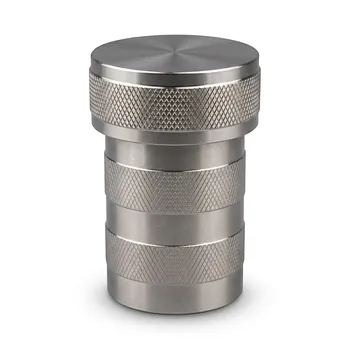
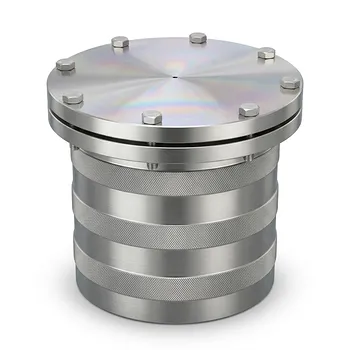
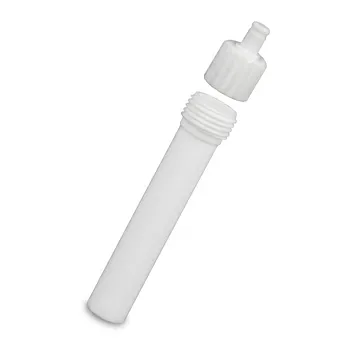
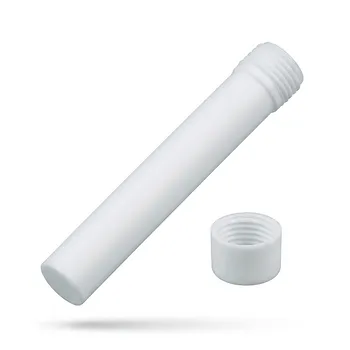
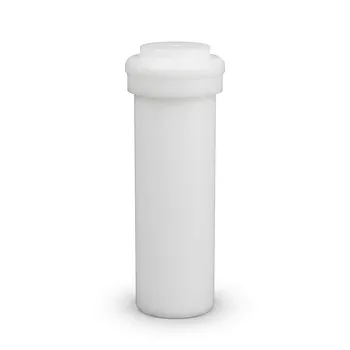
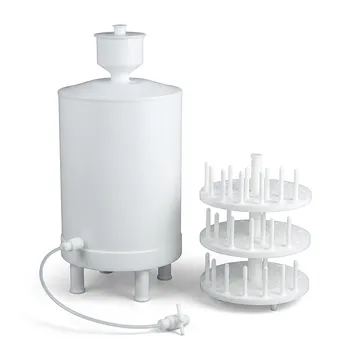
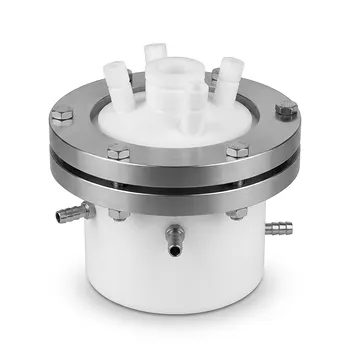
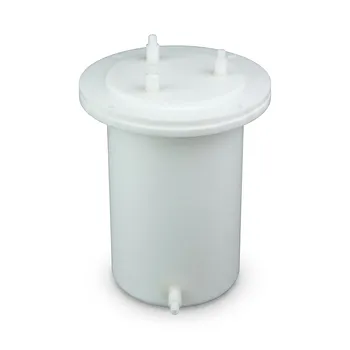
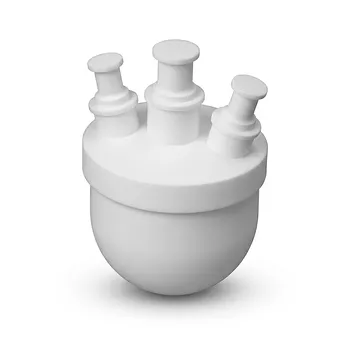
A high-pressure hydrothermal synthesis autoclave with a PTFE liner is essential for producing SnO2 nanostructures because it provides a chemically inert, sealed environment capable of withstanding the heat and autogenous pressure required for crystal growth. This setup prevents corrosive precursors from attacking the metallic reactor walls, which ensures the final Tin Dioxide product remains free of metallic impurities that would otherwise degrade its electrochemical properties and structural integrity.
The combination of a PTFE liner and a high-pressure autoclave creates a "controlled micro-laboratory" that isolates the reaction from external contaminants while utilizing extreme internal pressure to drive the precise nucleation and growth of high-purity SnO2 nanostructures.
The Critical Role of the PTFE Liner
Preventing Metallic Contamination
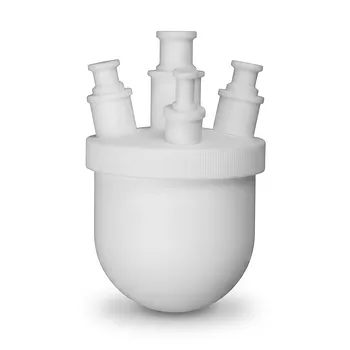
The primary function of the Polytetrafluoroethylene (PTFE) liner is to act as a physical and chemical barrier between the reaction solution and the stainless steel body of the autoclave.
Without this liner, the tin sources and surfactants—often in acidic or basic environments—would corrode the metallic walls, leaching iron, nickel, or chromium ions into the solution.
These impurities would integrate into the SnO2 crystal lattice, fundamentally altering its chemical purity and detrimentally affecting its performance in applications like gas sensing or energy storage.
Exceptional Chemical Inertness
PTFE is chosen for its radical resistance to almost all industrial chemicals, including the strong alkaline or acidic precursors used in SnO2 synthesis.
In reactions involving urea or sodium hydroxide at 120°C, the liner remains chemically stable, ensuring that the reagents only react with each other rather than the container.
This stability is what allows for the formation of high-purity, flower-like nanostructures or tetragonal rutile crystals by maintaining a "clean" reaction pathway.
The Necessity of a High-Pressure Environment
Driving Autogenous Pressure
The stainless steel outer shell of the autoclave provides the mechanical strength necessary to contain the high autogenous pressure generated as the liquid is heated.
In a sealed system, heating the solution above its boiling point creates a supercritical or near-supercritical environment that increases the solubility of the tin precursors.
This elevated pressure facilitates the synergistic interaction between the tin source, surfactants, and solvents, which is impossible to achieve in an open-beaker environment.
Controlling Nucleation and Growth
The high-pressure environment inside the autoclave allows for precise kinetic control over how tin dioxide molecules cluster together.
By maintaining constant pressure and temperature (e.g., 120°C to 200°C), the system promotes uniform anchoring and in-situ growth, resulting in consistent morphology across the entire batch.
This controlled environment is the key to achieving specific nanostructure shapes, such as nanowires, nanobelts, or nanospheres, which require stable conditions over long reaction durations.
Understanding the Trade-offs and Limitations
Temperature Constraints of PTFE
While PTFE is highly inert, it has a clear thermal ceiling, typically around 250°C, beyond which it begins to soften or undergo "cold flow."
If a synthesis requires temperatures exceeding this limit, researchers must switch to PFA liners or specialized metallic alloys, which may introduce higher costs or different contamination risks.
Pressure Risks and Safety
The very pressure that enables nanostructure growth also poses a safety risk if the autoclave is overfilled or heated too rapidly.
The "filling degree" of the PTFE liner must be carefully calculated (usually 60-80%) to allow for liquid expansion without breaching the seal or compromising the structural integrity of the stainless steel shell.
Making the Right Choice for Your Goal
When setting up your hydrothermal synthesis, your choice of equipment must align with the specific requirements of the Tin Dioxide structure you intend to create.
- If your primary focus is High-Purity Electrochemical Materials: Use a high-quality PTFE liner to ensure zero metallic ion leaching from the autoclave walls.
- If your primary focus is Complex Morphologies (e.g., Flower-like structures): Ensure your autoclave is rated for sustained high-pressure cycles to facilitate controlled, long-term nucleation.
- If your primary focus is High-Temperature Synthesis (>250°C): Move beyond standard PTFE to more thermally stable liner materials like PFA or use a linerless gold/platinum-plated reactor.
By isolating the reaction chemistry from the containment vessel, the PTFE-lined autoclave ensures that the resulting SnO2 nanostructures are defined by your precursors rather than your equipment.
Summary Table:
| Feature | Role in SnO2 Synthesis | Key Benefit |
|---|---|---|
| PTFE Liner | Chemical & Physical Barrier | Prevents metallic contamination from iron, nickel, or chromium |
| SS Outer Shell | Pressure Containment | Provides mechanical strength for high autogenous pressure |
| Inert Environment | Kinetic Control | Enables radical resistance to acidic/basic precursors |
| High-Pressure | Nucleation & Growth | Facilitates uniform formation of nanowires and nanospheres |
| Temperature Limit | Thermal Stability | Optimal for reactions up to 250°C (standard PTFE) |
Achieve Uncompromising Purity in Your Nanomaterial Synthesis with KINTEK
Elevate your research with high-performance fluoropolymer solutions tailored for the most demanding hydrothermal environments. KINTEK manufactures virtually all imaginable laboratory supplies crafted from PTFE and PFA, ensuring your SnO2 nanostructures remain free from metallic impurities.
From everyday basic labware—like beakers, crucibles, and reagent bottles—to advanced hydrothermal synthesis liners, microwave digestion vessels, and custom electrochemical cells, we provide the specialized equipment needed for precise results. Whether you require standard tubing and filters or complex non-standard machined parts via our end-to-end custom CNC fabrication, we deliver everything from bespoke setups to high-volume orders.
Ready to optimize your lab's performance? Contact us today to discuss your custom requirements!
References
- Poundoss Chellamuthu, Mohammad Shabaz. Fabrication and comprehensive experimental evaluation of surfactant-activated PEDOT:PSS/SnO2 thin films deposited via spin coating for advanced sensing applications. DOI: 10.1038/s41598-025-12499-1
This article is also based on technical information from Kintek Knowledge Base .
Related Products
- PTFE Lined High Pressure Digestion Vessel 50ml High Temperature Hydrothermal Synthesis Tank
- High Temperature Corrosion Resistant Hydrothermal Synthesis Reactor with TFM Inner Liner and Straight Cylinder Design
- Custom TFM Reaction Vessel with Stainless Steel Jacket and PTFE Inner Cup for High Corrosion Resistance
- High Pressure Custom TFM Reactor Stainless Steel Outer Vessel PTFE Inner Cup for Corrosive Synthesis
- High Purity PTFE Microwave Digestion Vessel Replacement Liner for Acid Sample Preparation and Trace Analysis
People Also Ask
- What are the benefits of using a PTFE-lined vessel for carbon-sulfur cathode treatment? Maximize Purity & Performance
- Why are PTFE-lined pressure digestion vessels required for the preparation of Ag/CeO2 catalysts? Purity & Performance
- What is the function of high-pressure PTFE digestion vessels in mineral analysis? Optimize Sample Mineralization
- What safety features are typically incorporated into high-pressure PTFE digestion vessel designs? Ensure Lab Safety
- What is the function of PTFE lined high-pressure vessels in g-C3N4 synthesis? Achieve High-Purity Material Growth