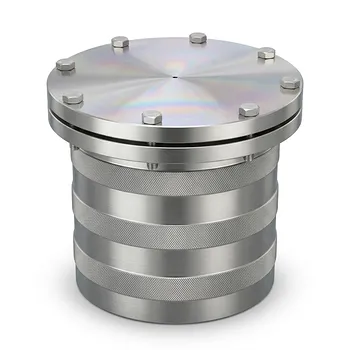
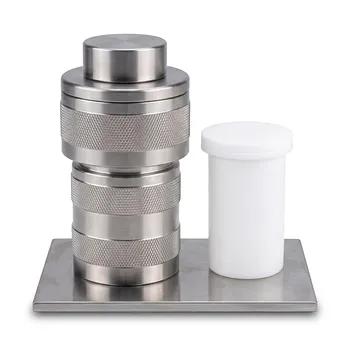
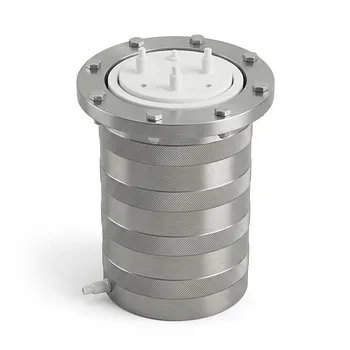
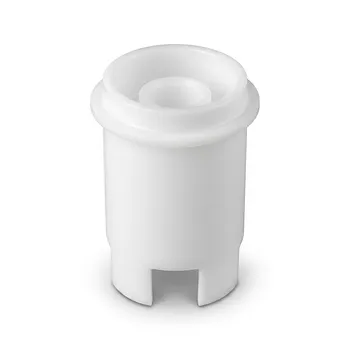
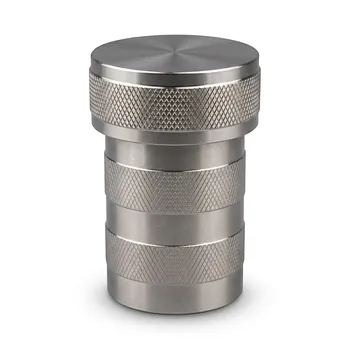
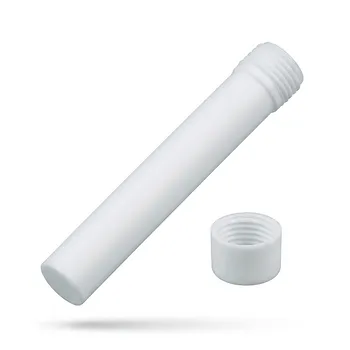
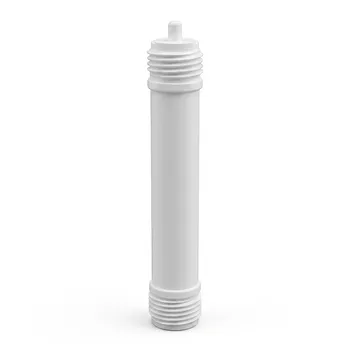
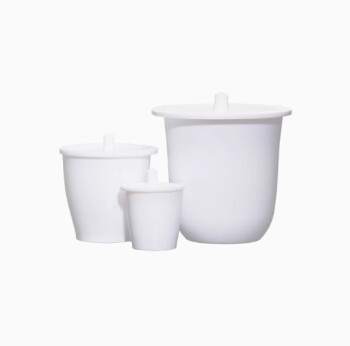
The PTFE-lined stainless steel autoclave is the indispensable reactor for $V_2O_5$-CNT synthesis because it simultaneously provides the mechanical strength to contain high autogenous pressure and the chemical inertness to prevent metal contamination. By isolating corrosive precursors like ammonium metavanadate and oxalic acid within a sealed environment, this equipment enables the controlled crystallization and conformal deposition of vanadium pentoxide onto carbon nanotubes (CNTs) without compromising the purity of the resulting electrode.
The core value of this equipment lies in its dual-material design: a stainless steel outer shell for structural safety under pressure and a PTFE liner for absolute chemical purity. This combination ensures that the high-temperature synthesis environment remains stable and free from leached metallic impurities that would otherwise degrade electrochemical performance.
The Role of the Sealed Pressurized Environment
Harnessing Autogenous Pressure
The synthesis of $V_2O_5$-CNT composites requires "hydrothermal" conditions, where water is heated above its boiling point in a sealed vessel. This creates autogenous pressure, which acts as a powerful driving force for chemical reactions that would not occur at atmospheric pressure.
Promoting Conformal Coating on CNTs
The internal pressure within the autoclave facilitates the conformal deposition of $V_2O_5$ precursors onto the surface of the carbon nanotubes. This ensures a tight, high-surface-area interface between the active material and the conductive framework, which is critical for efficient electron transport in the final electrode.
Facilitating Crystalline Development
High-pressure environments promote the growth of a highly crystalline catalytic phase. For $V_2O_5$, achieving the correct crystalline structure is essential for maintaining stable lithium-ion or sodium-ion intercalation during battery or supercapacitor cycling.
Chemical Protection and Purity Maintenance
Resistance to Corrosive Precursors
The synthesis of $V_2O_5$ often utilizes precursors such as ammonium metavanadate and oxalic acid. These chemicals can be highly reactive and corrosive to standard metals at elevated temperatures.
The Inertness of Polytetrafluoroethylene (PTFE)
The PTFE liner (often called Teflon) is exceptionally inert and resists chemical attack from both acidic and alkaline environments. This isolation ensures that the reaction solution does not come into direct contact with the stainless steel walls.
Preventing Metal Ion Leaching
If precursors were to react with the autoclave’s steel walls, metal ions (like iron, nickel, or chromium) would leach into the solution. These impurities would integrate into the $V_2O_5$ lattice, significantly impairing the electrochemical capacity and stability of the composite electrode.
Understanding the Trade-offs
Temperature Limitations of PTFE
While PTFE is chemically superior, it has a clear thermal ceiling, typically around 220°C to 250°C. Exceeding these temperatures can cause the liner to soften or deform, leading to potential leaks or structural failure of the seal.
Safety Risks of High Pressure
The primary risk with stainless steel autoclaves is the pressure buildup. If the vessel is overfilled (exceeding 70-80% capacity) or if a runaway reaction occurs, the internal pressure can exceed the mechanical limits of the steel sleeve, necessitating strict adherence to safety protocols.
Cooling Rate Sensitivity
The rate at which the autoclave cools after synthesis can significantly impact the morphology of the $V_2O_5$ crystals. Rapid cooling may lead to different structural properties compared to slow, controlled cooling, requiring the operator to balance time efficiency with material quality.
How to Apply This to Your Project
If your primary focus is Maximum Purity: Ensure your PTFE liner is thoroughly cleaned with dilute acid between runs to prevent "memory effects" or cross-contamination from previous syntheses.
If your primary focus is High-Yield Scaling: Monitor the "fill degree" of the autoclave carefully; never exceed 80% volume, as the liquid expansion at high temperatures is necessary to generate the required autogenous pressure safely.
If your primary focus is Structural Integrity: Regularly inspect the stainless steel threads and the PTFE gasket surface for signs of wear or deformation to prevent catastrophic pressure loss during the reaction.
Selecting the right autoclave configuration ensures that your $V_2O_5$-CNT electrodes achieve the precise crystallinity and purity required for next-generation energy storage.
Summary Table:
| Component/Feature | Role in V2O5-CNT Synthesis | Key Benefit |
|---|---|---|
| Stainless Steel Shell | Mechanical strength & pressure containment | Ensures safety under high autogenous pressure |
| PTFE (Teflon) Liner | Chemical isolation & inertness | Prevents metal ion leaching and contamination |
| Autogenous Pressure | Driving force for chemical reactions | Enables conformal coating and crystallization |
| Sealed Environment | Controlled hydrothermal conditions | Maintains precursor purity for better electrodes |
Elevate Your Materials Research with KINTEK’s Fluoropolymer Expertise
Precision in energy storage research demands uncompromising material purity and structural integrity. At KINTEK, we specialize in high-performance fluoropolymer solutions tailored for rigorous laboratory environments. From the PTFE-lined hydrothermal autoclaves and microwave digestion vessels essential for V2O5-CNT synthesis to a complete range of PFA/PTFE labware—including beakers, reagent bottles, and high-purity trace analysis instruments—we provide the tools you need for success.
Our capabilities extend to advanced reaction apparatus such as custom electrochemical cells, battery testing fixtures, and microchannel reactors. Backed by end-to-end custom CNC fabrication, we deliver everything from standard consumables like stirring bars and O-rings to complex, bespoke machined parts designed for your specific research goals.
Ready to optimize your synthesis workflow? Contact us today to discuss your custom laboratory needs!
References
- Rahul S. Ingole, Jong G. Ok. One‐Pot Hydrothermal Synthesis of Vanadium Oxide‐Decorated Carbon Nanotube Hybrid Composite Electrodes for Superior Supercapacitor Applications. DOI: 10.1002/admt.202500045
This article is also based on technical information from Kintek Knowledge Base .
Related Products
- Custom TFM Reaction Vessel with Stainless Steel Jacket and PTFE Inner Cup for High Corrosion Resistance
- PTFE Lined High Pressure Digestion Vessel 50ml High Temperature Hydrothermal Synthesis Tank
- High Pressure Custom TFM Reactor Stainless Steel Outer Vessel PTFE Inner Cup for Corrosive Synthesis
- High Pressure PTFE Digestion Vessel Inner Cup Holder Custom Corrosion Resistant Low Background Teflon
- High Temperature Corrosion Resistant Hydrothermal Synthesis Reactor with TFM Inner Liner and Straight Cylinder Design
People Also Ask
- Why are high-performance pressure-resistant reaction vessels required for oxygen-assisted hydrothermal conversion at 150 °C?
- How do magnetic stirring and reaction vessels impact MOF-derived carbon quality? Optimize Your Composite Performance
- Why are high-quality fluoropolymer-lined reaction vessels required for alk-Ti3C2Tx MXene? Ensure Purity & HF Resistance
- Why are PTFE-lined reaction vessels necessary for forced degradation studies? Ensure high-purity results and accuracy.
- Why is a high-purity PTFE lined reaction vessel required for the acidic etching of MXenes? Ensure Material Purity.