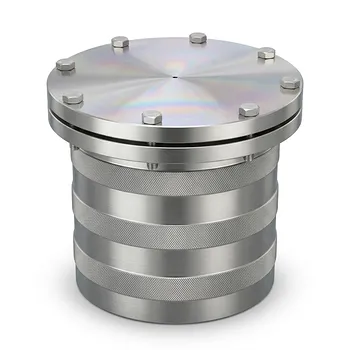
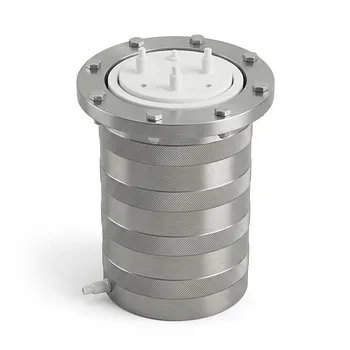
The PTFE-lined stainless steel autoclave is the essential pressure vessel for MoS2 synthesis. It creates a controlled, high-pressure environment that enables subcritical water reactions while protecting the integrity of both the equipment and the chemical product. Specifically, it facilitates the successful nucleation and growth of molybdenum disulfide crystals by providing chemical inertness and structural safety at temperatures typically reaching 200°C.
The autoclave serves as a dual-purpose vessel: the stainless steel shell provides the structural strength to maintain high autogenous pressure, while the PTFE (Teflon) liner ensures a chemically inert environment that prevents corrosion and metallic contamination, which is vital for achieving high-purity MoS2 nanostructures.
The Role of Controlled Pressurization
Achieving Subcritical Conditions
The primary function of the autoclave is to provide a sealed environment where precursor solutions can be heated beyond their boiling point. This generates autogenous pressure, creating subcritical conditions that increase the solubility and reactivity of molybdenum and sulfur sources.
Facilitating Phase Transitions
High-pressure environments are critical for inducing specific crystalline phases, such as the transition from the stable 2H phase to the metallic 1T phase. The sealed nature of the autoclave allows for the in-situ intercalation of ions, which is necessary to stabilize these metastable structures.
Morphological Engineering
The constant pressure maintained within the vessel directly influences the final shape of the nanoparticles. This stability is required to synthesize complex architectures like hollow microspheres or nanorod arrays, which would be impossible to form in an open-system reaction.
Chemical Isolation and Purity
The Inertness of the PTFE Liner
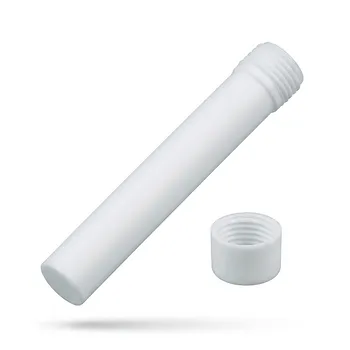
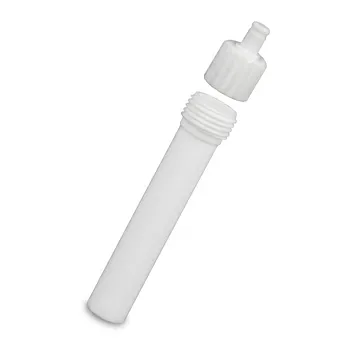
The Polytetrafluoroethylene (PTFE) liner acts as a barrier between the reactive precursors and the metal shell. It is exceptionally resistant to the strong acids, bases, and polar solvents used in synthesis, such as sodium molybdate and thiourea.
Preventing Metallic Contamination
Without the PTFE liner, the acidic reaction environment would corrode the stainless steel, leaching iron, nickel, or chromium into the solution. The liner ensures that these impurities do not enter the reaction system, maintaining the chemical purity and structural consistency of the MoS2.
Product Recovery and Maintenance
The smooth, non-stick surface of the PTFE liner prevents the synthesized MoS2 from adhering permanently to the walls. This facilitates easier product collection after the reaction and simplifies the cleaning process for the vessel.
Understanding the Trade-offs and Limitations
Temperature Constraints of PTFE
While PTFE is highly inert, it has a physical limit; it begins to soften and undergo thermal expansion at temperatures exceeding 250°C. For MoS2 synthesis requiring higher heat, alternative liners like PPL (Polyphenylene polymers) or quartz must be considered to prevent liner deformation.
Pressure Risks and Seal Integrity
The stainless steel shell is designed for strength, but the sealing mechanism is the most common point of failure. Rapid cooling or improper tightening can lead to pressure leaks, which drop the internal temperature and stall the crystal growth process.
Fill-Factor Sensitivities
The ratio of solution to the total volume of the liner (the fill factor) is a critical safety variable. Overfilling the autoclave can lead to excessive pressure that exceeds the mechanical limits of the stainless steel shell, posing a significant laboratory explosion risk.
How to Optimize Your Synthesis Results
To achieve the best results in the hydrothermal production of MoS2, align your autoclave usage with your specific research objectives:
- If your primary focus is phase control (e.g., 1T-MoS2): Ensure the autoclave is perfectly sealed to maintain the high autogenous pressure required for ion intercalation and phase stabilization.
- If your primary focus is high purity: Use a high-purity PTFE liner and perform a "pre-cleaning" run with dilute acid to ensure no residual metal ions from previous experiments remain in the vessel.
- If your primary focus is morphological consistency: Maintain a consistent fill factor (usually 60% to 80%) to ensure reproducible pressure levels across different experimental batches.
By mastering the balance between the structural strength of the steel and the chemical resistance of the PTFE liner, you can reliably produce high-quality molybdenum disulfide nanoparticles.
Summary Table:
| Component/Feature | Primary Function | Research Benefit |
|---|---|---|
| Stainless Steel Shell | Structural Strength | Sustains high autogenous pressure for subcritical water reactions. |
| PTFE (Teflon) Liner | Chemical Inertness | Prevents metallic contamination (Fe, Ni, Cr) and resists corrosive precursors. |
| Sealed Environment | Phase Regulation | Facilitates specific crystalline transitions (e.g., 2H to 1T phase). |
| Non-stick Surface | Product Recovery | Ensures easy collection of nanoparticles and simplified vessel maintenance. |
Elevate Your Synthesis with KINTEK’s Precision Fluoropolymer Engineering
Achieving high-purity MoS2 nanostructures requires equipment that balances structural integrity with absolute chemical inertness. At KINTEK, we specialize in high-performance fluoropolymer solutions, providing the critical components needed for advanced hydrothermal and electrochemical research.
From hydrothermal synthesis liners and microwave digestion vessels to high-purity trace analysis instruments and custom CNC-machined parts, our focus is exclusively on PTFE and PFA excellence. We support your lab with a comprehensive range of products, including:
- Basic Labware: Beakers, crucibles, reagent bottles, and centrifuge tubes.
- Fluid Transfer & Filtration: High-performance tubing, fittings, valves, and filters.
- Advanced Apparatus: Custom electrochemical cells, battery testing fixtures, and microchannel reactors.
Whether you need high-volume consumables like stirring bars and gaskets or bespoke laboratory setups designed via end-to-end custom fabrication, KINTEK delivers the reliability your research demands.
Ready to optimize your laboratory efficiency? Contact us today to explore how our custom fluoropolymer solutions can enhance your material synthesis!
References
- Seyoum A. Getaneh, Fabian I. Ezema. Synthesis and electrochemical study of MoS2/MoO3 and MoS2/CNTs binary composites for supercapacitor applications. DOI: 10.1007/s44373-025-00054-6
This article is also based on technical information from Kintek Knowledge Base .
Related Products
- Custom TFM Reaction Vessel with Stainless Steel Jacket and PTFE Inner Cup for High Corrosion Resistance
- PTFE Lined High Pressure Digestion Vessel 50ml High Temperature Hydrothermal Synthesis Tank
- High Pressure Custom TFM Reactor Stainless Steel Outer Vessel PTFE Inner Cup for Corrosive Synthesis
- High Purity TFM Microwave Digestion Vessels PTFE Acid Evaporation Liners Domestic GT-400 Equivalent Laboratory Reaction Containers
- High Purity PTFE Microwave Digestion Vessel Replacement Liner for Acid Sample Preparation and Trace Analysis
People Also Ask
- Why are high-performance pressure-resistant reaction vessels required for oxygen-assisted hydrothermal conversion at 150 °C?
- How do magnetic stirring and reaction vessels impact MOF-derived carbon quality? Optimize Your Composite Performance
- Why are high-quality fluoropolymer-lined reaction vessels required for alk-Ti3C2Tx MXene? Ensure Purity & HF Resistance
- Why are PTFE-lined reaction vessels necessary for forced degradation studies? Ensure high-purity results and accuracy.
- Why is a high-purity PTFE lined reaction vessel required for the acidic etching of MXenes? Ensure Material Purity.