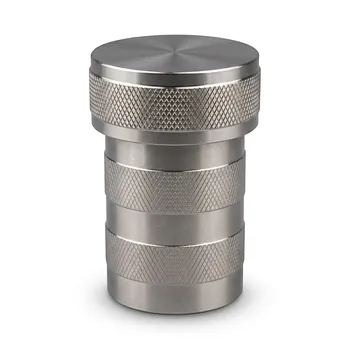
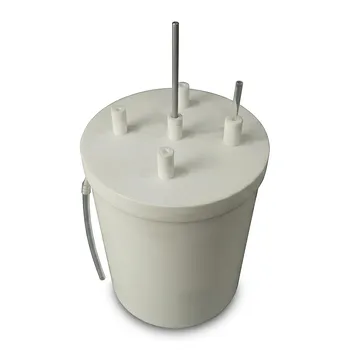
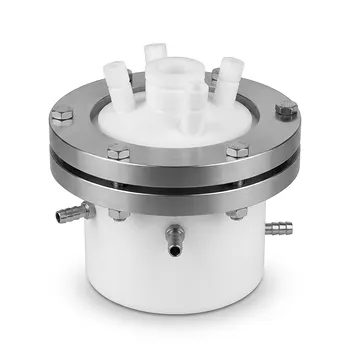
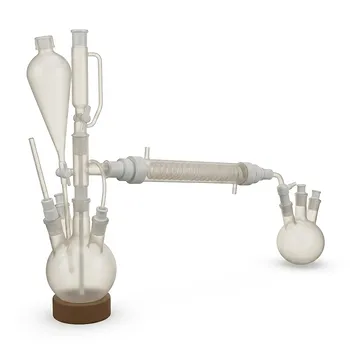
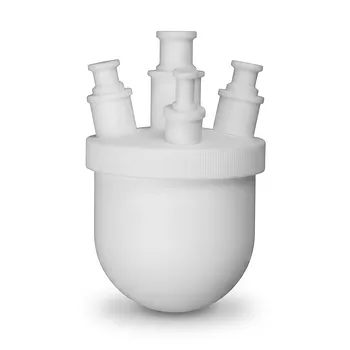
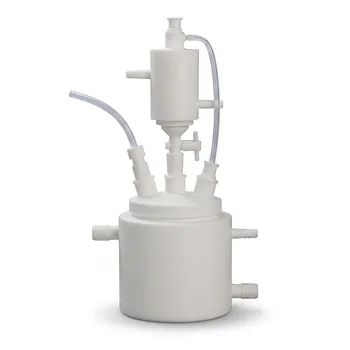
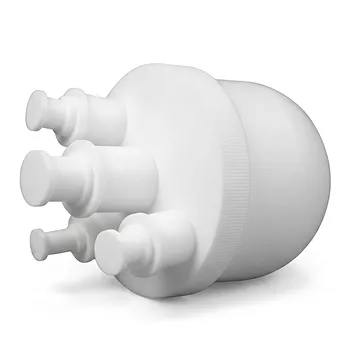
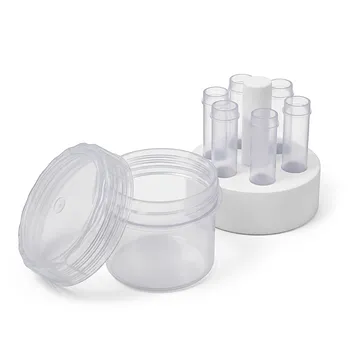
High-pressure hydrothermal reactors and fluoroplastic liners are the essential hardware for engineering high-performance metal oxide photocatalysts. These systems create a sealed environment where solvents can reach subcritical or supercritical states, drastically increasing solubility and reactant diffusion rates. This unique physical environment allows for the precise control of crystal nucleation and growth, resulting in materials with the specific electronic structures and surface areas required for efficient photocatalysis.
The combination of high-pressure reactors and fluoroplastic liners enables the synthesis of highly crystalline, pure, and structurally optimized photocatalysts. By providing a controlled, non-reactive environment, this setup ensures that materials achieve the precise chemical stoichiometry and morphology necessary for superior catalytic activity.
The Reactor: Engineering the Subcritical Environment
Accelerating Nucleation and Crystal Growth
High-pressure reactors allow aqueous solutions to be heated far beyond their normal boiling points while remaining in a liquid or supercritical state. This environment significantly enhances solvent solubility and the diffusion rates of reactant molecules. Consequently, metal ions and precursors can coordinate and nucleate more efficiently, leading to superior crystallinity compared to standard synthesis methods.
Controlling Morphology and Active Sites
The high-pressure environment is critical for developing specific physical characteristics, such as layered structures or heterojunctions between different semiconductors. These conditions facilitate the growth of micron-sized particles with narrow band gaps and abundant active sites. Such structural precision is vital for maximizing the photodegradation performance and charge transfer efficiency of the resulting metal oxide.
Facilitating In-Situ Deposition
Reactors provide the stable, high-temperature conditions necessary for the in-situ growth of active particles onto carrier surfaces, such as growing RuO2 on Co3O4. This creates a robust interface between materials, which is essential for the structural stability of the photocatalyst. The sealed nature of the vessel ensures that these complex reactions occur without the loss of volatile components or exposure to atmospheric contaminants.
The Liner: Ensuring Chemical Integrity and Purity
Protecting Equipment via Chemical Resistance
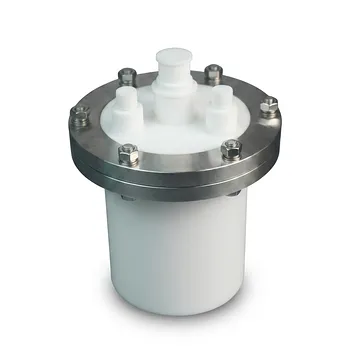
Fluoroplastic liners, typically made from PTFE (Polytetrafluoroethylene), PFA (Perfluoroalkoxy), or PPL (Polyphenylene), serve as the primary reaction vessel within the metal autoclave. They possess extraordinary resistance to strong acids and bases, which are frequently used to catalyze the synthesis of metal oxides. This protection prevents the corrosive media from damaging the external stainless steel reactor walls.
Preventing Trace Metal Contamination
High-purity liners are crucial because they exhibit extremely low trace metal leaching rates, even under intense heat and pressure. By preventing metal ions from the reactor walls from entering the solution, the liners ensure the catalyst maintains a precise chemical stoichiometry. This is particularly critical when synthesizing single-atom catalysts where the electronic environment of the active center must remain pristine.
Maximizing Product Recovery
The non-stick surface inherent to fluoropolymers like PTFE minimizes the adhesion of synthesized particles to the vessel walls. This property significantly improves the recovery rate of the target photocatalyst after the reaction is complete. Furthermore, the ease of cleaning these liners helps maintain a clean reaction interface for subsequent experiments, preventing cross-contamination.
Understanding Technical Limitations and Trade-offs
Temperature and Pressure Constraints
While fluoroplastic liners offer excellent chemical resistance, they have distinct thermal limitations that must be respected to avoid deformation. PTFE liners are generally rated for temperatures up to 200°C, while PPL liners can withstand slightly higher temperatures (up to 250-280°C). Exceeding these limits can lead to liner "creeping" or structural failure, which risks contaminating the sample or damaging the reactor.
Thermal Inertia and Heating Rates
The use of a thick-walled liner inside a heavy metal autoclave introduces thermal lag, meaning the internal reaction temperature may rise more slowly than the oven or heater indicates. This can affect the kinetics of nucleation and growth if not properly calibrated. Researchers must account for this delay to ensure the precursors spend the intended amount of time at the target temperature.
Choosing the Right Setup for Your Synthesis Goal
To achieve the best results in metal oxide photocatalyst synthesis, your equipment choice should align with your specific experimental requirements.
- If your primary focus is extreme chemical purity: Use PFA liners, as they often provide the lowest leaching rates and the smoothest surfaces for high-purity single-atom catalyst synthesis.
- If your primary focus is high-temperature stability (above 200°C): Utilize PPL (Polyphenylene) liners, which offer better structural integrity at elevated temperatures than standard PTFE.
- If your primary focus is maximum product yield: Ensure the use of high-quality PTFE, as its superior non-stick properties prevent product loss during the recovery phase.
- If your primary focus is complex heterojunction growth: Select a high-pressure stainless steel autoclave capable of maintaining consistent pressure to facilitate the diffusion required for interface charge transfer.
By meticulously matching the reactor's pressure capabilities with the liner's chemical resistance, you can unlock the full potential of hydrothermal synthesis to create next-generation photocatalytic materials.
Summary Table:
| Component | Primary Role in Synthesis | Material Options | Key Advantage |
|---|---|---|---|
| Hydrothermal Reactor | Creates subcritical/supercritical environment | Stainless Steel / High-Pressure Alloys | Accelerates nucleation and morphology control |
| PTFE Liner | Chemical resistance & non-stick recovery | Polytetrafluoroethylene | Cost-effective, resistant to acids/bases (up to 200°C) |
| PFA Liner | High-purity trace analysis | Perfluoroalkoxy | Lowest trace metal leaching for single-atom catalysts |
| PPL Liner | High-temperature stability | Polyphenylene | Enhanced structural integrity for reactions up to 280°C |
Optimize Your Synthesis with KINTEK High-Performance Labware
Achieving the precise chemical stoichiometry and morphology required for next-generation photocatalysts demands equipment that never compromises on purity. KINTEK specializes in high-performance fluoropolymer solutions designed to withstand the most corrosive environments and demanding thermal conditions.
From everyday basic labware (beakers, measuring cylinders, crucibles, reagent bottles, and digestion tubes) to specialized high-purity trace analysis instruments, we provide the foundational tools for your research. Our expertise extends to comprehensive fluid transfer components (tubing, fittings, valves), sample prep tools (filters, pipettes, tweezers), and advanced derivative apparatus like custom hydrothermal synthesis liners, microwave digestion vessels, and electrochemical cells.
Why choose KINTEK?
- End-to-End Customization: Our full-scale CNC fabrication allows us to deliver everything from complex non-standard machined parts to high-volume orders.
- Material Excellence: We maintain an absolute focus on PTFE, PFA, and PPL to ensure zero contamination and maximum chemical resistance.
- Precision Engineering: Designed specifically for target customers who require absolute control over crystal growth and active site development.
Ready to upgrade your laboratory setup? Contact KINTEK today for bespoke fluoropolymer solutions and ensure your materials achieve superior catalytic activity.
References
- M Suresh Kumar, Raj Kumar. Environmental risks of textile dyes and photocatalytic materials for sustainable treatment: current status and future directions. DOI: 10.1007/s44274-025-00337-0
This article is also based on technical information from Kintek Knowledge Base .
Related Products
- High Temperature Corrosion Resistant Hydrothermal Synthesis Reactor with TFM Inner Liner and Straight Cylinder Design
- High Pressure Custom TFM Reactor Stainless Steel Outer Vessel PTFE Inner Cup for Corrosive Synthesis
- Custom TFM Reaction Vessel with Stainless Steel Jacket and PTFE Inner Cup for High Corrosion Resistance
- PTFE Lined High Pressure Digestion Vessel 50ml High Temperature Hydrothermal Synthesis Tank
- PTFE 10L Reaction Vessel with Stirring Paddle Customizable Corrosion Resistant High Temperature Reactor for Biopharmaceutical and Chemical Processing
People Also Ask
- What is the role of a corrosion-resistant reactor in the synthesis of lignin-based carbon dots? Ensure Maximum Purity
- What are the technical advantages of using hydrothermal synthesis reactors for advanced electronic & optical nanomaterials?
- How does a hydrothermal synthesis reactor facilitate the production of crystalline materials with tailored morphologies? Precision Crystal Growth
- Why is the sealing reliability of a hydrothermal synthesis reactor critical for 24-hour cycles? Ensure Nano-Precision
- What role do hydrothermal synthesis reactors play in CQD preparation? Achieve High-Purity Nanomaterial Synthesis