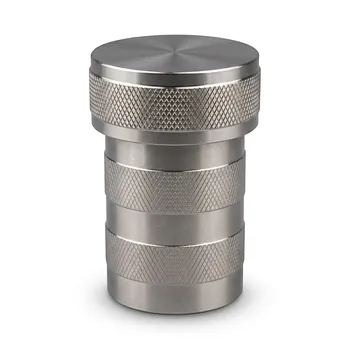
The synthesis of $Bi_2SiO_5$ relies on a polytetrafluoroethylene (PTFE) lined autoclave to create a controlled, high-pressure environment that is chemically shielded from the reactor's metal walls. This setup enables the reaction to reach the specific thermodynamic thresholds—typically around 120°C and under high autogenous pressure—required for the nucleation and growth of $Bi_2SiO_5$ crystals. By maintaining a stable environment even at a high alkalinity of pH 10, the PTFE liner facilitates the formation of precise rod-like nanostructures while ensuring the final product remains free from metallic impurities.
The PTFE-lined autoclave acts as a specialized reaction vessel that converts thermal energy into the high-pressure conditions necessary for crystal growth. It serves a dual purpose: providing the thermodynamic energy for $Bi_2SiO_5$ synthesis and acting as a chemical barrier to preserve material purity.
Establishing the Necessary Thermodynamic Environment
Achieving Subcritical Conditions
The primary role of the autoclave is to maintain solvents in a liquid state well above their atmospheric boiling points. These subcritical conditions significantly increase the solubility and reactivity of the bismuth and silicate precursors. This state of supersaturation is the engine that drives the slow, controlled growth of $Bi_2SiO_5$ crystals.
Facilitating Nucleation and Growth
The sealed environment allows for precise control over the nucleation process. By maintaining constant temperature and pressure, the autoclave provides the necessary energy for the precursors to organize into a defined crystalline lattice. This stability is what allows the $Bi_2SiO_5$ to develop its characteristic rod-like morphology.
Preserving Chemical Integrity and Purity
Exceptional Chemical Inertness
$Bi_2SiO_5$ synthesis often requires a high alkalinity, such as a pH of 10. The PTFE liner is chosen specifically for its ability to withstand these harsh conditions without degrading. Unlike the outer stainless steel shell, PTFE does not react with strong bases or acids during the hydrothermal process.
Eliminating Metal Ion Contamination
The liner acts as a physical barrier between the reaction solution and the stainless steel walls of the autoclave. Without this barrier, the high pressure and temperature would cause metal ions (like iron or nickel) to leach from the reactor into the product. The PTFE liner ensures the stoichiometric ratio and electrochemical purity of the $Bi_2SiO_5$ are maintained.
Understanding the Trade-offs
Temperature and Pressure Limitations
While PTFE is highly inert, it has a lower thermal threshold than the metal housing. Most PTFE liners are limited to a maximum operating temperature of 200°C to 220°C to prevent softening or deformation. Exceeding these limits can lead to a loss of the hermetic seal, causing pressure drops and potential experimental failure.
Thermal Lag and Cooling Rates
PTFE is an insulator, meaning it does not conduct heat as efficiently as the surrounding stainless steel. This creates a thermal lag during the heating and cooling phases of the synthesis. Researchers must account for this delay to ensure the internal reaction temperature accurately matches the set point of the external oven.
How to Apply This to Your Project
Making the Right Choice for Your Goal
To achieve the best results in $Bi_2SiO_5$ or similar hydrothermal syntheses, consider the following recommendations:
- If your primary focus is high chemical purity: Always use a high-quality, virgin PTFE liner to prevent the leaching of transition metals from the autoclave body into your sample.
- If your primary focus is morphological control (e.g., rod-like structures): Ensure the autoclave is filled to 60-80% of its capacity to maintain the optimal autogenous pressure required for consistent crystal growth.
- If your primary focus is high-temperature synthesis (above 220°C): Consider transitioning from a PTFE liner to a PPL (polyphenylene polymer) liner, which can withstand higher temperatures while maintaining similar chemical inertness.
The PTFE-lined autoclave is an indispensable tool that bridges the gap between raw chemical precursors and highly structured $Bi_2SiO_5$ nanomaterials.
Summary Table:
| Feature | Role in Bi2SiO5 Synthesis | Key Specification/Benefit |
|---|---|---|
| Subcritical Environment | Drives nucleation & growth of crystals | High autogenous pressure at 120°C |
| PTFE Chemical Barrier | Prevents metal ion leaching from steel walls | Maintains purity even at pH 10 |
| Morphology Control | Facilitates formation of rod-like structures | Stable thermodynamic conditions |
| Thermal Threshold | Protects liner from softening/deformation | Recommended max 200°C-220°C |
Elevate Your Synthesis with KINTEK Fluoropolymer Expertise
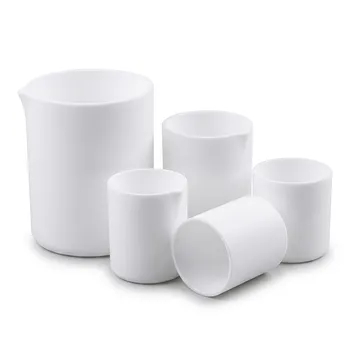
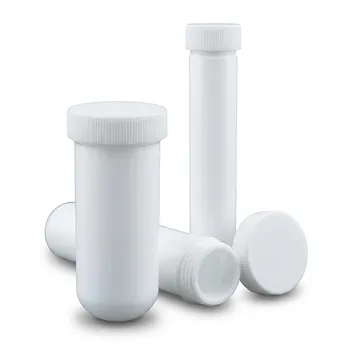
Precision in $Bi_2SiO_5$ synthesis demands materials that never compromise on purity. KINTEK specializes in high-performance fluoropolymer solutions, offering everything from standard PTFE and PFA labware (beakers, crucibles, and reagent bottles) to advanced hydrothermal synthesis liners and microwave digestion vessels.
Whether you require high-purity trace analysis tools, fluid transfer components, or custom CNC-fabricated reaction apparatus tailored to your unique specifications, our end-to-end manufacturing ensures your lab achieves absolute stoichiometric accuracy. Don't let metallic contamination stall your research—leverage our expertise in high-performance materials for your next project.
Contact KINTEK today for a custom quote on high-performance labware!
References
- Shaowei Qin, Jianhui Jiang. A high-performance g-C3N5/Bi2SiO5 heterojunction photocatalyst induced by constructing S-scheme electron-highways. DOI: 10.1038/s41598-025-85268-9
This article is also based on technical information from Kintek Knowledge Base .
Related Products
- PTFE Lined High Pressure Digestion Vessel 50ml High Temperature Hydrothermal Synthesis Tank
- Custom TFM Reaction Vessel with Stainless Steel Jacket and PTFE Inner Cup for High Corrosion Resistance
- High Temperature Corrosion Resistant Hydrothermal Synthesis Reactor with TFM Inner Liner and Straight Cylinder Design
- High Pressure Custom TFM Reactor Stainless Steel Outer Vessel PTFE Inner Cup for Corrosive Synthesis
- High Temperature Corrosion Resistant PTFE Hydrogen Fluoride Condensation Reflux System with Separatory Funnel and PFA Collection Bottle
People Also Ask
- What are the benefits of using a PTFE-lined vessel for carbon-sulfur cathode treatment? Maximize Purity & Performance
- Why are PTFE-lined pressure digestion vessels required for the preparation of Ag/CeO2 catalysts? Purity & Performance
- What is the function of high-pressure PTFE digestion vessels in mineral analysis? Optimize Sample Mineralization
- What safety features are typically incorporated into high-pressure PTFE digestion vessel designs? Ensure Lab Safety
- What is the function of PTFE lined high-pressure vessels in g-C3N4 synthesis? Achieve High-Purity Material Growth