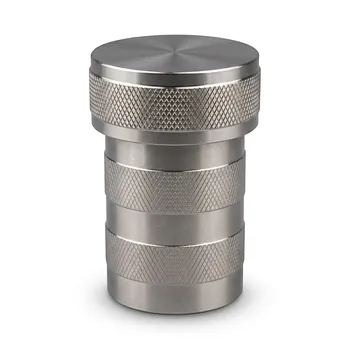
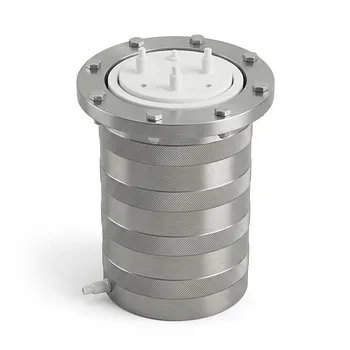
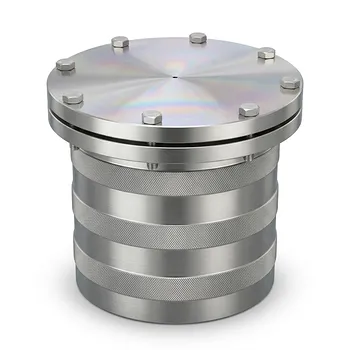
High-pressure hydrothermal synthesis is the standard for producing molybdenum disulfide (MoS2) because it creates a unique supercritical or subcritical environment that is impossible to achieve at atmospheric pressure. By sealing precursors like sodium molybdate and thiourea in a high-temperature vessel, the reactor forces the solvent to remain liquid well above its boiling point. This elevates the solubility of reactants, allowing for the precise nucleation and growth of high-purity, layered nanostructures with controlled crystalline phases.
Core Takeaway: The high-pressure reactor acts as a thermodynamic "pressure cooker" that enables precursors to react thoroughly in a liquid state at extreme temperatures. This environment is essential for achieving high crystallinity, specific 2D morphologies, and the necessary phase transitions for high-performance nanomaterials.
The Role of the Supercritical Environment
Exceeding Atmospheric Boiling Points
In a standard open-air environment, water evaporates at 100°C, limiting the energy available for chemical reactions. A high-pressure reactor seals the system, allowing temperatures to reach 200°C to 230°C while maintaining the solvent in a liquid or subcritical state.
Enhanced Solubility and Reactivity
Under these high-pressure conditions, the dielectric constant and density of the solvent change, significantly increasing the solubility of precursors. This ensures that sodium molybdate or ammonium molybdate and thiourea can react completely and uniformly within the solution.
Precision in Nucleation and Growth
The high-pressure environment provides the energy required to control the nucleation and growth direction of MoS2 nanocrystals. This leads to the formation of specific structures, such as vertically aligned nanosheets or layered 2D structures, which are critical for maximizing surface area.
Structural and Phase Advantages
Inducing Phase Transitions
High-pressure hydrothermal processes can facilitate the phase transition of MoS2 from the semiconducting 2H phase to the metallic 1T phase. This transition is highly desirable for applications requiring high electrical conductivity and electrochemical activity.
Eliminating Post-Processing Steps
The intense conditions inside the reactor allow for full crystallization during the reaction itself. Because the material reaches its final crystalline state in the liquid phase, there is often no need for secondary calcination or high-temperature annealing.
Uniform Loading on Porous Substrates
The internal pressure forces the precursor solution into the deep pores of complex structures, such as nickel tubes or graphene scaffolds. This ensures the MoS2 grows "in-situ" and is distributed uniformly across the entire surface of the support material.
Understanding the Trade-offs and Safety Requirements
The Necessity of PTFE Liners
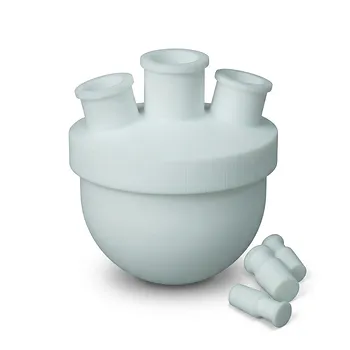
Because the reaction involves corrosive precursors and high temperatures, a Polytetrafluoroethylene (PTFE) liner is mandatory. This liner protects the stainless steel autoclave from acid corrosion and prevents metal ions from contaminating the nanomaterial.
Temperature and Pressure Limits
While high temperatures accelerate reactions, the thermal stability of the PTFE liner generally caps operations at 230°C. Exceeding these limits risks structural failure of the liner or dangerous pressure spikes within the autoclave body.
Scalability and Time Constraints
Hydrothermal synthesis is often a slow process, sometimes requiring 20 hours or more to ensure complete reaction. Additionally, the batch nature of high-pressure reactors can make it challenging to scale production to industrial levels compared to continuous flow methods.
How to Apply This to Your Project
Making the Right Choice for Your Goal
- If your primary focus is high electrochemical activity: Utilize temperatures near 210°C to encourage the formation of the metallic 1T phase and sulfur-rich defects.
- If your primary focus is uniform composite loading: Ensure the reactor maintains high autogenous pressure to force precursors into the pores of your substrate for in-situ growth.
- If your primary focus is material purity: Always use a clean, undamaged PTFE liner to prevent the corrosion of the steel vessel from leaching impurities into your MoS2 nanosheets.
- If your primary focus is specific 2D morphology: Control the reaction time (e.g., 15–20 hours) to allow for the slow, directed growth of layered structures with large specific surface areas.
By mastering the high-pressure environment, you can tailor the physical and chemical properties of MoS2 nanomaterials to meet the exact demands of your application.
Summary Table:
| Feature | Hydrothermal Advantage | Impact on MoS2 Nanomaterials |
|---|---|---|
| Temperature (>100°C) | Enables subcritical liquid state | Increases precursor solubility and reaction thoroughness |
| High Pressure | Forced in-situ growth | Ensures uniform loading on porous scaffolds (e.g., graphene) |
| Phase Control | Thermodynamic energy input | Facilitates the transition from 2H phase to metallic 1T phase |
| Crystallinity | In-liquid crystallization | Produces high-purity nanostructures without post-calcination |
| Environment | Sealed PTFE/PFA liners | Prevents contamination and protects against corrosive precursors |
Elevate Your Nanomaterial Synthesis with KINTEK
Precision in molybdenum disulfide synthesis starts with high-performance materials. KINTEK specializes in manufacturing virtually all imaginable laboratory supplies crafted from high-performance PTFE and PFA to ensure your research remains uncontaminated and efficient.
Whether you need everyday basic labware (beakers, measuring cylinders, crucibles, reagent bottles, and digestion tubes) or specialized tools for complex workflows—such as high-purity trace analysis instruments, fluid transfer components (tubing, fittings, valves), and sample prep tools (filters, pipettes, spatulas)—we have you covered.
For advanced researchers, we offer specialized hydrothermal synthesis liners, microwave digestion vessels, and custom reaction apparatus like electrochemical cells and battery testing fixtures. Backed by end-to-end custom CNC fabrication, KINTEK delivers everything from complex non-standard machined parts to high-volume orders with an absolute focus on fluoropolymer excellence.
Ready to optimize your lab setup? Contact us today to discuss your custom requirements!
References
- Murat Ateş. CuO and MoS2 difference including S -rGO and PPy nanocomposite for SupercapBattery device. DOI: 10.59287/icsis.630
This article is also based on technical information from Kintek Knowledge Base .
Related Products
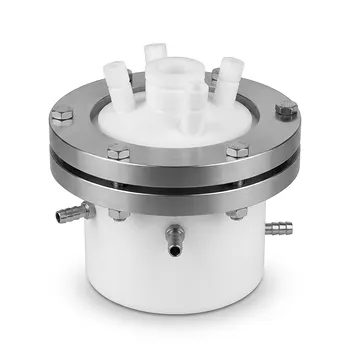
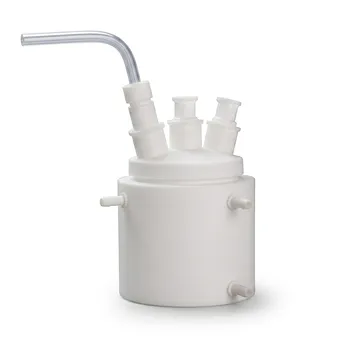
- High Temperature Corrosion Resistant Hydrothermal Synthesis Reactor with TFM Inner Liner and Straight Cylinder Design
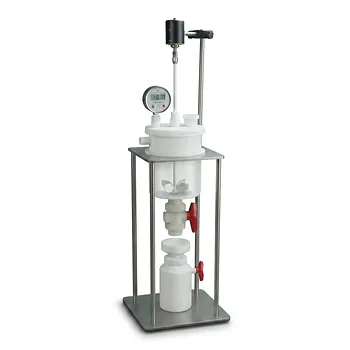
- High Pressure Custom TFM Reactor Stainless Steel Outer Vessel PTFE Inner Cup for Corrosive Synthesis
- PTFE Lined High Pressure Digestion Vessel 50ml High Temperature Hydrothermal Synthesis Tank
- High Temperature PTFE Reaction Flask 1000ml Single Neck Round and Flat Bottom Laboratory Bottle
- Custom TFM Reaction Vessel with Stainless Steel Jacket and PTFE Inner Cup for High Corrosion Resistance
People Also Ask
- What is the role of a corrosion-resistant reactor in the synthesis of lignin-based carbon dots? Ensure Maximum Purity
- What are the technical advantages of using hydrothermal synthesis reactors for advanced electronic & optical nanomaterials?
- How does a hydrothermal synthesis reactor facilitate the production of crystalline materials with tailored morphologies? Precision Crystal Growth
- Why is the sealing reliability of a hydrothermal synthesis reactor critical for 24-hour cycles? Ensure Nano-Precision
- What role do hydrothermal synthesis reactors play in CQD preparation? Achieve High-Purity Nanomaterial Synthesis