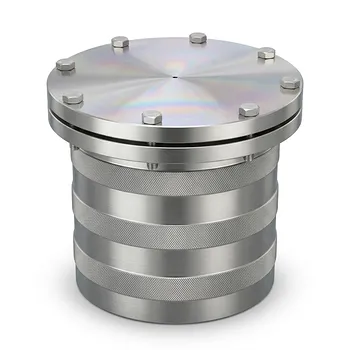
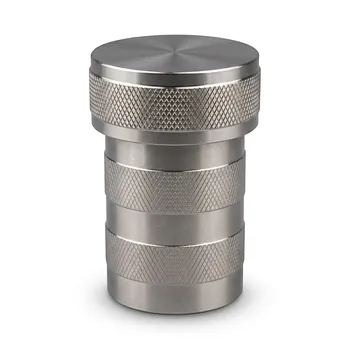
Stainless steel high-pressure reactors facilitate the synthesis of CuCo2S4@Co–V–O–F nanocatalysts by creating a subcritical hydrothermal reaction environment. This environment is achieved through sealed heating, which generates the high-temperature and high-pressure conditions necessary to significantly increase the diffusion rates and chemical reactivity of the reactant molecules.
Core Takeaway: The use of sealed high-pressure reactors transforms the reaction kinetics, enabling precise heteroepitaxial growth of high-valence vanadium and cobalt species onto a CuCo2S4 matrix to form uniform core-shell or nanowire structures.
The Mechanics of Subcritical Hydrothermal Environments
Achieving Subcriticality through Sealed Heating
The primary function of the stainless steel reactor is to provide a sealed, high-pressure environment that prevents the escape of vapors during heating. By containing the reaction mixture, the system reaches a subcritical state, where the liquid properties are altered to enhance its solvent power.
Accelerating Molecular Diffusion and Reactivity
Under high-pressure conditions, the diffusion rates of reactant molecules increase dramatically compared to standard atmospheric conditions. This accelerated movement allows the high-valence vanadium (V) and cobalt (Co) species to interact more frequently and energetically with the catalyst matrix.
Facilitating Decomposition and Crystallization
Consistent with hydrothermal principles, these reactors provide the thermal energy required for the decomposition of precursor salts. This ensures that the metallic species are liberated and ready to crystallize into the desired nanostructures on the surface of the substrate.
Impact on Nanostructure Morphology
Precision Heteroepitaxial Growth
The high-pressure environment is critical for precise heteroepitaxial growth, where the new crystalline layers (Co-V-O-F) align with the crystal lattice of the CuCo2S4 matrix. This level of control is difficult to achieve in open systems where temperature and pressure fluctuations are more common.
Engineering Uniform Core-Shell Structures
By maintaining stable subcritical conditions, the reactor ensures that the growth of high-valence species occurs uniformly across the entire surface. This results in the characteristic core-shell structures or dense nanowire arrays that define high-performance CuCo2S4@Co–V–O–F nanocatalysts.
Ensuring Structural Integrity and Adhesion
High-pressure synthesis ensures that the resulting nanoparticles adhere firmly to the underlying network or matrix. This robust mechanical bond is vital for the stability of the nanocatalyst during subsequent electrochemical or industrial applications.
Understanding the Trade-offs
Pressure Limits and Vessel Fatigue
While high pressure is beneficial for synthesis, it places significant mechanical stress on the stainless steel reactor. Repeated heating and cooling cycles can lead to material fatigue, requiring regular safety inspections and limiting the maximum pressure thresholds.
Complexity of Real-Time Monitoring
The sealed nature of these reactors makes it difficult to monitor the reaction in real-time. Because the system must remain closed to maintain subcritical conditions, researchers must rely on post-reaction analysis rather than in-situ adjustments.
Scalability and Safety Constraints
Scaling hydrothermal processes from laboratory reactors to industrial production introduces safety risks and thermal gradient challenges. Maintaining uniform temperature and pressure across a larger volume is technically demanding and energy-intensive.
Optimizing Your Hydrothermal Synthesis
To successfully implement a second hydrothermal step for complex nanocatalysts, consider your specific structural requirements and safety protocols.
- If your primary focus is precise morphology control: Ensure the reactor remains perfectly sealed to maintain constant subcritical pressure, as even minor leaks will disrupt the heteroepitaxial growth.
- If your primary focus is material durability: Prioritize a slower cooling phase post-reaction to prevent thermal shock and ensure the high-valence species adhere firmly to the CuCo2S4 matrix.
- If your primary focus is experimental safety: Regularly calibrate pressure gauges and inspect the internal lining of the stainless steel reactor for corrosion caused by high-valence precursors.
By mastering the subcritical environment provided by high-pressure reactors, you can achieve the molecular precision necessary to engineer next-generation nanocatalysts.
Summary Table:
| Condition | Physical Mechanism | Impact on Nanocatalyst |
|---|---|---|
| Subcritical State | Sealed heating prevents vapor escape | Enhances solvent power and chemical reactivity |
| High Pressure | Compressed reaction environment | Accelerates molecular diffusion and heteroepitaxial growth |
| Thermal Energy | Consistent heat distribution | Drives precursor decomposition and uniform crystallization |
| Sealed System | Constant volume maintenance | Ensures core-shell structural integrity and adhesion |
Elevate Your Hydrothermal Research with KINTEK
Precision in nanocatalyst synthesis requires equipment that can withstand the rigors of subcritical environments. At KINTEK, we specialize in high-performance fluoropolymer solutions and custom laboratory hardware tailored for advanced material science.
From high-purity PFA/PTFE liners for hydrothermal synthesis and microwave digestion vessels to custom CNC-machined components and comprehensive fluid transfer systems (tubing, valves, and fittings), we provide the tools necessary for molecular-level precision. Whether you need standard labware like beakers and reagent bottles or bespoke reaction apparatus like custom electrochemical cells and battery testing fixtures, KINTEK’s end-to-end fabrication ensures an absolute focus on high-performance materials.
Ready to optimize your lab’s synthesis capabilities? Contact us today to discuss how our custom fluoropolymer components and bespoke laboratory setups can support your next breakthrough!
References
- Boyao Zhang, Fu‐Fa Wu. Rapidly reconstructed CuCo<sub>2</sub>S<sub>4</sub>@Co–V–O–F nanocatalysts for efficient and stable overall water splitting in alkaline and seawater electrolysis. DOI: 10.1039/d5ra03052h
This article is also based on technical information from Kintek Knowledge Base .
Related Products
- High Pressure Custom TFM Reactor Stainless Steel Outer Vessel PTFE Inner Cup for Corrosive Synthesis
- Custom TFM Reaction Vessel with Stainless Steel Jacket and PTFE Inner Cup for High Corrosion Resistance
- High Temperature Corrosion Resistant Hydrothermal Synthesis Reactor with TFM Inner Liner and Straight Cylinder Design
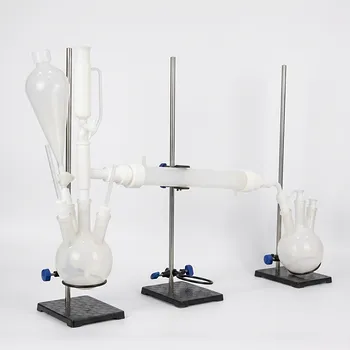
- High Purity PFA Constant Pressure Condensation Reaction System Acid Resistant High Temperature Customizable Teflon Labware
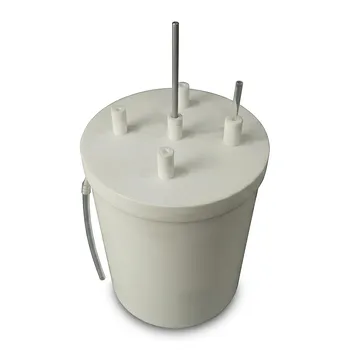
- PTFE 10L Reaction Vessel with Stirring Paddle Customizable Corrosion Resistant High Temperature Reactor for Biopharmaceutical and Chemical Processing
People Also Ask
- Why is a PTFE-lined reactor required for Mn2O3 synthesis? Achieve High Purity & Corrosion Resistance
- What is the technical value of 180 bar pressure for MgO nanostructures? Unlock Superior Crystallinity and Morphology
- What are the technical advantages of using high-pressure PTFE reaction vessels during metal digestion? Expert Insights.
- How does the regulation of initial pressure within a high-pressure reaction system affect the production of MIL-100(Fe)?
- Why is a high-pressure reactor necessary for the esterification reaction between oleic acid and methanol at 150°C? Guide