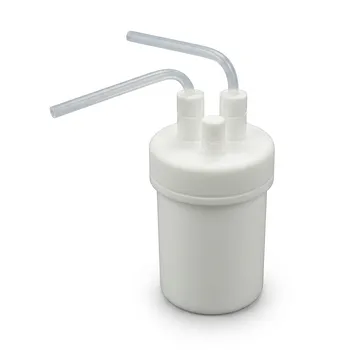
The high-pressure hydrothermal synthesis reactor serves as the essential vessel for enabling deep-level ion exchange in $Ru_xTi_yO_z$ catalysts. By creating a sealed environment that reaches temperatures between 120°C and 160°C, the reactor significantly enhances the diffusion capabilities of the solvent. This allows ruthenium (Ru) ions to effectively penetrate the layered structure of the sodium titanate ($Na_2Ti_3O_7$) precursor, successfully replacing sodium ions to create a highly dispersed active phase.
Core Takeaway: The reactor acts as a catalyst for the physical process of ion exchange, using high pressure and temperature to overcome the diffusion barriers of layered materials. This ensures that active metal components are integrated into the crystalline structure rather than merely deposited on the surface.
Accelerating Ion Diffusion and Penetration
Overcoming Structural Resistance
In standard conditions, the layered structure of sodium titanate ($Na_2Ti_3O_7$) can be difficult for larger metal ions to penetrate deeply. The high-pressure environment within the reactor increases the kinetic energy of the ruthenium ions and the permeability of the solvent. This enables the Ru ions to migrate into the internal channels of the precursor, ensuring a thorough ion-exchange process throughout the entire material.
Enhancing Solvent Solvating Power
Under the hydrothermal conditions provided by the reactor, the solvent—typically water or an aqueous solution—approaches a subcritical state. This state reduces the viscosity of the fluid and increases the solubility of the metal precursors. These changes are vital for maintaining a consistent concentration of Ru ions at the interface where the exchange with sodium ions occurs.
Achieving High Dispersion and Structural Integrity
Preventing Component Segregation
Unlike traditional impregnation methods where metal particles might aggregate on the surface, the hydrothermal ion-exchange process promotes atomic-level dispersion. The controlled pressure environment ensures that ruthenium is incorporated uniformly within the titanium-oxygen framework. This uniform distribution is critical for the final catalyst's performance, as it maximizes the available active sites for chemical reactions.
Maintaining Phase Purity
The reactor provides the stable thermal conditions necessary to maintain the desired crystalline phase of the titanium matrix. By keeping the system sealed, the reactor prevents the loss of volatile components and maintains the precise stoichiometry required for $Ru_xTi_yO_z$. This results in a more stable catalyst that resists deactivation during high-temperature applications.
Role of Reactor Design in Process Control
Chemical Resistance and Purity
High-pressure reactors used for these syntheses often utilize PTFE (Teflon) or PFA liners. These liners are critical because they resist corrosion from the precursor solutions, which can often be acidic or strongly alkaline. By preventing the leaching of impurity ions from the reactor walls, the liners ensure the high purity of the synthesized $Ru_xTi_yO_z$ catalyst.
Safety and Pressure Regulation
The sealed nature of the reactor allows the internal pressure to rise naturally as the temperature increases, creating a "self-pressurizing" system. This pressure is what forces the liquid phase into the microscopic pores and layers of the solid precursor. Modern reactors include safety release valves and precise temperature controls to manage the high energy stored within the vessel during the hours-long synthesis process.
Understanding the Trade-offs
Kinetic Limits vs. Structural Damage
While higher temperatures and pressures accelerate the ion-exchange process, exceeding the 160°C threshold can lead to unintended consequences. Excessive energy may cause the layered titanate structure to collapse or trigger the rapid growth of large $RuO_2$ crystals, reducing the catalyst's overall surface area.
Complexity and Scalability
Hydrothermal synthesis is significantly more complex than simple precipitation or ambient-pressure methods. The need for specialized high-pressure equipment increases capital costs and limits the batch size compared to open-air manufacturing. Furthermore, the "black box" nature of a sealed reactor makes it difficult to monitor the progress of the ion exchange in real-time.
How to Apply This to Your Project
Recommendations for Catalyst Synthesis
To achieve the best results when using a high-pressure reactor for $Ru_xTi_yO_z$ preparation, consider your specific performance targets:
- If your primary focus is Maximum Catalytic Activity: Prioritize the 140°C–160°C range to ensure the deepest possible Ru ion penetration and the highest dispersion of active sites.
- If your primary focus is Structural Stability: Lean toward the lower end of the temperature scale (120°C) to preserve the layered morphology of the titanate precursor while still enabling ion exchange.
- If your primary focus is Material Purity: Ensure the use of high-quality PTFE liners and high-purity precursors to prevent the incorporation of sodium or transition metal impurities during the long dwell times.
The high-pressure reactor is ultimately the tool that transforms a simple mixture into a sophisticated, nanostructured catalyst by leveraging the unique physics of hydrothermal fluids.
Summary Table:
| Feature | Impact on Ion Exchange Process | Benefit to Ru_xTi_yO_z Catalyst |
|---|---|---|
| High Pressure | Forces solvent/ions into layered precursors | Deep penetration & atomic-level dispersion |
| Temp (120-160°C) | Increases kinetic energy & reduces viscosity | Accelerated diffusion; overcomes structural resistance |
| PTFE/PFA Liners | Provides chemical resistance & prevents leaching | High phase purity & absence of impurities |
| Sealed System | Prevents loss of volatile components | Maintains precise stoichiometry & phase stability |
Maximize Your Catalyst Performance with KINTEK
Precise hydrothermal synthesis requires equipment that can withstand extreme chemical environments without compromising purity. KINTEK specializes in high-performance fluoropolymer solutions tailored for advanced material research. From hydrothermal synthesis liners and microwave digestion vessels to high-purity trace analysis instruments and bespoke reaction apparatus, we manufacture virtually all laboratory supplies from premium PTFE and PFA.
Whether you need standard labware like beakers and crucibles or complex, custom-machined components such as electrochemical cells and fluid transfer valves, our end-to-end CNC fabrication ensures your setup meets the most rigorous standards. Don't let equipment limitations hinder your ion-exchange efficiency.
Contact KINTEK today to build your custom high-purity laboratory setup!
References
- Hyojin Kim, Hiromi Yamashita. Layered Na2Ti3O7-supported Ru catalyst for ambient CO2 methanation. DOI: 10.1038/s41467-025-57954-9
This article is also based on technical information from Kintek Knowledge Base .
Related Products
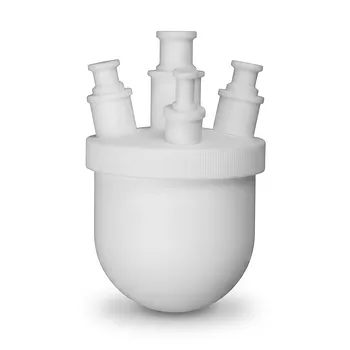
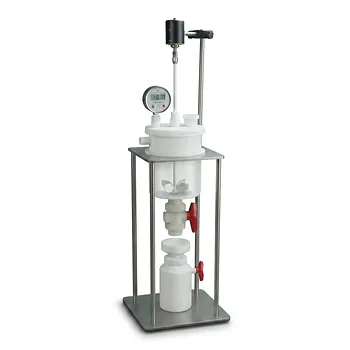
- High Temperature Corrosion Resistant Hydrothermal Synthesis Reactor with TFM Inner Liner and Straight Cylinder Design
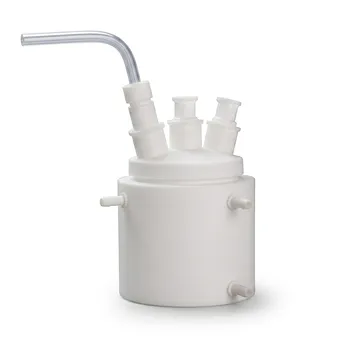
- High Pressure Custom TFM Reactor Stainless Steel Outer Vessel PTFE Inner Cup for Corrosive Synthesis
- PTFE Lined High Pressure Digestion Vessel 50ml High Temperature Hydrothermal Synthesis Tank
- High Temperature PTFE Reaction Flask 1000ml Single Neck Round and Flat Bottom Laboratory Bottle
- Custom TFM Reaction Vessel with Stainless Steel Jacket and PTFE Inner Cup for High Corrosion Resistance
People Also Ask
- What is the role of a corrosion-resistant reactor in the synthesis of lignin-based carbon dots? Ensure Maximum Purity
- What are the technical advantages of using hydrothermal synthesis reactors for advanced electronic & optical nanomaterials?
- How does a hydrothermal synthesis reactor facilitate the production of crystalline materials with tailored morphologies? Precision Crystal Growth
- Why is the sealing reliability of a hydrothermal synthesis reactor critical for 24-hour cycles? Ensure Nano-Precision
- What role do hydrothermal synthesis reactors play in CQD preparation? Achieve High-Purity Nanomaterial Synthesis