Maintaining structural integrity and purity is the primary reason why high chemical stability is mandatory for the synthesis of copper oxide (CuO) nanoflowers. In the harsh alkaline environments required for this process, unstable reaction vessels can leach trace impurities or react with the solution, which directly disrupts the delicate assembly of stacked nanosheets into hierarchical nanoflower architectures.
Core Takeaway: A chemically stable vessel ensures that the growth of CuO nanoflowers is dictated solely by the intended reactants, preventing unintended ion interference that would otherwise compromise the material's morphology, purity, and porous structure.
Maintaining the Chemical Microenvironment
Preservation of Alkaline Stability
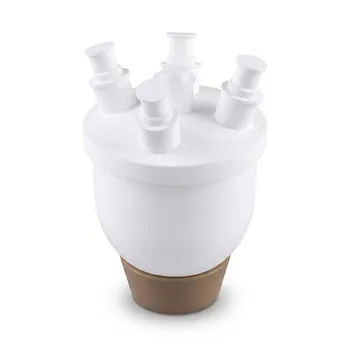
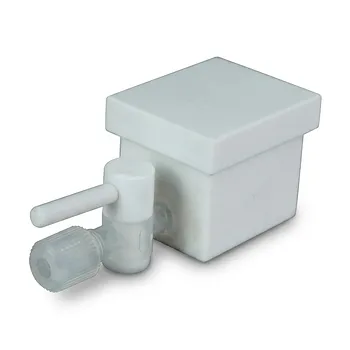
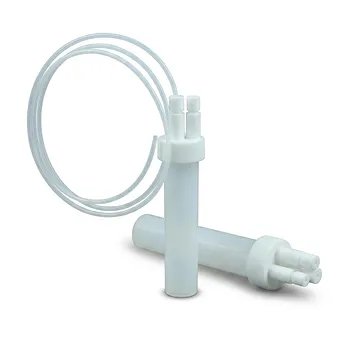
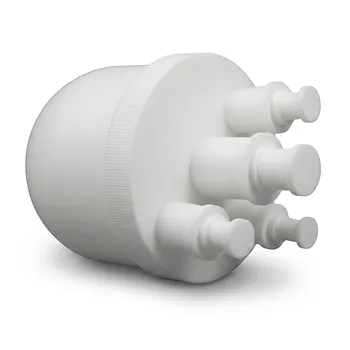
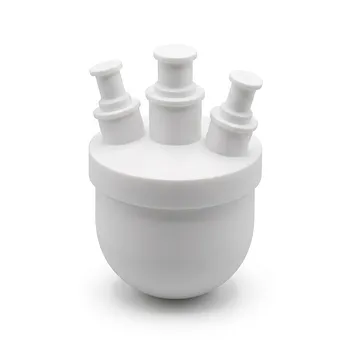
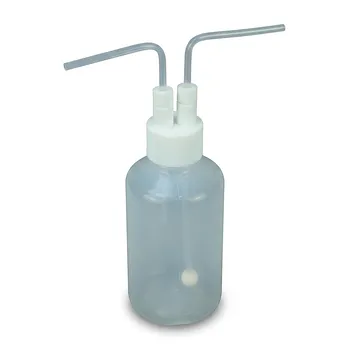
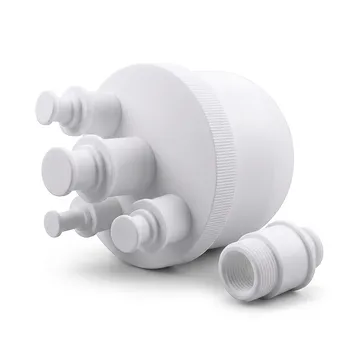
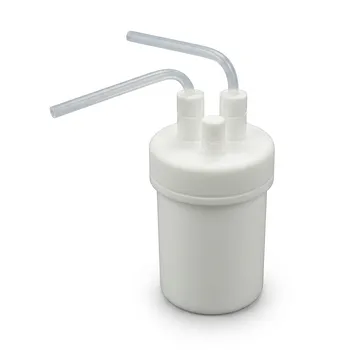
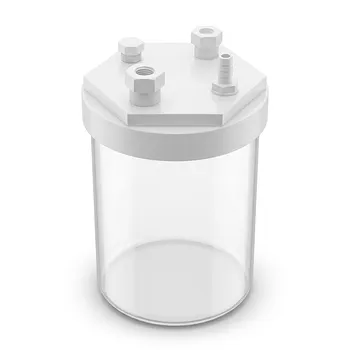
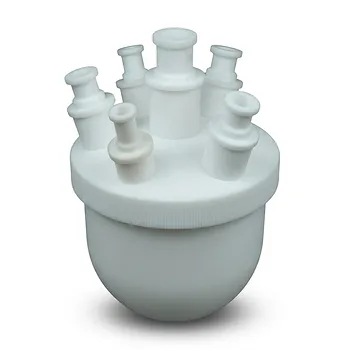
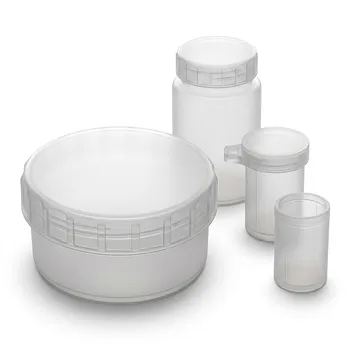
The synthesis of CuO nanoflowers typically utilizes alkaline ammonium persulfate solutions. A stable vessel, such as one made from PTFE (Polytetrafluoroethylene), is required to maintain a constant pH and chemical concentration throughout the growth cycle.
Thermal and Sealing Consistency
Beyond chemical resistance, these vessels provide the excellent sealing properties necessary to maintain a steady reaction temperature. Fluctuations in temperature or the evaporation of volatile components can lead to inconsistent growth rates and non-uniform nanoparticle sizes.
Preventing Contamination and Ion Leaching
The Risk of Impurity Leaching
Standard laboratory glassware can be susceptible to alkaline etching, where the high pH environment causes the container walls to release silicon or other metal ions into the solution. These foreign ions act as "chemical noise" that interferes with the intended reaction pathway.
Ensuring Precise Stoichiometry
High-purity materials like PTFE or PFA are chemically inert, meaning they do not participate in the reaction. This inertness ensures that the stoichiometric ratio of the copper ions and reactants remains exact, allowing for the predictable formation of the hierarchical porous metallic structure.
Controlling Morphological Evolution
Precision in Nanosheet Stacking
The "nanoflower" shape is a complex hierarchical structure formed by the precise stacking of individual nanosheets. Even trace amounts of leached impurities from a reaction vessel can adsorb onto the crystal facets of the copper oxide, blocking growth in certain directions and resulting in malformed particles.
Surface Smoothness and Adhesion
High-performance fluoropolymers offer extreme surface smoothness, which prevents metal ions from adhering to the vessel walls. This ensures that the entire precursor yield stays in the solution, promoting the growth of uniform, free-standing nanoflowers rather than irregular crusts on the container surface.
Understanding the Trade-offs
Material Costs vs. Results
While high-performance materials like PTFE or PFA offer superior results, they are significantly more expensive than standard borosilicate glass. For basic experiments where morphology is not critical, the cost may seem prohibitive; however, for reproducible nanomaterial synthesis, they are an essential investment.
Potential for Thermal Limitations
Although chemically inert, fluoropolymers have lower thermal conductivity than metal or glass. Users must account for a slight lag in heat transfer when heating the reaction bath to ensure the internal solution reaches the target temperature required for copper oxide precipitation.
How to Optimize Your Synthesis Environment
Strategic Material Selection
- If your primary focus is maximum purity and morphology control: Utilize PTFE or PFA reaction vessels exclusively to eliminate the risk of ion leaching and ensure the formation of hierarchical porous structures.
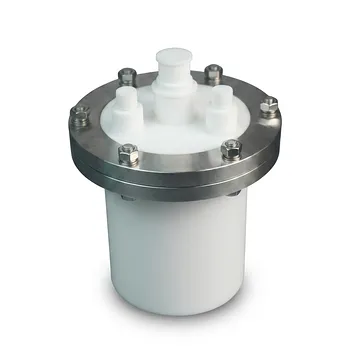
- If your primary focus is high-pressure synthesis: Ensure your chemically stable vessel is housed within a stainless steel autoclave to provide the necessary mechanical strength while maintaining chemical inertness.
- If your primary focus is cost-effective screening: Use high-quality glass for initial tests, but be aware that alkaline etching will likely alter the final nanostructure and introduce impurities.
Choosing the right reaction vessel transforms a volatile chemical process into a controlled environment capable of producing high-performance CuO nanoflowers.
Summary Table:
| Key Requirement | Importance in CuO Synthesis | Recommended Materials |
|---|---|---|
| Chemical Inertness | Prevents ion leaching and impurity interference | PTFE, PFA |
| pH Consistency | Maintains stable alkaline ammonium persulfate levels | PTFE, PFA |
| Surface Finish | Promotes uniform growth and prevents wall adhesion | High-purity Fluoropolymers |
| Thermal Stability | Maintains steady reaction temperatures for morphology | PTFE, PFA |
Elevate Your Material Synthesis with KINTEK Precision
Achieve unparalleled purity and morphological control in your chemical bath growth processes with KINTEK. We specialize in high-performance fluoropolymer solutions designed for the most demanding laboratory environments.
From everyday basic labware like PTFE beakers, crucibles, and reagent bottles to advanced components such as custom electrochemical cells, hydrothermal synthesis liners, and microwave digestion vessels, KINTEK provides the chemical stability you need. Our end-to-end custom CNC fabrication allows us to deliver everything from complex, non-standard machined parts to high-volume orders of PFA tubing, valves, and filtration tools.
Don't let impurity leaching compromise your research. Ensure a controlled, inert environment with our expert-crafted fluoropolymer supplies.
Ready to optimize your lab? Contact KINTEK today to discuss your custom fabrication needs and high-volume orders!
References
- Virgil Andrei, Peidong Yang. Perovskite-driven solar C2 hydrocarbon synthesis from CO2. DOI: 10.1038/s41929-025-01292-y
This article is also based on technical information from Kintek Knowledge Base .
Related Products
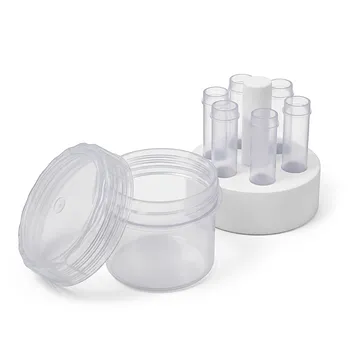
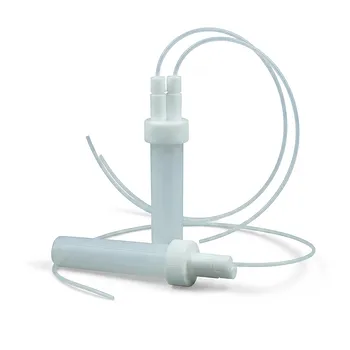
- High Purity Corrosion Resistant PFA Reaction Vessel with PTFE Holder and Integrated Sampling Tube for Trace Analysis
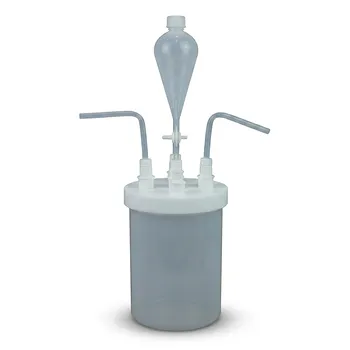
- High Purity PTFE Reaction Vessel with Electric Stirring System and Customizable 5L Tank including Buchner Funnel Filtration Assembly
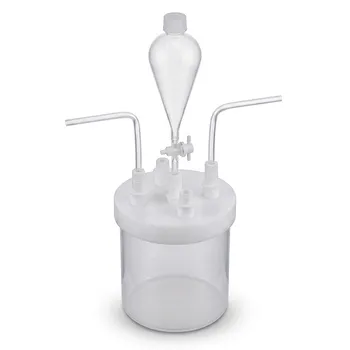
- High Purity PTFE Corrosion Resistant Reaction Vessel with Luer Fittings and Caps for Trace Analysis
- High Purity PFA Reaction Vessel for Biopharmaceutical Synthesis and Corrosive Chemical Fluid Handling with Customizable Tube Fittings
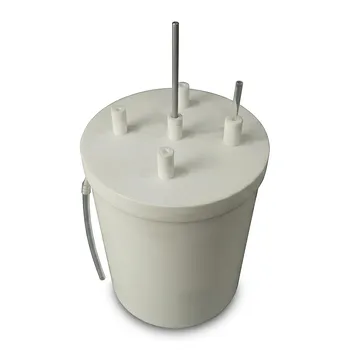
- PTFE 10L Reaction Vessel with Stirring Paddle Customizable Corrosion Resistant High Temperature Reactor for Biopharmaceutical and Chemical Processing
People Also Ask
- Why are well-sealed reaction vessels necessary for superacid-promoted Friedel-Crafts polycondensation? Optimize Synthesis
- What is the role of high chemical inertness reaction vessels in the organic synthesis of acylhydrazone ligands? | Guide
- Why are PTFE or PFA reaction vessels required for the selective etching process of MXene using hydrofluoric acid (HF)?
- Why are the reaction vessel and steam environment critical for alpha-FeOOH conversion? Achieve Superior Phase Purity.
- How do PTFE or PFA vessels affect Fe@Eu nanoparticle purity? Prevent Contamination for Superior Optical Performance