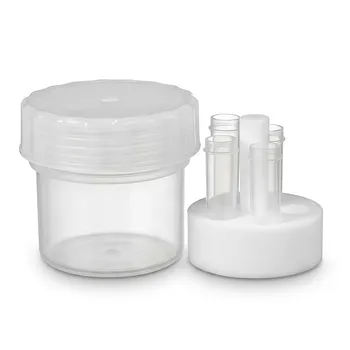
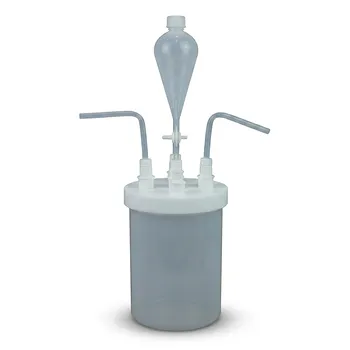
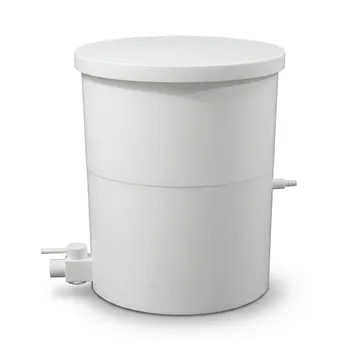
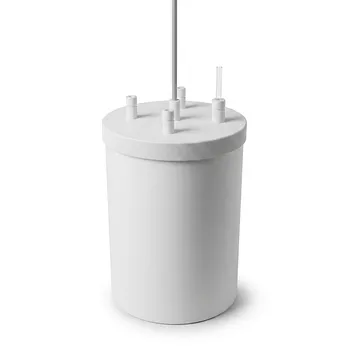
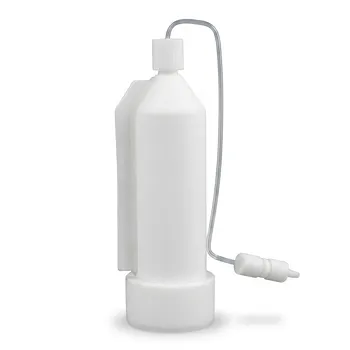
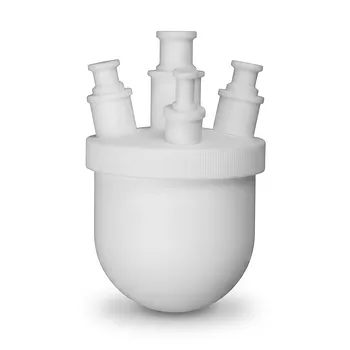
Selecting the right reaction vessel is the critical factor in controlling the morphology of NiFe-LDH. To achieve high-quality growth at 80°C, the vessel must be constructed from corrosion-resistant materials like PTFE or PFA to prevent contamination and withstand the thermal load. Simultaneously, absolute sealing integrity is required to prevent water evaporation, which stabilizes the solute concentration and ensures the formation of highly active, vertically oriented nanosheet structures.
The synthesis of NiFe-LDH nanoarrays relies on a "steady-state" chemical environment; superior vessel materials and airtight sealing prevent the concentration drifts and thermal fluctuations that would otherwise lead to disordered growth.
The Impact of Material Selection
Corrosion Resistance and Chemical Inertness
The reaction involves a nickel sulfate solution and oxygen-driven corrosion of an iron layer, creating a chemically active environment. Using vessels with fluoropolymer linings (PTFE or PFA) is essential because these materials do not react with the precursor solution or leach impurities.
If the vessel material is not inert, secondary reactions can occur, which deplete the nickel ions or introduce foreign elements into the LDH lattice.
Thermal Stability at Elevated Temperatures
At 80 degrees Celsius, standard plastics may soften or deform, leading to seal failure or uneven heat distribution. High-temperature stable materials ensure the vessel maintains its structural integrity throughout the conversion phase.
Consistent heat transfer through the vessel walls is necessary to drive the uniform oriented growth of the nanoarrays across the entire sacrificial layer surface.
The Role of Sealing Integrity
Prevention of Concentration Fluctuations
As the reaction proceeds at 80°C, water naturally seeks to evaporate. A poor seal allows water vapor to escape, which increases the concentration of the nickel sulfate solution over time.
This fluctuation in concentration alters the reaction kinetics, often leading to irregular crystal growth rather than the desired organized structures.
Maintaining a Stable Microenvironment
A hermetically sealed environment traps the necessary pressure and heat within the bottle. This stability is the primary driver for the oriented growth of NiFe-LDH nanoarrays.
When the environment is stable, the LDH crystals grow perpendicular to the substrate, forming a highly active vertical nanosheet structure that maximizes surface area.
Understanding the Trade-offs
Pressure Accumulation and Safety
While a perfect seal is necessary for concentration stability, it also leads to internal pressure buildup at 80°C. Researchers must balance the need for a tight seal with the pressure limits of the vessel to avoid mechanical failure or "burping" of the lid.
Thermal Lag in Linings
Thick fluoropolymer linings like PTFE are excellent insulators. This can create a thermal lag, where the internal solution takes longer to reach the target 80°C than the external heating element suggests.
If not accounted for, this lag can result in a shorter effective reaction time and incomplete conversion of the sacrificial iron layer.
How to Optimize Your Synthesis Setup
To achieve the best results when growing NiFe-LDH nanoarrays, tailor your vessel choice to your specific experimental priority:
- If your primary focus is maximum catalytic activity: Utilize PFA-lined vessels with reinforced screw caps to ensure a perfect seal, fostering the growth of dense, vertical nanosheets.
- If your primary focus is experimental reproducibility: Standardize the wall thickness of your PTFE liners and use a calibrated oven to ensure the thermal ramp-up is identical across all batches.
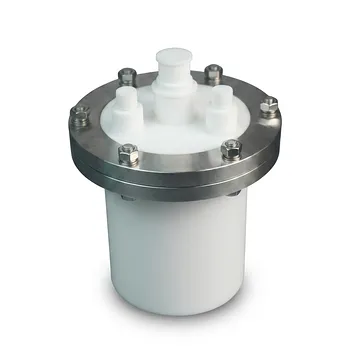
- If your primary focus is safety during long-duration reactions: Use pressure-rated hydrothermal autoclaves with PTFE inserts, which provide the benefits of sealing while safely containing internal pressures.
By mastering the interface between the reaction chemistry and the physical container, you ensure the precise, repeatable fabrication of high-performance nanomaterials.
Summary Table:
| Factor | Impact on NiFe-LDH Growth | Recommended Solution |
|---|---|---|
| Material Choice | Prevents contamination and secondary reactions; ensures chemical inertness. | High-purity PTFE or PFA-lined vessels. |
| Sealing Integrity | Prevents water evaporation and stabilizes solute concentration for vertical nanosheets. | Reinforced screw caps or hermetic seals. |
| Thermal Stability | Maintains vessel integrity at 80°C for uniform heat distribution and growth. | High-performance fluoropolymer materials. |
| Pressure Control | Manages internal buildup while maintaining a stable microenvironment. | Hydrothermal autoclaves with PTFE inserts. |
Maximize Your Synthesis Precision with KINTEK
Achieve unmatched control over your NiFe-LDH morphology with KINTEK’s specialized fluoropolymer solutions. We understand that the stability of your chemical environment depends on the quality of your vessels. From everyday basic labware like beakers, reagent bottles, and centrifuge tubes to advanced hydrothermal synthesis liners, microwave digestion vessels, and custom electrochemical cells, we manufacture virtually all laboratory supplies crafted from premium PTFE and PFA.
Our expertise extends from high-purity trace analysis instruments and comprehensive fluid transfer components (tubing, fittings, valves) to end-to-end custom CNC fabrication for complex, non-standard machined parts. Whether you require bespoke laboratory setups or high-volume orders, KINTEK provides the high-performance materials necessary to prevent concentration drift and ensure reproducible results.
Ready to upgrade your laboratory setup? Contact us today to explore how our high-performance fluoropolymer products can enhance your research and production efficiency.
References
- Xu Zhang, Xiaoxin Zou. Substrate-adaptive sacrificial corrosion strategy enables 700 mV oxygen evolution window for enhanced seawater electrolysis. DOI: 10.1038/s41467-025-67439-4
This article is also based on technical information from Kintek Knowledge Base .
Related Products
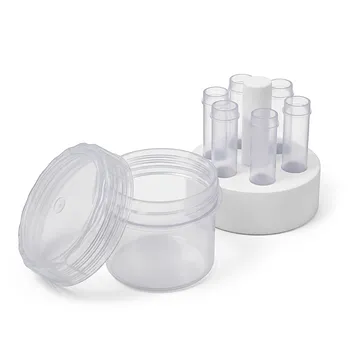
- High Purity Corrosion Resistant PFA Reaction Vessel with PTFE Holder and Integrated Sampling Tube for Trace Analysis
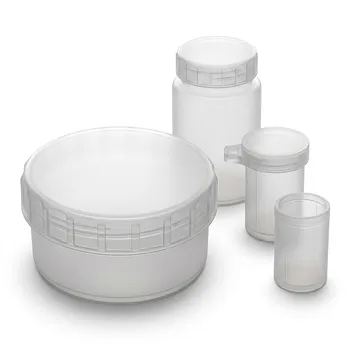
- PFA Reaction Jar Corrosion Resistant Wide Mouth PTFE Lab Bottle High Purity Chemical Vessel
- Custom PFA Reaction Bottles High Purity PTFE Reaction Vessels Corrosion Resistant Petrochemical Containers
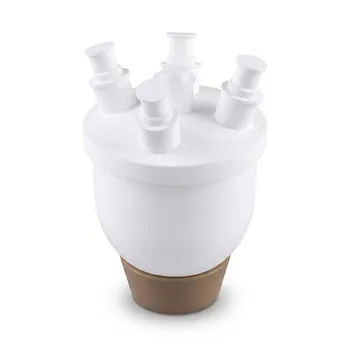
- High Performance Customizable PTFE Reaction Vessel and Corrosion Resistant Polytetrafluoroethylene Flask for Chemical Laboratory Use
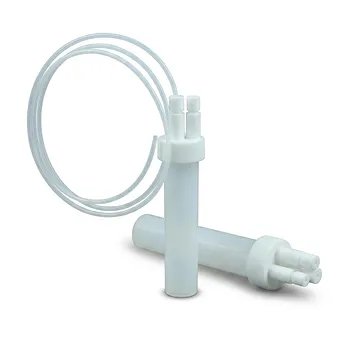
- Corrosion Resistant PTFE Support with PFA Transparent Reaction Tank and High Purity PFA Sampling Tube for Trace Analysis
People Also Ask
- Why is the choice of reaction vessel material critical during B-NiBDC synthesis? Optimize MOF Purity & Performance
- Why are corrosion-resistant vessels needed for alkaline cellulose extraction? Ensure Purity and Process Safety
- Why are well-sealed reaction vessels necessary for superacid-promoted Friedel-Crafts polycondensation? Optimize Synthesis
- Role of reaction vessels in alkali treatment for oil palm waste: Achieve High-Purity Cellulose with PTFE Vessels
- What is the role of high chemical inertness reaction vessels in the organic synthesis of acylhydrazone ligands? | Guide