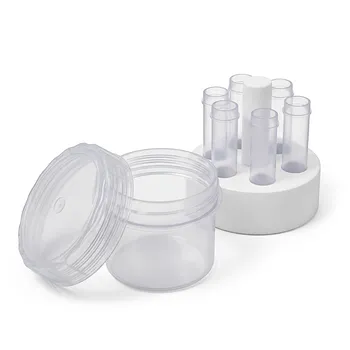
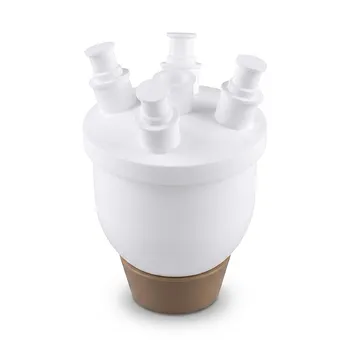
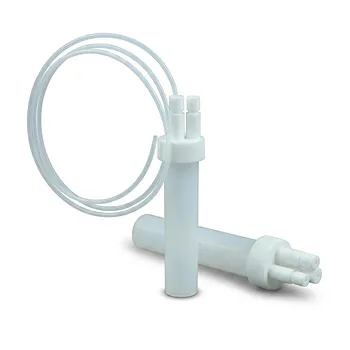
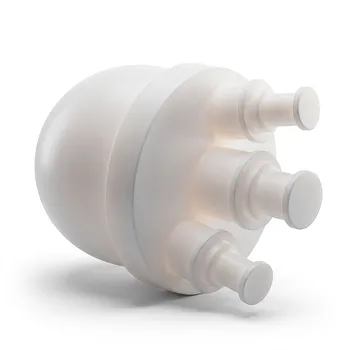
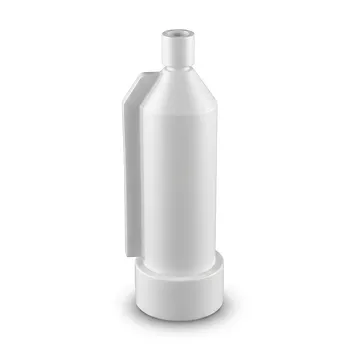
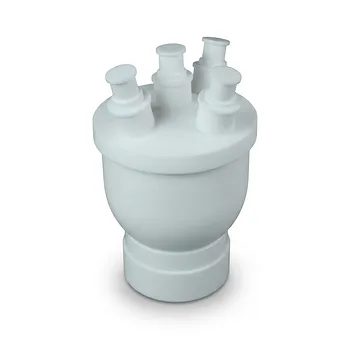
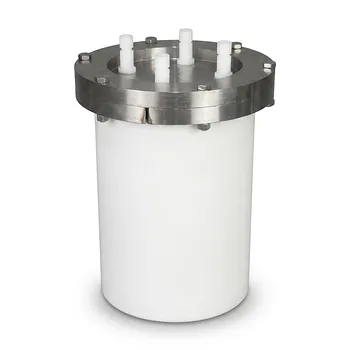
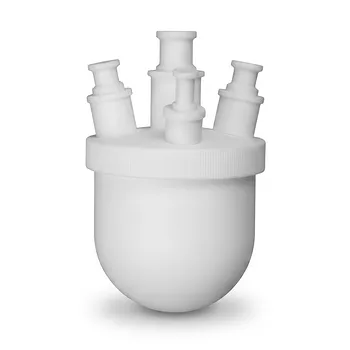
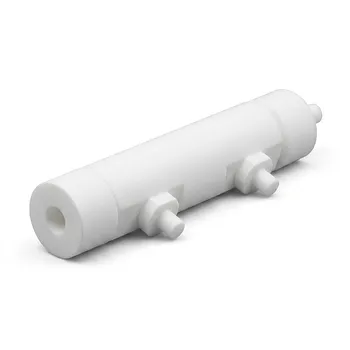
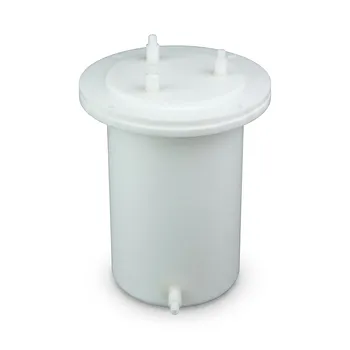
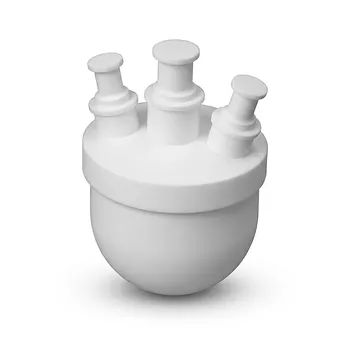
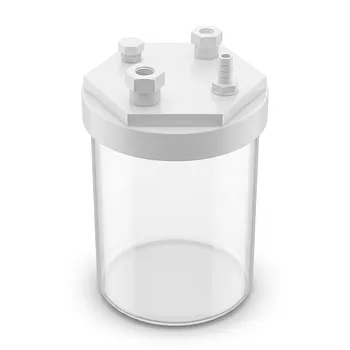
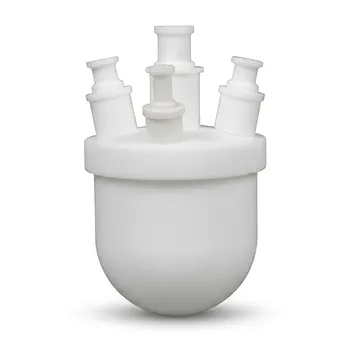
Corrosion-resistant reaction vessels serve as the critical barrier between aggressive chemical reagents and the purity of the final biological product. In the acid hydrolysis of molasses, these vessels—typically constructed from high-performance fluoropolymers like PFA or PTFE—are designed to withstand the combined stress of 5 M sulfuric acid (H2SO4) and temperatures of 60°C. Their primary function is to prevent vessel degradation while ensuring that no metal ion impurities leach into the solution, which would otherwise compromise the quality of the microalgae culture medium.
The core function of these vessels is to provide a chemically inert environment that facilitates the breakdown of complex sugars without introducing contaminants. By resisting the corrosive effects of strong acids and heat, they safeguard both the structural integrity of the process equipment and the biological viability of the resulting growth medium.
The Role of Chemical Resistance in Molasses Hydrolysis
Managing High-Concentration Acid Stress
The hydrolysis process requires the addition of 5 M sulfuric acid to break down the complex sugars found in molasses. This concentration is highly corrosive to standard industrial materials, necessitating the use of specialized corrosion-resistant linings or solid fluoropolymer tanks.
Thermal Stability at 60°C
Chemical reactions often accelerate at higher temperatures, and the 60°C environment required for molasses hydrolysis increases the rate of corrosive attack. High-performance fluoropolymers like PTFE maintain their mechanical properties and chemical inertness even under these elevated thermal conditions.
Ensuring a Stable Chemical Environment
Much like the alkali treatments used in other biomass extractions, acid hydrolysis requires a stable environment to ensure consistent results. Corrosion-resistant materials prevent the vessel itself from participating in the reaction, ensuring the acid focuses solely on the hydrolysis of complex sugars.
Safeguarding Culture Medium Purity
Preventing Metal Ion Leaching
Standard metallic vessels can release trace amounts of metal ions when exposed to strong acids. In the context of microalgae cultivation, these leached impurities can act as inhibitors or toxins that significantly reduce the efficiency of the culture.
Maintaining Medium Integrity
The use of PFA or PTFE reaction vessels ensures that the resulting medium remains pure and optimized for microalgae growth. By acting as a non-reactive boundary, these materials prevent the introduction of foreign contaminants that could skew experimental results or industrial yields.
Long-Term Process Safety
Beyond purity, corrosion resistance is a matter of operational safety. Preventing the "erosion" of the tank walls ensures that the structural integrity of the digestion tank remains intact, preventing leaks of hazardous sulfuric acid into the workspace.
Understanding the Trade-offs
Material Limitations and Cost
While fluoropolymers offer superior resistance, they are significantly more expensive than stainless steel or reinforced plastics. Engineers must balance the high initial capital expenditure against the long-term benefits of reduced maintenance and higher product purity.
Structural vs. Chemical Integrity
Some corrosion-resistant materials may lack the structural strength of heavy metals for very large-scale applications. In these cases, a common pitfall is neglecting the need for a dual-laminate construction, where a strong outer shell supports a chemically resistant inner liner.
Sensitivity to Mechanical Damage
Fluoropolymer linings, while chemically robust, are softer than metals and can be easily scratched or gouged during cleaning. Any breach in the lining can lead to rapid "under-film" corrosion of the outer tank structure, leading to catastrophic failure.
Making the Right Choice for Your Project
Selecting the appropriate reaction vessel depends heavily on the specific requirements of your microalgae species and the scale of your production.
- If your primary focus is maximum culture viability: Invest in high-purity PFA-lined vessels to virtually eliminate the risk of metal ion contamination that could inhibit sensitive microalgae strains.
- If your primary focus is industrial-scale cost efficiency: Consider PTFE-lined stainless steel tanks, which provide the structural durability needed for large volumes while maintaining a protective barrier against the sulfuric acid.
- If your primary focus is process versatility: Select vessels rated for both high-concentration acids and alkalis, allowing the equipment to be repurposed for different pre-treatment methods or cleaning cycles.
By prioritizing material inertness and thermal stability, you ensure a reliable production pipeline for high-quality microalgae culture media.
Summary Table:
| Feature | PTFE/PFA Benefit | Impact on Process |
|---|---|---|
| Chemical Resistance | Withstands 5 M Sulfuric Acid | Prevents vessel degradation and hazardous leaks |
| Contamination Control | Zero Metal Ion Leaching | Ensures high biological viability of microalgae |
| Thermal Stability | Mechanical integrity at 60°C | Enables consistent sugar breakdown without failure |
| Material Inertness | Non-reactive surface | Prevents vessel participation in the hydrolysis reaction |
Maximize Your Culture Purity with KINTEK’s High-Performance Fluoropolymer Solutions
At KINTEK, we maintain an exclusive and absolute focus on high-performance fluoropolymer materials, ensuring your sensitive processes are never compromised by contamination or corrosion. Whether you are performing acid hydrolysis for microalgae media or complex chemical synthesis, our PTFE and PFA solutions provide the chemical inertness your lab demands.
We manufacture virtually all imaginable laboratory supplies, including:
- Basic Labware: Beakers, measuring cylinders, crucibles, dishes, and reagent/wash bottles.
- Fluid Transfer & Filtration: Tubing, fittings, valves, separatory funnels, and filters.
- Advanced Apparatus: Custom electrochemical cells, battery testing fixtures, hydrothermal synthesis liners, and microwave digestion vessels.
Backed by end-to-end custom CNC fabrication, KINTEK is equipped to deliver everything from complex non-standard machined parts to high-volume orders tailored to your exact specifications. Don't let metal leaching or equipment failure hinder your research.
Contact us today to discuss your custom project and secure your laboratory's success!
References
- Adam Astiti, Eko Agus Suyono. Exploration of Lipid Profile and Wax Ester Content from Local Strain Euglena sp. IDN33 Cultivated in Mixotrophic Condition Combined with Molasses Supplementation. DOI: 10.4308/hjb.32.3.805-818
This article is also based on technical information from Kintek Knowledge Base .
Related Products
- High Purity Corrosion Resistant PFA Reaction Vessel with PTFE Holder and Integrated Sampling Tube for Trace Analysis
- High Performance Customizable PTFE Reaction Vessel and Corrosion Resistant Polytetrafluoroethylene Flask for Chemical Laboratory Use
- Custom PFA Reaction Bottles High Purity PTFE Reaction Vessels Corrosion Resistant Petrochemical Containers
- High Purity Custom PTFE Large Volume 15L Flask Corrosion Resistant Low Trace Background Fluoropolymer Reaction Vessel
- High Purity PTFE Corrosion Resistant Reaction Vessel with Luer Fittings and Caps for Trace Analysis
People Also Ask
- Why is the choice of reaction vessel material critical during B-NiBDC synthesis? Optimize MOF Purity & Performance
- How do the material choice and sealing integrity of the reaction vessel affect the growth of NiFe-LDH? Optimize Synthesis
- Why are corrosion-resistant vessels needed for alkaline cellulose extraction? Ensure Purity and Process Safety
- Why are well-sealed reaction vessels necessary for superacid-promoted Friedel-Crafts polycondensation? Optimize Synthesis
- Role of reaction vessels in alkali treatment for oil palm waste: Achieve High-Purity Cellulose with PTFE Vessels