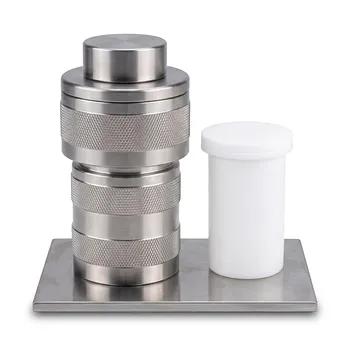
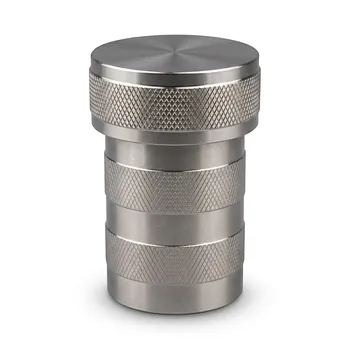
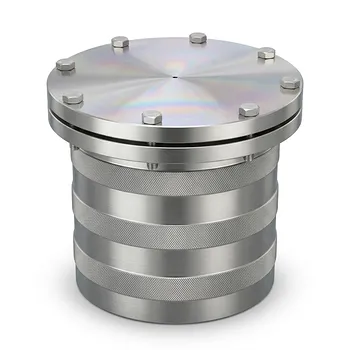
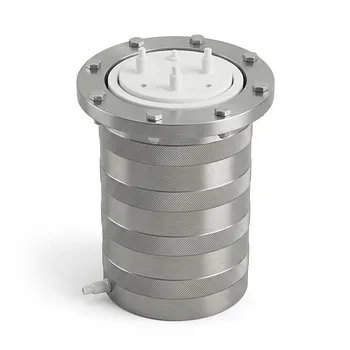
In the hydrothermal synthesis of cellulose-graphene hybrid materials, a high-pressure autoclave serves as the critical reaction vessel that creates a sealed, high-temperature, and high-pressure environment. This setup allows solvents to reach a supercritical or near-critical state under autogenous pressure, typically ranging from 120°C to 250°C, which is essential for reducing graphene oxide and bonding it to the cellulose matrix.
The autoclave provides the extreme physical conditions necessary to convert precursors into a stable hybrid structure by facilitating the reduction of graphene oxide and strengthening its chemical interface with cellulose.
Creating the Ideal Reaction Environment
Reaching the Supercritical State
The primary function of the autoclave is to maintain a sealed chamber where heating generates autogenous pressure. This pressure allows the solvent to exceed its normal boiling point while remaining in a liquid or near-critical state.
Enhancing Solvent Penetration
Under high pressure, the solvent’s ability to penetrate the cellulose matrix is significantly increased. This ensures that graphene components can effectively embed and anchor within the cellulose structure rather than just sitting on the surface.
Facilitating Dissolution and Recrystallization
The high-pressure environment accelerates the dissolution and recrystallization of precursors. This ensures that the graphene and cellulose components integrate uniformly, leading to a more consistent final product.
Chemical and Structural Transformation
Reduction of Graphene Oxide (GO)
The autoclave environment is vital for the thermal reduction of Graphene Oxide (GO) to reduced Graphene Oxide (rGO). This transformation restores the electrical conductivity of the graphene component within the hybrid material.
Strengthening Chemical Bonds
High temperatures and pressures promote the formation and repair of covalent bonds between the organic cellulose fibers and the graphene sheets. This results in a robust chemical interface that improves the material's mechanical and structural integrity.
Achieving Structural Uniformity
By providing a controlled, closed system, the autoclave ensures the purity and structural uniformity of the hybrid. This prevents contamination from the external environment and allows for the growth of well-defined morphologies without the need for post-synthesis annealing.
Understanding the Trade-offs
Temperature Limits of Liners
While autoclaves can reach high temperatures, they often utilize PTFE (Teflon) liners to prevent metal ion contamination from the stainless steel walls. These liners are typically limited to 180°C, meaning synthesis at the higher end of the 250°C range requires specialized, more expensive liner materials or direct contact with the vessel.
Pressure Safety Risks
Hydrothermal synthesis generates significant internal pressure that increases exponentially with temperature. Operating near the limits of the vessel requires precise monitoring to avoid mechanical failure or "venting" of the sealed environment.
Scalability Challenges
Batch synthesis in a high-pressure autoclave is highly effective for laboratory-scale precision but can be difficult to scale. The requirement for a sealed, pressurized vessel makes continuous production more complex compared to open-air chemical methods.
How to Apply This to Your Project
When utilizing a high-pressure autoclave for cellulose-graphene synthesis, your approach should depend on your specific material requirements:
- If your primary focus is maximum electrical conductivity: Prioritize temperatures at the higher end of the range (above 200°C) to ensure the most complete reduction of GO to rGO.
- If your primary focus is material purity: Use a high-purity PTFE liner and keep temperatures below 180°C to eliminate any risk of metal ion contamination from the autoclave walls.
- If your primary focus is structural bonding: Ensure the reaction time is sufficient for autogenous pressure to facilitate deep solvent penetration into the cellulose matrix.
The high-pressure autoclave is the indispensable engine of hydrothermal synthesis, transforming simple precursors into sophisticated, high-performance hybrid materials.
Summary Table:
| Key Function | Impact on Hybrid Material | Operational Consideration |
|---|---|---|
| Supercritical State | Enhances solvent penetration into cellulose matrix | Requires autogenous pressure control |
| GO Reduction | Restores electrical conductivity (GO to rGO) | Optimal above 200°C for max reduction |
| Chemical Bonding | Strengthens covalent bonds & structural integrity | Sufficient reaction time required |
| System Sealing | Ensures purity and structural uniformity | PTFE liner limits typically <180°C |
Elevate Your Synthesis Precision with KINTEK
Empower your material science research with KINTEK’s industry-leading fluoropolymer labware. From high-purity PTFE/PFA hydrothermal synthesis liners and microwave digestion vessels to specialized sample prep tools, we provide the high-performance equipment essential for successful cellulose-graphene hybrid development.
Whether you need everyday lab essentials like beakers, crucibles, and filtration tools, or custom-fabricated CNC parts and complex fluid transfer components, KINTEK offers end-to-end solutions tailored to your specific lab requirements. Our absolute focus on fluoropolymer performance ensures your experiments remain contamination-free and repeatable.
Ready to optimize your lab setup? Contact KINTEK today for bespoke solutions and high-volume laboratory supplies!
References
- Ghazaleh Ramezani, Ion Stiharu. Novel In-Situ Synthesis Techniques for Cellulose-Graphene Hybrids: Enhancing Electrical Conductivity for Energy Storage Applications. DOI: 10.21926/rpm.2501004
This article is also based on technical information from Kintek Knowledge Base .
Related Products
- PTFE Lined High Pressure Digestion Vessel 50ml High Temperature Hydrothermal Synthesis Tank
- High Temperature Corrosion Resistant Hydrothermal Synthesis Reactor with TFM Inner Liner and Straight Cylinder Design
- Custom TFM Reaction Vessel with Stainless Steel Jacket and PTFE Inner Cup for High Corrosion Resistance
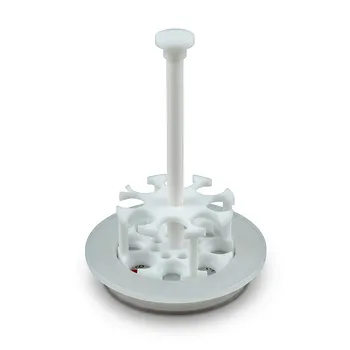
- High Performance TFM Microwave Digestion Vessel Rack 15 Position Customizable Sample Preparation Support
- High Pressure PTFE Digestion Vessel Inner Cup Holder Custom Corrosion Resistant Low Background Teflon
People Also Ask
- What are the benefits of using a PTFE-lined vessel for carbon-sulfur cathode treatment? Maximize Purity & Performance
- Why are PTFE-lined pressure digestion vessels required for the preparation of Ag/CeO2 catalysts? Purity & Performance
- What safety features are typically incorporated into high-pressure PTFE digestion vessel designs? Ensure Lab Safety
- What is the function of high-pressure PTFE digestion vessels in mineral analysis? Optimize Sample Mineralization
- What is the function of PTFE lined high-pressure vessels in g-C3N4 synthesis? Achieve High-Purity Material Growth