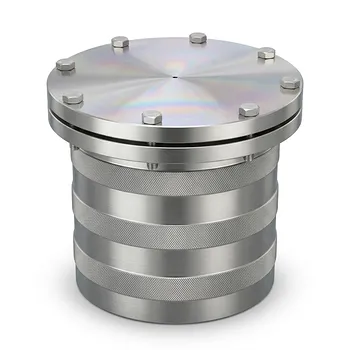
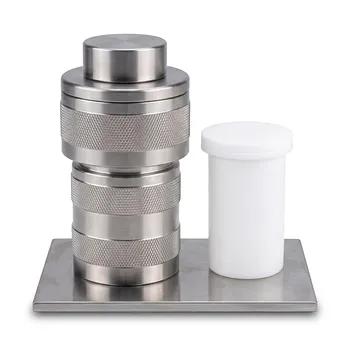
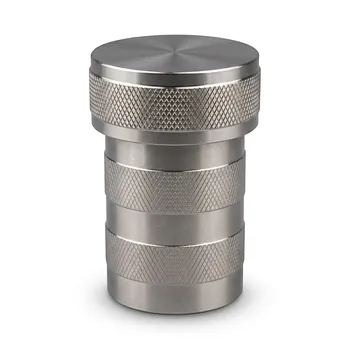
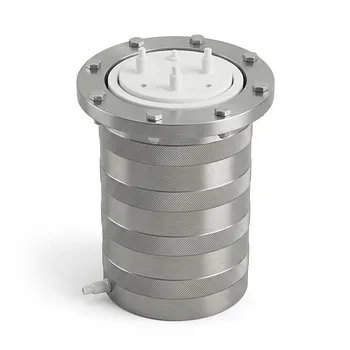
The synthesis of Bismuth Tungstate ($Bi_2WO_6$) requires a PTFE-lined stainless steel autoclave to provide a controlled, high-pressure, and chemically inert environment. This specific hardware configuration fulfills the technical necessity for temperatures typically reaching 160 °C and the resulting autogenous pressure, which are essential for the nucleation and growth of high-purity nanocrystals.
Core Takeaway: A PTFE-lined autoclave functions as a dual-layer system where the stainless steel provides the mechanical strength to contain high-pressure reactions, while the PTFE liner ensures chemical purity by preventing corrosive precursors from reacting with the metal vessel.
Precision Control of Reaction Kinetics
Achieving High-Temperature Synthesis
Bismuth Tungstate synthesis relies on a hydrothermal process that typically operates at 160 °C. This elevated temperature provides the thermal energy required to overcome activation barriers for the formation of $Bi_2WO_6$ crystals.
Generating Autogenous Pressure
In a sealed autoclave, heating the liquid precursor solution generates autogenous pressure. This high-pressure environment is critical for the complete reaction of precursors and the precise control of the crystal growth and morphology, such as the formation of nanosheets.
Facilitating Nucleation and Growth
The stable, closed system allows for the uniform heating of the solution. This stability is necessary for the kinetic growth of nanocrystals, ensuring that the final product has a consistent crystal structure and phase.
The Role of Chemical Passivation
Eliminating Metal Ion Contamination
The Polytetrafluoroethylene (PTFE) liner provides a clean reaction interface. By acting as a barrier, it prevents the leaching of metal ions from the stainless steel body into the solution, which would otherwise impair the chemical purity and performance of the $Bi_2WO_6$.
Resistance to Corrosive Precursors
Synthesis often involves strong acids or alkaline solutions that would aggressively corrode standard metal containers. PTFE is chosen for its exceptional chemical inertness, allowing it to withstand these corrosive intermediates without degrading.
Ensuring Product Purity
By maintaining a sealed and non-reactive environment, the autoclave ensures that the synthesized powder maintains an ideal crystal structure. This is vital for applications where electrochemical or photocatalytic performance is dependent on high-purity surfaces.
Mechanical Reliability and Safety
Structural Support for Subcritical Conditions
While PTFE provides chemical resistance, it lacks the structural integrity to withstand high internal pressures. The stainless steel outer shell provides the essential mechanical strength to contain the reaction safely under subcritical conditions.
Maintaining a Stable Closed System
The robust construction of the autoclave ensures that the reaction remains a closed system. This prevents the loss of volatile components and maintains the constant pressure necessary for consistent experimental results.
Understanding the Trade-offs and Limitations
Temperature Constraints of PTFE
While PTFE is highly stable, it has a thermal ceiling, generally recommended not to exceed 200–250 °C. Operating near these limits can lead to the deformation of the liner, potentially compromising the seal and risking leakage or contamination.
Thermal Expansion Mismatch
PTFE and stainless steel have different coefficients of thermal expansion. Rapid heating or cooling can cause the liner to expand or contract at a different rate than the shell, which may lead to permanent warping of the PTFE insert over time.
Maintenance and Inspection Requirements
Frequent use with corrosive precursors requires regular inspection of the PTFE seal. Even minor scratches or pits in the liner can allow chemicals to reach the stainless steel shell, leading to hidden corrosion that compromises the vessel's safety.
How to Apply This to Your Project
The choice of autoclave parameters directly impacts the quality of your synthesized Bismuth Tungstate.
- If your primary focus is high chemical purity: Ensure the PTFE liner is free of scratches and is thoroughly cleaned with acid between runs to prevent cross-contamination.
- If your primary focus is specific crystal morphology (e.g., nanosheets): Prioritize precise temperature control and allow the system to reach a stable autogenous pressure to ensure uniform growth.
- If your primary focus is operational safety: Regularly inspect the stainless steel threads and the integrity of the PTFE gasket to prevent pressure leaks during high-temperature cycles.
By balancing the mechanical strength of stainless steel with the chemical passivity of PTFE, researchers can reliably synthesize high-quality $Bi_2WO_6$ for advanced material applications.
Summary Table:
| Component | Technical Function | Benefit to Bi2WO6 Synthesis |
|---|---|---|
| Stainless Steel Shell | Mechanical Strength | Safely contains high autogenous pressure at 160°C+ |
| PTFE Liner | Chemical Passivation | Prevents metal contamination and resists corrosive precursors |
| Sealed Interface | Controlled Environment | Ensures uniform nucleation and consistent nanosheet morphology |
| Thermal Stability | Kinetic Energy | Provides stable heating to overcome activation barriers |
Elevate Your Material Synthesis with KINTEK Precision
Achieving the perfect crystal morphology for Bismuth Tungstate requires equipment that never compromises on purity or safety. KINTEK specializes in high-performance fluoropolymer solutions designed for the most demanding laboratory environments.
Whether you need standard PTFE and PFA labware (beakers, crucibles, reagent bottles), hydrothermal synthesis liners, or microwave digestion vessels, we offer an exhaustive range of high-purity tools. Our expertise extends to complex fluid transfer components, electrochemical cells, and custom CNC-fabricated parts tailored to your specific reaction apparatus.
From everyday consumables like stirring bars and O-rings to bespoke, non-standard machined setups, KINTEK provides the end-to-end support your research deserves.
Ready to upgrade your lab's capabilities? Contact us today to discuss your custom requirements!
References
- Amr Awad Ibrahim, Awad I. Ahmed. Reduced graphene oxide/ bismuth tungstate-based photocatalysts for enhanced dye photodegradation and photoelectrochemical water splitting. DOI: 10.1039/d5ra04049c
This article is also based on technical information from Kintek Knowledge Base .
Related Products
- Custom TFM Reaction Vessel with Stainless Steel Jacket and PTFE Inner Cup for High Corrosion Resistance
- PTFE Lined High Pressure Digestion Vessel 50ml High Temperature Hydrothermal Synthesis Tank
- High Temperature Corrosion Resistant Hydrothermal Synthesis Reactor with TFM Inner Liner and Straight Cylinder Design
- High Pressure Custom TFM Reactor Stainless Steel Outer Vessel PTFE Inner Cup for Corrosive Synthesis
- PTFE Acid Steam Cleaning System HF Resistant Trace Analysis Beaker Digestion Tank Customizable
People Also Ask
- Why are high-performance pressure-resistant reaction vessels required for oxygen-assisted hydrothermal conversion at 150 °C?
- Why are PTFE-lined reaction vessels necessary for forced degradation studies? Ensure high-purity results and accuracy.
- Why are high-quality fluoropolymer-lined reaction vessels required for alk-Ti3C2Tx MXene? Ensure Purity & HF Resistance
- How do magnetic stirring and reaction vessels impact MOF-derived carbon quality? Optimize Your Composite Performance
- Why is a high-purity PTFE lined reaction vessel required for the acidic etching of MXenes? Ensure Material Purity.