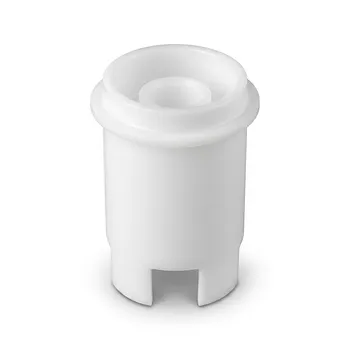
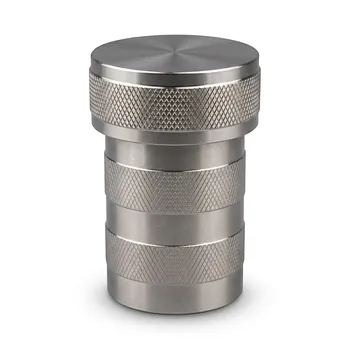
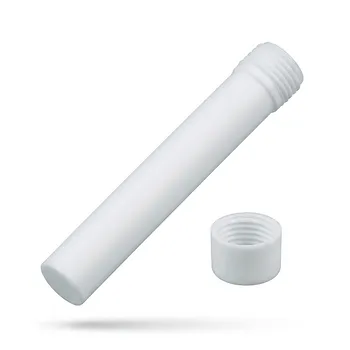
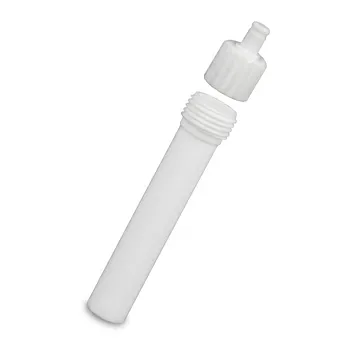
The PTFE-lined high-pressure autoclave serves as the primary vessel for creating a controlled, contamination-free environment essential for nano-hydroxyapatite (nHA) synthesis. By maintaining high temperatures and autogenous pressures, it enables subcritical water conditions that facilitate the formation of high-purity nHA. The Polytetrafluoroethylene (PTFE) liner specifically acts as a chemical barrier, ensuring the resulting nanostructures are free from metallic impurities and possess uniform morphology.
The core function of a PTFE-lined autoclave is to enable subcritical water conditions while providing a chemically inert barrier. This ensures the production of high-purity crystals by preventing metal ion contamination and protecting the structural integrity of the autoclave from corrosive precursors.
Facilitating the Hydrothermal Environment
Achieving Subcritical Conditions
The primary role of the autoclave is to provide a sealed, high-pressure environment that allows water to remain in a liquid state well above its atmospheric boiling point. These subcritical conditions significantly enhance the solubility and reactivity of the chemical precursors used to form nano-hydroxyapatite.
Driving Nucleation and Growth
High-temperature environments (often reaching 230°C) create a state of supersaturation within the solution. This state is critical for the controlled nucleation and slow growth of high-quality, one-dimensional nanorod structures.
Ensuring Chemical Purity and Integrity
The Role of Chemical Inertness
The PTFE (Polytetrafluoroethylene) liner is chosen for its exceptional resistance to chemical attack. In the synthesis of nHA, it prevents acidic or alkaline reaction precursors from eroding the metallic walls of the stainless steel autoclave.
Preventing Metal Ion Contamination
Without a liner, the reaction solution would contact the stainless steel shell, leading to the leaching of metal ions into the product. The PTFE barrier eliminates this risk, ensuring the stoichiometric ratio and high purity of the synthesized bioceramic material.
Maintaining Morphology and Phase
By providing a stable and inert environment, the autoclave ensures that the nanorod morphology is uniform. This precision is vital for the subsequent formation of composites and the overall biocompatibility of the hydroxyapatite.
Understanding the Trade-offs
Temperature Limitations
While PTFE is highly inert, it has a functional thermal ceiling, typically around 230°C to 250°C. Exceeding these temperatures can cause the liner to soften or deform, potentially leading to seal failure or "creeping" of the plastic.
Thermal Expansion Disparity
PTFE has a much higher coefficient of thermal expansion than the stainless steel shell surrounding it. Rapid heating or cooling can lead to mechanical stress on the liner, which may cause it to crack or lose its shape over repeated cycles.
Pressure Management Risks
Because the pressure inside the vessel is autogenous (generated by the heating of the solvent), users must strictly adhere to filling volume limits. Overfilling the liner can lead to extreme pressure spikes that exceed the safety ratings of the stainless steel outer shell.
Applying This Technology to Your Synthesis
When utilizing a PTFE-lined autoclave for hydrothermal synthesis, your approach should vary based on your specific material requirements.
- If your primary focus is High Purity: Ensure the PTFE liner is thoroughly cleaned with acid between uses to remove any residual ions from previous reactions.
- If your primary focus is Precise Morphology: Control the cooling rate of the autoclave meticulously, as the insulation provided by the PTFE liner can affect the crystallization process.
- If your primary focus is Equipment Longevity: Do not exceed a 70-80% fill level and keep temperatures below 220°C to prevent permanent deformation of the PTFE material.
The PTFE-lined autoclave is an indispensable tool that bridges the gap between raw chemical precursors and high-performance, medical-grade nanostructures.
Summary Table:
| Key Component/Feature | Role in Hydrothermal Synthesis of nHA |
|---|---|
| Sealed Pressure Vessel | Enables subcritical water conditions to increase precursor solubility. |
| PTFE Liner | Provides a chemically inert barrier to prevent metal ion contamination. |
| High-Temperature Environment | Drives supersaturation and controlled nucleation for nanorod growth. |
| Autogenous Pressure | Facilitates the formation of high-quality crystals and phase purity. |
| Thermal Limits | Requires monitoring (230°C-250°C) to maintain liner structural integrity. |
Elevate Your Synthesis with KINTEK’s Precision Fluoropolymer Solutions
Achieving the precise conditions for high-purity nano-hydroxyapatite synthesis requires equipment that never compromises on chemical integrity. KINTEK manufactures virtually all imaginable laboratory supplies crafted from PTFE and PFA, ensuring your research is free from contamination.
From the hydrothermal synthesis liners and microwave digestion vessels essential for high-pressure reactions to everyday basic labware (beakers, crucibles, reagent bottles) and advanced electrochemical cells or microchannel reactors, we provide the high-performance materials your lab demands. Backed by end-to-end custom CNC fabrication, we are equipped to deliver everything from complex non-standard machined parts to high-volume orders of fluid transfer components like tubing and valves.
Contact KINTEK today to discuss your custom laboratory setup!
References
- Sabila Aulia Hemzah, Atiek Rostika Noviyanti. Hydrothermal synthesis of nanohydroxyapatite-activated carbon composites and its slow-release performance for urea. DOI: 10.1038/s41598-025-09023-w
This article is also based on technical information from Kintek Knowledge Base .
Related Products
- PTFE Lined High Pressure Digestion Vessel 50ml High Temperature Hydrothermal Synthesis Tank
- Custom TFM Reaction Vessel with Stainless Steel Jacket and PTFE Inner Cup for High Corrosion Resistance
- High Pressure Custom TFM Reactor Stainless Steel Outer Vessel PTFE Inner Cup for Corrosive Synthesis
- High Pressure PTFE Digestion Vessel Inner Cup Holder Custom Corrosion Resistant Low Background Teflon
- High Temperature Corrosion Resistant Hydrothermal Synthesis Reactor with TFM Inner Liner and Straight Cylinder Design
People Also Ask
- What are the benefits of using a PTFE-lined vessel for carbon-sulfur cathode treatment? Maximize Purity & Performance
- Why are PTFE-lined pressure digestion vessels required for the preparation of Ag/CeO2 catalysts? Purity & Performance
- What safety features are typically incorporated into high-pressure PTFE digestion vessel designs? Ensure Lab Safety
- What is the function of PTFE lined high-pressure vessels in g-C3N4 synthesis? Achieve High-Purity Material Growth
- Role of High-Pressure Digestion Tanks in Perovskite Synthesis: Achieve Superior Stability and Latent Heat