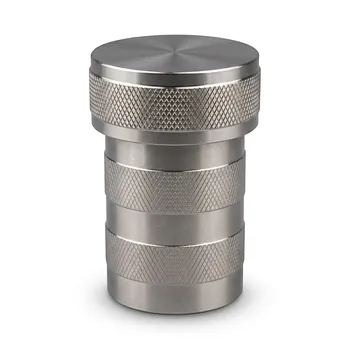
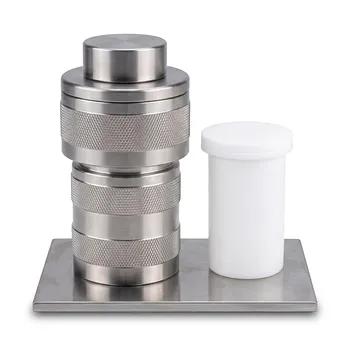
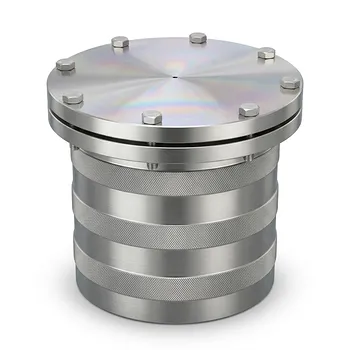
A hydrothermal synthesis autoclave is the critical vessel because it creates a closed, high-pressure environment that forces precursors to interact at the atomic level. This unique environment allows for the formation of strong chemical bonds between titanium dioxide (TiO₂) and other materials, such as carbon nanotubes or nanosheets, that would not occur under standard atmospheric conditions. By maintaining precise control over internal pressure and temperature, the autoclave ensures the resulting hybrid nanocomposites possess high crystallinity, uniform dispersion, and a regular structural morphology.
The hydrothermal autoclave acts as a high-pressure reactor that enables subcritical water conditions, facilitating the dense nucleation and crystalline growth of TiO₂ while using specialized liners to prevent metallic contamination during the synthesis process.
The Role of Subcritical Environments in Nanocomposite Growth
Achieving Atomic-Level Interaction
The autoclave provides a uniform reaction field where precursor molecules can fully interact and reorganize. This high-energy environment is essential for facilitating strong chemical bonds between TiO₂ nanoparticles and secondary components like carbon nitride or biochar.
Controlling Crystallinity and Morphology
Precise control of internal pressure allows for the development of a highly crystalline catalytic phase. This environment promotes heterogeneous nucleation, which is necessary for creating vertically aligned nanowire arrays or conformal coatings on complex substrates.
Managing Solubility and Hydrolysis
Under the high-temperature and high-pressure conditions of the autoclave, precursors undergo controlled hydrolysis and crystallization. This process is vital for ensuring that the TiO₂ nanoparticles deposit uniformly across the support material rather than clumping.
Ensuring Material Purity through Chemical Inertness
The Function of PTFE and Teflon Liners
Most autoclaves utilize a Polytetrafluoroethylene (PTFE) or Teflon liner to contain the reaction. This liner provides a chemically inert surface that can withstand extremely corrosive solvents, including high-concentration sodium hydroxide (NaOH) or hydrofluoric acid (HF).
Preventing Metallic Ion Contamination
The liner serves as a critical barrier, protecting the stainless steel walls of the autoclave from acidic or alkaline erosion. Without this protection, metal ion impurities would leach into the reaction, compromising the purity and performance of the nanocomposite.
Maintaining a Clean Reaction Field
By providing a smooth, non-stick surface, the liner ensures that the precursors remain contained within the intended reaction mixture. This allows for long-term reactions at high temperatures (e.g., 180°C to 200°C) without degradation of the vessel or the sample.
Understanding the Trade-offs and Operational Risks
Thermal Lag and Monitoring
One significant trade-off is the thermal lag between the external heating element and the internal reaction solution. Because the stainless steel jacket and PTFE liner are thick, the internal temperature may take considerable time to stabilize, requiring careful calibration.
Pressure Limits and Safety
While high pressure is beneficial for crystallinity, it presents significant safety risks if the autoclave is overfilled. Exceeding the recommended filling degree (usually 60-80%) can lead to a dangerous pressure spike that may compromise the seal or cause a vessel failure.
Maintenance of the PTFE Seal
The PTFE liner is susceptible to mechanical deformation over repeated high-temperature cycles. If the liner loses its shape or "creeps," it can lead to leaks, which result in a loss of autogenous pressure and the failure of the synthesis process.
How to Apply This to Your Project
When selecting or operating a hydrothermal autoclave for TiO₂ synthesis, your choice should be dictated by your specific material requirements:
- If your primary focus is high-purity fluorine doping: Utilize a thick Teflon liner to safely contain hydrofluoric acid (HF) and prevent metallic contamination at temperatures up to 180°C.
- If your primary focus is vertical nanowire alignment: Prioritize an autoclave that allows for stable, long-term heating to ensure consistent heterogeneous nucleation on substrates like FTO glass.
- If your primary focus is scalability and morphology: Use a high-performance PTFE liner with a stainless steel jacket to maintain the internal pressure required for regular, flower-like nanostructures.
The hydrothermal autoclave remains the gold standard for TiO₂ synthesis because it bridges the gap between raw chemical precursors and highly engineered, functional hybrid materials.
Summary Table:
| Feature | Impact on TiO2 Synthesis | Component Role |
|---|---|---|
| Subcritical Environment | Facilitates atomic bonding & dense nucleation | High-Pressure Reactor |
| Chemical Inertness | Prevents metallic ion contamination | PTFE/Teflon Liner |
| Morphology Control | Ensures uniform dispersion & crystallinity | Precise Temp/Pressure |
| Acid/Alkali Resistance | Allows use of corrosive solvents (NaOH/HF) | Fluoropolymer Surface |
Unlock the full potential of your nanotechnology research with KINTEK’s premium fluoropolymer laboratory solutions. As a leading manufacturer specializing in high-performance PTFE and PFA materials, we offer an exhaustive range of supplies—from essential beakers, crucibles, and digestion tubes to advanced hydrothermal synthesis liners, microwave digestion vessels, and custom electrochemical cells. Whether you require standard consumables like O-rings and stirring bars or complex, non-standard machined parts crafted via end-to-end custom CNC fabrication, KINTEK delivers the chemical inertness and precision your experiments demand. Contact us today to explore how our bespoke laboratory setups can enhance your synthesis workflows!
References
- Arslan Ashfaq, Muhammad Amin. Carbon Nitride Nanosheet-based Titanium Dioxide Hybrid Photocatalyst for Organic Effluent Degradation. DOI: 10.71107/kx22gt91
This article is also based on technical information from Kintek Knowledge Base .
Related Products
- High Temperature Corrosion Resistant Hydrothermal Synthesis Reactor with TFM Inner Liner and Straight Cylinder Design
- PTFE Lined High Pressure Digestion Vessel 50ml High Temperature Hydrothermal Synthesis Tank
- Custom TFM Reaction Vessel with Stainless Steel Jacket and PTFE Inner Cup for High Corrosion Resistance
People Also Ask
- What is the role of a corrosion-resistant reactor in the synthesis of lignin-based carbon dots? Ensure Maximum Purity
- What are the technical advantages of using hydrothermal synthesis reactors for advanced electronic & optical nanomaterials?
- How does a hydrothermal synthesis reactor facilitate the production of crystalline materials with tailored morphologies? Precision Crystal Growth
- Why is the sealing reliability of a hydrothermal synthesis reactor critical for 24-hour cycles? Ensure Nano-Precision
- What role do hydrothermal synthesis reactors play in CQD preparation? Achieve High-Purity Nanomaterial Synthesis