All Questions
What Structural Factors Enable High Proton Conductivity In Fluorinated Polymer Membranes Under Low Relative Humidity, And How Do Custom Ptfe/Pfa Electrochemical Cell Fixtures Facilitate Accurate Membrane Testing?
Discover key structural factors for proton conductivity in fluorinated membranes at low RH and how custom PTFE/PFA fixtures ensure accurate testing.
What Material And Design Considerations Are Critical For Electrofluorination And Aggressive Fluorinated Intermediates? Key Factors For Safe Ptfe/Pfa Systems
Learn critical material and design considerations for electrofluorination and handling aggressive fluorinated intermediates, focusing on PTFE and PFA safety.
How Does A Block Copolymer Structure Alter Ionic Channel Formation And Performance In Fluorinated Ionomer Membranes Compared To Random Copolymer Designs? Key Insights On Morphology And Transport.
Block copolymers form more connected ionic channels, achieving high conductivity at lower IEC than random copolymers. Explore trade-offs.
What Is The Primary Operational Trade-Off Between Ion Exchange Capacity (Iec), Ionic Conductivity, And Mechanical Stability When Selecting Fluoropolymer Membranes For Cell Assemblies? Optimize Conductivity And Strength Balance With Advanced Ptfe/Pfa Solutions.
Discover how to balance IEC, ionic conductivity, and mechanical stability in fluoropolymer membranes for robust cell assemblies. Expert insights.
How Do Spp-Co-Paek Membranes Perform In Proton Conductivity And Mechanical Strength? Discover Key Metrics And The Role Of Custom Ptfe/Pfa Cells.
Learn about SPP-co-PAEK membranes' proton conductivity and mechanical properties, and how custom PTFE/PFA apparatuses enable accurate evaluation.
How Are Electrochemical Cell Systems Utilized To Evaluate The Anodic Degradation And Defluorination Of Persistent Perfluorinated Compounds Like Pfoa? Discover Key Methods And Metrics.
Learn how electrochemical cells assess PFOA degradation and defluorination via anodic oxidation, with key metrics and experimental controls.
Why Are High-Performance Fluoropolymer Components Ideal For Battery Research And Electrochemical Cell Testing Setups? Discover Reliable, Inert Solutions For Accurate Results.
Explore the benefits of PTFE/PFA components in battery research: chemical inertness, electrical insulation, thermal stability, and more.
What Factors Should Be Considered When Performing Cyclic Voltammetry And Spectroelectrochemistry In Custom Electrochemical Cells To Characterize Redox-Active Polymers? Discover Key Design And Analysis Tips.
Learn essential factors for reliable CV and SEC in custom cells, including electrode stability, reference choices, baseline analysis, and optical alignment.
How Do Structural Cross-Linking And Bulky Fluorinated Moieties Influence Water Uptake And Swelling Ratios In Proton-Exchange Membranes? Achieve Precise Dimensional Control With Custom Fluoropolymer Fixtures
Discover how cross-linking and bulky fluorinated groups affect membrane hydration and swelling, and why dimensional control is critical for cell fixture reliability and performance.
How Does Bound Water In Modified Fluorinated Membranes Reduce Methanol Crossover In Dmfcs, And Why Is It Key For Fluoropolymer Test Cells?
Discover how bound water in fluorinated membranes lowers methanol crossover, crucial for designing accurate DMFC test cell components.
What Chemical Conditions Are Present During Electrochemical Fluorination (Ecf) Processes? Key Insights Into Ecf Electrolyte, Reactants, And Products
Learn about the harsh chemical environment in ECF cells, including anhydrous HF, fluorinating agents, and the role of fluoropolymers in cell design.
How Is Cyclic Voltammetry Performed On Fluoropolymer-Modified Electrodes Within Electrochemical Cells, And What Factors Affect Energy Bandgap Calculations?
Learn the steps for CV on fluoropolymer electrodes and key factors influencing HOMO/LUMO and bandgap estimates.
What Role Does Backbone Fluorination Play In Modulating The Solid-State Microstructure And Electron Mobility Of N-Type Conjugated Polymers, And How Are Custom Ptfe/Pfa Electrochemical Cells Utilized To Characterize These Redox-Active Materials?
Discover how backbone fluorination boosts electron mobility in n-type polymers and how PTFE/PFA cells enable precise electrochemical characterization.
How To Balance Ionic Conductivity And Water Barrier In Amphiphilic Polymer Electrolyte Membranes? Optimize With Fluoropolymer Testing Supplies
Explore the design trade-offs in amphiphilic membranes for Li and seawater batteries, and the role of PTFE/PFA electrochemical testing supplies.
Why Are Fluorinated Polymers Utilized In Specialized Laboratory Electrochemical Cells And Electrical Test Fixtures Requiring Low Dielectric Constant And High Insulation? Explore Key Benefits & Trade-Offs.
Discover why fluorinated polymers excel in electrochemical cells and test fixtures: low dielectric constant, high insulation, chemical inertness, and thermal stability.
How Does The Electroactive Β-Phase In Fluoropolymer Battery Separators Enhance Lithium-Ion Transport, And Why Are Custom Electrochemical Cells Necessary For Evaluating These Membrane Performance Characteristics?
Explore how the β-phase in PVDF separators improves Li+ transport and why custom electrochemical cells are essential for accurate evaluation.
What Are The Design Requirements For An Electrochemical Cell Used In Nife-Ldh Testing? Optimize Oer Performance
Master electrochemical cell design for NiFe-LDH testing. Explore alkaline-resistant PTFE materials, electrode stability, and OER efficiency tips.
What Is The Operating Mechanism Of An H-Type Two-Compartment Diffusion Cell? Measure Methanol Permeability Accurately
Learn how H-type diffusion cells measure methanol permeability in composite membranes through concentration gradients and crossover analysis.
What Is The Purpose Of Using A Four-Probe Electrochemical Test Fixture? Ensure Accuracy In Pem Conductivity Testing
Learn how four-probe fixtures isolate lead resistance to provide accurate proton conductivity measurements for PEM research and fuel cell development.
How Do High-Performance Electrolyzer Test Fixtures Optimize Mof Catalyst Evaluation? Precision Tools For Water Splitting
Discover how high-performance fixtures optimize MOF catalyst evaluation through enhanced wetting, bubble removal, and industrial flow simulation.
Why Are Ptfe/Pfa Test Cells Necessary For Evaluating Mof-Based Her Catalysts? Ensure Data Integrity And Precision.
Discover why high-purity PTFE/PFA electrochemical cells are vital for MOF-based HER catalyst testing to prevent contamination and ensure accuracy.
Why Are Customized Ptfe Testing Fixtures Required For Electrochemical Testing And Battery Research? Boost Data Accuracy
Discover how custom PTFE testing fixtures ensure signal integrity, chemical resistance, and precise electrode control in advanced battery research.
What Is The Aem's Function In Cu-Ion Intercalation Cells? Enhance Data Accuracy And Prevent Cation Crossover
Learn how Anion Exchange Membranes (AEM) isolate chemical environments and prevent cation crossover in copper-ion intercalation kinetic studies.
What Is The Role Of High-Precision Electrochemical Cells In Seawater Electrolysis Catalyst Evaluation? Expert Insights
Learn how high-precision electrochemical cells and PTFE/PFA materials optimize seawater electrolysis catalyst testing and OER/ClOR selectivity.
What Are The Advantages Of Using Ptfe Test Cell Components During The Her Testing Of Co-Mos2? Achieve High-Precision Data
Learn why PTFE is essential for Co-MoS2 HER testing. It prevents bubble interference, resists corrosive electrolytes, and ensures high-purity results.
How Does Apparatus Stability Influence Co-Mos2 Cv Tests? Ensure Precision In Long-Term Electrochemical Research.
Learn how structural stability in electrochemical testing prevents artifacts and ensures accurate Co-MoS2 catalyst performance data during CV tests.
What Is The Importance Of A Specialized Electrochemical Test Cell Design For Co-Mos2? Ensure Precise Oer/Her Metrics
Discover how specialized cell designs optimize Co-MoS2 OER/HER testing through spatial control, chemical resistance, and efficient gas management.
Why Is A Specialized Electrochemical Test Cell Necessary For Evaluating Feooh Electrodes? Ensure Precision & Accuracy.
Learn why specialized electrochemical cells are vital for FeOOH testing to ensure data precision, chemical resistance, and repeatable measurements.
How Does A Three-Electrode Cell Configuration Impact Trace Heavy Metal Detection? Boost Sensitivity To Nanomolar Levels
Learn how three-electrode cell configurations reduce detection limits for trace heavy metals by isolating potential control and minimizing iR drop.
What Specific Technical Challenges Are Addressed By Using Customized Pfa Electrochemical Cells In Precision Analysis? - Kintek
Learn how customized PFA electrochemical cells overcome corrosion, signal noise, and electrode displacement for high-precision laboratory analysis.
How Do Electrochemical Testing Systems Ensure Accurate Uor Measurement? Optimize Monip@Cep2/Nf Catalyst Evaluation
Learn how high-precision workstations and inert PTFE/PFA cells ensure accurate UOR performance and kinetic data for MoNiP@CeP2/NF catalysts.
How Does A Two-Electrode Electrochemical Test Cell Assist In Evaluating Supercapacitor Performance? Expert Analysis
Learn how two-electrode cells evaluate supercapacitors using GCD analysis to measure capacitance, IR drop, and the impact of nanomaterial doping.
How Do Meshed Cr2032-Type Coin Cell Cases Facilitate The Testing Of Lithium-Oxygen Batteries? Enable Gas Diffusion
Discover how meshed CR2032 cases enable gas diffusion for ORR/OER reactions in Li-O2 battery research while maintaining vital mechanical stability.
How Does The Material Of An Electrochemical Test Cell Influence Cv Results For Ptau/3D Graphene Aerogels? Ensure Purity.
Learn how PTFE/PFA cell materials prevent ion contamination and ensure accurate ECSA measurements for PtAu/3D graphene aerogel catalysts during CV.
Why Is Continuous High-Purity Argon Gas Purging Necessary During Nitrate Electroreduction (No3Rr) Testing? Ensure Accuracy
Learn why Argon purging is critical in NO3RR to eliminate oxygen interference, prevent parasitic currents, and ensure accurate Faradaic efficiency.
What Are The Design Advantages Of Using A Custom Ptfe Electrochemical Cell For In-Situ Raman Spectroscopy? Enhance Signal Purity And Accuracy.
Explore the benefits of custom PTFE electrochemical cells for in-situ Raman spectroscopy, featuring chemical inertness and precision optical design.
What Is The Purpose Of The Multi-Step Boiling Pretreatment For Ion Exchange Membranes? Optimize H-Type Cell Performance
Discover how multi-step boiling pretreatment removes impurities and lowers resistance in ion exchange membranes for superior electrochemical data.
Why Are Ptfe Electrochemical Cells Preferred For Testing 2Dcp Membranes? Ensure Precise Ion Transport Data
Learn why PTFE cells are ideal for testing 2DCP membranes, offering the chemical inertness and electrical insulation required for precise data.
What Are The Advantages Of Using Button Cell Components For S@Mo2C Testing? Ensure Precision In Catalyst Evaluation
Explore why button cell components are vital for S@Mo2C catalyst testing, offering precise contact, sealed environments, and accurate simulation.
What Are The Advantages Of Using Interdigitated Flow Fields In Redox Flow Battery Modules? Boost Power & Mass Transport
Learn how interdigitated flow fields enhance redox flow battery performance by improving mass transport and boosting power density.
How Do Peristaltic Pumps And Battery Test Systems Work Together During Redox Flow Battery Performance Testing? Optimize Rfb Efficiency
Learn how peristaltic pumps and battery test systems synchronize fluid dynamics and electrical monitoring for optimized redox flow battery testing.
Why Are Specialized Battery Testing Fixtures Necessary? Ensure High-Precision Data For New Energy Materials
Discover how specialized battery testing fixtures eliminate variables, resist corrosion, and ensure accurate electrochemical data for your research.
What Key Functions Does A Three-Electrode Test Cell Provide When Evaluating The Electrochemical Behavior Of Alpha-Mn1-Xtixo2?
Learn how three-electrode cells isolate working electrode performance to accurately analyze alpha-Mn1-xTixO2 redox kinetics and electrolyte stability.
How Does A 400 Micrometer Spacer Function In A Cdi Cell? Optimize Desalination Efficiency And System Stability
Learn how 400-micrometer spacers prevent short circuits and optimize ion transport in capacitive deionization cells to improve desalination performance.
What Roles Do Photoelectrode Panels And Reaction Cells Play In Pec Water Splitting? Optimize Solar Hydrogen Efficiency
Learn how photoelectrode panels and reaction cells synergize in PEC systems to optimize solar energy absorption and hydrogen gas collection.
How Do Electrochemical Testing Fixtures Contribute To The Research Of Energy Storage? Optimize Tmo & Go Performance
Explore how electrochemical fixtures enhance TMO and graphene oxide research through precise GCD, EIS, and stability testing for energy storage.
How Does The Design Precision Of An Electrochemical Cell Impact The Reliability Of Battery Testing? Ensure Data Integrity
Discover how precision-engineered electrochemical cells eliminate variables and improve data reproducibility in battery research and material science.
Why Is A Three-Electrode Configuration Utilized In Pec Water Splitting? Precise Control For Material Characterization
Discover why the three-electrode setup is vital for PEC water splitting, ensuring precise electrode control and accurate material characterization.
How Are Electrochemical Workstations And Three-Electrode Systems Used To Evaluate Aczo Nanomaterials? A Technical Guide
Learn how electrochemical workstations and three-electrode systems analyze ACZO nanomaterials via EIS and Charge Transfer Resistance measurements.
How Does A Three-Electrode Cell Ensure Accuracy For Nis/Cos Testing? Achieve High-Precision Electrochemical Insights.
Master NiS/CoS electrode testing with 3-electrode cells. Eliminate iR drop and polarization for precise redox peak and pseudocapacitance data.
What Is The Design Significance Of A Three-Electrode Electrochemical Cell In Material Characterization? Unlock Precise Material Insights.
Discover how three-electrode cells isolate electrochemical variables to provide precise redox, capacitance, and energy level data for materials research.
How Does A Three-Electrode Cell Configuration Facilitate Testing Of Ni-Co-Chh? Unlock Precise Material Characterization
Learn how three-electrode systems isolate Ni-Co-CHH material performance, eliminate interference, and ensure precise capacitance measurements.
How Do 2032-Type Coin Cell Testing Fixtures Influence Li-O2 Battery Results? Optimize Diffusion And Stability
Learn how 2032 coin cell housings impact Li-O2 battery testing through oxygen diffusion, mechanical pressure, and anode protection for accurate data.
How Do Ptfe/Pfa Cells Aid Ptof Band Analysis? High-Purity Solutions For Accurate Semiconductor Band Gap Determination.
Discover how high-purity PTFE and PFA electrochemical cells eliminate leaching and interference to ensure accurate PTOF energy band determinations.
What Is The Importance Of A Specialized Electrochemical Cell For Mott-Schottky Testing? Map Precise Band Alignments
Learn why specialized electrochemical cells and workstations are vital for accurate Mott-Schottky analysis and precise semiconductor band mapping.
What Is The Significance Of The 3-Electrode Cell In Mott-Schottky Measurements? Get Precise Semiconductor Data.
Learn why the three-electrode configuration is the industry standard for Mott-Schottky measurements to ensure accurate semiconductor property analysis.
What Are The Design Priorities For An Electrochemical Cell For Lamotrigine Detection? Precision Pfa & Stable Geometry
Learn how high-purity PFA and fixed electrode geometry optimize electrochemical cells for sensitive Lamotrigine detection using LSV.
What Roles Do High-Precision Electrochemical Cells And Cathode Substrates Play In Copper Nanoparticle Deposition?
Learn how electrochemical cells and substrates control copper nanoparticle growth, morphology, and uniformity for advanced material research.
What Are The Core Functions Of Dual-Chamber Cells & Membranes In Pec? Achieve Pure Isolation & Accurate Characterization
Learn how dual-chamber cells and ion-exchange membranes optimize PEC performance by isolating reactions and managing ionic flow for accurate data.
What Are The Requirements For A Pec Electrochemical Reaction Cell? Optimize Light Transmittance And Sealing For Research
Learn the critical requirements for PEC degradation cells, focusing on quartz windows, electrode setups, and corrosion-resistant material selection.
How Do Custom-Fabricated Electrochemical Battery Testing Fixtures Improve Experimental Accuracy And Consistency? Pro Tips.
Learn how custom CNC-machined PTFE/PFA battery fixtures eliminate variables, reduce Ohmic drop, and ensure uniform contact for accurate testing data.
How Do Custom Ptfe Electrochemical Cells Improve The Accuracy Of Stability Testing For Alkaline Catalysts Compared To Glass Cells?
Discover how custom PTFE electrochemical cells prevent silicate poisoning and ensure high-fidelity data for alkaline catalyst stability testing.
How Does A Three-Electrode Electrochemical Test Cell Ensure Data Accuracy? Maximize Precision For Composite Materials
Learn how three-electrode configurations improve data accuracy by isolating potential from current, ensuring precise composite material analysis.
Why Are Specialized Electrochemical Test Fixtures Necessary For Mnfe2O4/Rgo? Optimize Supercapacitor Testing Accuracy
Learn how specialized electrochemical fixtures ensure precise MnFe2O4/rGO testing by minimizing ESR and preventing electrolyte evaporation.
What Are The Advantages Of A Three-Electrode Electrochemical Cell? Unlock Precision In Your Material Testing
Discover why three-electrode systems are superior for material testing, offering precise potential control and accurate redox kinetics analysis.
Why Is A Three-Electrode Electrochemical Test Cell Required For Tio2? Achieve High-Fidelity Material Characterization
Learn how a three-electrode cell isolates TiO2's electrochemical potential for precise redox peak analysis and accurate charge transfer measurements.
What Are The Design Advantages Of A Dual-Chamber H-Type Electrochemical Cell? Optimize Stability And Analytical Precision.
Explore how dual-chamber H-type electrochemical cells decouple environments, protect photo-active materials, and ensure accurate research data.
What Is The Purpose Of A 3-Electrode Cell For Evaluating (Nh4)2V10O25·8H2O? Ensure Precise Hydrogen Storage Accuracy.
Learn why the 3-electrode setup is vital for isolating potential and eliminating noise in (NH4)2V10O25·8H2O hydrogen storage evaluations.
How Do Coin Cell Components & Fixtures Support Vs2/Mos2@S Evaluation? Key To High-Accuracy Battery Testing Results
Learn how coin cell components like spacers and springs ensure mechanical integrity and data accuracy when testing VS2/MoS2@S composite cathodes.
Why Is A High-Precision Battery Performance Testing System Required For Vs2/Mos2@S Cathodes? Ensure Accuracy.
Learn how high-precision testing verifies VS2/MoS2@S cathode performance by accurately tracking capacity decay and inhibiting polysulfide shuttle.
Why Is The Sealing Of Specialized Electrochemical Test Cells And Electrode Fixtures Critical In Pec Systems? Expert Guide
Discover why high-spec sealing in PEC systems is vital for data integrity, preventing electrolyte leakage, and ensuring precise catalyst measurement.
What Technical Advantages Does Ptfe Provide For Electrochemical Fixtures Vs Plastics? Achieve Superior Data Precision.
Discover how PTFE outperforms common plastics in electrochemical testing through chemical inertness, signal isolation, and thermal stability.
How Do Battery Testing Fixtures Assist In Evaluating G-C3N4 As An Anode? Ensure High-Precision Electrochemical Data
Learn how battery fixtures optimize g-C3N4 anode evaluation through uniform pressure, hermetic sealing, and reliable electrochemical data monitoring.
What Are The Design Advantages Of An H-Type Electrochemical Reaction Cell For Hmf Oxidation & Co2 Reduction?
Discover how H-type cells isolate products and prevent re-oxidation in HMF oxidation and CO2 reduction to ensure high-precision Faradaic efficiency.
What Factors Influence The Selection Of A High-Porosity Glass Fiber Separator For V-Nbopo4@Rgo Sodium-Ion Cells?
Discover how high-porosity glass fiber separators enable ultra-high rate performance in sodium-ion cells through superior ion transport and wetting.
Why Use High-Purity Koh And Ptfe/Pfa Cells For Oer? Prevent Impurity Leaching For Accurate Catalytic Data.
Discover why PTFE/PFA cells and high-purity KOH are essential for OER. Prevent impurity leaching and ensure accurate catalyst performance data.
How Does An In-Situ Optical Cell Equipped With A Quartz Window Facilitate The Study Of Battery Anode Surfaces? Experts.
Discover how in-situ optical cells with quartz windows enable real-time visualization of dendrite growth and anode corrosion in battery research.
How Do A Three-Electrode Cell And Potentiostat Cooperate For Pec Performance? Achieve High-Precision Analysis Results
Discover how the synergy between three-electrode cells and potentiostats enables accurate charge carrier transport and PEC efficiency measurements.
Why Must Seawater Electrolysis Test Cells Have High Corrosion Resistance? Protect Catalyst Stability & Data Accuracy.
Learn why corrosion-resistant PTFE cells are vital for seawater electrolysis to prevent impurity leaching and ensure accurate catalyst data.
What Role Do Electrochemical Cells Play In Battery Material Characterization? Achieve High-Precision Performance Data
Learn how electrochemical cells provide controlled environments, chemical inertness, and structural precision for accurate battery material testing.
What Are The Design Requirements For An Electrochemical Cell Used In The Electrochemical Exfoliation Of Graphene Hybrid Materials? - Tips
Explore essential design requirements for graphene exfoliation cells, from PTFE housing to 3-electrode systems for high-purity hybrid materials.
What Is The Necessity Of A 3-Electrode Cell For Bivo4 Testing? Ensure Precise Pec Data & Accurate Potential Control.
Learn why a three-electrode system is essential for BiVO4 testing to isolate potential, eliminate polarization, and measure true OER activity.
What Role Does A Specialized Photoelectrochemical Testing Fixture Play? Optimizing Cubi2O4 Photocathode Evaluation.
Discover how specialized PEC fixtures optimize CuBi2O4 photocathode evaluation through superior light transmission, sealing, and electrical stability.
Why Are High-Precision Electrochemical Reaction Cells Necessary For The Electrochemical Deposition Of Cubi2O4? Optimal Bandgap
Discover how high-precision cells ensure stable potential, uniform thickness, and optimal bandgap for CuBi2O4 semiconductor synthesis.
What Are The Technical Advantages Of Using A Three-Electrode Electrochemical Cell For Testing V2O5? Precision Mapping.
Learn how three-electrode cells enhance V2O5 electrochromic testing by isolating potential, minimizing iR drop, and ensuring precise ion mapping.
What Experimental Conditions Does A Three-Electrode Glass Electrochemical Cell Provide For Oer? Achieve Precise Kinetic Data
Learn how three-electrode glass cells enable precise OER assessment through electrode separation, thermal control, and RDE integration for research.
How Is A Three-Electrode Testing Cell Configured For Evaluating Electrochemical Hydrogen Storage Performance? Expert Guide
Learn to configure a three-electrode cell for hydrogen storage. Explore WE, CE, and RE roles, electrolyte selection, and how to ensure precise data.
What Role Do High-Performance Electrochemical Testing Fixtures Play In Evaluating Supercapacitor Materials? Ensure Accuracy
Discover how high-performance fixtures enhance supercapacitor evaluation by minimizing ESR, ensuring stable environments, and providing accurate data.
What Are The Design Advantages Of Using An H-Type Electrochemical Cell For Eco2Rr? Optimize Your Catalyst Precision
Discover how H-type electrochemical cells enhance eCO2RR testing through product isolation, oxygen blockage, and accurate Faradaic efficiency data.
What Role Do High-Precision Electrochemical Testing Cells Play In Battery Testing? Unlock Accurate Material Insights.
Discover how high-precision electrochemical cells ensure data integrity in battery material testing through PFA/PTFE isolation and fixed geometry.
What Is The Purpose Of Specialized Coin Cell Test Fixtures With Aluminum Foil Windows? Boost In Situ Xrd Accuracy
Discover how specialized coin cell fixtures with Al-foil windows enable real-time XRD monitoring of lattice shifts while maintaining cell integrity.
What Are The Advantages Of Using A Three-Electrode Testing System For Mn2O3? Unlock Precise Electrochemical Analysis
Learn why three-electrode systems are essential for Mn2O3 evaluation, offering precise potential control and eliminating measurement artifacts.
What Is The Purpose Of Battery Testing Fixtures For Coal-Based Quantum Dots? Ensure Data Accuracy & Low Resistance
Learn how battery testing fixtures ensure accurate data for coal-based quantum dots in supercapacitors by minimizing ESR and ensuring repeatability.
How Does 3-Electrode Cell Design Impact Transition Metal Boride Testing? Achieve High-Fidelity Data
Learn how three-electrode cell design optimizes potential control and minimizes IR drop for accurate transition metal boride performance testing.
Why Pretreat An Electrochemical Cell With Nitrogen For Her? Eliminate Oxygen To Ensure Precise Kinetic Data
Learn why nitrogen purging is essential for HER testing to eliminate dissolved oxygen, prevent ORR interference, and ensure accurate kinetic data.
What Role Does A High-Precision Electrochemical Cell Play In Mxene Co-Deposition? Master 3D Structural Engineering
Discover how high-precision electrochemical cells control parameters to engineer 3D morphologies for advanced MXene energy storage materials.
What Is The Importance Of Uv Test Cell Selection When Evaluating Tio2? Unlock Accurate Photocatalytic Performance Data
Ensure precise TiO2 photocatalytic evaluation. Discover how UV test cell transparency impacts light distribution and reaction rate accuracy.
Why Is Constant Potential Control Necessary For Wo3 Stability? Ensure Precise Photoanode Performance Testing
Learn how electrochemical workstations isolate WO3 performance from electrical fluctuations to accurately measure stability and anti-photocorrosion.
How Does A 3-Electrode Cell Ensure Cuwo4 Pec Accuracy? Achieve Precise Photoelectrochemical Measurement Results
Learn how three-electrode cells ensure accuracy in CuWO4 testing by decoupling current from potential and minimizing iR drop for precise data.
How Does A Three-Electrode Electrochemical Cell System Ensure Testing Accuracy For Znse/Rgo? Precision In Lab Analysis
Learn how three-electrode systems isolate potential control to ensure precise redox and stability measurements for ZnSe/rGO composite electrodes.
Related Products

Spherical Electrochemical Corrosion Test Cell with Luggin Capillary and Specimen Holder
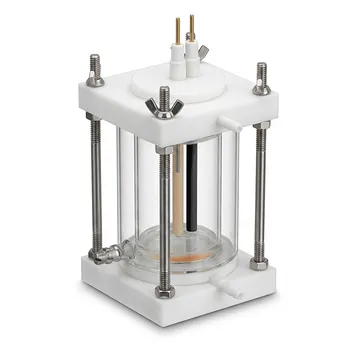
Electrochemical Coating Evaluation Test Cell and Flat Sample Corrosion Testing Vessel
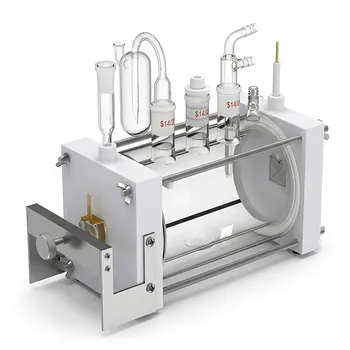
Flat Plate Corrosion Test Electrochemical Cell Jacketed Glass Labware for Sheet Specimen Metallurgy Analysis

Acid Resistant PTFE Button Cell Battery Test Fixture Customizable Machining High Purity Electrochemical Testing Clamp

PTFE Electrochemical Electrode Holder for Thickened Samples with Platinum Contact Sheet