Continuous high-purity Argon purging is a fundamental requirement in nitrate electroreduction (NO3RR) to eliminate dissolved oxygen from the electrolyte. This process ensures that the measured electrical current results exclusively from the reduction of nitrate ions rather than the simultaneous reduction of oxygen. Without this inert environment, researchers cannot accurately quantify ammonia yields or evaluate the intrinsic activity of the catalyst.
Core Takeaway: Argon purging isolates the nitrate reduction process by removing oxygen, which shares a similar reduction potential. This isolation is critical for preventing "parasitic" currents that would otherwise lead to false-positive results and inaccurate calculations of catalytic efficiency.
The Electrochemical Interference of Dissolved Oxygen
Overlapping Reduction Potentials
The primary challenge in NO3RR testing is that the Oxygen Reduction Reaction (ORR) occurs at a potential range that overlaps with the nitrate reduction potential. If oxygen is present in the electrolyte, it will consume electrons simultaneously with the nitrate ions.
The Problem of Parasitic Current
When oxygen is reduced alongside nitrate, the total measured current is the sum of both reactions. This parasitic current makes it impossible to determine exactly how many electrons were actually used to produce ammonia.
Ensuring Accurate Yield Calculations
To calculate the Faradaic efficiency of a catalyst, you must know the precise amount of charge consumed by the nitrate-to-ammonia conversion. Removing oxygen via Argon purging ensures that the current data used in these calculations is "clean" and representative of the target reaction.
Impact on Catalyst Characterization
Resolving Specific Redox Peaks
Dissolved oxygen creates a significant amount of background noise in electrochemical measurements. This noise can obscure the subtle redox peaks that characterize specific crystal planes, such as those found in copper nanowires.
Identifying Surface Defects
Maintaining a strictly anaerobic environment is a prerequisite for analyzing surface defect information. When the background interference from oxygen is removed, the unique electrochemical "fingerprints" of the catalyst's surface become visible and measurable.
Consistency in Experimental Starting Points
Similar to how nitrogen is used in fuel cells to displace residual water, continuous Argon purging ensures a consistent initial state for every test. This uniformity allows researchers to compare different materials or conditions without the variable influence of fluctuating oxygen levels.
Understanding the Trade-offs
The Risk of Incomplete Deoxygenation
Using low-purity gas or insufficient purging time can leave trace oxygen in the system. Even small amounts of residual oxygen can lead to an overestimation of the catalyst's activity, particularly at low current densities where the ORR contribution is more significant.
Evaporation and Electrolyte Concentration
Continuous high-flow purging can lead to the evaporation of the electrolyte over long-duration experiments. If the liquid volume decreases significantly, the concentration of nitrates and the pH of the solution will change, potentially altering the reaction kinetics.
Cost and Complexity
High-purity Argon and specialized gas-tight electrochemical cells increase the operational cost and complexity of the setup. However, these costs are necessary to avoid publishing data that is fundamentally flawed by atmospheric interference.
How to Apply This to Your NO3RR Testing
Guidance Based on Research Objectives
- If your primary focus is Faradaic Efficiency: You must use high-purity Argon for at least 30 minutes prior to testing and maintain a constant, low-pressure flow during the measurement to prevent oxygen re-entry.
- If your primary focus is Catalyst Surface Science: Ensure the purging is vigorous enough to completely flatten the ORR background, allowing you to clearly resolve the redox peaks associated with specific crystal planes.
- If your primary focus is Long-Term Stability: Use a gas humidifier before the Argon enters the cell to prevent the gas stream from drying out your electrolyte and changing the ion concentration over time.
By strictly controlling the gaseous environment of your electrochemical cell, you ensure that your findings reflect the true chemical behavior of your catalyst rather than the influence of ambient contaminants.
Summary Table:
| Key Aspect | Purpose in NO3RR Testing | Impact of Oxygen Presence |
|---|---|---|
| Oxygen Removal | Eliminates Oxygen Reduction Reaction (ORR) | Overlapping potentials create parasitic current. |
| Data Accuracy | Isolates charge for Faradaic efficiency | Leads to false-positives and inaccurate ammonia yields. |
| Surface Analysis | Reduces background noise for redox peaks | Obscures catalyst defects and crystal plane signals. |
| Consistency | Ensures uniform experimental start points | Fluctuating oxygen levels cause irreproducible results. |
Precision Engineering for High-Performance Electrochemistry
Achieve uncompromising accuracy in your NO3RR research with KINTEK. We specialize in high-performance fluoropolymer materials, offering an extensive range of PTFE and PFA labware—from everyday beakers, centrifuge tubes, and reagent bottles to advanced gas-tight electrochemical cells and battery testing fixtures.
Whether you need standard consumables like stirring bars and O-rings or complex, custom-machined reaction apparatus and hydrothermal synthesis liners, our end-to-end CNC fabrication ensures your setup maintains the strict anaerobic conditions required for trace analysis. Don't let atmospheric interference compromise your data.
Contact KINTEK today for bespoke laboratory solutions!
References
- Pandi Muthukumar, Chundong Wang. Unlocking a Water Coordination Environment in Co-Based Metal–Organic Frameworks for Advanced Nitrate-to-Ammonia Electroreduction. DOI: 10.1021/jacs.5c07066
This article is also based on technical information from Kintek Knowledge Base .
Related Products
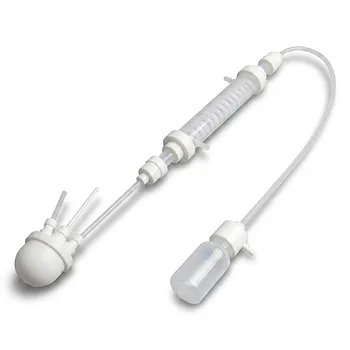
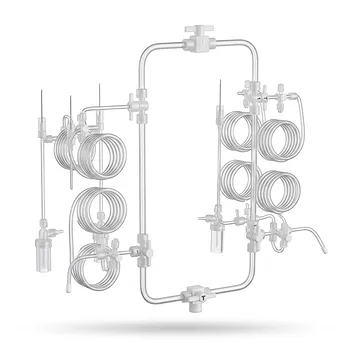
- Corrosion Resistant Hydrogen Fluoride Reflux Apparatus PTFE Flask Condenser Separatory Funnel Collection Bottle High Temperature Laboratory System
- PFA Nitrogen Blowdown System 4-Position 6-Position Corrosion Resistant Multi Sample Evaporator with Customizable PFA Valves
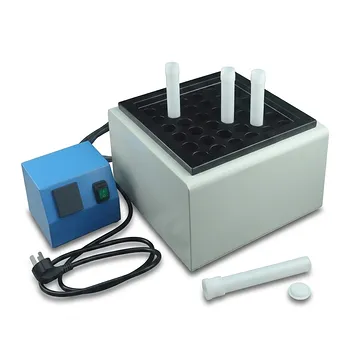
- Corrosion Resistant Graphite Digestion System with PID Digital Control for High Throughput Laboratory Sample Preparation
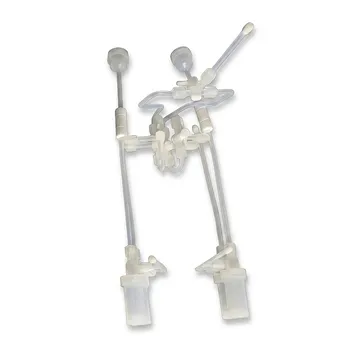
- High Purity PFA Nitrogen Purge System Corrosion Resistant 4 and 6 Position Evaporation Setup Customizable Laboratory Trace Analysis Equipment
- High Purity Corrosion Resistant PTFE Acid Reflux Cleaning System for Laboratory Trace Analysis
People Also Ask
- What structural characteristics provide PTFE fluoropolymer laboratory apparatus with high thermal stability? Strong C-F bonds, dense fluorine shielding, and rigid helical conformation ensure stability during high-temperature analysis.
- How does resin stratification occur during the curing of fluoropolymer coatings, and why might solid fluoropolymer laboratory apparatus be preferred over surface coatings for aggressive chemical applications?
- What chemical resistance considerations are important when selecting fluoropolymer laboratory apparatus for post-modification reactions of FAVE polymers?
- How do operating temperatures and pressures influence the formation of thermal degradation products during the high-temperature processing of PTFE fluoropolymer laboratory equipment? Key factors and safety limits
- What impact does thermal annealing and crystallization temperature have on the material properties of custom-machined fluoropolymer apparatus? Optimize Performance with Controlled Thermal Processing