Thermal annealing and crystallization temperature directly influence the stiffness, toughness, dimensional stability, surface behavior, and thermal performance of custom-machined fluoropolymer apparatus. Higher crystallinity generally increases modulus, strength, hardness, creep resistance, and dimensional stability, while lower crystallinity improves elongation, impact resistance, and—in some fluoropolymers—optical clarity. Annealing also relieves or redistributes internal stresses and increases molecular ordering, but excessive or poorly controlled treatment can cause shrinkage, warping, or cracking.
The correct thermal history is a design variable, not merely a manufacturing detail. Use lower crystallinity when toughness and flexibility are priorities; use higher crystallinity when rigidity, creep resistance, and dimensional retention matter most. The optimum crystallization temperature and annealing cycle must be established for the specific fluoropolymer, geometry, and service conditions.
How Crystallization Temperature Changes Fluoropolymer Properties
Lower crystallization temperatures
Lower crystallization temperatures generally produce a less ordered, lower-crystallinity structure. This can increase elongation, impact resistance, and flexibility, while reducing stiffness and resistance to deformation under sustained load.
In electroactive fluoropolymer systems, lower crystallization temperatures can also modify monomer incorporation into crystalline regions, producing lower coercive fields and higher electrostrictive strain. These effects are material-specific and should not be assumed for every fluoropolymer grade.
Higher crystallization temperatures
Higher crystallization temperatures generally promote greater crystal growth and overall crystallinity. The resulting apparatus is typically stiffer, harder, stronger, and more resistant to creep and compression.
The trade-off is reduced ductility. Highly crystalline material usually has lower elongation at break and lower notched impact resistance than a more amorphous structure.
Cooling rate is equally important
The final crystalline structure depends not only on the peak temperature but also on how quickly the part cools through the crystallization range.
For example, rapidly cooled PCTFE can be predominantly amorphous, with lower specific gravity, greater elongation, and improved optical transparency in thin sections. Slowly cooled PCTFE can reach substantially higher crystallinity, providing greater strength, hardness, and compression-creep resistance but producing an opaque part.
How Thermal Annealing Changes Machined Apparatus
Annealing increases structural order
Controlled annealing allows molecular segments and crystalline domains to reorganize toward a more stable configuration. In perfluorinated materials, analysis such as GI-WAXD shows sharper diffraction features associated with improved lamellar ordering and alignment of fluorinated side chains.
This increased order can improve consistency in mechanical, thermal, and surface properties. It can also stabilize the material against changes caused by later exposure to heat, moisture, or mechanical stress.
Annealing can improve mechanical durability
Extended high-temperature conditioning can increase modulus, high-temperature tensile strength, and resistance to cyclic fatigue in suitable high-performance fluoropolymers.
One reported example showed MIT flex life increasing from approximately 14,000 to 53,000 cycles after high-temperature conditioning, while tensile strength at 200 °C increased from roughly 1,130 psi to 1,500 psi. These values are representative examples, not universal design values; the response depends strongly on resin chemistry and treatment conditions.
Annealing can improve surface repellency
Annealing may reorganize perfluoroalkyl side chains at or near the surface, increasing fluorinated-chain ordering. This can improve liquid repellency, reduce surface retention, and support more consistent non-stick behavior in fluid-transfer components and laboratory vessels.
In one example, annealing increased the receding contact angle to approximately 112° and reduced the sliding angle to about 7°. Actual performance depends on surface finish, contamination, roughness, polymer grade, and the specific liquid.
Annealing shifts thermal behavior
Recrystallization during annealing can change the position and sharpness of thermal transitions. In some perfluorinated ionomer systems, low-temperature thermal endotherms shift upward by approximately 20–30 °C after annealing.
This can improve stability during repeated thermal cycling, but it also means that the part’s post-anneal transition behavior may differ from that of the as-machined or as-molded material.
Effects on Precision and Dimensional Stability
Higher crystallinity generally reduces deformation
A more crystalline fluoropolymer structure normally provides greater flexural modulus and tensile yield strength, reducing deflection under load.
As an example, higher-crystallinity material has been reported with a flexural modulus near 1,753 MPa versus approximately 1,311 MPa for lower-crystallinity material at 25 °C. This difference can be important for pressure vessels, support fixtures, threaded components, and precision fluid paths.
Thermal history can release internal stress
Machining can expose residual stresses that were introduced during molding, extrusion, quenching, or stock cooling. Annealing may relax these stresses and improve dimensional stability during later service.
However, stress relief can also produce dimensional movement. A precision-machined component may change size or shape during annealing if the treatment is performed after final machining.
Geometry affects the result
Thick sections cool more slowly than thin sections and develop greater thermal gradients. Rapidly quenching thick fluoropolymer parts can promote internal voids, residual stress, and stress cracking, even when the surface appears acceptable.
For precision apparatus, the thermal cycle should therefore account for wall thickness, machining allowances, transitions, holes, threads, and constrained features.
Matching Material Condition to Apparatus Requirements
Rigid structural components
Highly crystalline material is generally preferred for components that must resist bending, compression, creep, or dimensional change.
Typical examples include mounting blocks, valve bodies, pressure-support elements, structural rings, and fixtures exposed to sustained loads.
Impact-resistant or flexible components
A lower-crystallinity condition may be preferable where the part must tolerate impact, flexing, vibration, or rapid mechanical loading.
The reduced modulus and greater deformation under load must be included in the design, particularly around fasteners, seals, thin walls, and unsupported spans.
Transparent or visually inspectable parts
For PCTFE and similar materials, rapid cooling can preserve a more amorphous structure and improve transparency in thin sections.
This approach must be used cautiously in thick-walled components, where rapid cooling may create internal defects and stress cracking.
Low-retention fluid-handling components
Annealed surfaces with greater fluorinated-chain order may provide improved liquid repellency and lower fluid retention.
The benefit is most useful for custom labware, transfer parts, manifolds, and vessels where clean draining, reduced carryover, or non-stick behavior affects process reliability.
Understanding the Trade-offs
Strength versus toughness
Increasing crystallinity generally raises modulus, yield strength, hardness, and creep resistance. It simultaneously tends to reduce elongation and impact toughness.
There is no universally superior condition. A rigid pressure component and an impact-resistant flexible insert require different material states.
Dimensional stability versus processing movement
Annealing can improve long-term stability by reducing residual stress and increasing structural order. The same process can cause short-term shrinkage, warpage, or movement if the part is already machined to final dimensions.
For tight-tolerance components, annealing is often best performed on the stock or near-net blank before final finishing, followed by dimensional verification.
Clarity versus defect risk
Rapid cooling can improve transparency in thin PCTFE parts, but the same strategy can create internal voids and stress cracking in thick sections.
Clarity should therefore be specified together with wall thickness, cooling method, inspection criteria, and required mechanical performance.
Higher performance versus over-treatment
Longer or hotter annealing is not automatically beneficial. Excessive exposure can alter phase composition, increase dimensional change, degrade the resin, or create an undesirable balance between stiffness and toughness.
The treatment must remain below the material’s applicable degradation and melting limits and should follow the resin supplier’s processing guidance.
How to Apply This to Your Project
The thermal specification should be developed as part of the component design rather than added after machining. Define the required material condition, thermal cycle, dimensional allowance, and inspection method before releasing the apparatus for production.
- If your primary focus is dimensional stability and creep resistance: Specify a controlled, higher-crystallinity condition and validate shrinkage, warpage, and load deformation on a representative geometry.
- If your primary focus is impact resistance and flexibility: Use a lower-crystallinity or more amorphous condition, accepting greater deflection and deformation under sustained load.
- If your primary focus is optical clarity: Consider rapid cooling for suitable thin-wall PCTFE components, but inspect thick sections for internal voids and residual stress.
- If your primary focus is liquid repellency and low retention: Use controlled annealing to promote surface ordering, then verify contact angle, sliding behavior, cleanliness, and chemical compatibility.
- If your primary focus is high-temperature fatigue life: Evaluate extended thermal conditioning for the specific resin and confirm tensile, flex, creep, and thermal-cycling performance after treatment.
- If your primary focus is tight machining tolerances: Anneal before final machining whenever practical, leave appropriate machining allowance, and measure the part after thermal stabilization.
A controlled crystallization and annealing strategy enables custom fluoropolymer apparatus to deliver predictable performance instead of relying on nominal resin properties alone.
Summary Table:
| Condition | Crystallinity | Stiffness/Strength | Toughness/Flexibility | Dimensional Stability | Surface Repellency | Typical Applications |
|---|---|---|---|---|---|---|
| Lower crystallization temperature | Lower | Lower | Higher | Lower | Lower | Impact-resistant, flexible parts |
| Higher crystallization temperature | Higher | Higher | Lower | Higher | Moderate | Rigid structural components |
| Annealing | Higher (improved ordering) | Increased | Varies | Improved (stress relief) | Enhanced (in some grades) | Precision parts, low-retention fluid handling |
| Rapid cooling | Lower (for PCTFE) | Lower | Higher | Lower | Lower | Thin-wall transparent parts |
Optimize your custom-machined fluoropolymer apparatus with KINTEK's expertise in PTFE/PFA components. Our advanced thermal processing ensures precise control over crystallinity and annealing to meet your application's mechanical, thermal, and surface requirements. From laboratory beakers to complex electrochemical cells, we deliver high-performance solutions with rigorous quality assurance. Contact us today to discuss your project and experience the KINTEK advantage!
Related Products
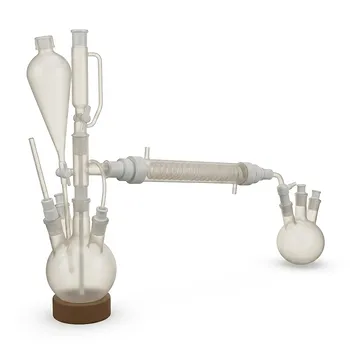
- PTFE Distillation Condensation Apparatus High Temperature Hydrofluoric Acid Resistant Fluorination Reaction Flask
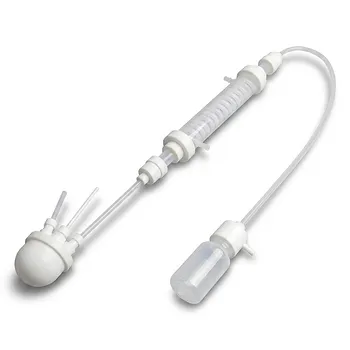
- Corrosion Resistant Hydrogen Fluoride Reflux Apparatus PTFE Flask Condenser Separatory Funnel Collection Bottle High Temperature Laboratory System
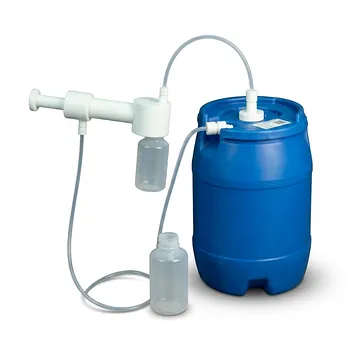
- PTFE Ultrapure Liquid Sampler Corrosion Resistant Acid Sampling Tool for 200L Reactors Custom Fluoropolymer Sampling Device
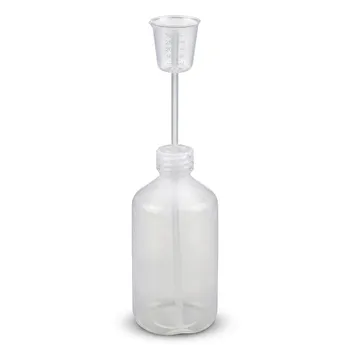
- Translucent PFA Bottle Top Dispenser for Corrosion Resistant Chemical Squeeze Extraction
- Customizable PFA Square Tray Corrosion Resistant High Temperature Large Petri Dish Electrolytic Cell
People Also Ask
- How does the low surface energy of PTFE benefit the condensation process? Boost Heat Transfer and Prevent Fouling
- What structural characteristics provide PTFE fluoropolymer laboratory apparatus with high thermal stability? Strong C-F bonds, dense fluorine shielding, and rigid helical conformation ensure stability during high-temperature analysis.
- How can autopolymerization of TFE gas be prevented during storage and handling? Master TFE safety with oxygen control, inhibitors, and robust system design.
- How do pyrolysis temperature and steam diluent ratios influence tetrafluoroethylene (TFE) conversion and yield in fluoropolymer monomer reaction apparatus? Optimize TFE yield with temperature and steam control
- What technical challenges exist in synthesizing main-chain fluorinated polymers? Discover why PTFE/PFA apparatus is ideal for these processes.