Preventing TFE autopolymerization requires rigorous oxygen exclusion, inhibitor control, and engineered containment. Keep oxygen contamination below the established process limit, commonly less than 20 ppm, by using leak-tight equipment, vacuum degassing, inert-gas purging, and dedicated transfer lines. Add a qualified terpene inhibitor, such as alpha-pinene or d-limonene, where compatible with the TFE specification and polymerization process, and control temperature and pressure continuously.
The primary safeguard is preventing oxygen from entering the TFE system. Terpene inhibitors provide additional protection against trace oxygen, but they do not replace leak testing, oxygen analysis, thermal control, pressure protection, or a validated emergency shutdown system.
Why TFE Requires Multiple Safeguards
Oxygen Can Trigger Rapid Autopolymerization
Uninhibited TFE is highly reactive. Trace oxygen can initiate localized polymerization, generating heat that accelerates further reaction and creates hazardous hot spots.
These hot spots can lead to pressure escalation, vapor ignition, or decomposition. Oxygen control must therefore apply to storage vessels, valves, tubing, manifolds, and the reactor itself.
TFE Can Decompose Without Air
Removing oxygen does not eliminate every TFE hazard. Under unfavorable pressure or temperature conditions, TFE can undergo violent exothermic decomposition even without air, producing carbon and tetrafluoromethane.
The apparatus must therefore control temperature, pressure, residence time, and heat removal in addition to oxygen concentration.
Polymerization Is Strongly Exothermic
TFE polymerization releases substantial heat. If heat removal is inadequate, the reaction can accelerate and create conditions that promote decomposition.
Reaction vessels require appropriate cooling capacity, temperature measurement, pressure relief, and safeguards against loss of agitation or cooling.
How to Control Oxygen Contamination
Use Leak-Tight Fluid Systems
Design the system to prevent air ingress during storage, transfer, sampling, and maintenance. Use welded or otherwise qualified connections where practical, minimize dead legs, and select seals and gaskets for the pressure, temperature, and chemical environment.
Leak testing should be performed with a validated method before introducing TFE. A system that is pressure-tight during operation can still admit air during cooling, evacuation, or pressure cycling if it has not been properly assessed.
Purge and Evacuate Before Charging
Use an approved inert-gas purge and vacuum-degassing sequence to remove residual air from vessels and lines. The sequence should be validated for the actual apparatus volume, valve arrangement, and operating procedure.
Do not assume that a single purge is sufficient. Confirm oxygen concentration with suitable instrumentation at representative points, including storage vessels and monomer delivery lines.
Measure Oxygen Continuously or at Defined Hold Points
Use calibrated oxygen analyzers appropriate for the pressure and composition of the TFE stream. Establish an operating limit below the maximum permitted specification so that there is time to stop transfer and correct contamination.
Interlock TFE admission or transfer when oxygen exceeds the validated limit. The exact limit, alarm setting, sampling frequency, and analyzer location should be defined by the process hazard analysis and applicable regulations.
How Inhibitors Add Protection
Use Compatible Terpene Scavengers
Terpenes such as alpha-pinene, Terpene B, and d-limonene can scavenge trace oxygen and reduce the risk of oxygen-initiated autopolymerization.
The inhibitor concentration must be established for the specific TFE grade, storage duration, temperature, pressure, and downstream polymerization chemistry. It should not be selected by general rule of thumb.
Treat Inhibitors as a Secondary Barrier
An inhibitor cannot compensate for a leaking valve, contaminated cylinder, failed purge, or inaccurate oxygen measurement. It may be consumed over time or become ineffective under conditions different from those used during qualification.
Track inhibitor identity, concentration, age, and compatibility. Confirm that the inhibitor will not compromise polymer quality, catalyst performance, end-group chemistry, or purification requirements.
Keep Polymerization Chemistry Separate From Storage Controls
Some fluoropolymer processes use specialized initiators or end-group chemistry, including sulfate ester groups that can later be hydrolyzed to hydroxyl end groups. Those polymerization details do not substitute for monomer storage controls.
Storage and transfer safeguards must remain effective regardless of the selected polymerization recipe.
Select Compatible Apparatus Materials
Prefer Inert Fluoropolymer-Wetted Components
Use compatible materials such as PFA and PTFE for valves, tubing, liners, and other wetted components where their pressure and temperature ratings are adequate.
Material selection must consider permeation, mechanical strength, creep, temperature limits, static charge, and compatibility with inhibitors and process fluids. “Fluoropolymer” does not automatically mean suitable for every pressure-containing application.
Minimize Unwanted Metal-Catalyzed Reactions
Avoid exposed materials that could promote side reactions or contaminate the monomer. Where metal components are unavoidable, qualify the specific alloy, surface treatment, geometry, and operating conditions.
Keep surfaces clean and free from residues. Contamination control is particularly important around valves, filters, regulators, and heated sections where localized reactions can begin.
Use Dedicated Transfer Equipment
A dedicated TFE delivery path reduces contamination and prevents incompatible gases or residues from entering the monomer system. The path should include validated isolation, purging, pressure regulation, sampling, and emergency shutoff arrangements.
Do not share lines with oxygen, oxidizing agents, or unverified process chemicals without a documented decontamination and compatibility procedure.
Control Pressure and Temperature
Prevent Hot Spots
Provide uniform heat removal and avoid stagnant regions, blocked lines, rapid compression, and uncontrolled heating. Monitor temperatures at locations where polymerization or decomposition could be initiated, not only at the bulk vessel sensor.
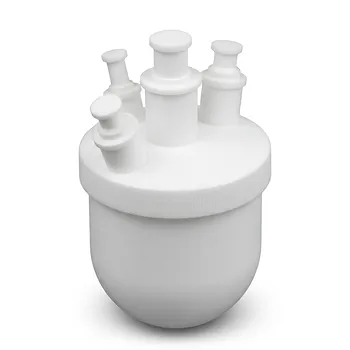
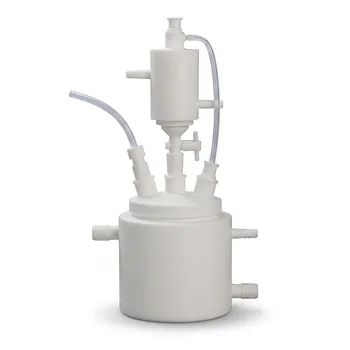
Specialized apparatus may be required to prevent local hot spots during polymerization. Cooling capacity should account for credible upset conditions, including loss of normal heat removal.
Avoid Unnecessary Pressure and Temperature
TFE becomes more hazardous as pressure and temperature increase. Operate within a validated envelope with independent high-temperature and high-pressure protection.
Pressure relief systems must be designed for credible polymerization and decomposition scenarios. Conventional relief assumptions may be inadequate for rapidly reacting TFE systems, so relief design requires specialist process-safety review.
Consider Inert Diluents Only After Validation
Pressurized mixtures with an inert diluent such as carbon dioxide may reduce flammability under some validated storage or transport conditions. However, dilution does not remove the need for oxygen control, thermal management, compatible materials, and pressure protection.
Any diluent strategy must be proven for the full composition range, phase behavior, relief scenario, separation method, and downstream polymerization process.
Understanding the Trade-offs
Inhibitors Can Affect Product Quality
An inhibitor that improves storage stability may affect polymerization kinetics, molecular weight, purity, or end-group composition. Removing it before polymerization may add purification steps and introduce additional handling hazards.
The correct approach is to qualify both the safety benefit and the effect on the final fluoropolymer.
Fluoropolymer Components Have Mechanical Limits
PFA and PTFE offer useful chemical resistance, but they can creep, permeate gases, and lose mechanical strength at elevated temperature or pressure. Metal-free construction is not automatically the safest design if it compromises pressure integrity.
Use a materials and mechanical-design review rather than choosing components solely by chemical compatibility.
Oxygen Specifications Are Not the Entire Safety Case
Maintaining oxygen below 20 ppm addresses oxygen-initiated autopolymerization, but TFE can also undergo hazardous decomposition without air. A safe system therefore needs controls for both oxygen-driven reaction and anaerobic decomposition.
Emergency Response Must Be Defined in Advance
If oxygen rises, temperature increases unexpectedly, pressure changes rapidly, or polymer formation restricts flow, operators need a predetermined response. This normally includes isolation, controlled depressurization or quench procedures where validated, remote operation, exclusion zones, and specialist emergency support.
Operators should not improvise interventions on a pressurized TFE system.
Making the Right Choice for Your Goal
Use the safeguards as a layered system rather than relying on one inhibitor or one equipment material.
- If your primary focus is storage stability: Maintain oxygen below the validated limit, use a qualified terpene inhibitor, control temperature and pressure, and verify inhibitor and oxygen levels throughout the storage period.
- If your primary focus is safe transfer: Use a dedicated, leak-tight, vacuum-degassed delivery system with compatible PFA/PTFE components, calibrated oxygen monitoring, inert purging, and automatic isolation.
- If your primary focus is polymerization reliability: Qualify inhibitor concentration, monomer purity, heat removal, agitation, and end-group chemistry together so that stability controls do not compromise resin properties.
- If your primary focus is facility safety: Complete a formal process hazard analysis covering oxygen ingress, hot spots, runaway polymerization, anaerobic decomposition, relief design, remote operation, and emergency response.
Reliable TFE handling comes from combining oxygen exclusion, compatible equipment, inhibitor management, and strict thermal-pressure control within a formally validated process-safety system.
Summary Table:
| Prevention Measure | Key Actions | Critical Limits/Considerations |
|---|---|---|
| Oxygen Control | Leak-tight systems, vacuum degassing, inert purging, continuous monitoring | <20 ppm oxygen; interlock admission above limit |
| Inhibitor Use | Add terpenes (alpha-pinene, d-limonene) as secondary barrier | Concentration qualified for TFE grade and process |
| Material Selection | Use PFA/PTFE components; avoid metal catalysis | Check pressure/temperature ratings and compatibility |
| Pressure/Temperature Management | Prevent hot spots; operate within validated envelope | Independent high-T/P protection; relief for credible scenarios |
| Emergency Preparedness | Predefine response: isolation, controlled depressurization | Remote operation, exclusion zones, specialist support |
Ensure TFE safety with KINTEK's high-performance fluoropolymer apparatus. Our PTFE/PFA labware, tubing, valves, and custom CNC-machined parts are designed for rigorous oxygen control and chemical compatibility. Contact our experts today to optimize your TFE handling system for safety and reliability. Contact us now to discuss your specific requirements and benefit from our end-to-end solutions tailored for fluoropolymer applications.
Related Products
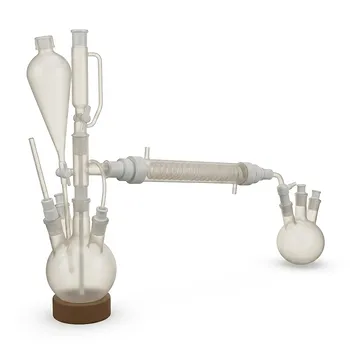
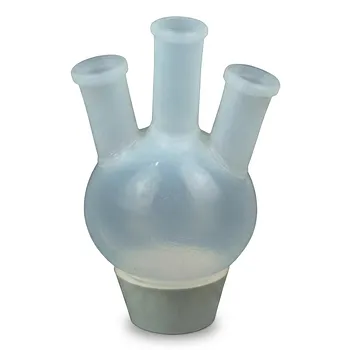
- PTFE Distillation Condensation Apparatus High Temperature Hydrofluoric Acid Resistant Fluorination Reaction Flask
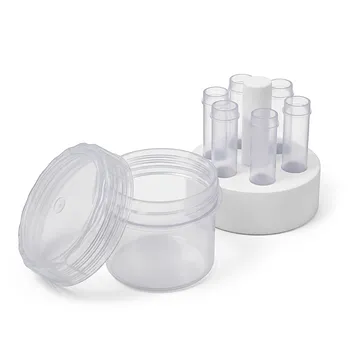
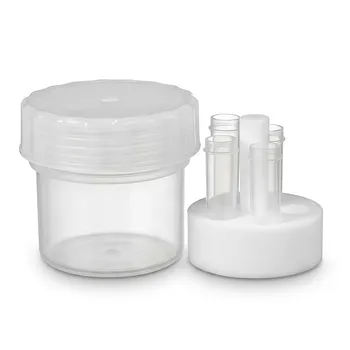
- High Purity Corrosion Resistant PFA Reaction Vessel with PTFE Holder and Integrated Sampling Tube for Trace Analysis
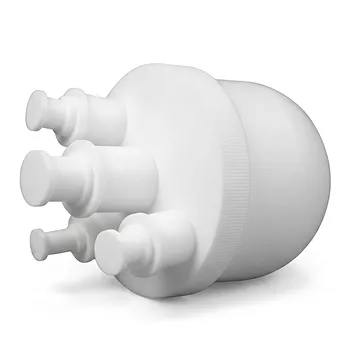
- High Purity PTFE Single Neck Reaction Flask Acid Resistant Customizable Fluoropolymer Laboratory Reactor
- Corrosion Resistant Hydrogen Fluoride Reflux Apparatus PTFE Flask Condenser Separatory Funnel Collection Bottle High Temperature Laboratory System
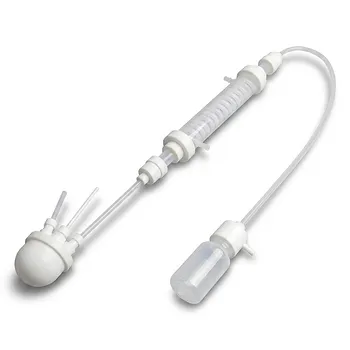
- Custom PTFE Continuous Reaction Bottles Virgin Fluoropolymer High Purity Low Background Synthesis Vessels
People Also Ask
- How does the low surface energy of PTFE benefit the condensation process? Boost Heat Transfer and Prevent Fouling
- What structural characteristics provide PTFE fluoropolymer laboratory apparatus with high thermal stability? Strong C-F bonds, dense fluorine shielding, and rigid helical conformation ensure stability during high-temperature analysis.
- How do pyrolysis temperature and steam diluent ratios influence tetrafluoroethylene (TFE) conversion and yield in fluoropolymer monomer reaction apparatus? Optimize TFE yield with temperature and steam control
- What impact does thermal annealing and crystallization temperature have on the material properties of custom-machined fluoropolymer apparatus? Optimize Performance with Controlled Thermal Processing
- What technical challenges exist in synthesizing main-chain fluorinated polymers? Discover why PTFE/PFA apparatus is ideal for these processes.