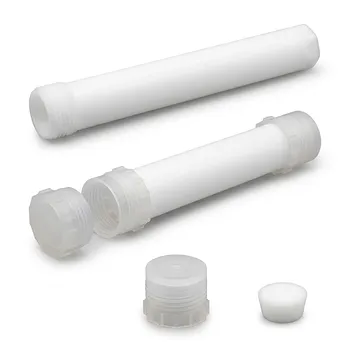
PTFE fluoropolymers protect sample purity and operator safety through a combination of high-temperature stability, chemical inertness, and flame resistance. PTFE remains mechanically useful up to an approximately 260°C continuous service temperature and does not become a freely flowing liquid at temperatures above 300°C, although its mechanical strength declines as it approaches its melting point near 327°C. Its highly fluorinated structure resists attack from most acids, bases, and organic solvents used in digestion, preventing vessel degradation, analyte contamination, and unwanted chemical reactions.
The central benefit of PTFE in high-temperature digestion is material stability: the vessel remains resistant to heat and aggressive reagents long enough to protect both the sample and the equipment, provided operating temperatures remain within the manufacturer’s limits.
How PTFE Preserves Sample Purity
Chemical Inertness Limits Contamination
PTFE has a carbon backbone protected by strong carbon-fluorine bonds. This structure gives it exceptional resistance to concentrated mineral acids, organic solvents, and many strong bases used in sample digestion.
Because the vessel walls are not readily attacked by these reagents, they are less likely to release metallic, organic, or polymer-derived contaminants into trace-level samples.
Low Reactivity Protects Analytes
A digestion vessel should contain the reaction without becoming part of it. PTFE is sufficiently non-reactive for most conventional acid digestion environments, so it does not normally consume reagents, catalyze unwanted reactions, or chemically alter the analytes being measured.
This is particularly important in trace-element analysis, where contamination at very low concentrations can affect the result.
Low Adsorption Supports Recovery
PTFE is hydrophobic and has a low-friction surface. These properties reduce the tendency of many materials to adhere to the vessel wall, helping limit analyte loss through adsorption during digestion, rinsing, and sample transfer.
This does not eliminate every recovery problem. Sample chemistry, surface condition, cleaning practices, and the specific analyte still determine whether adsorption occurs.
How PTFE Performs Under High Heat
Continuous Service Temperature Matters Most
PTFE is commonly rated for continuous service up to approximately 260°C, depending on the product design, pressure, exposure time, and operating conditions. This is the relevant practical limit for digestion equipment.
Its melting point is near 327°C, but melting point is not a safe operating temperature. As PTFE approaches that point, mechanical stiffness and load-bearing capability can deteriorate even before the material becomes fully molten.
Thermal Stability Maintains Vessel Integrity
The dense fluorinated molecular structure restricts polymer-chain movement and helps PTFE resist softening, creep, and degradation under severe thermal and chemical conditions. This allows properly designed vessels to retain their shape during microwave or block digestion procedures.
PTFE can therefore tolerate temperatures substantially higher than the atmospheric boiling points of common laboratory acids when used in a suitable sealed or controlled digestion system.
Thermal Endurance Adds Fire Resistance
PTFE is difficult to sustain in ordinary atmospheric combustion because its limiting oxygen index is about 95%, compared with roughly 21% oxygen in air. It is also commonly classified as UL94 V-0, meaning it self-extinguishes rapidly in the specified vertical burning test without flaming droplets.
Its low net heat of combustion further limits energy release compared with many conventional plastics. These characteristics reduce fire propagation risk, but they do not make PTFE equipment fireproof or suitable for uncontrolled overheating.
Why These Properties Matter in Digestion Equipment
The Vessel Separates Heat, Pressure, and Chemistry
Microwave digestion combines aggressive reagents with elevated temperature and, frequently, elevated pressure. PTFE provides a chemically resistant containment surface while the vessel design manages the associated thermal and mechanical loads.
The polymer’s resistance to acid attack helps preserve the vessel wall during repeated digestion cycles. Its thermal endurance helps prevent deformation when the procedure is operated within the equipment’s specified limits.
Purity Depends on the Entire System
PTFE can minimize vessel-derived contamination, but sample purity also depends on seals, liners, caps, tubing, cleaning procedures, reagents, and laboratory handling. A PTFE liner cannot compensate for contaminated acids or metal components exposed directly to the digestion mixture.
For ultra-trace work, laboratories should validate the complete vessel assembly with blanks and recovery studies rather than relying on the material designation alone.
PTFE and PFA Have Related but Different Uses
PTFE and PFA both provide broad chemical inertness and high-temperature resistance. PFA is often selected where greater melt-processability, transparency, or geometric flexibility is needed, while PTFE is widely used for robust liners, vessels, crucibles, and machined components.
The appropriate choice depends on temperature, pressure, mechanical loading, transparency requirements, dimensional tolerances, and the specific reagent combination.
Understanding the Trade-offs
The Melting Point Is Not the Operating Limit
A PTFE vessel may remain solid above 300°C, but that does not mean it retains the mechanical strength required for a pressure-bearing digestion process. Continuous operation should generally remain near or below the stated 260°C service rating, unless the equipment manufacturer specifies otherwise.
Temperature, pressure, exposure time, wall thickness, and applied load must be considered together.
Overheating Can Cause Decomposition
PTFE is thermally stable under normal processing conditions, but accidental overheating can eventually produce decomposition products and off-gassing. The risk increases when temperature controls fail, vessels run dry, or localized hot spots develop.
Heating systems should use functional temperature limit switches and should operate at the lowest temperature required by the procedure. Local exhaust or forced ventilation should be provided where the process could generate volatile decomposition products or organic vapors.
Chemical Inertness Has Limits
PTFE is highly resistant to the acids, bases, and solvents commonly used in digestion, but “non-reactive with virtually all chemicals” is not the same as universal compatibility. Certain extreme environments, including some highly reactive fluorinating conditions and molten alkali-metal systems, require separate compatibility verification.
Compatibility must also account for temperature and concentration. A reagent that is acceptable at room temperature may impose different stresses at elevated temperature or pressure.
Thermal Expansion and Creep Still Matter
PTFE has relatively high thermal expansion and can deform under sustained mechanical load, particularly near its upper temperature range. Seals, threaded parts, vessel closures, and pressure interfaces therefore require careful design and inspection.
Repeated thermal cycling can also affect dimensions and sealing performance. Equipment should be replaced or requalified when it shows cracking, permanent deformation, discoloration, or loss of sealing reliability.
How to Apply This to Your Project
PTFE is a strong choice when the procedure requires both chemical purity and resistance to elevated temperature, but the equipment must be operated within its actual thermal and pressure ratings.
- If your primary focus is sample purity: Use high-purity PTFE or PFA components, validate the full assembly with reagent blanks, and control cleaning and reagent contamination as carefully as the vessel material.
- If your primary focus is high-temperature digestion: Keep continuous operation within the manufacturer’s service-temperature and pressure limits, recognizing that the melting point is not a safe process limit.
- If your primary focus is operator safety: Use temperature-limit controls, prevent dry heating and hot spots, and provide local exhaust or forced ventilation to manage any products of accidental overheating.
- If your primary focus is long-term equipment reliability: Inspect liners, seals, closures, and stressed components for creep or deformation after repeated thermal cycles and aggressive chemical exposure.
When correctly specified and controlled, PTFE fluoropolymer equipment provides a stable, low-contamination barrier between aggressive digestion chemistry, sensitive samples, and the laboratory environment.
Summary Table:
| Property | Value/Description | Implication for Digestion |
|---|---|---|
| Continuous Service Temperature | ~260°C | Maintains mechanical integrity during digestion |
| Melting Point | ~327°C | Not a safe operating limit; mechanical strength declines |
| Chemical Inertness | Resists most acids, bases, solvents | Prevents contamination and vessel degradation |
| Limiting Oxygen Index (LOI) | ~95% | Self-extinguishing, reduces fire risk |
| UL94 Flammability Rating | V-0 | Self-extinguishes rapidly |
| Hydrophobicity / Low Friction | Reduces adsorption | Minimizes analyte loss |
| Thermal Expansion / Creep | High at elevated temps | Requires careful design and inspection |
Ensure your lab's sample purity and safety with high-performance PTFE digestion vessels from KINTEK. Our PTFE and PFA products are designed for demanding high-temperature digestion applications, offering exceptional chemical inertness and thermal stability. Whether you need standard crucibles, custom digestion vessels, or complete lab setups, our custom CNC machining capabilities ensure a perfect fit for your requirements. For reliable, contamination-free digestion, trust KINTEK's expertise. Contact us today to discuss your needs and elevate your laboratory's performance!
Related Products
- Custom Thickened PTFE Beaker High Temperature Hot Plate Heating Laboratory Fluoropolymer Vessel Chemical Resistant Digestion Beaker
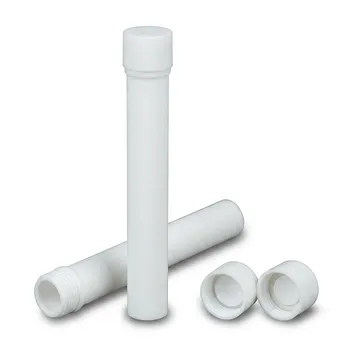
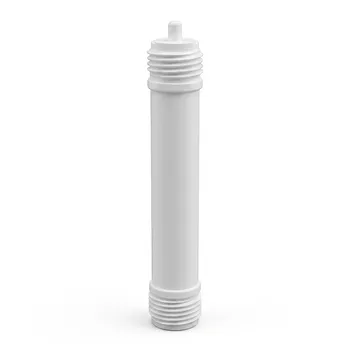
- Custom PTFE Digestion Tube Double Sided Openable High Temperature Corrosion Resistant Low Background
- High Purity PTFE Microwave Digestion Vessels for 44 Position Systems Trace Analysis Acid Digestion and Evaporation
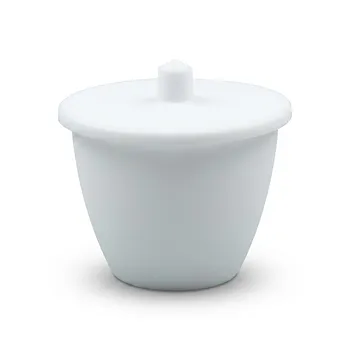
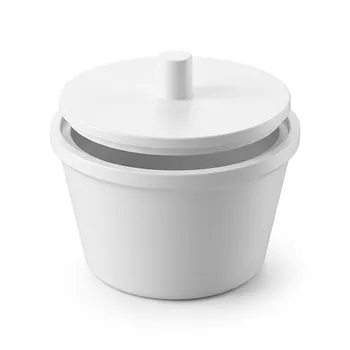
- High Temperature Corrosion Resistant Customizable PTFE Laboratory Digestion Crucible with Lid Small Volume Hot Plate Compatible Vessel
- High Performance PTFE Microwave Digestion Vessel Replacement Bespoke Fluoropolymer Acid Digestion Tank Intelligent Sample Preparation Labware
People Also Ask
- Why is the material of the reaction vessel critical for tribocatalytic degradation? Boost Your Catalytic Yield!
- What fundamental chemical properties make PTFE the material of choice for high-temperature chemical digestion vessels and aggressive reaction apparatus? Discover its chemical inertness and thermal stability.
- What are the limitations of pure PTFE in high temperature applications? Understanding the 200°C Ceiling
- Why are PTFE and PFA preferred over FEP for high-temperature digestion vessels and extreme chemical reaction apparatus? Key thermal margins and chemical resistance
- Are Teflon parts capable of withstanding high temperatures? Understanding the 260°C Limit for Performance