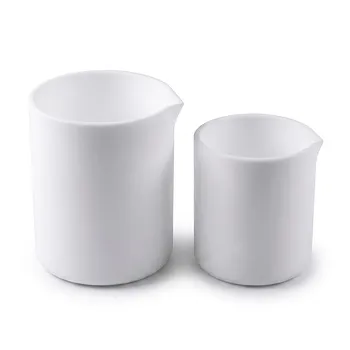
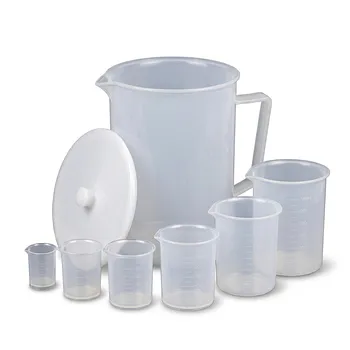
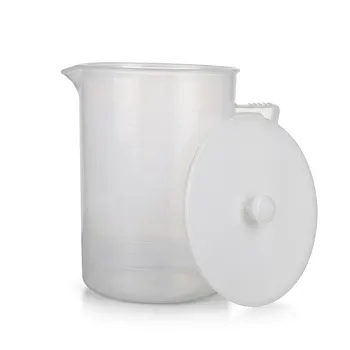
The material of your reaction vessel serves as a functional component of the catalytic system rather than a passive container.
The choice of Polypropylene (PP) or Polytetrafluoroethylene (PTFE) is critical because these materials dictate the electronegativity and friction coefficient at the reaction interface. By optimizing the contact between the vessel and the stirring bar, these polymers maximize the triboelectric effect, which significantly increases the production of active free radicals and accelerates the degradation of organic pollutants.
Core Takeaway: Selecting high-electronegativity polymer vessels like PP or PTFE optimizes charge transfer efficiency during friction. This ensures a higher yield of reactive oxygen species (ROS) compared to traditional glass, directly increasing the speed and efficiency of the tribocatalytic process.
The Role of Electronegativity in Charge Generation
Optimizing the Triboelectric Series
Every material has a specific position on the triboelectric series, which determines its tendency to gain or lose electrons. Compared to traditional glass, polymers like PP and PTFE provide a distinct electronegativity profile that enhances charge exchange when paired with a moving stirrer.
Maximizing Electron Transfer Efficiency
When a PTFE stirring bar interacts with a PP or PTFE vessel, the difference in their surface properties creates a more potent charge exchange. This interaction generates a stronger unbalanced electric field, which is the primary driver for converting mechanical friction into chemical energy.
Preventing Charge Dissipation
Standard glass beakers are often less efficient at accumulating the surface charges necessary for catalysis. Polymer materials allow for more effective electron capture and accumulation, ensuring that the energy generated by friction is directed toward the catalyst rather than being lost to the environment.
Impact on Catalyst Activation and ROS Production
Facilitating Effective Charge Separation
The intense triboelectric effect generated in polymer vessels promotes better charge separation on the surface of the catalyst particles. This process prevents the immediate recombination of electrons and holes, which is a common bottleneck in catalytic efficiency.
Increasing the Yield of Reactive Oxygen Species (ROS)
By maintaining a high density of separated charges, the system can produce a greater volume of holes and Reactive Oxygen Species (ROS). These species possess high oxidative capabilities, which are essential for breaking down complex molecular structures like dyes or pharmaceuticals.
Accelerating Degradation Kinetics
Experimental data indicates that using a PP vessel with a PTFE stirring bar results in a significantly higher degradation rate. This improvement is a direct result of the optimized friction interface providing the necessary "spark" to drive the chemical breakdown of the target contaminants.
Chemical and Mechanical Advantages of Polymer Vessels
Superior Chemical Inertness
High-stability fluoropolymers like PTFE are essentially chemically inert, meaning they do not react with strong acids, bases, or oxidative agents. This ensures that the vessel itself does not undergo secondary reactions that could interfere with the kinetic data or contaminate the sample.
Ensuring High-Purity Results
In sensitive reactions, such as the wet chemical reduction of catalysts, PTFE prevents the introduction of external impurities. This is vital for maintaining the integrity of the material being synthesized and ensuring that the observed degradation is purely a result of the catalyst.
Durability Under Mechanical Stress
The low friction coefficient and high wear resistance of PTFE ensure that the vessel can withstand continuous mechanical motion. This durability prevents the vessel walls from shedding micro-particles into the reaction mixture, which could otherwise skew the experimental results.
Understanding the Trade-offs
Thermal and Pressure Limitations
While PP and PTFE are chemically robust, they have lower thermal stability than borosilicate glass. PP, in particular, may deform under high temperatures, which can alter the friction interface and reduce the consistency of the tribocatalytic effect.
Potential for Static Retention
The high electronegativity of these materials can lead to significant static charge buildup on the vessel exterior. This can sometimes make the recovery of fine powder catalysts difficult, as particles may adhere to the walls due to electrostatic attraction.
How to Apply This to Your Project
Recommendations for Vessel Selection
- If your primary focus is maximum degradation speed: Utilize a PP or PTFE vessel paired with a PTFE stirring bar to maximize the triboelectric effect and ROS production.
- If your primary focus is high-temperature stability: Consider a PTFE-lined stainless steel vessel to balance chemical inertness with structural integrity under heat.
- If your primary focus is analytical precision and purity: Stick with high-purity PTFE (or PFA) to eliminate any risk of vessel-wall interference or secondary chemical reactions.
- If your primary focus is cost-effective scaling: Use PP vessels for room-temperature applications, as they offer a significant performance boost over glass at a lower cost than PTFE.
By strategically matching the vessel material to the electronegativity of your stirring components, you transform the reaction container from a simple holder into an active driver of catalytic efficiency.
Summary Table:
| Material Type | Electronegativity | Charge Retention | Chemical Inertness | Recommended Use |
|---|---|---|---|---|
| Glass | Low | Poor | Moderate | General non-catalytic mixing |
| PP (Polypropylene) | High | Good | High | Cost-effective room temp reactions |
| PTFE/PFA | Very High | Superior | Excellent | High-purity, high-efficiency catalysis |
| PTFE-Lined | High | Superior | Excellent | High-pressure/High-temp stability |
Maximize Your Catalytic Performance with KINTEK
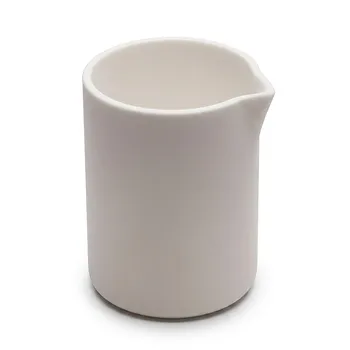
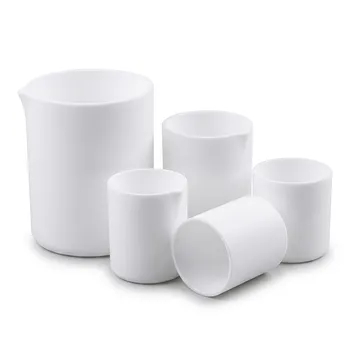
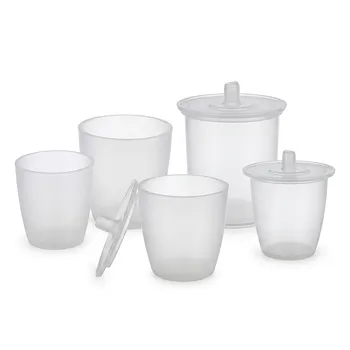
Is your reaction vessel hindering your results? At KINTEK, we transform laboratory containers into high-performance functional components. We specialize in an extensive range of labware crafted exclusively from PTFE and PFA, ensuring your experiments achieve maximum triboelectric efficiency and zero contamination.
From everyday essentials like beakers, measuring cylinders, crucibles, and reagent bottles to precision-engineered high-purity trace analysis instruments and cleaning tanks, we provide the tools necessary for scientific excellence. Our catalog extends to fluid transfer components (tubing, valves), filtration tools (separatory funnels, filters), and advanced reaction apparatus such as custom electrochemical cells, battery testing fixtures, and microwave digestion vessels.
Why choose KINTEK?
- Expert Fabrication: End-to-end custom CNC machining for non-standard, bespoke laboratory setups.
- High-Performance Materials: An absolute focus on fluoropolymers (PTFE/PFA) for superior chemical inertness.
- Versatility: From high-volume consumable orders to complex, one-off engineering projects.
Don't let standard glass limit your degradation kinetics. Contact us today to source the high-purity fluoropolymer tools your research deserves!
References
- Ajibola A. Bayode, Antonella Glisenti. Modification of a flexoelectric perovskite type LaMnO3 with APg-C3N4 for the removal of organic micropollutants: a synergy between tribo-catalysis and photo-illumination. DOI: 10.1186/s13065-025-01578-z
This article is also based on technical information from Kintek Knowledge Base .
Related Products
- High Temperature Resistant Thickened PTFE Beaker 2000ml for Chemical Processing and Laboratory Trace Analysis
- High Purity Custom PTFE Beaker 5000ml With Lid Hot Plate Heating Compatible High Temperature Chemical Labware
- Custom Thickened PTFE Beaker 3000ml Hotplate Heating High Temperature Deformation Resistant Fluoropolymer Labware
- Custom PTFE Beaker Thickened Design for Hot Plate Heating 200C Heat Resistant Anti Deformation Laboratory Glassware Alternative
- Custom Thickened PTFE Beaker High Temperature Hot Plate Heating Resistant Precision Laboratory Labware Customizable Fluoropolymer Vessel
People Also Ask
- What advantages do PTFE's surface properties provide for lab tools? Optimize Sample Recovery and Tool Longevity
- What structural characteristics provide PTFE fluoropolymer laboratory apparatus with high thermal stability? Strong C-F bonds, dense fluorine shielding, and rigid helical conformation ensure stability during high-temperature analysis.
- How do PTFE fluoropolymer labware's surface energy and coefficient of friction improve sample recovery and lab safety?
- What PTFE chemical properties make it safe for hydrofluoric acid? Discover inertness & high-temp stability.
- What key physical parameter differences should laboratory engineers evaluate when choosing between PTFE fluoropolymers and polyethylene for corrosion-resistant custom labware? Key factors explained.