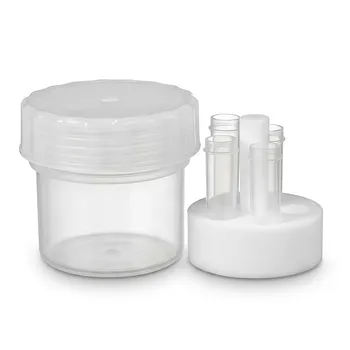
PTFE fluoropolymer laboratory apparatus achieves high thermal stability through its molecular architecture, not simply its high melting point. A linear, unbranched carbon backbone is enclosed by a dense sheath of fluorine atoms, while strong carbon-fluorine bonds and a rigid helical conformation resist chain motion, chemical attack, and thermal degradation. These characteristics allow PTFE components to retain structural integrity and chemical inertness during demanding procedures such as microwave digestion and heated reaction work.
PTFE’s thermal stability comes from the combination of strong C-F bonding, dense fluorine shielding, restricted molecular mobility, and a high melting and decomposition temperature. Together, these structural features help laboratory apparatus withstand intense heat without the rapid softening, oxidation, or chemical contamination associated with conventional plastics.
Why PTFE Resists Thermal Degradation
Strong Carbon-Fluorine Bonding
PTFE replaces the hydrogen atoms found in many hydrocarbon polymers with fluorine. The resulting carbon-fluorine bonds require substantial energy to break, making the polymer backbone resistant to thermal cleavage and chemical attack.
The relevant thermal-degradation barrier should not be confused with a single universal bond-dissociation value. Depending on the measurement and calculation method, references report different values, but the engineering conclusion is consistent: PTFE’s fluorinated backbone is unusually difficult to disrupt.
Dense Fluorine Shielding
Fluorine atoms form a continuous protective sheath around the carbon backbone. Their size and electronegativity shield the internal carbon-carbon structure from oxidation, solvent penetration, and direct contact with reactive species.
This shielding is important in analytical equipment because it protects both the apparatus and the sample environment. It helps prevent corrosive reagents from attacking the material or extracting contaminants into trace-level samples.
Rigid Helical Conformation
PTFE chains adopt a tightly organized helical conformation, commonly described as a 13/6 helix. The fluorine atoms are densely arranged around the backbone, creating steric repulsion that limits rotation and large-scale movement of adjacent polymer segments.
Restricted chain mobility reduces the likelihood of thermally induced rearrangement and deformation. It also contributes to PTFE’s ability to remain dimensionally stable under sustained heating below its recommended operating limit.
How PTFE’s Structure Supports High-Temperature Use
High Melting Temperature
Virgin PTFE has an initial melting point near 342°C and a secondary melting point near 327°C. These values are substantially higher than the approximate 105–140°C melting range of polyethylene.
A high melting point gives PTFE a wide margin between ordinary high-temperature operation and loss of its crystalline structure. It does not mean that PTFE remains mechanically unchanged up to its melting point, however; creep and deformation can occur well below melting when loads, time, and temperature combine unfavorably.
High Thermal-Decomposition Resistance
PTFE’s reported thermal-decomposition midpoint is approximately 505°C, while decomposition onset is generally reported above 400°C, depending on test conditions and material history. This resistance delays significant molecular breakdown during high-temperature procedures.
The practical operating limit remains lower than the decomposition threshold. PTFE components are commonly assigned a maximum continuous-use temperature near 260°C, because mechanical performance and dimensional stability matter before chemical decomposition begins.
Limited Oxidation and Chemical Attack
The fluorine sheath protects the backbone from oxygen, aggressive reagents, and many solvents. PTFE is therefore highly resistant to the combined stress of heat and corrosive chemistry, which is common in digestion vessels, trace-analysis containers, and reaction assemblies.
This combination is more valuable than thermal resistance alone. A material may tolerate heat but still fail when heat accelerates oxidation, solvent absorption, or reagent attack; PTFE resists these mechanisms simultaneously under its specified conditions.
Flame Resistance
The same fluorinated structure gives PTFE strong resistance to sustained combustion. Its reported limiting oxygen index is approximately 95%, far above the oxygen concentration of ordinary air, and it is commonly classified as self-extinguishing in standard flammability testing.
These properties reduce the likelihood of sustained burning when apparatus is exposed to an external ignition source. They do not make PTFE immune to overheating or eliminate the need to control temperature and ventilation.
Why PTFE Performs Better Than Standard Plastics
Greater Backbone Stability Than Polyethylene
Polyethylene contains carbon-hydrogen bonds and has a less effectively shielded hydrocarbon backbone. Its lower melting range leaves it more vulnerable to softening and loss of dimensional stability during heated analytical procedures.
PTFE’s stronger fluorinated bonds and restricted chain mobility provide a substantially higher resistance to thermal and chemical damage. This is why PTFE is preferred where polyethylene would soften, deform, or become chemically unsuitable.
Lower Structural Vulnerability Than Some Related Fluoropolymers
PTFE has a linear, unbranched backbone with a relatively uniform fluorine shield. By comparison, FEP contains structural features including tertiary carbon sites and pendant CF3 groups that can create more vulnerable points during elevated-temperature oxidation.
This difference contributes to the commonly cited continuous-use limits of approximately 260°C for PTFE and 205°C for FEP, although the actual limit depends on design, load, exposure time, and the manufacturer’s specifications.
Preservation of Chemical Inertness
PTFE is effectively insoluble in common organic solvents below its melting temperature and resists many halogenated solvents and corrosive media. The material therefore maintains a low-reactivity surface while subjected to heat.
For analytical work, this helps preserve sample integrity. The apparatus is less likely to contribute extractables, react with digestion reagents, or introduce contamination through surface degradation.
Understanding the Trade-offs
Thermal Stability Is Not Unlimited
PTFE should not be operated at or above its decomposition range. Excessive temperatures can cause structural failure and may generate hazardous or contaminating decomposition products.
The correct temperature limit must account for the specific grade, component geometry, pressure, mechanical load, heating rate, and duration of exposure. Manufacturer ratings should take precedence over general material-property values.
Creep Can Occur Below the Melting Point
PTFE has relatively low stiffness compared with many reinforced engineering plastics, and it can undergo cold flow or creep under sustained mechanical stress. Heat increases this tendency even when the polymer remains below its melting temperature.
Consequently, high-temperature vessels, seals, and supports should be designed to minimize continuous load and unsupported spans. Dimensional stability must be evaluated separately from chemical resistance.
Decomposition Products Require Control
Overheating PTFE can produce fumes and decomposition products that present safety concerns and may contaminate analytical systems. The absence of ordinary melting or burning does not mean that uncontrolled heating is harmless.
Laboratory procedures should use accurate temperature control, suitable ventilation, and operating conditions that remain below the component’s specified continuous-use limit.
Material Selection Still Matters
Virgin PTFE offers excellent purity and chemical resistance, but fillers or reinforcement can alter its thermal expansion, stiffness, wear behavior, and contamination profile. A filled grade may be mechanically stronger while being less appropriate for ultra-clean trace analysis.
Material selection should therefore consider both the thermal environment and the analytical requirement. Purity, dimensional stability, pressure resistance, and compatibility with the specific reagents all matter.
Making the Right Choice for Your Goal
PTFE is most effective when its molecular advantages are matched to realistic operating conditions.
- If your primary focus is high-temperature chemical resistance: Select PTFE apparatus for its strong fluorinated backbone, dense shielding, and resistance to combined heat and aggressive reagents.
- If your primary focus is dimensional stability: Keep operating temperatures below the specified continuous-use limit and control mechanical loads because PTFE can creep before it melts.
- If your primary focus is trace analytical purity: Prefer an appropriate virgin-PTFE grade and verify that fillers, processing residues, and thermal exposure will not compromise contamination control.
- If your primary focus is operational safety: Use temperature monitoring, ventilation, and manufacturer limits because PTFE’s high decomposition temperature is not a permissible operating temperature.
Understanding PTFE’s bonding, shielding, and chain structure makes it possible to use its thermal stability confidently without mistaking heat resistance for unlimited temperature tolerance.
Summary Table:
| Structural Feature | Contribution to Thermal Stability |
|---|---|
| Carbon-Fluorine Bonding | High bond energy resists thermal cleavage and chemical attack. |
| Dense Fluorine Shielding | Protective sheath prevents oxidation and solvent penetration. |
| Rigid Helical Conformation | Restricts chain motion, maintaining dimensional stability. |
Upgrade your lab with KINTEK's high-purity PTFE and PFA apparatus, engineered for thermal stability and chemical inertness. From digestion vessels to custom CNC-machined parts, our fluoropolymer solutions ensure reliable performance in high-temperature analysis. Contact us today to discuss your requirements and experience the KINTEK advantage. Get in touch!
Related Products
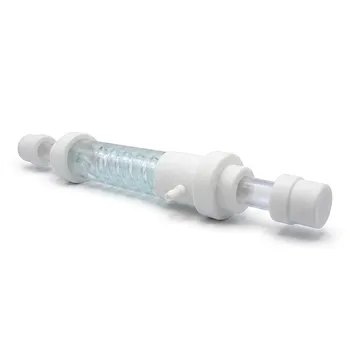
- Corrosion Resistant Hydrogen Fluoride Reflux Apparatus PTFE Flask Condenser Separatory Funnel Collection Bottle High Temperature Laboratory System
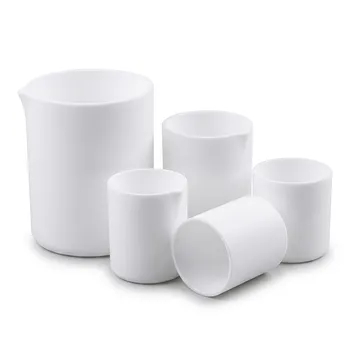
- High Purity PFA Crucible and Corrosion Resistant PTFE Beaker for Trace Analysis and Custom Laboratory Applications
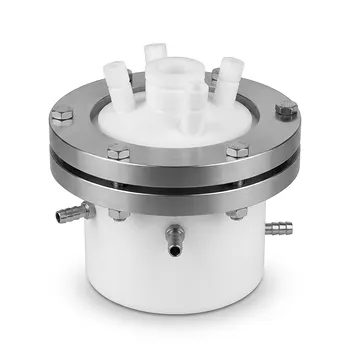
- PTFE Distillation Condensation Apparatus High Temperature Hydrofluoric Acid Resistant Fluorination Reaction Flask
- Heat Resistant Custom PTFE Laboratory Beaker for Hot Plate Heating and Trace Analysis
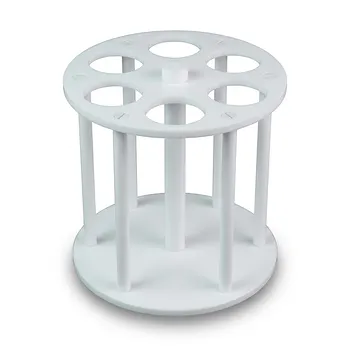
- Custom PFA Microcolumn Racks and PTFE Machined Low Background Corrosion Resistant Laboratory Fixtures
People Also Ask
- How does resin stratification occur during the curing of fluoropolymer coatings, and why might solid fluoropolymer laboratory apparatus be preferred over surface coatings for aggressive chemical applications?
- What impact does thermal annealing and crystallization temperature have on the material properties of custom-machined fluoropolymer apparatus? Optimize Performance with Controlled Thermal Processing
- How do extreme temperatures and harsh chemical environments affect PTFE and PFA lab apparatus? Achieve Reliable Performance in Demanding Conditions
- How do perfluorinated monomer building blocks impart superhydrophobic and oleophobic properties? Low surface energy is critical for fluoropolymer labware.
- What inherent physical and chemical properties make fluoropolymers ideal for high-performance laboratory equipment and reaction apparatus? Discover the Key to Durability & Purity