Operating temperature is the dominant factor, while pressure and atmosphere determine which degradation products are favored. PTFE remains suitable for continuous laboratory service up to approximately 260°C, but degradation accelerates above roughly 350–400°C and becomes rapid near 525°C. At higher temperatures, pressure changes the collision and recombination pathways that convert PTFE fragments into products such as tetrafluoroethylene, octafluorocyclobutane, hexafluoropropylene, and, under extreme conditions, highly toxic perfluoroisobutene.
The practical rule is simple: keep PTFE equipment well below its continuous-use limit whenever possible. Once decomposition begins, increasing temperature changes the product distribution, while pressure and atmosphere influence whether cyclic fluorocarbons, carbonyl fluoride, hydrogen fluoride, or highly toxic fluorinated compounds are formed.
Why Temperature Controls the Degradation Pathway
Normal operating temperatures preserve stability
PTFE laboratory components can retain useful mechanical properties during prolonged exposure near 250°C, and the commonly cited continuous-use limit is approximately 260°C. Within this range, thermal degradation and off-gassing are generally minimized.
The material may remain chemically resistant above its recommended operating limit, but chemical inertness does not mean unlimited thermal stability. Mechanical strength, dimensions, and purity can deteriorate before obvious visual damage appears.
Degradation accelerates above the recommended limit
Above the melting range of approximately 320–340°C, PTFE begins to undergo increasing polymer-chain scission rather than behaving as a conventional processable melt. Weight loss is gradual around 350°C, increases by approximately 425°C, and becomes extremely rapid near 525°C.
This temperature range is especially important for laboratory equipment because degradation can cause both structural failure and hazardous off-gassing. A vessel may lose dimensional accuracy, warp, or contaminate a sample before complete decomposition is visible.
Higher temperatures produce different compounds
Under vacuum or inert conditions, PTFE decomposition initially produces substantial quantities of tetrafluoroethylene (TFE). TFE is formed from difluorocarbene-derived fragments and acts as a key intermediate in subsequent reactions.
Between approximately 500°C and 700°C, TFE-derived intermediates can recombine and cyclize to form octafluorocyclobutane (OFCB). Above approximately 750°C, hexafluoropropylene (HFP) becomes increasingly significant because of rearrangement involving a 1,2-fluorine shift.
At around 900°C and 1 bar, HFP-derived radicals can react with difluorocarbene to form significant quantities of perfluoroisobutene (PFIB). PFIB is highly toxic, so this temperature regime represents a severe process-safety hazard rather than a normal operating condition for PTFE labware.
How Pressure Changes Product Formation
Lower pressure favors volatile decomposition products
Under vacuum, volatile products leave the reaction zone more readily. The primary reference identifies TFE as the main pyrolysis product under vacuum, reflecting the reduced opportunity for secondary collisions and reactions.
Reduced pressure can therefore shift the product distribution toward smaller, volatile fluorocarbon species. It does not make high-temperature PTFE processing safe; it changes how the decomposition products form and escape.
Increasing pressure reduces OFCB formation
In the approximately 500–700°C range, OFCB formation depends on collisions between TFE-derived biradicaloid intermediates. The reported relationship is that increasing reaction pressure reduces OFCB yield.
Pressure can alter residence time, collision frequencies, and the balance between competing radical pathways. The exact product distribution depends on the complete system, including temperature profile, gas composition, reactor geometry, and residence time.
Pressure does not eliminate toxic products
A change in pressure should not be treated as a control that prevents decomposition. At sufficiently high temperatures, PTFE generates reactive fluorocarbon intermediates regardless of whether the system is evacuated, inerted, or operated near atmospheric pressure.
Pressure management must therefore be combined with temperature limitation, compatible materials, containment, and engineered exhaust treatment.
Why Atmosphere Matters Alongside Pressure
Air introduces carbonyl fluoride pathways
In air, PTFE decomposition between approximately 460°C and 610°C can proceed exothermically and produce TFE and carbonyl fluoride (COF2). These products differ from the fluorocarbon mixtures typically emphasized for vacuum or inert heating.
The presence of oxygen can therefore change both the reaction energetics and the hazard profile. A system that behaves one way under vacuum may produce carbonyl-containing gases when heated in air.
Moisture can generate hydrogen fluoride
If moisture is present, secondary reactions involving fluorinated decomposition products can generate hydrogen fluoride (HF) and fluoroform. HF is highly corrosive and toxic, and its presence creates risks for personnel, equipment, and downstream ventilation components.
Atmosphere control should therefore address both oxygen and water vapor. Dry inert conditions may reduce some oxidation-related products, but they do not prevent the primary thermal breakdown of PTFE.
Inert conditions are not a license to exceed limits
Vacuum and inert gas can alter decomposition pathways and may avoid carbonyl oxides associated with heating in air. They do not preserve PTFE indefinitely at temperatures where its polymer chains are rapidly breaking apart.
For laboratory equipment, the appropriate objective is to maintain the material within its rated operating range, not to use atmospheric control to justify extreme-temperature exposure.
What This Means for Laboratory Equipment
Thermal limits are equipment limits
The approximately 260°C continuous-use limit should be treated as a design boundary for PTFE vessels, crucibles, liners, tubing, and reaction components. Short excursions above that value may not produce immediate decomposition, but repeated or prolonged exposure can reduce mechanical reliability and dimensional stability.
The relevant limit is also application-specific. Pressure loading, thermal gradients, mechanical stress, chemical contents, and heating rate can make an apparently acceptable temperature unsafe for a particular vessel.
Closed vessels increase the consequence of failure
In a sealed or partially sealed vessel, decomposition gases can accumulate and raise internal pressure. The resulting hazard is not limited to toxic exposure; it may include vessel rupture, uncontrolled release, and contamination of the process or sample.
High-temperature PTFE systems should therefore be evaluated as pressure systems as well as polymer components. Relief, containment, and exhaust provisions must account for possible decomposition products.
PFA is not exempt from thermal degradation
PFA shares PTFE's strong chemical resistance and high-temperature capability, but it also has thermal limits. Operating PFA or PTFE near or above decomposition thresholds can cause chain scission, off-gassing, loss of strength, and sample contamination.
Material selection should be based on the actual temperature-pressure-time profile, not solely on the polymer's resistance to acids, bases, or solvents.
Understanding the Trade-offs
Higher temperature improves processing but narrows the safety margin
Elevated temperature may be required for digestion, reaction kinetics, or process throughput. However, once the temperature approaches the decomposition regime, a small increase can produce a disproportionate increase in weight loss and hazardous gas generation.
The transition from gradual degradation to rapid decomposition is not a convenient operating window. It is a warning that the material is approaching failure.
Vacuum reduces some secondary reactions but increases volatility
Vacuum can favor TFE and other volatile fluorocarbon products while reducing certain collision-dependent products such as OFCB. It may also transport decomposition gases rapidly into pumps, exhaust lines, or the laboratory environment if the system is not properly trapped.
A vacuum system therefore requires compatible abatement and monitoring equipment, not merely a pump connection.
Ventilation is necessary but not sufficient
General laboratory ventilation may not adequately control a concentrated release of HF, carbonyl fluoride, or PFIB. Hazard controls should prioritize preventing decomposition through temperature control, then use closed handling, local exhaust, detection, and appropriate gas treatment as additional safeguards.
Operators should consult the equipment manufacturer's temperature-pressure ratings and the applicable institutional chemical-safety procedures before high-temperature use.
Making the Right Choice for Your Goal
The safest operating strategy is to control the complete thermal and pressure profile rather than focusing on temperature alone.
- If your primary focus is routine laboratory heating: Keep PTFE or PFA components comfortably below the approximately 260°C continuous-use limit to preserve mechanical integrity and minimize off-gassing.
- If your primary focus is digestion or high-temperature reaction work: Verify the vessel's temperature, pressure, duration, and chemical compatibility ratings together, and provide containment and exhaust controls for possible decomposition gases.
- If your primary focus is vacuum processing: Recognize that vacuum favors volatile products such as TFE and ensure pumps, traps, and exhaust systems are designed for fluorinated decomposition products.
- If your primary focus is process development above 400°C: Treat PTFE as a decomposing reactant rather than a passive vessel material and select a purpose-designed reactor material and gas-handling system.
Reliable high-temperature PTFE operation depends on staying within the material's rated limits and treating temperature, pressure, atmosphere, and exposure time as one integrated safety problem.
Summary Table:
| Factor | Influence on Degradation | Key Points |
|---|---|---|
| Temperature | Dominant factor; degradation accelerates above 350-400°C, rapid near 525°C | Keep below 260°C continuous use; higher temps change product distribution |
| Pressure | Affects product formation; lower pressure favors volatile products like TFE, higher reduces OFCB | Not a safety control; must be managed with temperature |
| Atmosphere | Air introduces carbonyl fluoride, moisture generates HF | Use inert conditions to reduce oxidation, but doesn't prevent thermal breakdown |
| Practical Rule | Stay well below limit; control pressure and atmosphere | Prevent decomposition, not just manage it |
Ensure the safety and longevity of your PTFE labware with KINTEK's high-performance fluoropolymer products. Our PTFE and PFA equipment are designed for reliable operation within safe temperature limits. Contact us today to discuss your specific requirements and benefit from our custom CNC machining capabilities. Get in touch to see how we can support your lab's needs.
Related Products
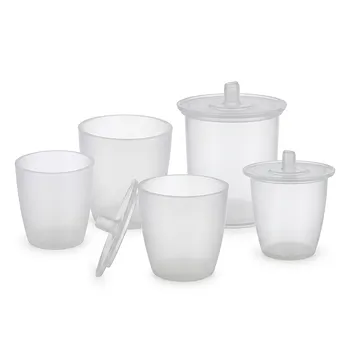
- High Purity PFA Crucible and Corrosion Resistant PTFE Beaker for Trace Analysis and Custom Laboratory Applications
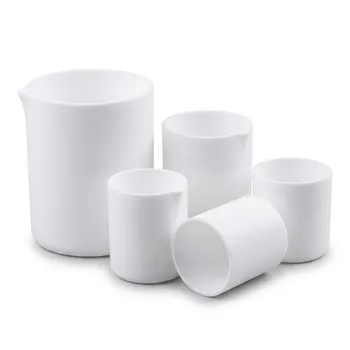
- Heat Resistant Custom PTFE Laboratory Beaker for Hot Plate Heating and Trace Analysis
- High Temperature Resistant PTFE Thermal Insulation Board Corrosion Resistant Metal Free Fluoropolymer Stand for Ultra Clean Laboratories
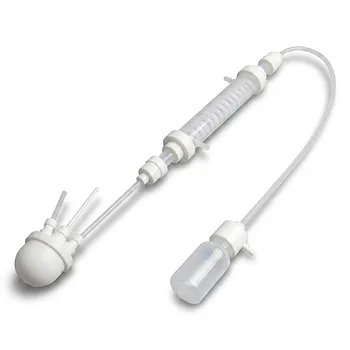
- Corrosion Resistant Hydrogen Fluoride Reflux Apparatus PTFE Flask Condenser Separatory Funnel Collection Bottle High Temperature Laboratory System
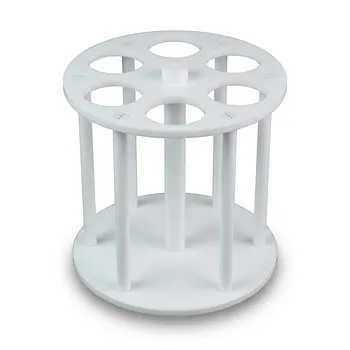
- Custom PFA Separatory Funnel Rack PTFE Machined Laboratory Support Stand Corrosion Resistant Low Background Fluoropolymer Fixture
People Also Ask
- Why are high-purity vessels critical for BiFeO3 synthesis? Ensuring Phase Purity
- Why is the use of high-purity PFA or PTFE labware critical during TiO2 nanoparticle purification? Protect Sample Purity
- Why is high-purity PFA labware necessary for Znx@LS-2 zeolite ICP-OES analysis? Ensure Trace-Level Precision
- Why is high-purity PFA trace analysis labware used for MXene? Ensure Superior Material Integrity in Research
- Why is high-purity PFA trace analysis labware recommended for trace element detection? Achieve Gold Standard PPT Accuracy