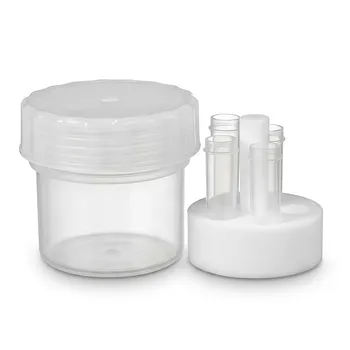
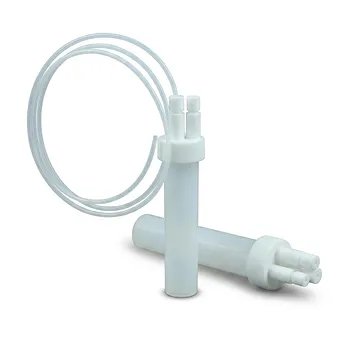
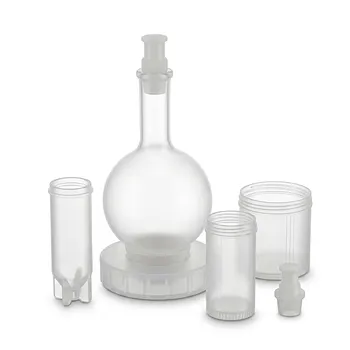
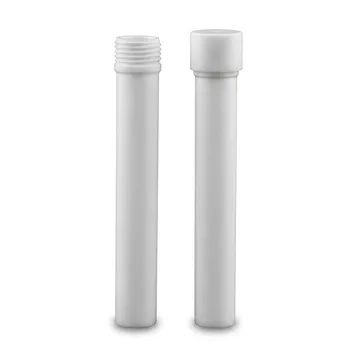
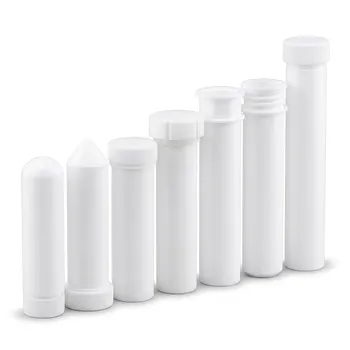
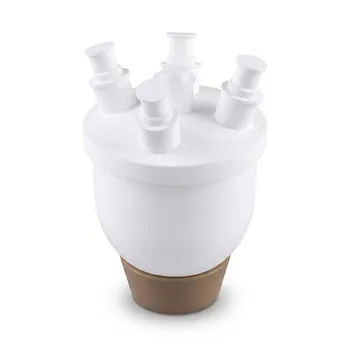
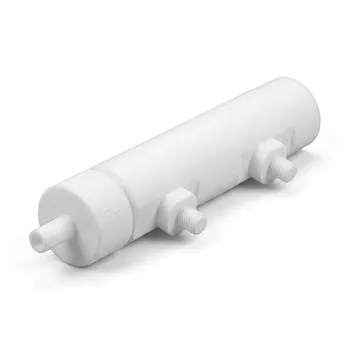
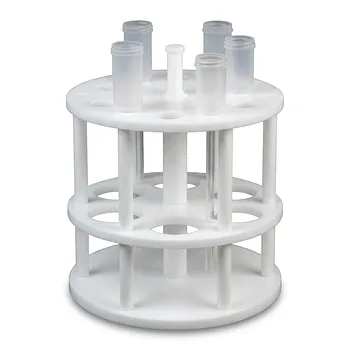
The integrity of nanomaterial research depends entirely on the elimination of external variables. Using high-purity PFA or PTFE labware is critical because these materials prevent the leaching of trace metal impurities and organic contaminants into the sample during the washing process. Without this level of purity, the catalytic performance of titanium dioxide ($TiO_2$) cannot be accurately measured, as external ions may interfere with the material’s natural active sites.
Core Takeaway: High-purity PFA and PTFE containers provide the extreme chemical inertness required to ensure that experimental results for $TiO_2$ nanoparticles are a true reflection of their intrinsic properties—such as particle size and crystal phase—undistorted by background contamination from the laboratory environment.
The Critical Impact of Trace Impurities on Nanoparticle Performance
Protecting Photocatalytic Active Sites
Titanium dioxide is primarily synthesized for its photocatalytic properties, which are highly sensitive to surface chemistry. Trace metal ions leached from lower-quality plastic or glass containers can occupy or poison the active sites on the nanoparticle surface. This interference skews the assessment of catalytic efficiency, making it impossible to determine if performance is due to the material's design or accidental contamination.
Ensuring Experimental Reproducibility
In advanced material science, reproducibility is the benchmark of success. High-purity fluoropolymers ensure that the background contamination remains near zero across multiple rounds of washing and purification. This consistency allows researchers to confidently attribute changes in redox potential or degradation rates to the nanoparticle’s crystal phase and morphology rather than fluctuating levels of leached impurities.
Chemical Resilience and Solvent Compatibility
Resistance to Corrosive Synthesis Reagents
The synthesis of $TiO_2$ precursors often involves highly corrosive substances, such as hydrofluoric acid (HF), which rapidly erode standard laboratory glass. PFA and PTFE provide the necessary chemical resistance to withstand these aggressive acids without degrading. By maintaining structural integrity, these materials prevent the container walls from contributing dissolved silica or metallic ions to the solution.
Stability Across Diverse Solvent Systems
Purifying nanoparticles requires repeated washing with a variety of liquids, including deionized water, isopropyl alcohol, and acetone. Unlike standard plastics, which may release organic plasticizers or unreacted monomers when exposed to solvents, high-purity PFA and PTFE remain non-reactive. This ensures that the solvents used for cleaning do not inadvertently introduce new contaminants to the $TiO_2$ system.
Understanding the Trade-offs
Cost and Material Selection
The primary drawback of high-purity PFA and PTFE labware is the significant financial investment required compared to standard polypropylene or glass alternatives. Researchers must balance the need for extreme purity against budgetary constraints, often reserving these materials specifically for the final purification and storage stages.
Maintenance and Surface Adsorption
While fluoropolymers are chemically inert, their surfaces can still adsorb certain molecules if not cleaned with rigorous protocols between uses. Improper maintenance can lead to cross-contamination between different batches of nanoparticles. Furthermore, PTFE is opaque, which can make it difficult to visually confirm the complete suspension or settling of nanoparticles during the centrifugation or washing process.
How to Apply This to Your Project
Making the Right Choice for Your Goal
- If your primary focus is Photocatalytic Efficiency: Use high-purity PFA wash bottles and reagent containers to ensure that trace metals do not mask the true activity of your $TiO_2$ surface sites.
- If your primary focus is Synthesis using Corrosive Acids: Prioritize PTFE labware for its exceptional resistance to HF and other strong mineral acids to prevent container erosion and sample contamination.
- If your primary focus is Biomedical or Electrochemical Safety: Utilize PFA-grade containers to guarantee the removal of all surfactants and precursors without introducing secondary plasticizers that could affect biological toxicity or redox potential.
By strictly controlling the chemical environment through high-performance fluoropolymers, you ensure that your data is a definitive and unbiased reflection of your material’s engineered properties.
Summary Table:
| Feature | Impact on TiO2 Research |
|---|---|
| Extreme Inertness | Prevents trace metal leaching from poisoning photocatalytic active sites. |
| Acid Resistance | Safely handles corrosive synthesis reagents like HF without container erosion. |
| Solvent Stability | Ensures no organic plasticizers contaminate the sample during washing phases. |
| High Purity | Maintains near-zero background levels to ensure experimental reproducibility. |
Ensure the integrity of your nanomaterial research with KINTEK’s high-performance fluoropolymer labware. From everyday basics like PFA beakers, wash bottles, and centrifuge tubes to advanced hydrothermal synthesis liners and custom CNC-fabricated PTFE reaction apparatus, we provide the purity your TiO2 research demands. Whether you need high-volume consumables or bespoke non-standard machined parts, our expert team is ready to deliver. Contact us today to discover how our PFA and PTFE solutions can eliminate experimental variables and safeguard your results!
References
- Luke T. Coward, Oksana Love. Insights into Successful Hydrothermal Synthesis of Brookite TiO <sub>2</sub> Particles: From Micro to Nano. DOI: 10.1021/acsomega.5c06112
This article is also based on technical information from Kintek Knowledge Base .
Related Products
- High Purity PFA Crucible and Corrosion Resistant PTFE Beaker for Trace Analysis and Custom Laboratory Applications
- High Purity PTFE PFA Plastic Crucible for Corrosion Resistant Acid Digestion and Trace Analysis
- High Purity PTFE Trays Corrosion Resistant Laboratory Labware Customizable Square Round Fluoropolymer Trays
- PFA Reaction Jar Corrosion Resistant Wide Mouth PTFE Lab Bottle High Purity Chemical Vessel
- Corrosion Resistant PTFE Support with PFA Transparent Reaction Tank and High Purity PFA Sampling Tube for Trace Analysis
People Also Ask
- Why are high-purity vessels critical for BiFeO3 synthesis? Ensuring Phase Purity
- Why is high-purity PFA trace analysis labware used for MXene? Ensure Superior Material Integrity in Research
- Why is high-purity PFA labware necessary for Znx@LS-2 zeolite ICP-OES analysis? Ensure Trace-Level Precision
- Why is high-purity PFA trace analysis labware used for sample processing when preparing Mo2CTx@MoS2? Ensure Material Purity
- Why are high-purity PTFE or PFA laboratory products preferred in chemical synthesis and sample preparation processes?