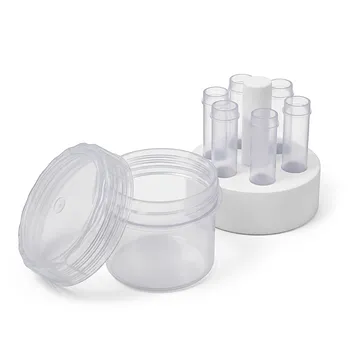
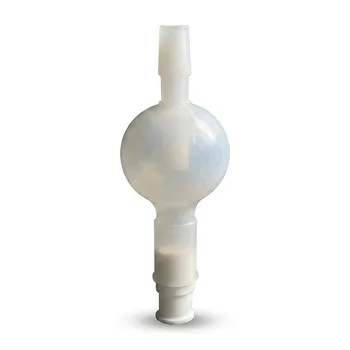
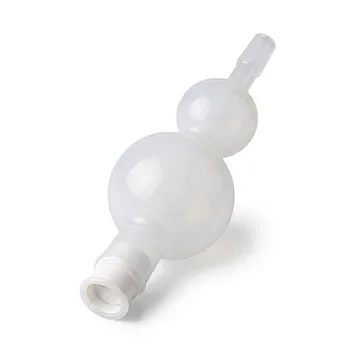
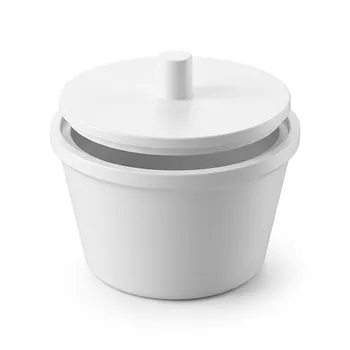
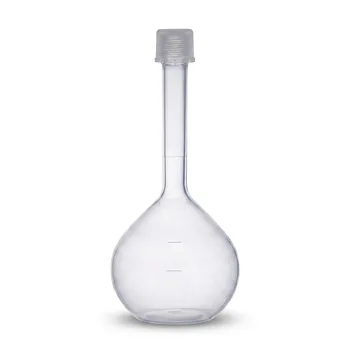
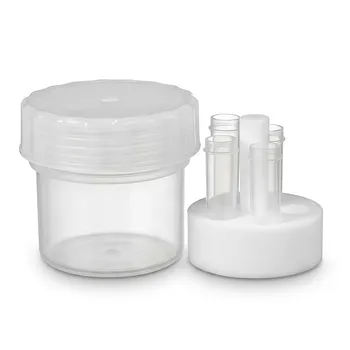
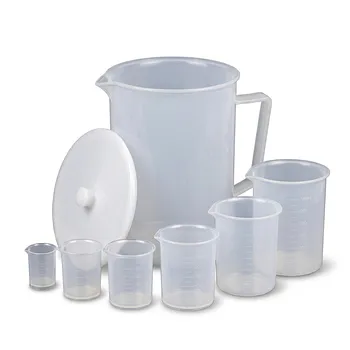
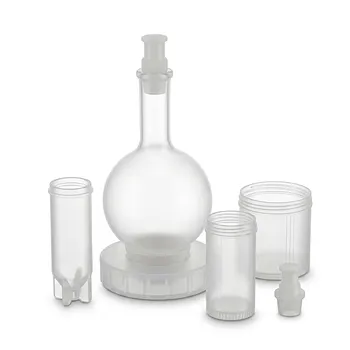
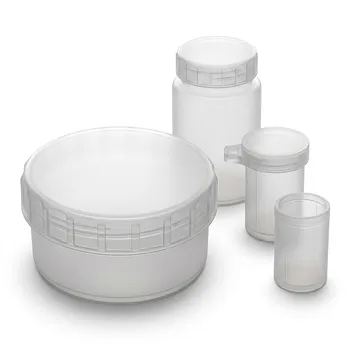
The precision required for Mo2CTx@MoS2 synthesis necessitates the use of high-purity PFA labware to protect the material's delicate heterogeneous interfaces. These composite materials are exceptionally sensitive to trace impurities, which can disrupt their energy storage mechanisms. By utilizing PFA (perfluoroalkoxy), researchers eliminate background ion leaching and prevent the loss of critical metal ions through vessel wall adsorption, ensuring the final composite reaches its theoretical performance.
Core Takeaway: High-purity PFA labware is the industry standard for MXene-based composite synthesis because it provides a chemically inert, non-leaching environment that preserves the exact stoichiometry and interface integrity of the material.
The Critical Impact of Impurities on Mo2CTx@MoS2
Sensitivity of Heterogeneous Interfaces
The performance of Mo2CTx@MoS2 composites relies on the seamless interaction between the MXene substrate and the molybdenum disulfide layers.
Even trace levels of foreign ions can settle at these heterogeneous interfaces, creating "dead zones" or electronic defects. These defects hinder charge transfer and significantly degrade the energy storage capacity of the final material.
Maintaining Stoichiometric Precision
To achieve high-performance results, the ratio of active metal ions must be controlled with extreme accuracy.
Standard labware can introduce secondary contamination, shifting the chemical balance of the synthesis. PFA ensures that the chemical composition intended in the experimental design is exactly what is produced in the lab.
Technical Advantages of High-Purity PFA
Low Background Ion Leaching
Unlike traditional glassware, which can leach silica, sodium, or boron into a solution, high-purity PFA is manufactured to have an extremely low metal ion background.
This is critical when handling the metal salt solutions used in MoS2 preparation. It ensures that the only ions present in the reaction are those explicitly added by the researcher.
Hydrophobicity and Anti-Adsorption
PFA features a naturally hydrophobic surface that prevents target analytes from "sticking" to the container walls.
In trace analysis, the loss of even a small fraction of active metal ions to vessel adsorption can lead to significant experimental error. PFA's anti-adsorption properties guarantee that the full concentration of precursors remains available for the composite formation.
Superior Chemical Resistance
The synthesis of Mo2CTx@MoS2 often involves aggressive reagents, including strong acids or reducing agents.
PFA exhibits exceptional chemical inertness, meaning it will not react with or be corroded by these harsh substances. This resistance eliminates the risk of container degradation contributing impurities to the sample.
Understanding the Trade-offs
Cost and Resource Allocation
High-purity PFA labware represents a significantly higher upfront investment compared to standard borosilicate glass or disposable plastics.
For routine, non-sensitive work, this cost may be difficult to justify. However, in the context of high-level academic research or specialized material synthesis, the cost of a failed experiment due to contamination far outweighs the price of the labware.
Temperature Constraints
While PFA is highly durable, it does have a maximum service temperature (typically around 260°C).
It cannot be used for high-temperature furnace applications or direct-flame heating where quartz or ceramic vessels would be required. Researchers must ensure their synthesis temperatures remain within the PFA thermal stability range.
Making the Right Choice for Your Goal
How to Apply This to Your Project
- If your primary focus is maximizing energy density: Use PFA beakers and reagent bottles for all precursor mixing to ensure the heterogeneous interfaces remain free of performance-inhibiting ions.
- If your primary focus is experimental reproducibility: Standardize on PFA centrifuge tubes and storage vessels to eliminate the variable of "ion leaching" that fluctuates between different batches of glass.
- If your primary focus is trace element quantification: Utilize high-purity PFA digestion vessels to maintain the lowest possible background values during sample preparation.
Ensuring the absolute purity of your processing environment is the most reliable way to bridge the gap between theoretical material design and high-performance physical composites.
Summary Table:
| Feature | PFA Labware Benefit | Impact on Mo2CTx@MoS2 Synthesis |
|---|---|---|
| Ion Leaching | Near-zero metal background | Prevents electronic defects at interfaces |
| Adsorption | Hydrophobic, anti-stick surface | Ensures accurate precursor concentration |
| Chemical Stability | Resistant to strong acids/reagents | Eliminates contamination from vessel corrosion |
| Stoichiometry | High-purity environment | Preserves the exact chemical balance required |
Elevate Your Research Precision with KINTEK Fluoropolymer Solutions
Protect the integrity of your sensitive composite materials with KINTEK’s specialized high-purity labware. We offer an exhaustive range of high-performance supplies crafted exclusively from PTFE and PFA, ensuring a chemically inert environment for your most demanding trace analysis and synthesis workflows.
Our product catalog spans from everyday basic labware (beakers, measuring cylinders, crucibles, dishes, reagent/wash bottles, centrifuge and digestion tubes) and cleaning/storage tanks to comprehensive fluid transfer components (tubing, fittings, valves) and sample prep tools (separatory funnels, burettes, filters, pipettes, tweezers, spatulas). We also provide general consumables (stirring bars, O-rings, gaskets, seal tapes) and advanced reaction apparatus, including standard or custom electrochemical cells, battery testing fixtures, electrode accessories, and microwave digestion vessels.
Whether you require complex non-standard machined parts via our end-to-end custom CNC fabrication or high-volume orders, KINTEK is equipped to deliver the high-performance fluoropolymer tools your lab deserves.
Don’t let trace impurities compromise your results—Contact our experts today to discuss your custom project or bulk needs!
References
- Hanchen Xu, Li Song. Halogen Ion‐Mediated Hydrothermal Synthesis of Diverse MXenes with Tailored Heterostructures (Adv. Mater. 40/2025). DOI: 10.1002/adma.70713
This article is also based on technical information from Kintek Knowledge Base .
Related Products
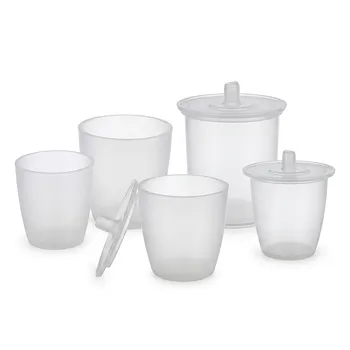
- High Purity PFA Crucible and Corrosion Resistant PTFE Beaker for Trace Analysis and Custom Laboratory Applications
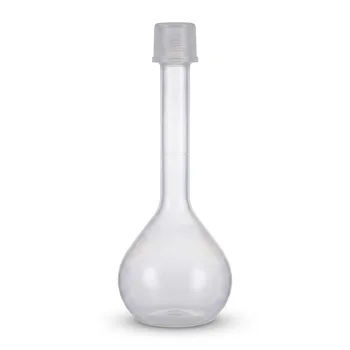
- High Purity PFA Volumetric Flask 1000ml 2000ml Constant Volume Bottle Acid Resistant Trace Analysis Custom Laboratory Labware
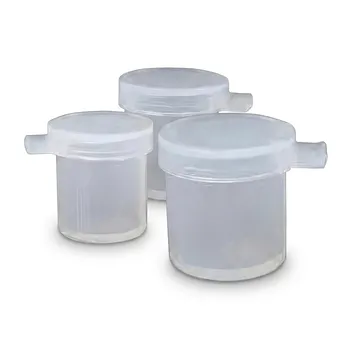
- High Purity PFA Sample Dissolution Cups Acid Resistant Chemical Digestion Vessels with Lids Trace Analysis Labware
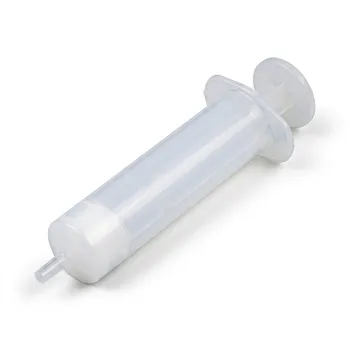
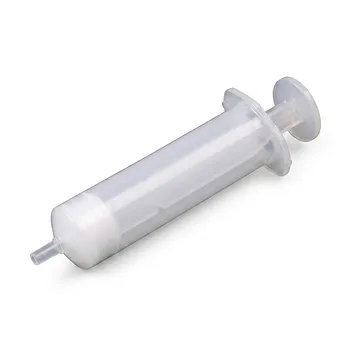
- High Purity PFA Syringe 10ml Corrosion Resistant Translucent Fluoropolymer Sampling Unit for Trace Analysis
- High Purity PFA Beakers with Handles and Cleaning Baskets for Trace Analysis and Industrial Chemical Processing
People Also Ask
- Why are high-purity vessels critical for BiFeO3 synthesis? Ensuring Phase Purity
- Why is the use of high-purity PFA or PTFE labware critical during TiO2 nanoparticle purification? Protect Sample Purity
- Why is high-purity PFA labware necessary for Znx@LS-2 zeolite ICP-OES analysis? Ensure Trace-Level Precision
- Why is high-purity PFA trace analysis labware used for MXene? Ensure Superior Material Integrity in Research
- What key material characteristics make PTFE and PFA suitable for high-purity laboratory labware, trace analysis containers, and medical microporous tubing? Discover the essential properties that ensure purity.