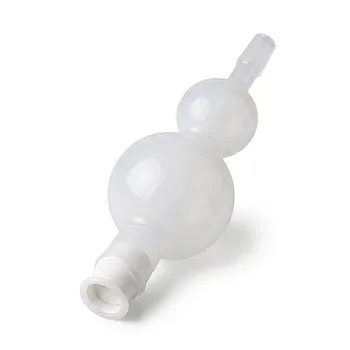
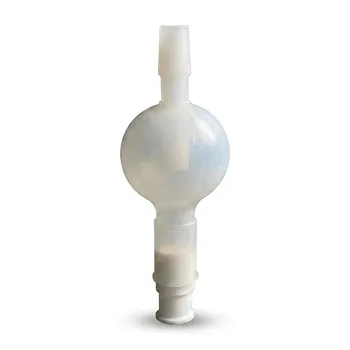
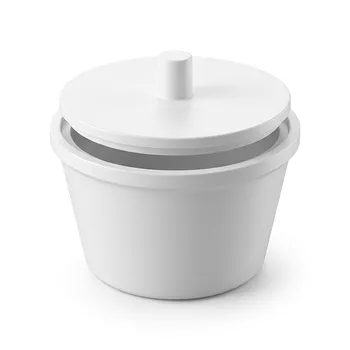
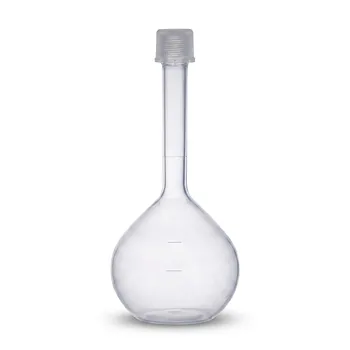
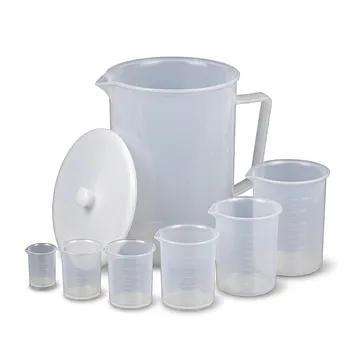
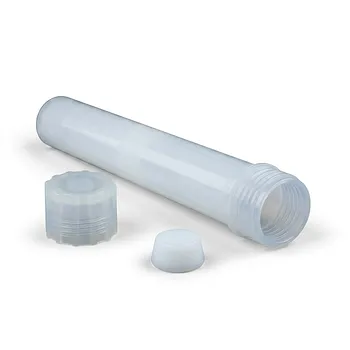
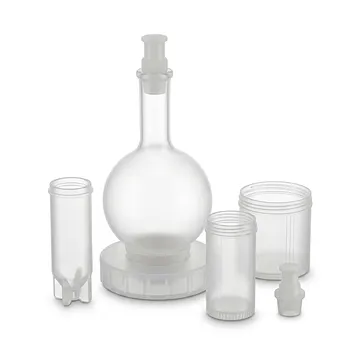
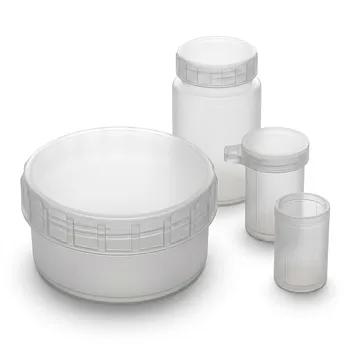
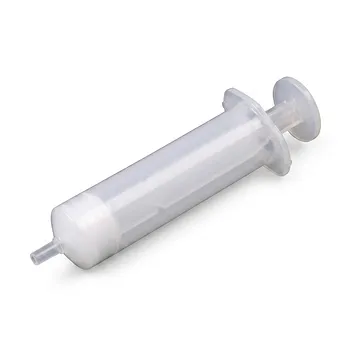
High-purity PFA (Perfluoroalkoxy) labware is the gold standard for trace element detection. It is recommended because it provides a nearly inert environment with extremely low metal ion leaching and minimal surface adsorption. This ensures that the elements you are measuring come from the sample rather than the container, maintaining the integrity of parts-per-trillion (ppt) or parts-per-billion (ppb) measurements.
High-purity PFA addresses the two primary enemies of trace analysis: contamination from the vessel itself and the loss of the analyte to the vessel walls. By virtually eliminating these factors, PFA enables researchers to achieve lower detection limits and higher reproducibility than is possible with glass or standard plastics.
Minimizing Background Noise Through Purity
The Problem of Metal Leaching
Standard plastics and glass contain trace metals—such as boron, sodium, or lead—within their material matrix. High-purity PFA is manufactured to be virtually free of these impurities, preventing "background noise" from leaching into your sample. This is critical for meeting strict experimental precision requirements in sensitive analytical chemistry.
Chemical Inertness in Harsh Environments
Trace analysis often requires the use of concentrated acids, such as hydrofluoric (HF) or nitric acid (HNO3), for sample digestion. PFA remains chemically stable even under extreme conditions, ensuring the container does not degrade or release secondary contaminants during the heating process. Unlike glass, it will not react with aggressive reagents, preserving the chemical profile of the sample.
Reducing Cross-Contamination Risks
The non-porous nature of PFA makes it significantly easier to clean to a "trace-clean" level compared to other materials. This minimizes the risk of cross-contamination between different samples or experimental runs. By providing a consistently clean starting point, PFA ensures that high standards for data rigor are met in advanced research.
Preserving Sample Integrity
Overcoming Surface Adsorption
In trace-level chemistry, a significant percentage of your target elements can "stick" to the walls of a container. PFA features a hydrophobic, low-energy surface that minimizes this adsorption loss. This ensures that the concentration you measure reflects the actual sample, rather than a depleted version caused by the vessel walls.
Enhancing Data Reproducibility
Because PFA minimizes both leaching and adsorption, results remain consistent across different batches and trials. This reliability is essential for high-sensitivity trace analysis where even minor fluctuations can lead to false positives or inaccurate conclusions. PFA allows for the high level of reproducibility required for peer-reviewed academic research.
Suitability for Long-Term Storage
The stability of PFA makes it an ideal material for the long-term storage of trace element standards. It prevents the slow migration of ions into or out of the solution over time. This ensures that calibration standards remain accurate, which is the foundation of all quantitative trace analysis.
Understanding the Trade-offs
Cost and Resource Allocation
High-purity PFA is significantly more expensive than standard polypropylene or borosilicate glass. Laboratories must often perform a cost-benefit analysis to determine which stages of their workflow—such as final digestion or storage—justify the use of PFA.
Physical Sensitivity
While PFA is chemically robust, it is physically softer than glass and can be prone to mechanical scratching if cleaned with abrasive tools. Scratches can create microscopic crevices that trap contaminants, potentially compromising the material's high-purity benefits over time.
Temperature Transitions
PFA has a wide operating temperature range, but it does not transfer heat as efficiently as glass or metal. Users must account for this thermal lag when using PFA beakers on hotplates to ensure samples reach the required digestion temperatures without overheating the vessel.
How to Apply This to Your Project
- If your primary focus is ultratrace analysis (ppt levels): Utilize high-purity PFA for every stage of the workflow, including digestion, storage, and liquid handling.
- If your primary focus is hydrofluoric acid (HF) digestion: Always use PFA labware, as HF will dissolve glass containers and contaminate the sample with silica and boron.
- If your primary focus is maximizing budget on routine screening: Use PFA for the final sample preparation and storage of sensitive standards, while using lower-cost plastics for less critical wash steps.
Choosing high-purity PFA is a strategic investment in the accuracy and credibility of your analytical data.
Summary Table:
| Feature | Benefit | Impact on Trace Analysis |
|---|---|---|
| Ultra-Low Leaching | Prevents ion contamination from vessel walls | Ensures accurate background levels for PPT/PPB |
| Minimal Adsorption | Reduces loss of analytes to container surfaces | Maintains sample integrity and high recovery rates |
| Chemical Inertness | Resists HF, HNO3, and aggressive reagents | Ideal for digestion without vessel degradation |
| Hydrophobic Surface | Easy to clean and reach trace-clean levels | Eliminates cross-contamination between runs |
Elevate Your Analytical Precision with KINTEK
Achieve unparalleled accuracy in your trace analysis with KINTEK’s high-performance fluoropolymer solutions. From everyday basic PFA labware like beakers, digestion tubes, and reagent bottles to advanced custom-machined PFA reaction apparatus and electrochemical cells, we provide the nearly inert environment your research demands.
Whether you need high-volume consumables—such as stirring bars, O-rings, and filters—or bespoke laboratory setups crafted via end-to-end CNC fabrication, KINTEK is your absolute source for high-purity PTFE and PFA supplies.
Ready to eliminate contamination and optimize your workflow? Contact KINTEK today for standard or custom high-performance labware!
References
- Yao Zhao, Junhua You. Cu‐Content Engineering in FeCoNiCuAl High‐Entropy Alloy Precursors: A Pathway to Advanced HEA‐Derived Sulfide Electrocatalysts for Efficient Oxygen Evolution Reaction. DOI: 10.1002/cctc.202500147
This article is also based on technical information from Kintek Knowledge Base .
Related Products
- High Purity PFA Crucible and Corrosion Resistant PTFE Beaker for Trace Analysis and Custom Laboratory Applications
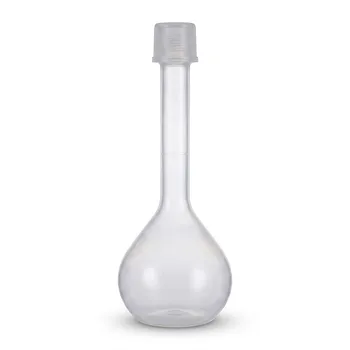
- High Purity PFA Volumetric Flask 1000ml 2000ml Constant Volume Bottle Acid Resistant Trace Analysis Custom Laboratory Labware
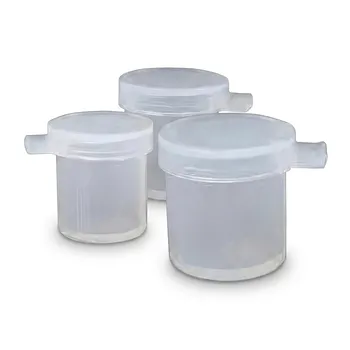
- High Purity PFA Sample Dissolution Cups Acid Resistant Chemical Digestion Vessels with Lids Trace Analysis Labware
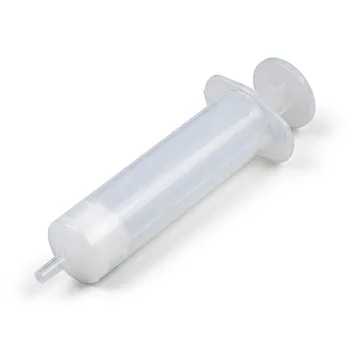
- High Purity PFA Syringe 10ml Corrosion Resistant Translucent Fluoropolymer Sampling Unit for Trace Analysis
- High Purity PFA Beakers with Handles and Cleaning Baskets for Trace Analysis and Industrial Chemical Processing
People Also Ask
- Why are high-purity vessels critical for BiFeO3 synthesis? Ensuring Phase Purity
- Why is the use of high-purity PFA or PTFE labware critical during TiO2 nanoparticle purification? Protect Sample Purity
- Why is high-purity PFA trace analysis labware used for MXene? Ensure Superior Material Integrity in Research
- Why is high-purity PFA labware necessary for Znx@LS-2 zeolite ICP-OES analysis? Ensure Trace-Level Precision
- What key material characteristics make PTFE and PFA suitable for high-purity laboratory labware, trace analysis containers, and medical microporous tubing? Discover the essential properties that ensure purity.