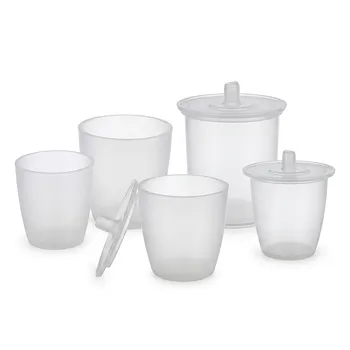
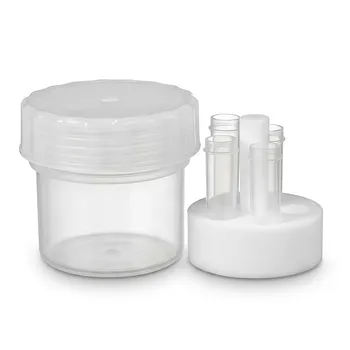
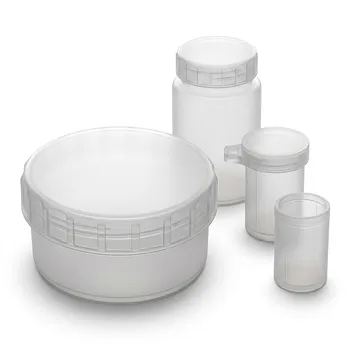
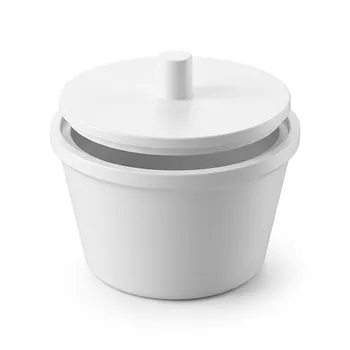
PTFE and PFA are suitable for high-purity labware because they combine exceptional chemical inertness, very low surface energy, high purity, and broad thermal stability. These properties prevent reagents and samples from reacting with the container, absorbing into its surface, or leaving behind significant residue. As a result, PTFE and PFA help preserve sample integrity, maximize recovery in trace analysis, and support demanding medical fluid-handling applications.
The central advantage of PTFE and PFA is their ability to remain chemically and physically unobtrusive. They resist aggressive chemicals, contribute very little contamination, and minimize liquid retention across a wide operating-temperature range.
Why Chemical Inertness Matters
Resistance to Aggressive Reagents
PTFE and PFA resist a broad range of acids, bases, and organic solvents. This makes them appropriate for digestion tubes, reagent bottles, transfer fittings, and other components exposed to aggressive laboratory chemistries.
The material is less likely to react with the sample or degrade during preparation. That stability is particularly important when trace concentrations could be affected by even minor chemical interactions.
Low Extractables and Leachables
High-purity PTFE and PFA contribute extremely low levels of elemental and organic contamination. They therefore reduce the risk that the container itself will introduce background signals into a sample.
This characteristic is valuable in trace elemental analysis, mass spectrometry, semiconductor processing, and biopharmaceutical workflows, where contamination from plasticizers, additives, or residual processing materials can compromise results.
Protection Against Sample Degradation
Because these fluoropolymers are chemically inert, they help prevent sensitive reagents and analytes from being altered by the container. This supports reliable storage, digestion, dilution, and fluid transfer.
For medical tubing, chemical inertness also helps maintain the intended composition of drug formulations or biological fluids as they pass through the component.
How Low Surface Energy Improves Sample Handling
Minimal Wetting and Adhesion
PTFE and PFA have exceptionally low surface energy, giving them non-stick and non-wetting behavior. Liquids are less likely to spread across or adhere strongly to the internal walls of a vessel or tube.
That reduces residual hold-up and helps more of the original sample reach the next stage of the procedure.
Higher Sample Recovery
In trace analysis, a small amount of retained material can materially affect the measured concentration. Low surface adhesion helps maximize recovery during transfers, rinsing, evaporation, and digestion.
The same property reduces carryover between samples and makes cleaning more efficient.
Reduced Absorption and Cross-Contamination
Fluoropolymer surfaces generally do not absorb or retain chemicals as readily as many conventional plastics. This helps limit cross-contamination in centrifuge tubes, reagent bottles, wash bottles, and fluid-transfer components.
However, surface behavior depends on the specific grade, finish, geometry, and analyte. The material should still be validated for applications involving highly adsorptive trace species.
Why Purity Is Critical in Trace Analysis
Low Background Contamination
Trace-analysis labware must contribute less contamination than the concentration being measured. High-purity PTFE and PFA are used because their low leaching and low extractables help maintain a clean analytical background.
This is especially important for ultra-trace sample preparation, aggressive acid digestion, and non-targeted analytical methods where unexpected organic or elemental signals can interfere with detection.
Cleaner Analytical Signals
Reducing contamination from the labware can lower baseline noise and make low-abundance compounds or elements easier to detect. The benefit is not that fluoropolymers improve the instrument itself, but that they reduce material-related interference before the sample reaches it.
Compatibility With Ultra-Pure Reagents
PFA and PTFE are well suited to storing and handling high-purity reagents because they are unlikely to contribute significant ionic or organic impurities. This supports applications ranging from reagent bottles to custom-machined valves and fluid-transfer assemblies.
PTFE and PFA Have Different Practical Strengths
PTFE for Broad Chemical and Thermal Resistance
PTFE offers outstanding chemical resistance and thermal stability. It is commonly fabricated by compression molding and sintering because it is not melt-processible in the conventional sense.
This manufacturing route can produce a microstructure and surface finish that are less smooth than those of molded PFA. In some trace applications, that difference may increase the potential for retention or adsorption of particular species.
PFA for Smooth, High-Purity Fluid Paths
PFA is melt-processible, allowing manufacturers to produce smooth, translucent containers, fittings, and tubing with complex geometries. Its smoother internal surface can reduce absorption and make visual inspection of the contents easier.
For the most demanding trace-analysis and fluid-transfer applications, PFA is often preferred when low leaching, surface smoothness, and visibility are priorities.
Choosing Between the Two
The choice is not simply a matter of which polymer is more chemically resistant; both provide exceptional resistance. The decision should also consider surface finish, transparency, fabrication method, flexibility, mechanical design, temperature, pressure, and the specific sample or drug formulation.
Thermal Stability Across Demanding Conditions
Wide Operating Temperature Range
PTFE and PFA remain useful across a broad temperature range, from cryogenic conditions to elevated temperatures commonly reaching approximately 500°F to 550°F, depending on the grade and design.
This allows one material family to support cold storage, heated digestion, sterilization-related processes, and temperature-variable fluid handling.
Stability During Digestion and Processing
Trace-analysis vessels may encounter strong reagents and elevated temperatures simultaneously. Thermal stability helps the container retain its dimensional and chemical integrity during these procedures.
The actual limit must be based on the manufacturer’s data, pressure conditions, exposure time, and the complete assembly rather than polymer name alone.
Relevance to Medical Microporous Tubing
Chemical Compatibility With Drug and Biological Fluids
For medical tubing, PTFE and PFA can provide chemically clean fluid-contact surfaces that resist degradation and minimize interaction with the transported material. This is important for drug dispersion, fluid transfer, and other sensitive medical processes.
Low Surface Retention
Their low surface energy helps reduce liquid hold-up inside the tubing. That can support more consistent delivery and reduce the amount of formulation left behind after a transfer.
Porosity Requires Application-Specific Validation
PTFE can be manufactured in porous or microporous forms, but porosity is a product design feature rather than an automatic property of all PTFE. PFA is generally selected for smooth, chemically resistant fluid paths; a “microporous” PFA application requires confirmation of the exact construction and intended function.
For medical use, the tubing must also be evaluated for pore size, pressure resistance, sterilization compatibility, particle shedding, extractables, and biocompatibility.
Understanding the Trade-offs
Low Adhesion Does Not Mean Zero Adsorption
PTFE and PFA minimize wetting and surface retention, but no material eliminates adsorption for every analyte. Particular trace species may interact with surface irregularities, contamination films, or the polymer itself.
PFA’s smoother surface often makes it preferable where trace-level absorption and visual inspection are especially important.
Fabrication Affects Performance
The final performance depends on how the material is molded, sintered, machined, cleaned, and packaged. A high-purity resin can still be unsuitable if manufacturing controls introduce contamination or produce an unsuitable surface.
Supplier cleanliness certifications and application-specific extractables or leachables testing remain important.
Thermal and Mechanical Limits Still Apply
Broad thermal capability does not mean unlimited exposure to heat, pressure, or mechanical stress. Tubing and vessels must be assessed as complete components, including wall thickness, fittings, pressure, cycling, and sterilization conditions.
Chemical Resistance Is Not Universal Under Every Condition
PTFE and PFA are among the most chemically resistant materials available, but extreme combinations of temperature, concentration, pressure, and exposure time can change performance. Compatibility should be checked for the actual process rather than inferred from a general resistance label.
Making the Right Choice for Your Goal
The material should be selected according to the dominant risk in the workflow: contamination, retention, temperature, visibility, flexibility, or porosity.
- If your primary focus is trace analysis: Choose high-purity PTFE or, where surface smoothness and minimal leaching are critical, PFA labware that has been validated for the target analytes.
- If your primary focus is aggressive chemical digestion: Use PTFE or PFA rated for the specific reagents, temperatures, exposure times, and pressure conditions involved.
- If your primary focus is ultra-pure reagent storage: Favor high-purity PFA when low trace-element leaching, smooth surfaces, and visual inspection are important.
- If your primary focus is medical fluid transfer: Evaluate PTFE or PFA tubing for chemical compatibility, extractables, sterilization, pressure, and biocompatibility as a complete assembly.
- If your primary focus is microporous transport or dispersion: Confirm that the selected product has the required engineered porosity and validate pore structure, flow behavior, and material cleanliness.
PTFE and PFA protect sample integrity by contributing very little chemically while retaining performance across demanding temperatures and fluid-handling conditions.
Summary Table:
| Property | PTFE | PFA | Significance |
|---|---|---|---|
| Chemical Inertness | Excellent | Excellent | Resists aggressive reagents, prevents reactions with samples. |
| Surface Energy | Very Low | Very Low | Minimizes wetting, adhesion, and sample retention. |
| Purity | High purity grades available | High purity grades available | Low extractables/leachables, reducing background contamination. |
| Thermal Stability | ~500°F to 550°F | ~500°F to 550°F | Withstands demanding temperatures in digestion and storage. |
| Fabrication | Requires molding/sintering | Melt-processible | PFA offers smoother surfaces and complex geometries. |
Elevate Your High-Purity Applications with KINTEK
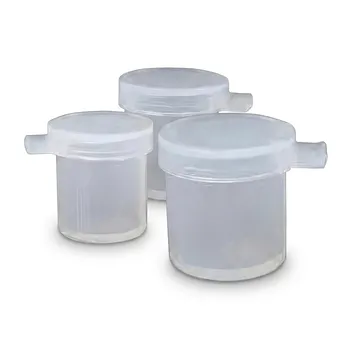
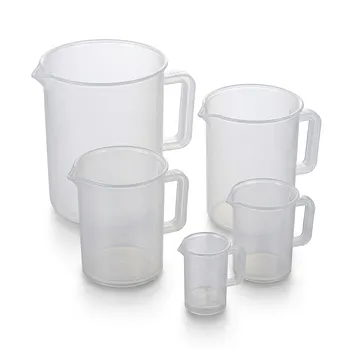
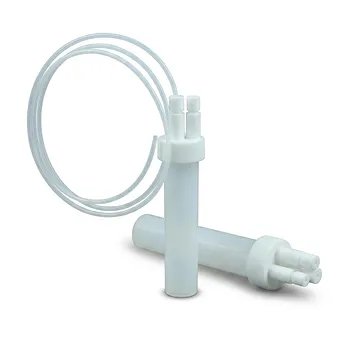
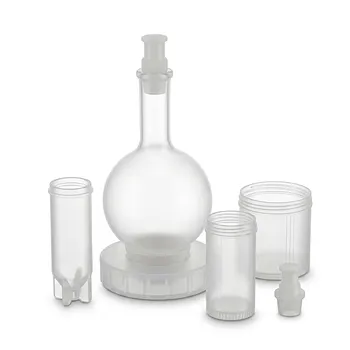
At KINTEK, we specialize in high-performance PTFE and PFA labware crafted for the most demanding purity and chemical resistance requirements. Our range includes beakers, measuring cylinders, digestion tubes, reagent bottles, fluid transfer components (tubing, fittings, valves), sample prep tools, and custom-machined parts—from electrochemical cells to microwave digestion vessels.
Whether you're performing ultra-trace analysis, handling aggressive chemicals, or need reliable medical fluid pathways, our products ensure minimal contamination, maximum sample recovery, and long-term durability. Plus, our custom CNC machining capabilities allow us to deliver bespoke solutions for your exact specifications.
📞 Contact KINTEK today to discuss your requirements and discover how our PTFE/PFA solutions can enhance your lab's performance: Get in Touch.
Related Products
- High Purity PFA Crucible and Corrosion Resistant PTFE Beaker for Trace Analysis and Custom Laboratory Applications
- Corrosion Resistant PTFE Support with PFA Transparent Reaction Tank and High Purity PFA Sampling Tube for Trace Analysis
- PFA Reaction Jar Corrosion Resistant Wide Mouth PTFE Lab Bottle High Purity Chemical Vessel
- High Purity PTFE PFA Plastic Crucible for Corrosion Resistant Acid Digestion and Trace Analysis
- High Purity PFA Constant Pressure Condensation Reaction System Acid Resistant High Temperature Customizable Teflon Labware
People Also Ask
- Why are high-purity vessels critical for BiFeO3 synthesis? Ensuring Phase Purity
- Why is the use of high-purity PFA or PTFE labware critical during TiO2 nanoparticle purification? Protect Sample Purity
- Why is high-purity PFA trace analysis labware used for MXene? Ensure Superior Material Integrity in Research
- Why is high-purity PFA labware necessary for Znx@LS-2 zeolite ICP-OES analysis? Ensure Trace-Level Precision
- Why is high-purity PFA trace analysis labware used for sample processing when preparing Mo2CTx@MoS2? Ensure Material Purity