PTFE and PFA laboratory apparatus remain reliable under extreme heat and aggressive chemical exposure because their highly fluorinated molecular structures resist degradation, dissolution, swelling, and chemical attack. Both materials support continuous operating temperatures of up to approximately 260°C, making them suitable for digestion vessels, reaction equipment, tubing, and other demanding laboratory components. PTFE generally provides the greater margin at very high temperatures, while PFA offers similar routine thermal performance with the added benefit of melt-processability and high-purity transparent molded designs.
PTFE and PFA perform exceptionally well when used within their continuous-use temperature limits. PTFE is typically preferred for maximum thermal stability and mechanically robust custom components, while PFA is often preferred when transparency, complex molded geometries, or melt-sealed fluid paths are important.
How Extreme Temperatures Affect Performance
Continuous Operation up to 260°C
PTFE and PFA can maintain structural integrity and chemical resistance at continuous temperatures of up to approximately 260°C. This enables their use in high-temperature reaction vessels, microwave digestion apparatus, crucibles, and heated fluid-transfer tubing.
At these temperatures, the materials generally resist melting, deformation, chemical leaching, and contamination more effectively than common laboratory plastics such as polypropylene, nylon, or polycarbonate.
PTFE Provides the Higher High-Temperature Margin
PTFE has a melting point of approximately 342°C, compared with approximately 305°C for PFA. Its linear, unbranched molecular structure also gives it greater thermal stability among these two materials.
At temperatures around 400°C to 425°C, PTFE loses mass more slowly than PFA in the cited testing. This distinction matters in exceptional high-temperature environments, but these temperatures exceed the normal continuous-use range for laboratory apparatus.
PFA Offers Near-PTFE Thermal Performance
PFA maintains near-PTFE thermal performance while being easier to process. Its lower melt viscosity allows manufacturers to produce intricate molded components, transparent or translucent tubing, valves, fittings, and sealed vessels.
PFA can therefore be the more practical choice when the apparatus requires complex geometry, visual inspection of fluids, or melt-sealed connections.
Why Harsh Chemicals Have Limited Effect
Carbon-Fluorine Bonds Resist Chemical Attack
The strong carbon-fluorine bonds in PTFE and PFA make their polymer matrices highly resistant to aggressive reagents. Both materials tolerate many concentrated acids, strong bases, and organic solvents without the dissolution, swelling, or rapid degradation seen in less fluorinated plastics.
This chemical inertness is particularly valuable in sample digestion and trace-analysis workflows, where the apparatus must remain stable without contributing significant contamination.
Reduced Leaching and Sample Contamination
Because PTFE and PFA resist chemical breakdown, they are less likely to release material into samples during normal operation. This supports high-purity applications involving concentrated reagents, heated reaction mixtures, and trace-element preparation.
The benefit is not only chemical compatibility. A vessel or tubing material that remains stable also reduces the risk that mechanical failure, surface attack, or thermal breakdown will compromise the sample.
Reliability Under Combined Thermal and Chemical Stress
Heat can accelerate chemical reactions, diffusion, and material degradation. PTFE and PFA are valuable in these conditions because they retain both chemical inertness and useful mechanical stability across a broad operating range.
This combination makes them suitable for microwave digestion vessels, heated fluid lines, reaction apparatus, and containers exposed simultaneously to elevated temperatures and corrosive reagents.
Choosing Between PTFE and PFA
When PTFE Is the Better Choice
PTFE is generally preferable when the application prioritizes maximum thermal stability, low surface wetting, and robust solid components. It is well suited to heavy-duty labware, custom-machined reaction equipment, electrochemical cells, and components exposed to severe thermal conditions.
Its extremely high melt viscosity means it is not conventionally melt-molded. Complex PTFE parts are instead commonly produced through specialized molding or precision machining.
When PFA Is the Better Choice
PFA is often preferable when the apparatus requires transparent or translucent construction, complex molded shapes, tubing, fittings, valves, or sealed geometries. It provides a continuous-use temperature rating comparable to PTFE while allowing melt processing.
This makes PFA especially useful for high-purity fluid-transfer systems and digestion vessels where inspection, smooth molded surfaces, or reliable sealing are important.
Consider the Actual Component Design
Material selection alone does not determine performance. Wall thickness, joints, pressure, mechanical loading, heating uniformity, thermal cycling, and the design of seals or closures can all affect whether an apparatus remains reliable.
A component rated for 260°C in general service should not automatically be assumed suitable for every combination of temperature, pressure, reagent, and duration.
Understanding the Trade-offs
Exceeding the Continuous-Use Limit
Operating PTFE or PFA near or above approximately 350°C to 400°C can accelerate polymer-chain scission and mass loss. The materials may no longer maintain their expected mechanical and contamination-control performance.
The melting point is not a safe operating temperature. Structural reliability must be based on the component's continuous-use rating and the specific process conditions.
Thermal Decomposition and Off-Gassing
At excessive temperatures, fluoropolymers can release hazardous decomposition products, including carbonyl fluoride and perfluoroisobutylene. Thermal decomposition can also create sample contamination and damage the apparatus.
Processes involving overheating, hot spots, or uncontrolled microwave exposure therefore require temperature control, appropriate ventilation, and safeguards against exceeding the material's rated limits.
PFA’s Lower Extreme-Temperature Stability
PFA's processing advantages come with a smaller margin at the most extreme temperatures. Its pendant perfluoroalkyl ether side chains contribute to greater weight loss than PTFE under severe high-temperature testing.
For normal laboratory service within the continuous-use range, this difference may be immaterial. For exceptional thermal excursions, prolonged exposure above the rated range, or applications where every increment of thermal stability matters, PTFE is usually the stronger choice.
Chemical Compatibility Still Requires Verification
“Chemically inert” does not eliminate the need to verify compatibility for a specific reagent, concentration, temperature, pressure, and exposure time. The polymer may resist the chemical while a seal, fitting, coating, additive, or mechanically stressed region does not.
The complete apparatus should therefore be evaluated, especially in pressurized, heated, or highly concentrated chemical processes.
Applying This to Laboratory Design
Select the material according to both the operating environment and the required manufacturing geometry.
- If your primary focus is maximum thermal stability: Choose PTFE for robust components and custom-machined apparatus, and keep operating temperatures comfortably below its decomposition range.
- If your primary focus is complex molded geometry or transparency: Choose PFA for high-purity tubing, fittings, valves, and vessels that benefit from melt processing and visual inspection.
- If your primary focus is aggressive chemical digestion: Use PTFE or PFA within validated temperature and pressure limits to minimize chemical attack, leaching, and sample contamination.
- If your primary focus is process safety: Control temperature excursions, prevent localized overheating, and provide ventilation because decomposition products can be hazardous above the normal operating range.
PTFE and PFA provide dependable performance in harsh laboratory environments when their distinct thermal limits, fabrication characteristics, and complete component design are treated as part of the material selection.
Summary Table:
| Material | Continuous Use Temp | Melt Point | Chemical Resistance | Key Advantage |
|---|---|---|---|---|
| PTFE | Up to 260°C | ~342°C | Excellent | Higher thermal stability at extreme temps |
| PFA | Up to 260°C | ~305°C | Excellent | Melt-processable, transparent options |
| Factor | Impact on Performance | Recommendation |
|---|---|---|
| Extreme Temperatures (up to 260°C) | Maintains integrity; safe within limits | Use within rated range |
| Above 260°C | Accelerated degradation and off-gassing | Avoid or use with extreme care |
| Harsh Chemicals | Minimal attack; low leaching | Verify compatibility with specific reagents |
| Combined Stress | Retains stability; reliable under heat and chemicals | Design with wall thickness and seals in mind |
Ensure your lab operates reliably in extreme environments with KINTEK's high-performance PTFE and PFA apparatus. From custom-machined parts to complete fluid systems, our fluoropolymer solutions withstand harsh chemicals and high temperatures. Contact our experts today to find the perfect labware for your demanding applications. Get in touch with KINTEK now to discuss your requirements and discover how we can enhance your lab's efficiency and safety.
Related Products
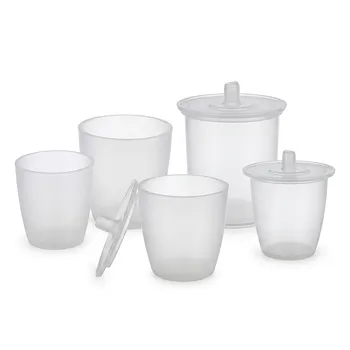
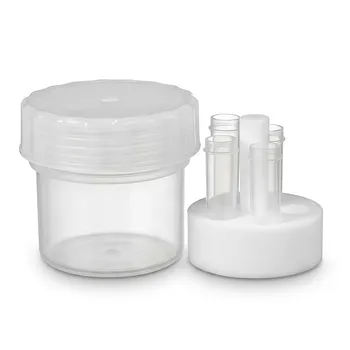
- High Purity PFA Crucible and Corrosion Resistant PTFE Beaker for Trace Analysis and Custom Laboratory Applications
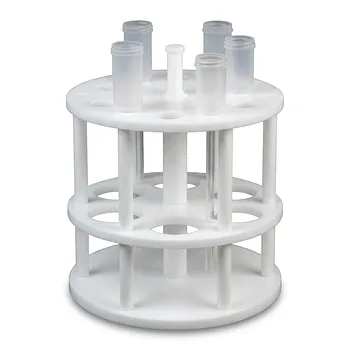
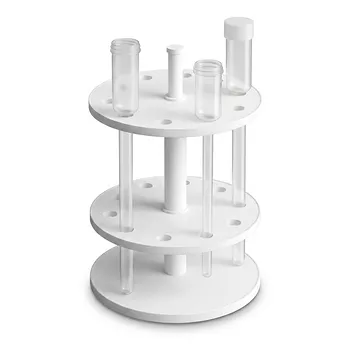
- Custom PFA Microcolumn Racks and PTFE Machined Low Background Corrosion Resistant Laboratory Fixtures
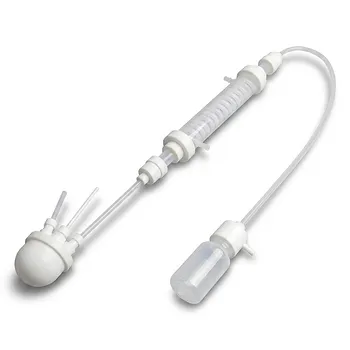
- PTFE PFA Vacuum Filtration System Corrosion Resistant Customizable Shatterproof Laboratory Device
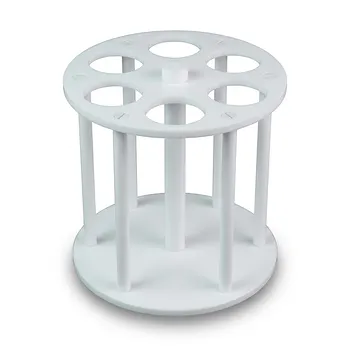
- Custom PFA Separatory Funnel Rack PTFE Machined Laboratory Support Stand Corrosion Resistant Low Background Fluoropolymer Fixture
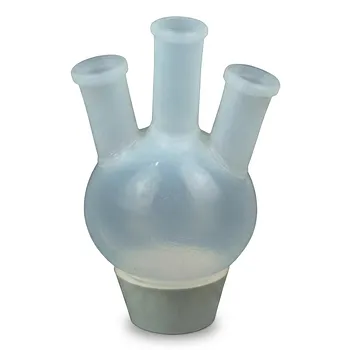
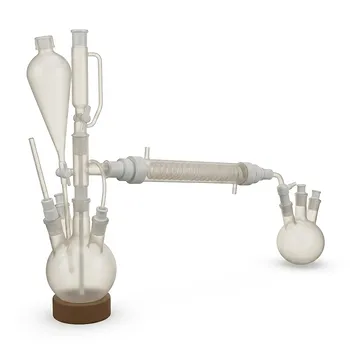
- Custom Corrosion Resistant PFA PTFE Multi Neck Laboratory Reaction Flask GL Standard Mouth Fluoropolymer Flasks
People Also Ask
- Why are high-purity vessels critical for BiFeO3 synthesis? Ensuring Phase Purity
- Why is the use of high-purity PFA or PTFE labware critical during TiO2 nanoparticle purification? Protect Sample Purity
- Why is high-purity PFA trace analysis labware used for MXene? Ensure Superior Material Integrity in Research
- Why is high-purity PFA labware necessary for Znx@LS-2 zeolite ICP-OES analysis? Ensure Trace-Level Precision
- What key material characteristics make PTFE and PFA suitable for high-purity laboratory labware, trace analysis containers, and medical microporous tubing? Discover the essential properties that ensure purity.