Resin stratification is a thermally driven separation within the coating. When a fluoropolymer and adhesive-binder blend is heated above the resins’ melting points, the low-surface-energy fluoropolymer migrates toward the exposed surface, while the non-fluoropolymer binder concentrates near the substrate. This produces a functional gradient: fluoropolymer provides chemical resistance and non-stick behavior at the surface, while the binder promotes adhesion to the underlying metal. For the most aggressive chemical work, solid PTFE or PFA apparatus may be preferable because its chemical performance extends through the material rather than depending on a thin coating layer.
Coatings use stratification to place each resin where it performs best, but solid fluoropolymer construction removes the risk that damage to a surface layer will expose a less-resistant binder or substrate.
How Resin Stratification Develops
The Initial Resin Blend
A liquid fluoropolymer coating typically contains fluoropolymer particles or resin combined with a non-fluoropolymer adhesive binder. Before curing, these components are distributed throughout the wet coating.
The binder is needed because fluoropolymers generally do not adhere to metal as readily as conventional adhesive resins. The coating therefore combines surface performance from the fluoropolymer with bonding performance from the binder.
Heating Above the Melting Point
During baking, the coating is heated above the melting points of the relevant resins. The fluoropolymer becomes mobile within the fluid coating, allowing the components to redistribute.
This redistribution is driven by thermodynamics. Each resin tends to occupy the region where its properties are most favorable.
Formation of the Functional Gradient
The low-surface-energy fluoropolymer moves toward the outer surface. This creates a surface with low friction, non-stick behavior, and strong resistance to chemical contact.
The non-fluoropolymer binder migrates toward the metal interface. Its position helps establish mechanical and chemical bonding between the coating and the substrate.
The Resulting Layer Structure
The cured coating is not necessarily uniform through its thickness. Instead, it has a concentration gradient: the exposed surface is fluoropolymer-rich, while the substrate-facing region is binder-rich.
This arrangement is useful because it places chemical and release properties at the surface and adhesion properties at the base. Stratification is therefore an intentional part of the coating’s design, not simply a manufacturing defect.
Why Coatings Can Be Effective
Surface-Level Chemical Protection
A fluoropolymer-rich surface can shield the underlying metal from contact with aggressive reagents. The exposed layer provides the chemical inertness expected from the fluoropolymer.
For many applications, this is an efficient way to combine a metal component’s structural strength with a fluoropolymer’s surface properties.
Stronger Attachment to the Substrate
The binder-rich interface helps the coating adhere to the metal. This is important for reaction vessels, tanks, and other equipment where a fluoropolymer-only layer could be difficult to bond securely.
The result is a composite structure with a durable support and a chemically resistant working surface.
Non-Stick Performance
Because fluoropolymer concentrates at the outer surface, the coating can provide low adhesion and easier release of residues. This is valuable in processing and laboratory environments where contamination or cleanup is a concern.
Why Solid Fluoropolymer Apparatus May Be Preferred
Chemical Inertness Through the Full Wall
A solid PTFE or PFA vessel has fluoropolymer throughout its material thickness. Chemical resistance does not depend only on the integrity of a thin surface layer.
If the apparatus is machined, scratched, or locally worn, the exposed material remains the same fluoropolymer rather than a less-resistant adhesive binder or metal substrate.
Lower Risk of Substrate Exposure
Coatings can experience stress when the coating and metal expand or contract differently during temperature changes. Severe thermal expansion mismatch may contribute to micro-cracking.
Abrasion can create a similar concern. Once a crack or worn area penetrates the fluoropolymer-rich region, aggressive reagents may reach the underlying binder or substrate.
Suitability for Aggressive Processing
Solid PTFE or PFA laboratory apparatus, including custom-machined reaction vessels, cleaning tanks, and digestion tubes, is well suited to applications involving aggressive chemicals and elevated temperatures.
The key advantage is material uniformity. The entire wetted structure provides the intended fluoropolymer properties instead of relying on a stratified surface finish.
Reduced Concern About Coating Integrity
A coated metal component can be an appropriate solution when structural strength, geometry, or cost make a coating attractive. However, the coating itself remains a separate layer whose adhesion, thickness, cracking, and abrasion resistance must be managed.
A solid fluoropolymer component avoids the specific failure mode in which coating damage exposes a different material beneath the working surface.
Understanding the Trade-offs
Coatings Provide Structural Efficiency
Metal substrates are often selected for their mechanical strength and dimensional stability. Applying a fluoropolymer coating can preserve those advantages while adding a chemically resistant surface.
This makes coatings useful when the component needs the properties of metal but only its surface requires fluoropolymer protection.
Solid Fluoropolymers May Change the Mechanical Design
PTFE and PFA apparatus provide uniform chemical resistance, but they do not simply replicate every structural property of a metal component. The equipment must be designed around the fluoropolymer’s material behavior and intended temperature and chemical conditions.
For that reason, solid fluoropolymer construction is a materials and design decision, not merely a thicker version of a coating.
Stratification Is Not the Same as Unlimited Protection
A fluoropolymer-rich surface does not make the entire coated assembly fluoropolymer. The binder and substrate remain part of the structure below the surface.
Coatings should therefore be evaluated for the actual combination of reagent exposure, temperature cycling, abrasion, and required purity rather than judged only by the nominal chemistry of the top layer.
Purity Requirements Can Favor Solid Construction
High-purity trace analysis can be especially sensitive to contamination from exposed or poorly compatible underlying materials. A solid PTFE or PFA wetted surface provides a more uniform material environment.
The appropriate choice still depends on the application, but the absence of a chemically different binder beneath a thin working layer can simplify risk assessment.
Making the Right Choice for Your Goal
Choose the construction method according to the most demanding condition the apparatus must withstand.
- If your primary focus is economical metal-supported equipment: Use a properly designed fluoropolymer coating when the surface can remain intact and the application benefits from the metal substrate’s structural properties.
- If your primary focus is maximum resistance to aggressive reagents: Prefer solid PTFE or PFA apparatus so the fluoropolymer properties extend through the full wetted material thickness.
- If your primary focus is abrasion or repeated thermal cycling: Treat coating integrity as a major design concern and consider solid fluoropolymer construction where exposure of the binder or substrate would be unacceptable.
- If your primary focus is high-purity trace analysis: Favor a uniform solid fluoropolymer wetted surface when minimizing the risk associated with an underlying adhesive layer is important.
Understanding the difference between a fluoropolymer-rich surface and a solid fluoropolymer body allows you to match the material choice to the real chemical, thermal, mechanical, and purity demands of the process.
Summary Table:
| Aspect | Fluoropolymer Coatings | Solid PTFE/PFA Apparatus |
|---|---|---|
| Chemical resistance | Only at the surface layer | Throughout the material |
| Risk of substrate exposure | High if coating is damaged | Low; material is uniform |
| Structural strength | High (metal substrate) | Lower (needs design consideration) |
| Purity | Potential contamination from binder | Uniform, low risk |
| Suitability for aggressive chemicals | Less reliable due to coating integrity | Excellent |
For maximum chemical resistance and purity in your lab, choose solid PTFE/PFA apparatus. At KINTEK, we specialize in custom-machined fluoropolymer labware. Contact us today to discuss your needs. Contact us
Related Products
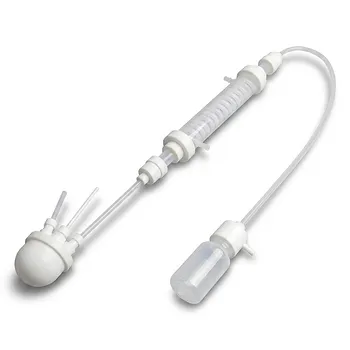
- Corrosion Resistant Hydrogen Fluoride Reflux Apparatus PTFE Flask Condenser Separatory Funnel Collection Bottle High Temperature Laboratory System
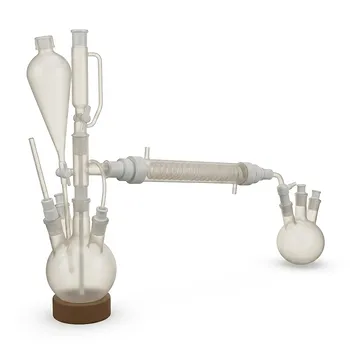
- PTFE Distillation Condensation Apparatus High Temperature Hydrofluoric Acid Resistant Fluorination Reaction Flask
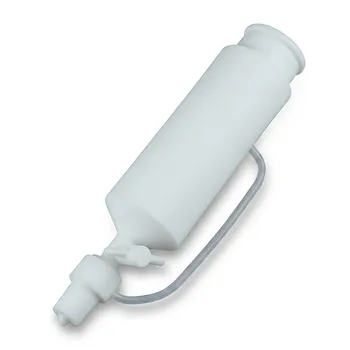
- Custom PTFE Constant Pressure Separatory Funnel 100ml Fluoropolymer Labware for Corrosive Chemical Transfer
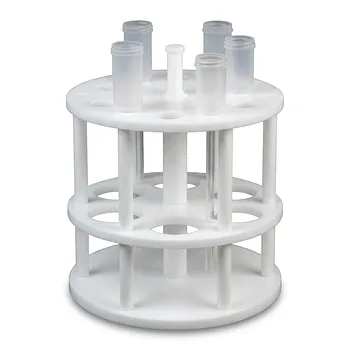
- Custom PFA Microcolumn Racks and PTFE Machined Low Background Corrosion Resistant Laboratory Fixtures
- Custom PFA Separatory Funnel Rack PTFE Machined Laboratory Support Stand Corrosion Resistant Low Background Fluoropolymer Fixture
People Also Ask
- What structural characteristics provide PTFE fluoropolymer laboratory apparatus with high thermal stability? Strong C-F bonds, dense fluorine shielding, and rigid helical conformation ensure stability during high-temperature analysis.
- How do perfluorinated monomer building blocks impart superhydrophobic and oleophobic properties? Low surface energy is critical for fluoropolymer labware.
- What technical challenges exist in synthesizing main-chain fluorinated polymers? Discover why PTFE/PFA apparatus is ideal for these processes.
- Why is controlling the cooling rate during thermal processing critical when manufacturing high-density fluoropolymer laboratory apparatus? Optimize Strength, Clarity, and Durability
- How does the radical homopolymerization of VDF proceed under high-pressure conditions, and what role do high-performance fluoropolymer laboratory apparatus play during peroxide-initiated synthesis and purification? Discover the essential equipment for reproducible PVDF.