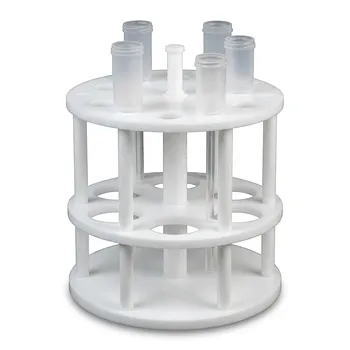
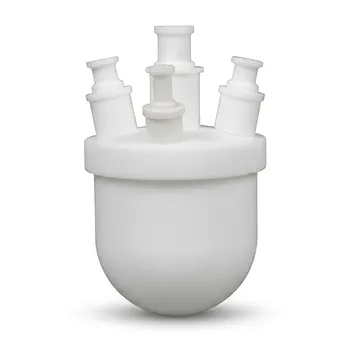
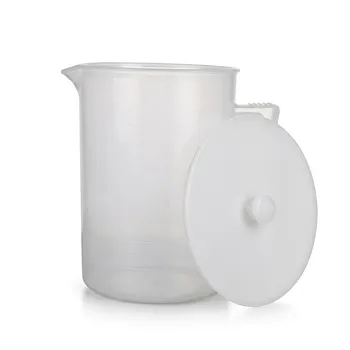
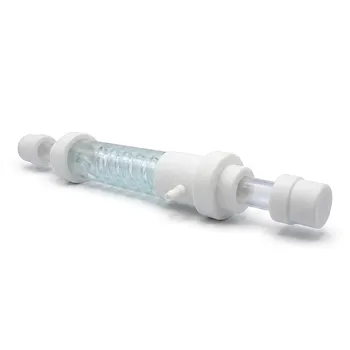
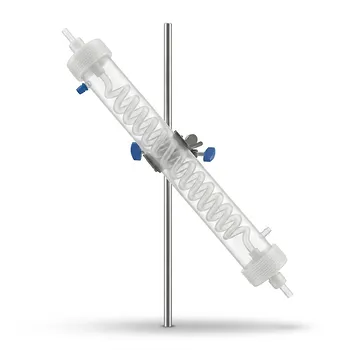
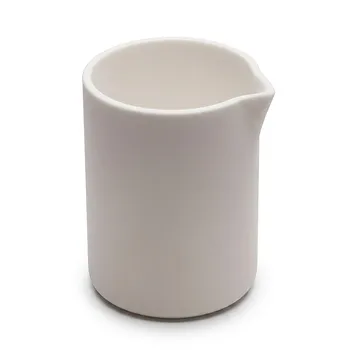
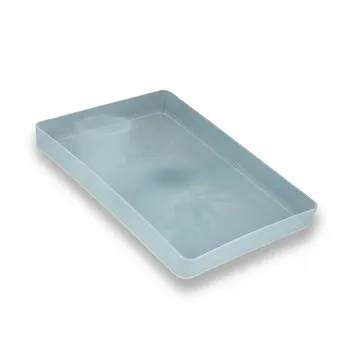
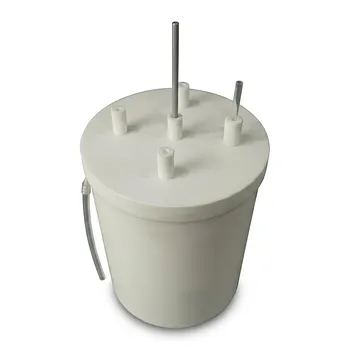
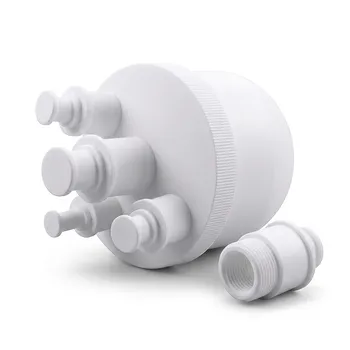
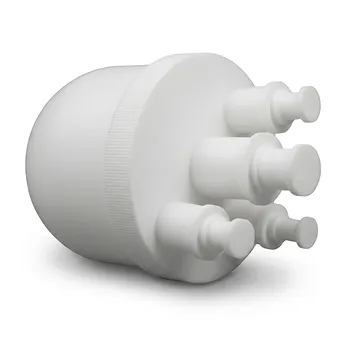
For FAVE post-modification reactions, select apparatus based on the exact reagent, solvent, temperature, and exposure time—not simply on the label “fluoropolymer.” High-purity PTFE or PFA is generally the preferred material for reaction vessels, bottles, tubing, and fittings exposed to LiAlH₄, thionyl chloride, and other aggressive reagents because these perfluoropolymers offer very high chemical inertness and low extractables. However, LiAlH₄’s moisture sensitivity and reactivity with certain solvents make system design, sealing, drying, and temperature control just as important as the polymer choice.
PTFE and PFA provide a strong baseline for chemical containment and sample purity, but compatibility must be verified for the complete reaction system. Evaluate the fluoropolymer, seals, fittings, solvent, concentration, temperature, pressure, and mechanical stresses together.
Why Material Selection Matters in FAVE Chemistry
Preventing Apparatus Degradation
FAVE post-modification commonly involves reagents capable of strong reduction, chlorination, or acid activation. LiAlH₄ can reduce ester groups to benzyl alcohol functionalities, while thionyl chloride can convert carboxylic acids into acid chlorides.
Inadequate materials may soften, embrittle, swell, crack, or slowly permeate under these conditions. Failure can cause leaks, expose personnel to hazardous reagents, and compromise the polymer product.
Protecting Polymer Purity
Low-quality or chemically incompatible apparatus can release leachables, surface residues, or degradation products into the reaction mixture. This is particularly important in multistep polymer synthesis, where trace contamination can affect functionalization, molecular weight measurements, optical properties, or downstream reactions.
High-purity PTFE and PFA are valued because they combine chemical resistance with low extractables when properly manufactured, cleaned, and handled.
Comparing PTFE and PFA for Laboratory Apparatus
PTFE for Maximum Chemical Inertness
PTFE is widely used for liners, seals, vessels, stopcocks, tubing, and other components exposed to aggressive reagents. Its highly fluorinated carbon backbone provides strong resistance to many reducing agents, chlorinating reagents, acids, and organic solvents.
PTFE is often the conservative choice where chemical exposure is severe and dimensional flexibility is less important.
PFA for Fabricated and Transparent Components
PFA offers chemical resistance comparable to PTFE while providing better melt processability. This makes it useful for molded or fabricated vessels, bottles, tubing, and components requiring greater uniformity or visual inspection.
PFA can be advantageous when the apparatus must be formed into complex geometries or when observing the reaction is useful. Its suitability still depends on the specific grade, wall thickness, temperature, and mechanical design.
Partially Fluorinated Alternatives Require More Scrutiny
Materials such as PVDF may provide better rigidity or mechanical strength than fully fluorinated polymers, but they do not provide the same broad chemical resistance. For example, PVDF is reported as unsuitable for exposure to concentrated chlorosulfonic acid at ambient temperature.
This illustrates an important principle: fluoropolymer is a material family, not a compatibility guarantee. Fully fluorinated PTFE or PFA is generally more appropriate when maximum inertness and process purity are the priorities.
LiAlH₄-Specific Considerations
Moisture Exclusion Is Essential
LiAlH₄ reacts vigorously with water and other protic contaminants. Apparatus must therefore be thoroughly dry, and the reaction should be protected from atmospheric moisture using an appropriate inert-gas and handling procedure.
PTFE or PFA can provide chemically resistant containment, but they do not compensate for wet glassware, contaminated fittings, humid gas, or moisture entering through an inadequate closure.
Verify the Solvent Independently
THF is commonly used with LiAlH₄, but it must be dry and handled under conditions appropriate for the reagent. DMF requires special caution: although it is a polar aprotic solvent, it is not chemically inert toward LiAlH₄ and may undergo reaction or reduction.
Therefore, compatibility tables for the apparatus should not be confused with reagent-solvent compatibility. A PTFE or PFA vessel may tolerate DMF physically while the LiAlH₄-DMF combination remains chemically unsuitable.
Consider Heat and Gas Evolution
LiAlH₄ reactions can be strongly exothermic, particularly during reagent addition or contact with residual moisture. The apparatus should tolerate the expected temperature excursion and allow controlled addition, agitation, cooling, and venting.
A fluoropolymer liner may resist the chemistry while the surrounding support, valve body, tubing connection, or closure fails mechanically. The complete assembly must be rated for the actual operating conditions.
Thionyl Chloride and Other Chlorinating Reagents
Account for Corrosive Vapors
Thionyl chloride can generate corrosive vapors and reactive byproducts. Apparatus should minimize permeation and leakage, and connections should be designed to prevent vapor escape during charging, reaction, transfer, and workup.
PTFE and PFA are strong candidates for wetted components, but external metal parts, elastomers, adhesives, and instrument interfaces may have very different resistance.
Avoid Assuming Acid Resistance Is Universal
Fluoropolymers generally tolerate many strong acids and chlorinating chemicals, but compatibility depends on concentration, temperature, impurities, and exposure duration. Concentrated chlorosulfonic acid is a particularly demanding example in which some partially fluorinated materials are unsuitable.
For highly aggressive chlorosulfonating conditions, fully fluorinated PTFE or PFA should be considered for wetted parts, subject to confirmation from the manufacturer’s compatibility data.
Inspect the Complete Apparatus
Evaluate Wetted and Non-Wetted Materials
The chemical-contact path includes more than the vessel wall. It may include tubing, valves, O-rings, gaskets, stirrer components, sampling ports, filters, liners, and transfer fittings.
A PTFE vessel with an incompatible elastomer seal can still leak or contaminate the reaction. Request a material list for every wetted component rather than evaluating only the primary vessel material.
Check Permeation and Mechanical Integrity
Chemical resistance includes resistance to permeation, not only visible corrosion. Small, volatile, or reactive molecules may diffuse through some plastics even when the material appears structurally intact.
Also assess creep, compression set, pressure rating, wall thickness, and dimensional stability at the operating temperature. PTFE and PFA are chemically robust, but their mechanical behavior can limit use in unsupported or pressurized configurations.
Use High-Purity Grades
For polymer synthesis, choose laboratory or process grades intended for high-purity chemical handling. Surface finish, manufacturing cleanliness, storage conditions, and cleaning procedures can influence contamination as much as the nominal polymer family.
Avoid apparatus with unknown fillers, pigments, recycled content, lubricants, or metal inserts in contact with the reaction unless their compatibility and extractables are documented.
Understanding the Trade-offs
Chemical Resistance Versus Mechanical Strength
Increasing fluorine content generally improves chemical resistance, thermal stability, flame resistance, and photostability. It can also reduce mechanical strength and solvent solubility.
Fully fluorinated PTFE and PFA are therefore preferred for chemical inertness, while partially fluorinated materials may be selected when rigidity or structural strength is more important. That trade-off should be resolved according to the reaction hazard and apparatus design.
Chemical Inertness Versus Heat Transfer
Fluoropolymer walls can provide excellent chemical isolation, but they may alter heat transfer compared with metal or glass components. This matters for exothermic reductions and controlled reagent additions.
Use external cooling, temperature monitoring, and controlled addition rates as needed. Do not rely on the fluoropolymer alone to manage reaction heat.
Broad Compatibility Versus Universal Compatibility
PTFE and PFA resist a very broad range of laboratory chemicals, but no material should be treated as universally compatible. Extreme temperatures, elemental fluorine, molten alkali metals, radiation, mechanical stress, or unusual reagent mixtures may require separate evaluation.
Supplier compatibility charts are useful screening tools, not substitutes for process-specific validation.
Making the Right Choice for Your Goal
Before selecting the apparatus, document the full chemical and operating envelope and verify each wetted material against it.
- If your primary focus is maximum chemical containment: Use high-purity PTFE or PFA for the wetted reaction path, with compatible seals, fittings, tubing, and support hardware.
- If your primary focus is reaction purity: Select low-extractable laboratory grades, establish validated cleaning and drying procedures, and avoid unknown fillers or elastomers.
- If your primary focus is LiAlH₄ reaction safety: Prioritize rigorous moisture exclusion, solvent compatibility, controlled addition, temperature management, and appropriate venting.
- If your primary focus is thionyl chloride or chlorosulfonating chemistry: Verify resistance to both the liquid reagent and its vapors, using fully fluorinated materials where the compatibility data support them.
- If your primary focus is mechanical rigidity: Consider partially fluorinated materials only after confirming their resistance to the specific reagent concentration, temperature, and exposure duration.
The right apparatus is a validated chemical system in which material purity, compatibility, mechanical integrity, and reaction control are evaluated together.
Summary Table:
| Material | Key Properties | Suitability for FAVE Reactions |
|---|---|---|
| PTFE | Maximum chemical inertness, low extractables | Excellent for vessels, liners, seals; use for severe chemical exposure |
| PFA | Chemical resistance similar to PTFE, better processability | Good for molded/transparent components; ensure grade compatibility |
| PVDF | Better mechanical strength but lower chemical resistance | Not recommended for concentrated chlorosulfonic acid; evaluate carefully |
Need high-purity PTFE/PFA labware for your demanding FAVE synthesis? KINTEK offers a full range of fluoropolymer products, from basic labware to custom CNC-machined parts, ensuring chemical compatibility and sample purity. Visit our website or contact us to find the perfect solution for your specific application.
Related Products
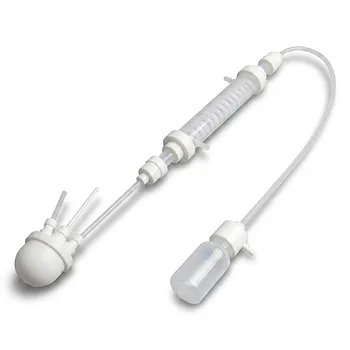
- Corrosion Resistant Hydrogen Fluoride Reflux Apparatus PTFE Flask Condenser Separatory Funnel Collection Bottle High Temperature Laboratory System
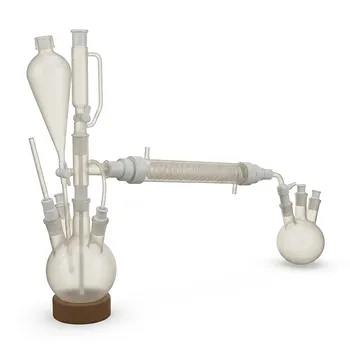
- PTFE Distillation Condensation Apparatus High Temperature Hydrofluoric Acid Resistant Fluorination Reaction Flask
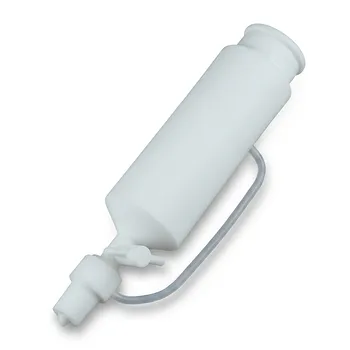
- Custom PTFE Constant Pressure Separatory Funnel 100ml Fluoropolymer Labware for Corrosive Chemical Transfer
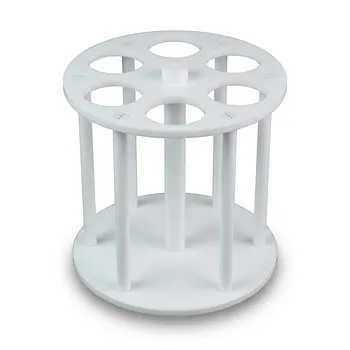
- Custom PFA Separatory Funnel Rack PTFE Machined Laboratory Support Stand Corrosion Resistant Low Background Fluoropolymer Fixture
- Custom PFA Microcolumn Racks and PTFE Machined Low Background Corrosion Resistant Laboratory Fixtures
People Also Ask
- What structural characteristics provide PTFE fluoropolymer laboratory apparatus with high thermal stability? Strong C-F bonds, dense fluorine shielding, and rigid helical conformation ensure stability during high-temperature analysis.
- How does resin stratification occur during the curing of fluoropolymer coatings, and why might solid fluoropolymer laboratory apparatus be preferred over surface coatings for aggressive chemical applications?
- How do operating temperatures and pressures influence the formation of thermal degradation products during the high-temperature processing of PTFE fluoropolymer laboratory equipment? Key factors and safety limits
- What impact does thermal annealing and crystallization temperature have on the material properties of custom-machined fluoropolymer apparatus? Optimize Performance with Controlled Thermal Processing
- How do extreme temperatures and harsh chemical environments affect PTFE and PFA lab apparatus? Achieve Reliable Performance in Demanding Conditions