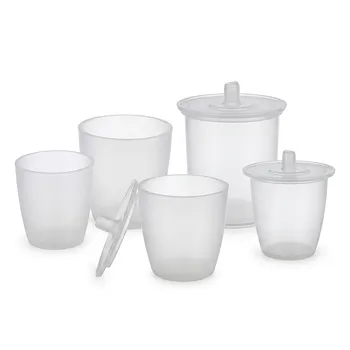
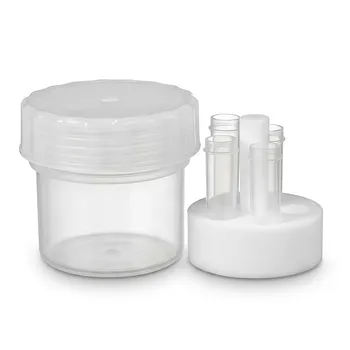
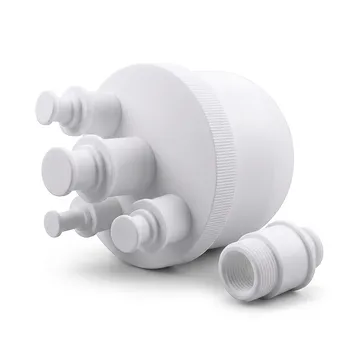
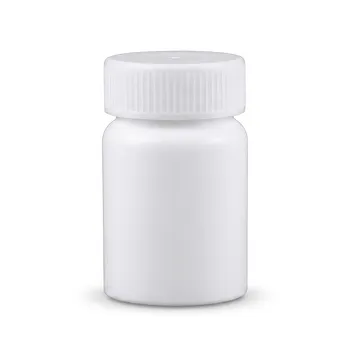
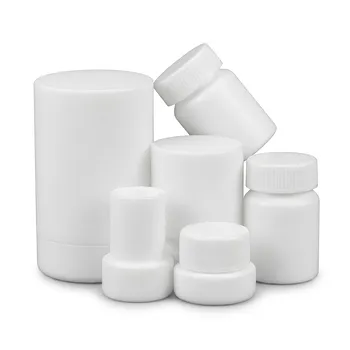
For corrosion-resistant custom labware, the decisive physical differences are density, thermal capability, chemical resistance, dielectric behavior, crystallinity, and manufacturability. PTFE is substantially denser than polyethylene (PE), remains stable at much higher temperatures, and provides near-universal resistance to organic solvents and aggressive chemicals. PE is lighter, easier to process, and often more economical, but its solvent resistance and dimensional stability are more application-dependent.
PTFE is the stronger choice when chemical exposure, temperature, dimensional stability, or electrical insulation dominates. PE is appropriate when low weight, simpler fabrication, impact resistance, and moderate chemical service are more important.
Compare the Properties That Control Service Life
Density and Weight
PTFE typically has a density of approximately 2.2-2.3 g/cm³, compared with approximately 0.92-1.0 g/cm³ for common PE grades.
This makes PTFE components roughly twice as dense or more. The added mass can improve stability in reaction vessels, electrochemical cells, and processing fixtures, but it increases material cost and handling weight.
Thermal Limits
PTFE provides substantially greater thermal capability than standard PE and is commonly specified for continuous service approaching 260 °C, depending on grade, load, and design conditions.
PE has much lower thermal limits, and its stiffness and dimensional accuracy decline as temperature increases. Engineers should evaluate not only maximum temperature, but also sustained load, thermal cycling, and the possibility of creep.
Chemical and Solvent Resistance
PTFE offers exceptionally broad resistance to acids, bases, and organic solvents. It is generally selected when the labware must retain purity and structural integrity across highly aggressive or mixed chemical environments.
PE provides useful chemical resistance, but performance varies significantly by grade, solvent, concentration, temperature, and exposure duration. A chemical that is harmless to PE at room temperature may cause swelling, softening, or stress cracking at elevated temperature.
Dimensional Stability Under Load
PTFE's high crystallinity and molecular regularity support strong chemical inertness and stable physical behavior across demanding environments. However, PTFE can still deform slowly under sustained mechanical load because of creep and cold flow.
PE is also susceptible to creep, particularly at elevated temperatures. The design should therefore account for wall thickness, unsupported spans, clamping loads, sealing forces, and long-term dimensional tolerances rather than relying only on room-temperature strength values.
Evaluate Electrical and Structural Behavior
Dielectric Performance
PTFE has excellent dielectric properties and a low dielectric constant, approximately 2.0 at 1 kHz in the supplied reference data. This makes it useful for insulating components, electrochemical cells, sensor housings, and laboratory assemblies where electrical isolation and low dielectric loss matter.
The dielectric constant is not the same as dielectric strength. Engineers should request both dielectric constant and breakdown strength at the relevant frequency, thickness, temperature, and humidity because these parameters describe different failure mechanisms.
Crystallinity and Molecular Structure
Virgin PTFE is highly crystalline, with the reference describing crystallinity around 92%-98%. Its fully fluorinated, highly regular molecular structure contributes to its low surface energy, hydrophobicity, and chemical inertness.
PE crystallinity depends on the grade and its molecular architecture. Branching is especially important: high-density PE has less branching and higher crystallinity than low-density PE, while more highly branched grades are generally softer and less dimensionally stable.
Friction and Surface Behavior
PTFE has an exceptionally low coefficient of friction and a low surface tension, with strong intrinsic hydrophobicity. These characteristics help reduce sticking, particle retention, and friction in seals, plugs, valve components, and fluid-contact surfaces.
PE can also provide low-friction behavior, but it does not generally match PTFE's combination of low surface energy and chemical inertness. Surface finish and machining marks should be considered because they can affect cleaning, contamination control, and fluid drainage.
Porosity and Permeability
Solid, dense PTFE and PE provide different performance from expanded or porous fluoropolymer structures. For containment labware, engineers should specify a dense, non-porous construction unless controlled gas venting or filtration is an explicit requirement.
Permeability should be evaluated when the component handles volatile solvents, gases, or trace-analysis samples. Chemical compatibility alone does not guarantee that the material will prevent vapor transmission or protect sample concentration.
Match the Material to the Fabrication Method
PTFE Custom Machining
PTFE is non-melt-processible by conventional injection molding and extrusion because of its extremely high melt viscosity. It is typically formed through specialized powder processing, compression molding, and sintering, then precision-machined into the required geometry.
This makes PTFE well suited to custom reaction vessels, microwave digestion components, electrochemical cell bodies, valve seats, and heavy-duty chemical-processing parts. The design should allow for machining tolerances, creep, and the behavior of the finished sintered stock shape.
PE Molding and Fabrication
PE is readily available in grades suitable for machining, thermoforming, extrusion, and conventional molding. This supports lower-cost production of larger or less intricate containers, trays, bottles, liners, and fittings.
Its easier processing does not remove the need for grade selection. Molecular weight, density, branching, filler content, weldability, and stress-cracking resistance can materially change the performance of custom labware.
Surface Quality and Geometry
PTFE's machining route is advantageous for one-off or low-volume components requiring precise features and robust chemical service. PE's melt-processability can be advantageous for repeatable molded geometries and high-volume production.
For high-purity fluid handling, the required surface finish, seams, welds, radii, and cleaning access should be specified alongside the polymer. These manufacturing details can influence contamination retention as much as the bulk material choice.
Understanding the Trade-offs
PTFE Is Not Automatically Better for Every Design
PTFE's chemical and thermal performance comes with greater density, higher material cost, limited conventional processability, and susceptibility to creep under load. It may be excessive for aqueous or mildly corrosive service at moderate temperatures.
PE can be the more practical choice when the chemical exposure is well characterized and remains within the selected grade's validated limits. It also offers lower weight and simpler fabrication.
“Polyethylene” Is Not a Single Material
The comparison must identify the PE grade, such as high-density or low-density PE, because density, crystallinity, branching, stiffness, and stress-cracking behavior vary across the family.
A generic PE compatibility chart is not sufficient for critical labware. Testing should reflect the actual chemical concentration, temperature, exposure time, mechanical stress, and cleaning cycle.
Chemical Resistance Does Not Equal Mechanical Suitability
A polymer may resist a reagent chemically while still failing through creep, thermal softening, stress cracking, permeation, or dimensional distortion. The evaluation must combine chemical compatibility with load, temperature, geometry, and service duration.
This is particularly important for threaded closures, thin walls, flanges, seals, and components held under constant compression.
Do Not Confuse PTFE with Melt-Processible Fluoropolymers
PFA is a related fluoropolymer that can be melt-processed into intricate, smooth, and sometimes translucent components. PTFE generally requires compression processing and machining, so PFA may be a better fluoropolymer option when molded complexity, weldability, or optical inspection is essential.
That distinction concerns PTFE versus PFA, not PTFE versus PE, but it can materially affect the final custom-labware specification.
Making the Right Choice for Your Goal
The selection should be based on the complete operating envelope rather than on corrosion resistance alone.
- If your primary focus is maximum chemical and solvent resistance: Select PTFE when exposure includes aggressive organic solvents, strong reagents, or mixed chemical environments that could swell or stress-crack PE.
- If your primary focus is high-temperature service: Favor PTFE for sustained high-temperature applications approaching 260 °C, while validating the selected PE grade against its lower thermal and creep limits.
- If your primary focus is low weight and economical fabrication: Evaluate PE first for moderate-temperature service with well-characterized chemicals and conventional molded or machined geometries.
- If your primary focus is electrical insulation or electrochemical performance: Favor PTFE, but specify dielectric constant, dielectric loss, and breakdown strength separately for the actual operating frequency and component thickness.
- If your primary focus is complex molded geometry or high-volume production: Evaluate PE for conventional molding, or consider a melt-processible fluoropolymer such as PFA when fluoropolymer-level chemical resistance is still required.
- If your primary focus is long-term dimensional accuracy: Compare creep, crystallinity, wall thickness, support conditions, and thermal cycling for the exact grade and geometry rather than relying on nominal chemical compatibility.
The right material is the one whose chemical, thermal, mechanical, electrical, and fabrication characteristics remain acceptable throughout the entire intended service life.
Summary Table:
| Parameter | PTFE | Polyethylene (PE) |
|---|---|---|
| Density (g/cm³) | 2.2-2.3 | 0.92-1.0 |
| Max Continuous Service Temp (°C) | ~260 | Lower (grade-dependent) |
| Chemical Resistance | Exceptional against acids, bases, solvents | Good but varies by grade and conditions |
| Dielectric Constant (at 1 kHz) | ~2.0 | ~2.3 (varies) |
| Crystallinity | 92%-98% | Depends on grade (HDPE vs LDPE) |
| Friction Coefficient | Very low | Low |
| Fabrication Method | Powder processing, machining | Conventional molding, machining |
| Key Advantage | High temp & chemical resistance | Low weight, economical |
Ensure your labware meets the highest standards of performance and reliability. At KINTEK, we specialize in manufacturing custom PTFE and PFA labware, from basic beakers to complex electrochemical cells, backed by our end-to-end CNC machining capabilities. Whether you need a one-off prototype or high-volume production, our expert team can deliver solutions tailored to your exact specifications. Contact us today to discuss your project and discover how our high-performance fluoropolymers can enhance your lab's efficiency and accuracy. Get in touch with us.
Related Products
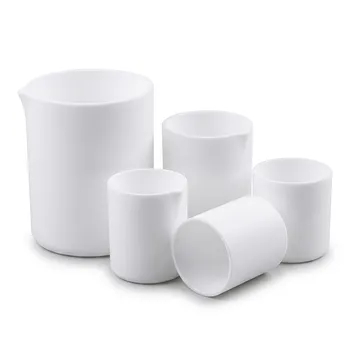
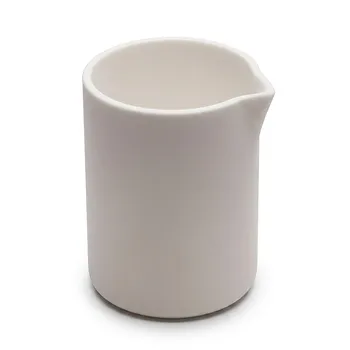
- High Purity PFA Crucible and Corrosion Resistant PTFE Beaker for Trace Analysis and Custom Laboratory Applications
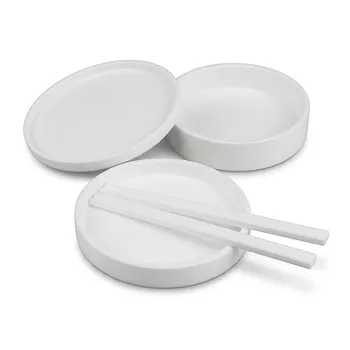
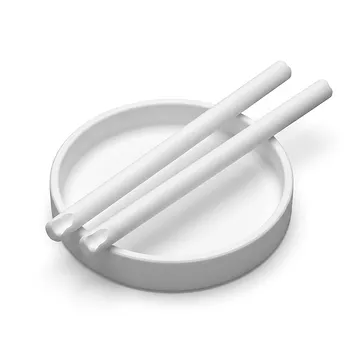
- Custom Polytetrafluoroethylene PTFE Petri Dishes 60mm Corrosion Resistant Low Background Labware
- Custom PTFE Petri Dish 30mm Corrosion Resistant Low Background Non Leaching Laboratory Ware
- Custom PTFE Petri Dish 120mm Diameter Corrosion Resistant Low Background High Purity Labware
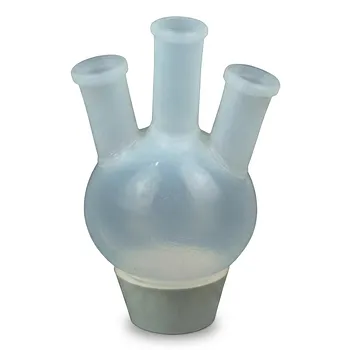
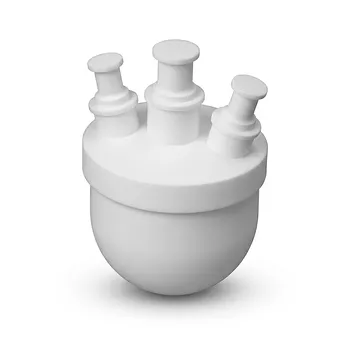
- Large Scale PTFE Beakers and Flasks for High Temperature Corrosion Resistant Laboratory Applications with Custom CNC Fabrication
People Also Ask
- Why are high-purity vessels critical for BiFeO3 synthesis? Ensuring Phase Purity
- Why is the use of high-purity PFA or PTFE labware critical during TiO2 nanoparticle purification? Protect Sample Purity
- Why is high-purity PFA labware necessary for Znx@LS-2 zeolite ICP-OES analysis? Ensure Trace-Level Precision
- Why is high-purity PFA trace analysis labware used for MXene? Ensure Superior Material Integrity in Research
- What key material characteristics make PTFE and PFA suitable for high-purity laboratory labware, trace analysis containers, and medical microporous tubing? Discover the essential properties that ensure purity.