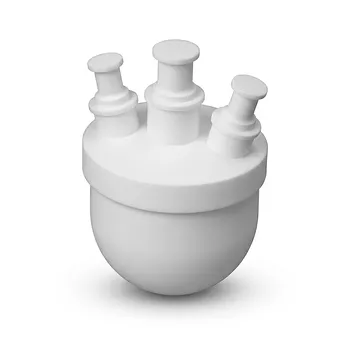
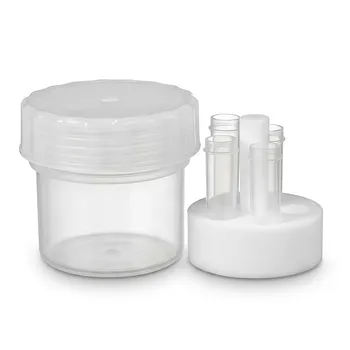
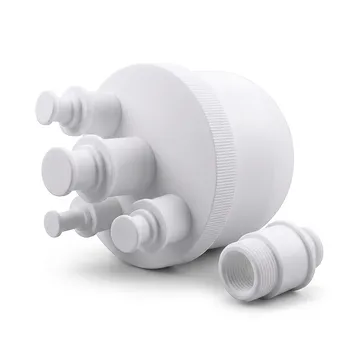
PTFE fluoropolymer labware improves sample recovery and lab safety by making surfaces exceptionally difficult to wet, coat, or drag across. Its very low surface energy, approximately 18 dyn/cm, gives PTFE strong hydrophobic and non-stick behavior, while its low coefficient of friction, commonly reported around 0.05–0.10 under specified conditions, supports smooth fluid movement and component operation. Together, these properties reduce liquid retention, simplify cleaning, limit cross-contamination, and make handling more controlled.
The central benefit is reduced hold-up: PTFE leaves less sample behind on vessel walls and inside fluid-transfer components, while its low-friction surfaces support smoother handling, easier cleaning, and safer operation.
Why PTFE Surfaces Improve Sample Recovery
Low surface energy reduces wetting
Surface energy describes how readily a liquid spreads across and interacts with a solid surface. PTFE's exceptionally low value, approximately 18 dyn/cm, discourages many liquids from wetting and adhering to the material.
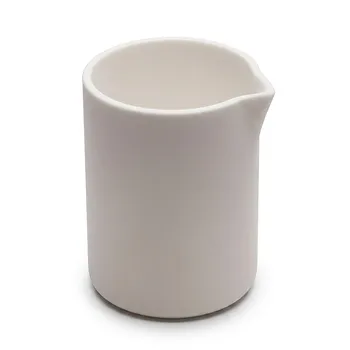
Instead of forming a persistent film on a beaker, digestion tube, wash bottle, or liner, the liquid tends to remain cohesive and drain more completely.
Non-stick behavior minimizes sample retention
Reduced adhesion is especially valuable when working with precious, viscous, or trace-level samples. Less material remains on vessel walls, tubing interiors, fittings, valves, and other wetted components.
This improves recovery during transfers, rinsing, digestion, and sample preparation because a greater proportion of the original sample reaches the intended collection vessel.
Hydrophobic and oleophobic behavior limits residue
PTFE's low-surface-energy characteristics provide strong water-repellent and non-stick behavior. Fluoropolymer surfaces can also resist adhesion from many oily or hydrocarbon-containing substances.
The result is less droplet retention and less stubborn residue after dispensing or draining, although compatibility and cleaning performance still depend on the specific chemical and operating conditions.
How Low Friction Supports Controlled Handling
Fluid transfer encounters less resistance
A low-friction interior can help liquids move smoothly through PTFE tubing, fittings, valves, and related components. This reduces residual hold-up volume and supports more complete transfer.
For analytical workflows, smoother movement helps reduce the amount of sample that remains trapped in a transfer path between operations.
Moving components operate more smoothly
In components such as magnetic stir bars and stopcocks, low friction supports smooth rotation or actuation. PTFE is also self-lubricating in the sense that it can provide low-resistance sliding without relying on conventional liquid lubricants.
This can make repeated operation more consistent and reduce the chance that a component will drag, stick, or require excessive force.
Sealing can require less installation torque
In some fluid-transfer and sealing applications, low friction reduces torque losses during installation. More of the applied force can be converted into the compressive force needed to form a secure seal.
A properly installed seal helps reduce leaks, which is directly relevant to operator exposure, contamination control, and maintaining the intended fluid path.
How These Properties Improve Lab Safety
Easier cleaning reduces contamination risk
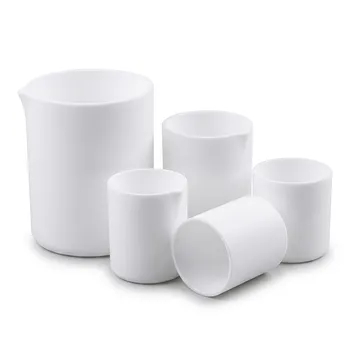
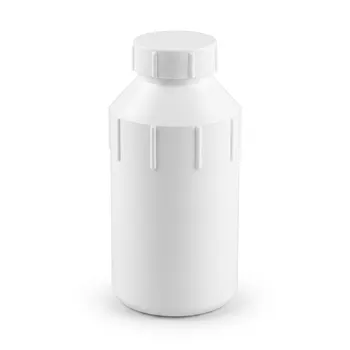
Because samples and residues are less likely to adhere strongly, PTFE labware is generally easier to rinse and clean. This is useful for beakers, digestion tubes, wash bottles, tubing, and custom liquid-handling components.
More efficient cleaning reduces the likelihood that residue from one test cycle will enter the next cycle.
Reduced cross-contamination protects results and workflows
Cross-contamination is both a data-quality problem and a safety concern when incompatible or hazardous materials move between batches. Minimizing retained material lowers the amount available to contaminate subsequent samples or surfaces.
This is particularly important in trace analysis, where very small residual quantities can affect results.
Lower operating force improves control
Smoothly operating stopcocks, valves, stir bars, and fittings are easier to manipulate predictably. Reduced friction can help limit sudden movement, awkward force, and accidental disruption of a connection or vessel.
PTFE does not eliminate handling hazards, but it can support more controlled routine operation.
Leak prevention limits exposure
Where low-friction surfaces contribute to reliable sealing and smooth valve operation, they can help maintain containment. Preventing leaks reduces the chance of spills, skin contact, airborne release from splashing, or contamination of nearby equipment.
The safety benefit depends on correct component selection, installation, inspection, and chemical compatibility.
Understanding the Trade-offs
Coefficient of friction is not a single universal value
Reported PTFE friction values vary with the test method and operating conditions. The references include static values from approximately 0.05 to 0.8 and dynamic values near 0.04, so these figures should not be treated as interchangeable.
Load, speed, temperature, mating material, surface condition, and lubrication can all affect actual performance.
Non-stick does not mean chemically universal
PTFE is widely valued for chemical resistance, but no material should be assumed compatible with every chemical, temperature, pressure, or process condition. The specific PTFE grade, design, and exposure conditions must be checked before use.
Material selection should follow the chemical manufacturer's compatibility data and the lab's established safety procedures.
Low retention does not replace validated cleaning
PTFE reduces adhesion and residual hold-up, but it cannot guarantee complete removal of every substance. Highly viscous, particulate, reactive, or strongly adsorbing materials may still require validated rinsing and cleaning protocols.
Cleanability should be verified for the actual sample matrix and analytical method.
Surface properties do not remove procedural hazards
PTFE labware can reduce residue and improve handling, but it does not protect users from corrosive, toxic, hot, pressurized, or otherwise hazardous materials. Appropriate containment, personal protective equipment, ventilation, inspection, and waste procedures remain necessary.
Making the Right Choice for Your Goal
PTFE is most valuable when retained sample volume, contamination control, smooth transfer, or cleaning effort materially affects the workflow.
- If your primary focus is maximum sample recovery: Use PTFE vessels, tubing, liners, or fittings where low surface energy can reduce wetting, wall adhesion, and residual hold-up.
- If your primary focus is trace analysis: Choose low-retention PTFE components and validate cleaning and rinsing procedures to limit carryover between samples.
- If your primary focus is safer liquid handling: Apply PTFE to transfer paths, valves, and seals where smooth operation and reliable containment can reduce leaks and excessive handling force.
- If your primary focus is efficient cleaning: Use PTFE for components exposed to sticky or difficult-to-remove materials, while confirming compatibility with the actual chemicals and cleaning process.
By reducing adhesion and friction in the right parts of the workflow, PTFE helps laboratories recover more of each sample while improving control over contamination, cleaning, and containment.
Summary Table:
| Property | Value | Benefit |
|---|---|---|
| Surface Energy | ~18 dyn/cm | Non-stick, hydrophobic, reduces adhesion and retention |
| Coefficient of Friction | 0.05–0.10 (typical) | Smooth fluid transfer, easy handling, less force needed |
| Self-lubrication | N/A | Low-resistance sliding, consistent operation |
| Cleaning Effort | Reduced | Easier rinsing, less cross-contamination |
Enhance sample recovery and lab safety with KINTEK's high-performance PTFE/PFA labware. Our precision-crafted beakers, tubing, valves, and custom components are designed to minimize retention and ensure smooth operation. Contact us today to optimize your workflow! #ContactForm
Related Products
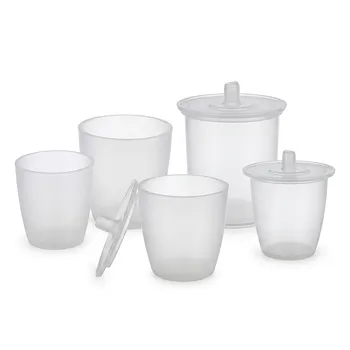
- High Purity PFA Crucible and Corrosion Resistant PTFE Beaker for Trace Analysis and Custom Laboratory Applications
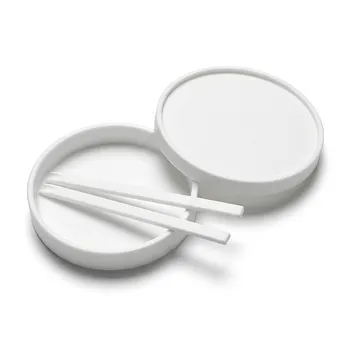
- Custom Polytetrafluoroethylene PTFE Petri Dishes 60mm Corrosion Resistant Low Background Labware
- Custom PTFE Petri Dish 30mm Corrosion Resistant Low Background Non Leaching Laboratory Ware
- Custom PTFE Petri Dish 120mm Diameter Corrosion Resistant Low Background High Purity Labware
- Large Scale PTFE Beakers and Flasks for High Temperature Corrosion Resistant Laboratory Applications with Custom CNC Fabrication
People Also Ask
- Why are high-purity vessels critical for BiFeO3 synthesis? Ensuring Phase Purity
- Why is the use of high-purity PFA or PTFE labware critical during TiO2 nanoparticle purification? Protect Sample Purity
- Why is high-purity PFA labware necessary for Znx@LS-2 zeolite ICP-OES analysis? Ensure Trace-Level Precision
- Why is high-purity PFA trace analysis labware used for MXene? Ensure Superior Material Integrity in Research
- Why is high-purity PFA trace analysis labware used for sample processing when preparing Mo2CTx@MoS2? Ensure Material Purity