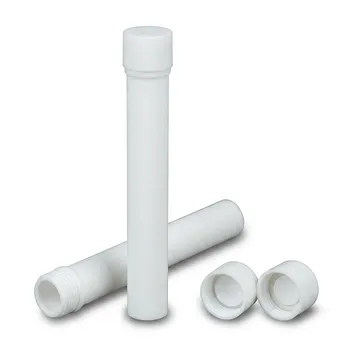
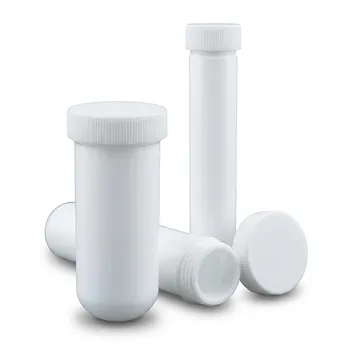
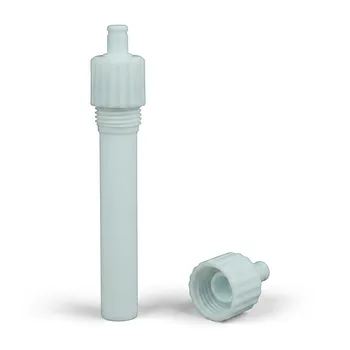
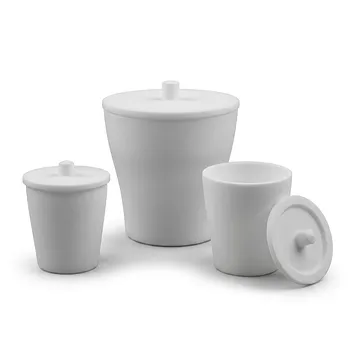
PTFE is chosen because its fluorinated molecular structure combines exceptional chemical inertness with useful thermal stability. The polymer’s carbon backbone is shielded by strong carbon–fluorine bonds, making PTFE resistant to attack, dissolution, and contamination from most acids, bases, and organic solvents. This stability allows PTFE vessels and reaction components to preserve sample integrity during aggressive digestion and other demanding laboratory processes, within the material’s temperature and chemical limits.
PTFE’s value is not simply that it is “non-stick”; it is that its tightly fluorinated, chemically stable structure is difficult for most reagents to disrupt. Its low reactivity, insolubility, low moisture uptake, and broad working-temperature range make it particularly effective where corrosion, leaching, and contamination must be minimized.
Why PTFE Resists Chemical Attack
Strong Carbon–Fluorine Bonds
PTFE consists of a carbon backbone surrounded by fluorine atoms. The carbon–fluorine bond is highly stable, largely because fluorine is extremely electronegative and forms a tightly bound protective environment around the polymer chain.
This fluorinated sheath makes it difficult for acids, bases, and solvents to reach or react with the carbon backbone. The result is a polymer that remains chemically stable where many metals, glass compositions, and ordinary plastics would corrode, swell, dissolve, or become contaminated.
A Shielded Polymer Backbone
Fluorine atoms are large enough to form a relatively continuous protective layer around the carbon chain. This structure limits access by reactive chemical species and reduces the number of chemically vulnerable sites available for reaction.
The polymer is also highly non-polar and has very low surface energy. These characteristics contribute to its low wettability, low friction, and resistance to adhesion, which help prevent residues from remaining on vessel walls or reaction components.
Exceptional Insolubility
PTFE is effectively insoluble in the common organic and inorganic solvents used in laboratory workflows. This matters because a vessel that dissolves, swells, or extracts into a reagent can alter the chemistry and introduce contamination.
Its insolubility supports reliable performance in trace analysis, sample preparation, and microwave digestion, where even small amounts of leached material can compromise results.
Why This Matters in Digestion Vessels
Protection Against Corrosive Reagents
Chemical digestion often uses concentrated acids, oxidizing mixtures, or other aggressive reagents to break down difficult samples. PTFE generally resists these environments without the corrosion mechanisms associated with metallic vessels.
That resistance helps maintain vessel integrity and prevents the container from becoming a source of metal ions or other contaminants.
Reduced Leaching and Sample Contamination
Trace-element analysis requires the container to contribute as little background contamination as possible. PTFE’s chemical inertness and insolubility reduce the likelihood that vessel components will dissolve into the sample.
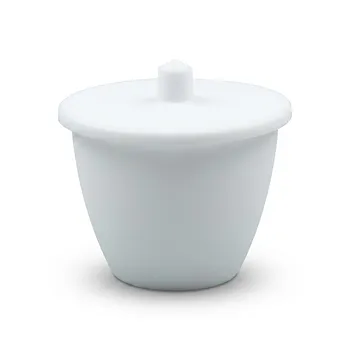
Its low moisture absorption also helps limit water retention and carryover between preparation steps. PTFE is therefore well suited to high-purity containers, liners, crucibles, beakers, and transfer components.
Compatibility with Thermal Digestion
PTFE remains useful across a broad temperature range and can operate continuously at approximately 260°C, with a melting point near 327°C. This provides substantial thermal margin for many wet-chemical and microwave-assisted digestion procedures.
The temperature rating must still be evaluated together with pressure, reagent composition, vessel design, and exposure time. A PTFE liner may tolerate the chemistry while the complete pressure vessel has a lower operating limit.
Properties That Improve Apparatus Performance
Low Moisture Uptake
PTFE absorbs very little moisture compared with many polymers. This helps preserve reagent concentration and reduces the risk that absorbed water will later be released into a sample or interfere with a measurement.
Low Friction and Non-Stick Release
PTFE has a very low coefficient of friction and low surface energy. Reaction products and residues are less likely to adhere strongly to its surface, making vessels easier to clean and reducing cross-contamination between runs.
These properties are especially useful when handling viscous digests, precipitates, or samples requiring strict cleanliness.
Thermal and Electrical Resistance
PTFE resists heat transfer and provides excellent electrical insulation. Its thermal behavior can help protect surrounding components, while its dielectric properties are valuable in electrically or microwave-assisted equipment.
These characteristics support PTFE’s role as a liner, seal component, insulator, or chemically resistant insert in more complex reaction systems.
Understanding the Trade-offs
PTFE Is Not Resistant to Every Chemical
PTFE is resistant to most laboratory reagents, but “chemically inert” does not mean universally immune. Elemental fluorine, some highly reactive fluorinating agents, molten or dissolved alkali metals, and certain specialized high-temperature conditions can attack PTFE.
Reagent compatibility should therefore be confirmed for the exact chemical mixture, concentration, temperature, and exposure duration.
Temperature and Pressure Are Linked
PTFE’s usable temperature is lower than its melting point, and pressure-vessel performance depends on more than the polymer’s chemical resistance. At elevated temperature, PTFE can soften, creep, or deform under sustained mechanical load.
For sealed digestion systems, the vessel assembly, liner support, closure, seals, and pressure rating must all be considered. A chemically compatible liner does not automatically make an entire apparatus suitable for high-pressure operation.
Mechanical Strength Is Not Its Main Advantage
PTFE is softer and less dimensionally rigid than many metals and engineering ceramics. It can deform under load, and it may require structural support when used in high-pressure or mechanically demanding equipment.
Filled PTFE grades can improve wear resistance or dimensional stability, but additives may be unsuitable for ultra-trace work because they can introduce contamination or alter chemical compatibility.
Processing Is More Specialized
PTFE does not behave like a conventional thermoplastic melt. When heated, it forms a stiff gel rather than flowing readily, so components are typically produced through specialized sintering, molding, machining, or related processes.
This can increase manufacturing complexity and cost, particularly for custom reaction vessels or precision components.
Making the Right Choice for Your Goal
PTFE is a strong choice when chemical purity and resistance to corrosive reagents are more important than maximum mechanical rigidity or low cost.
- If your primary focus is chemical resistance: Choose PTFE for contact with most strong acids, bases, oxidizing digestion mixtures, and laboratory solvents, while verifying compatibility with unusually reactive fluorinating or alkali-metal systems.
- If your primary focus is trace analysis: Use high-purity PTFE components to reduce leaching, moisture retention, and sample carryover, and control cleaning and handling procedures as carefully as the material selection.
- If your primary focus is high-temperature digestion: Confirm the continuous-use temperature, heating profile, pressure, and complete vessel design rather than relying only on PTFE’s melting point.
- If your primary focus is mechanical durability: Treat PTFE as a chemically resistant liner or contact surface and provide appropriate structural support where pressure, load, or dimensional stability is critical.
PTFE is the material of choice when its fluorinated chemistry provides the best protection for both the apparatus and the sample under the intended chemical, thermal, and pressure conditions.
Summary Table:
| Property | Benefit |
|---|---|
| Strong C-F bonds | Resists attack by most reagents |
| Insolubility | Prevents leaching and contamination |
| Low moisture uptake | Maintains reagent concentration |
| Wide temperature range | Operates up to 260°C continuously |
| Non-stick surface | Easy cleaning, reduced cross-contamination |
Elevate your lab's performance with PTFE products from KINTEK. Our high-purity PTFE and PFA components ensure chemical resistance and sample integrity. Contact us today to discuss your custom requirements! Get in touch
Related Products
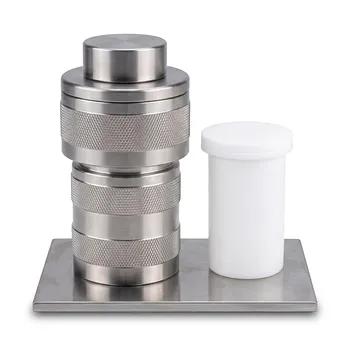
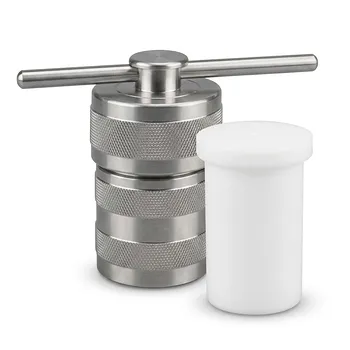
- PTFE Lined High Pressure Digestion Vessel 50ml High Temperature Hydrothermal Synthesis Tank
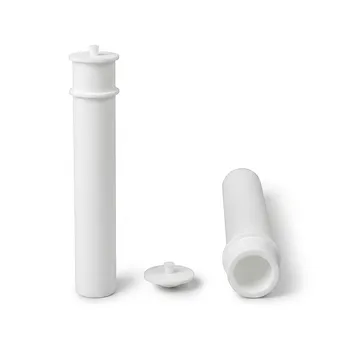
- Custom 100ml PTFE Digestion Tube for Heavy Metal Trace Analysis and High Temperature Acid Digestion
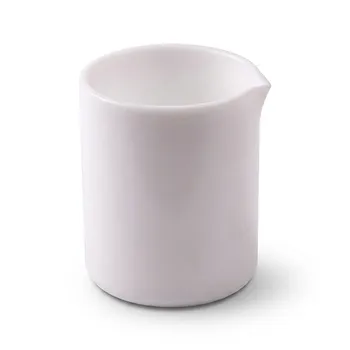
- Custom Thickened PTFE Beaker High Temperature Hot Plate Heating Laboratory Fluoropolymer Vessel Chemical Resistant Digestion Beaker
- 5ml High Pressure PTFE Digestion Vessel for Geological Mineral Analysis Corrosion Resistant Polytetrafluoroethylene TFM Digestion Inner Liner
- High Temperature Corrosion Resistant Customizable PTFE Laboratory Digestion Crucible with Lid Small Volume Hot Plate Compatible Vessel
People Also Ask
- What are the benefits of using a PTFE-lined vessel for carbon-sulfur cathode treatment? Maximize Purity & Performance
- Why are PTFE-lined pressure digestion vessels required for the preparation of Ag/CeO2 catalysts? Purity & Performance
- What safety features are typically incorporated into high-pressure PTFE digestion vessel designs? Ensure Lab Safety
- What is the function of PTFE lined high-pressure vessels in g-C3N4 synthesis? Achieve High-Purity Material Growth
- Role of High-Pressure Digestion Tanks in Perovskite Synthesis: Achieve Superior Stability and Latent Heat