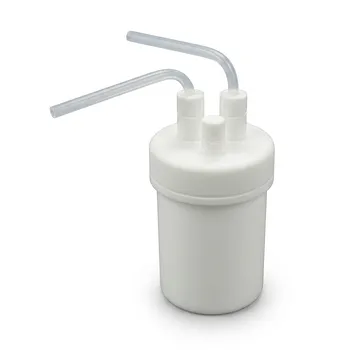
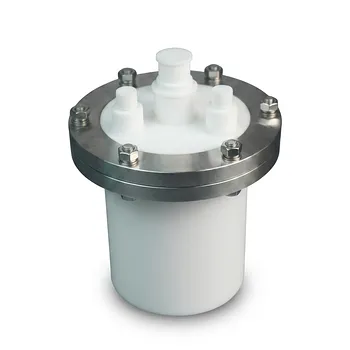
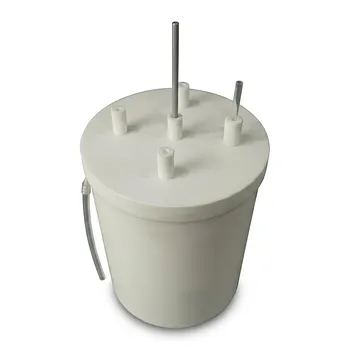
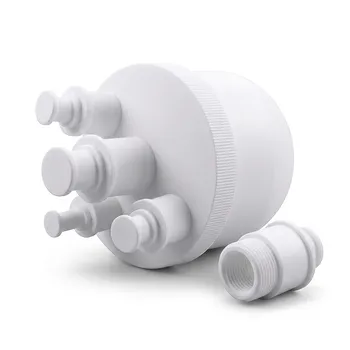
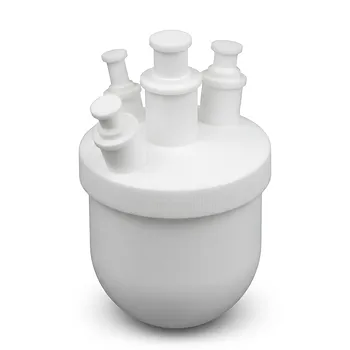
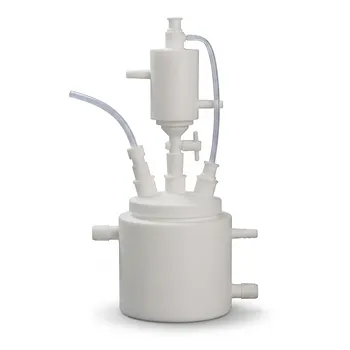
Fluoropolymer laboratory reaction apparatus must combine chemical inertness, vapor containment, pressure integrity, and carefully controlled thermal performance. For volatile and toxic monomers such as octafluorocyclopentene (OFCP), whose boiling point is approximately 26–27 °C, sealed PTFE or PFA reaction vessels and leak-proof transfer fittings are essential. Decafluorocyclohexene (DFCH) has a somewhat higher boiling point and greater chemical stability, but it still requires closed handling, compatible materials, and controlled heating.
The required apparatus is not defined by fluoropolymer compatibility alone. It must prevent monomer escape and contamination while safely managing elevated temperature, pressure, toxic decomposition products, and potential ignition hazards.
Why Material Selection Matters
PTFE and PFA Provide Chemical Compatibility
PTFE and PFA are suitable for wetted components because they resist strong acids, bases, organic solvents, and many fluorinated reagents. Their low reactivity helps prevent monomer consumption, sample contamination, leaching, and vessel degradation during polymerization and trace analysis.
PFA is particularly useful where melt-processable fluoropolymer components, transparency, or complex molded geometry are needed. PTFE is widely suited to liners, seals, tubing, and chemically resistant vessel components.
Use High-Purity Materials
Reaction vessels, digestion containers, reagent bottles, and fluid-transfer parts should use high-purity fluoropolymer resin without harmful additives. This reduces the risk of extractables, ionic contamination, and trace-metal contamination in sensitive polymer or analytical workflows.
Where stainless steel forms the pressure boundary, grade 316 or higher should be selected for acidic reaction environments and demanding purity requirements. The metal surface should be properly passivated and cleaned using high-purity water, typically in the 16–18 MΩ range, to reduce ionic contamination.
Protect Wetted Surfaces
The apparatus should keep reactive fluids in contact primarily with PTFE, PFA, or another demonstrably compatible fluoropolymer. Fittings, valves, tubing, gaskets, and vessel liners must be evaluated as a complete system because the weakest component can determine the practical chemical resistance and leak performance.
Avoid assuming that a fluoropolymer liner compensates for incompatible elastomers, adhesives, lubricants, or valve internals. Those auxiliary materials can swell, degrade, introduce contaminants, or lose sealing force during heating.
Features Required for Vapor and Fluid Containment
Use Sealed Reaction Vessels
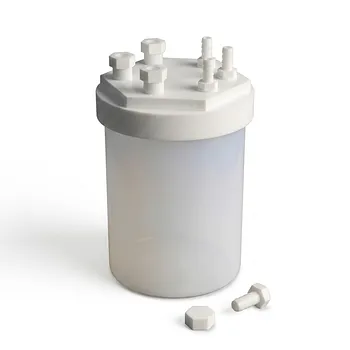
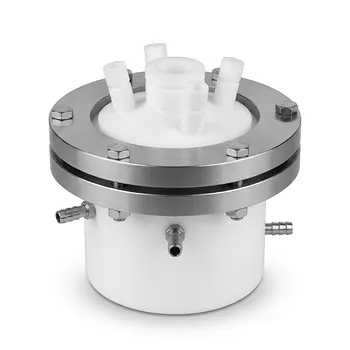
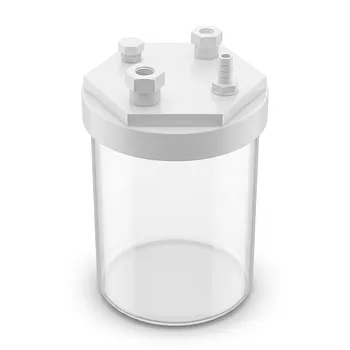
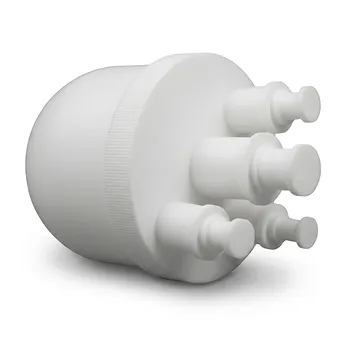
OFCP's low boiling point makes an open vessel unsuitable for routine synthesis. The reaction system should use a sealed PTFE or PFA vessel, or a compatible fluoropolymer-lined pressure vessel, with a closure designed to maintain containment throughout charging, heating, reaction, cooling, and transfer.
The closure should be tested for leakage under the intended temperature and pressure conditions. Connections should be minimized, clearly identified, and arranged so that no monomer can escape through unused ports or temporary fittings.
Specify Leak-Resistant Transfer Hardware
Fluid-transfer components should include chemically compatible tubing, compression fittings, valves, and connectors rated for the expected temperature and pressure. The system should support closed transfer wherever practicable, including closed charging, sampling, draining, and waste collection.
Connections require particular attention during thermal cycling. Differential expansion between fluoropolymer tubing, metal fittings, and seals can reduce clamping force or create leaks even when the materials are chemically compatible.
Provide Secondary Containment
The primary vessel should be placed inside suitable secondary containment capable of capturing liquid leaks and directing vapors toward local exhaust. Secondary containment is especially important during monomer charging, vessel opening, and maintenance, when exposure risk is higher than during a fully closed reaction.
Control Contamination During Trace Work
For trace analysis or high-purity polymer synthesis, use dedicated or thoroughly cleaned vessels and transfer paths. PTFE and PFA help prevent contamination, but they do not eliminate contamination caused by inadequate cleaning, degraded residues, metallic corrosion products, or incompatible sealing materials.
Thermal and Pressure Features
Control Temperature Below Degradation Limits
Fluoropolymer components must be operated within the manufacturer's specified temperature limits. Some fluoropolymer materials can begin discoloring or releasing trace hydrogen fluoride (HF) near or above approximately 204 °C (400 °F), with short-term processing limits commonly cited around 232–249 °C depending on the material and application.
These figures are not universal operating targets. The exact limit depends on the resin, component design, exposure time, atmosphere, mechanical load, and chemicals present.
Account for Catalyzed Decomposition
Strong Lewis acids, including BF3-containing systems, can catalyze fluoropolymer decomposition at temperatures below the normal thermal-degradation range. Chemical compatibility must therefore consider temperature and catalytic chemistry together, rather than relying only on a material's nominal maximum temperature.
Before use, screen the planned reagents for catalytic effects, especially when acidic or Lewis-acidic species contact PTFE, PFA, seals, or other fluoropolymer components at elevated temperature.
Add Active Heating and Cooling Control
A jacketed vessel or equivalent heating and cooling system should provide controlled ramping and rapid heat removal. This is important for exothermic reactions, volatile monomers, and any process in which pressure increases rapidly with temperature.
Temperature measurement should represent the actual reaction-zone temperature, not merely the heating-block or jacket temperature. Independent over-temperature protection is also appropriate for heated systems.
Design for Pressure Relief
A sealed reaction system must include a pressure-control strategy. For pressure-capable equipment, this may include a rated pressure vessel, a correctly specified safety rupture disc, and other approved relief devices.
Rupture discs must be inspected and cleaned regularly. Fluoropolymer buildup can obstruct the disc and prevent proper venting, creating a severe overpressure and explosion hazard. Relief devices must never be isolated, blocked, or replaced with components of uncertain rating.
Process Safety Around Volatile Monomers
Eliminate Ignition Sources
Monomer handling should occur without ignition sources, electrical arcs, uncontrolled hot spots, or other equipment capable of initiating combustion. Residual oxygen should be controlled where the process hazard assessment requires it, using an appropriate inerting and verification procedure.
This requirement applies during charging, transfer, reaction, venting, and waste handling. A closed system is not automatically safe if air can enter through poorly controlled connections or during maintenance.
Use Dedicated Ventilation
Local exhaust or dedicated fume extraction should capture vapors at charging points, vessel openings, transfer stations, relief outlets, hot equipment, and waste containers. General room ventilation alone may not provide adequate control for toxic monomer vapors or thermal decomposition products.
Potential high-temperature byproducts include HF, carbon monoxide, carbonyl fluoride, volatile monomer residues, and particulate matter. The ventilation design should be suitable for corrosive and toxic emissions and should discharge safely.
Treat Cooling and Opening as Safety-Critical Steps
Cooling does not immediately eliminate the hazard. Residual monomer vapor and pressure may remain after heating stops, so the vessel should be cooled, depressurized, and verified safe before opening.
Opening, sampling, and cleaning procedures should be performed under appropriate local exhaust with controls for residual liquid and vapor. Waste containers must remain closed and compatible with the monomer and reaction residues.
Designing the Apparatus for Long-Term Reliability
Resist Chemical and Environmental Aging
Fluoropolymer materials provide strong resistance to weathering, ultraviolet exposure, acids, bases, and organic solvents. This supports long service life in laboratory vessels, tubing, reagent containers, and transfer components.
However, chemical resistance does not guarantee mechanical reliability. Repeated pressure cycles, thermal cycling, abrasion, compression-set in seals, and radiation or UV exposure can still reduce service life.
Prevent Seal Failure
Seals must retain elasticity and compression at the full operating temperature and under exposure to the actual monomer, solvent, catalysts, and byproducts. A PTFE vessel with an incompatible elastomer seal is not a fully compatible apparatus.
Inspect seals, valve seats, tubing ends, and threaded or compression connections for swelling, cracking, embrittlement, deformation, and loss of sealing force.
Plan for Cleaning and Inspection
The design should permit inspection of vessel interiors, relief devices, transfer lines, and dead legs where polymer buildup may accumulate. Fluoropolymer deposits can interfere with pressure relief, contaminate subsequent reactions, or obstruct fluid flow.
Cleaning procedures should avoid damaging the fluoropolymer surface or introducing residues that affect later synthesis. Components used for high-purity work should have defined cleaning, inspection, and replacement intervals.
Understanding the Trade-offs
Chemical Inertness Does Not Mean Unlimited Heat Resistance
PTFE and PFA are highly chemically resistant, but they can release hazardous decomposition products when overheated. Their excellent chemical performance must be balanced against temperature, time, mechanical loading, and the specific reaction chemistry.
Sealing a Volatile Monomer Increases Pressure Risk
A sealed vessel reduces exposure and contamination, but vapor pressure can rise sharply as temperature increases. The vessel, fittings, heating system, and relief device must therefore be rated as one pressure system.
Metal Strength Can Conflict With Purity Requirements
316 or higher stainless steel offers mechanical strength and pressure capability, but exposed metal surfaces may contribute ions or corrosion products in aggressive chemistry. Fluoropolymer liners and careful passivation reduce that risk, but they require inspection for damage, pinholes, and loss of fit.
Thermal Processing Requires Separate Controls
Manufacturing fluoropolymer components through compounding, molding, hot pressing, or post-curing can itself generate toxic airborne byproducts. The production environment needs dedicated ventilation, temperature control, and post-curing procedures; a chemically resistant finished part does not remove hazards created during fabrication.
Making the Right Choice for Your Goal
Select the apparatus according to the dominant risk and the intended process conditions.
- If your primary focus is volatile-monomer containment: Use a closed PTFE or PFA reaction and transfer system with leak-tested fittings, secondary containment, local exhaust, and a documented depressurization procedure.
- If your primary focus is high-temperature operation: Use a fully rated pressure vessel with accurate temperature monitoring, independent over-temperature protection, active cooling, and confirmed operation below the selected fluoropolymer's degradation limit.
- If your primary focus is analytical purity: Use high-purity PTFE or PFA wetted surfaces, passivated stainless steel where required, additive-free materials, dedicated cleaning procedures, and components that minimize extractables and dead volume.
- If your primary focus is pressure safety: Specify a compatible pressure boundary, correctly rated relief hardware, an accessible and regularly inspected rupture disc, and a system design that cannot accidentally isolate the relief path.
- If your primary focus is long service life: Evaluate seals, fittings, tubing, liners, thermal cycling, chemical exposure, and polymer buildup together rather than selecting the vessel material in isolation.
A safe fluoropolymer synthesis system contains the monomer, controls heat and pressure, prevents contamination, and remains compatible with the entire reaction environment.
Summary Table:
| Feature | Requirement |
|---|---|
| Material | High-purity PTFE/PFA for wetted parts; 316 SS for pressure boundary |
| Containment | Sealed vessels, leak-tested fittings, secondary containment |
| Thermal | Operate below degradation limits (~204°C), monitor real temperature, active cooling |
| Pressure | Rated vessel, regular inspection of relief devices |
| Safety | Dedicated ventilation, inerting, eliminate ignition sources |
At KINTEK, our high-purity PTFE/PFA labware and custom CNC machined parts meet the strictest safety standards for handling volatile monomers like OFCP and DFCH. From sealed reaction vessels to leak-proof transfer systems, we provide end-to-end solutions for your synthesis needs. Contact us today to ensure your lab's safety and efficiency — get in touch with our experts.
Related Products
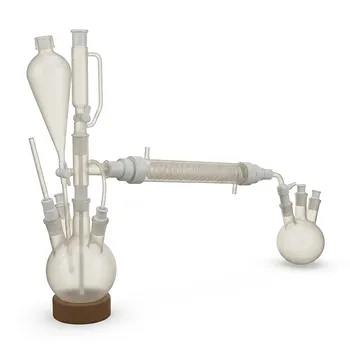
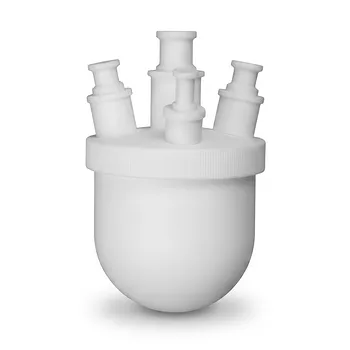
- PTFE Distillation Condensation Apparatus High Temperature Hydrofluoric Acid Resistant Fluorination Reaction Flask
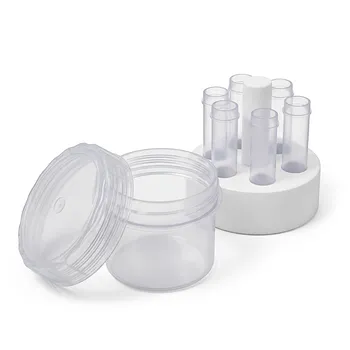
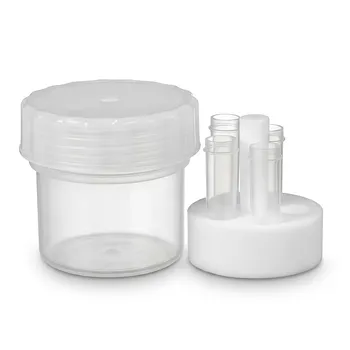
- High Purity Corrosion Resistant PFA Reaction Vessel with PTFE Holder and Integrated Sampling Tube for Trace Analysis
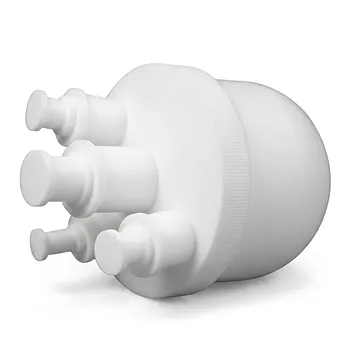
- High Purity PTFE Single Neck Reaction Flask Acid Resistant Customizable Fluoropolymer Laboratory Reactor
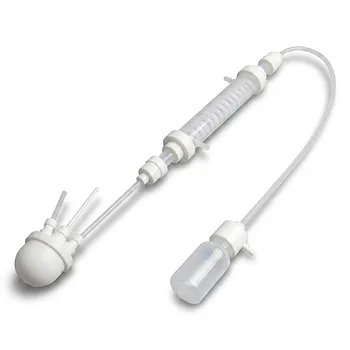
- Corrosion Resistant Hydrogen Fluoride Reflux Apparatus PTFE Flask Condenser Separatory Funnel Collection Bottle High Temperature Laboratory System
- Custom PTFE Continuous Reaction Bottles Virgin Fluoropolymer High Purity Low Background Synthesis Vessels
People Also Ask
- How does the low surface energy of PTFE benefit the condensation process? Boost Heat Transfer and Prevent Fouling
- What structural characteristics provide PTFE fluoropolymer laboratory apparatus with high thermal stability? Strong C-F bonds, dense fluorine shielding, and rigid helical conformation ensure stability during high-temperature analysis.
- How can autopolymerization of TFE gas be prevented during storage and handling? Master TFE safety with oxygen control, inhibitors, and robust system design.
- How do pyrolysis temperature and steam diluent ratios influence tetrafluoroethylene (TFE) conversion and yield in fluoropolymer monomer reaction apparatus? Optimize TFE yield with temperature and steam control
- What thermal and non-reactive properties of PTFE fluoropolymers ensure sample purity and safety in high-temperature digestion equipment? Discover the Key Benefits for Your Lab