The low surface energy of PTFE fundamentally alters condensation dynamics by promoting drop-wise formation instead of a continuous liquid film. This physical property ensures that condensates cannot wet the surface, leading to rapid droplet shedding and a significant reduction in thermal resistance. Consequently, the heat exchanger maintains higher efficiency by keeping more of the heat-transfer surface directly exposed to the vapor phase.
PTFE’s non-stick, hydrophobic nature prevents the formation of an insulating liquid layer during condensation. By forcing droplets to bead up and roll off the surface quickly, it maximizes heat-transfer rates and prevents the accumulation of efficiency-robbing residues.
The Mechanics of Drop-wise Condensation
Shifting from Film to Droplet
On standard metallic surfaces, condensates typically spread out to form a continuous liquid film. PTFE’s low surface energy creates a hydrophobic environment that forces the liquid to form discrete, spherical droplets instead.
Accelerating Surface Clearance
Because PTFE has an ultra-low coefficient of friction (typically 0.05 to 0.10), these droplets do not adhere to the surface. Gravity easily pulls the beads away, causing them to shed much faster than a viscous film would.
Maximizing Surface Exposure
As droplets shed rapidly, they leave behind "bare" tube surfaces. This constant clearing ensures that the incoming vapor is always in contact with the most efficient part of the heat-transfer interface.
Enhancing Thermal Performance
Reducing Thermal Resistance
A standing liquid film acts as an insulating barrier that slows the transfer of heat from the vapor to the cooling medium. By promoting drop-wise condensation, PTFE minimizes the thickness of this barrier, drastically reducing thermal resistance.
Preventing Precipitate Fouling
In many industrial processes, condensates contain dissolved solids or precipitates. PTFE’s non-stick properties prevent these materials from baking onto or "fouling" the surface, which would otherwise create a permanent layer of insulation.
Managing Viscous Residues
The material’s resistance to surface adhesion is critical when dealing with sticky or polymeric residues. Even when working with complex reagents, the low surface energy ensures that materials slide off rather than accumulating into a thick, efficiency-killing sludge.
Understanding the Trade-offs
Thermal Conductivity Constraints
While PTFE promotes efficient drop-wise condensation, the material itself has lower intrinsic thermal conductivity than metals like copper or stainless steel. This means the PTFE layer must be kept very thin—often as a coating—to ensure the benefits of drop-wise condensation aren't offset by the material's own resistance.
Mechanical Wear and Durability
PTFE is softer than the metals it usually coats. In high-velocity environments or systems with abrasive particulates, the coating can suffer from mechanical wear, potentially leading to a loss of the hydrophobic properties over time.
Temperature Limitations
While highly stable, PTFE has specific temperature thresholds. If the condensation process involves extreme temperatures beyond the material's operating range, the coating may degrade, losing its low friction and non-stick advantages.
How to Apply This to Your Project
Making the Right Choice for Your Goal
To successfully leverage PTFE in a condensation system, you must align the material properties with your specific operational requirements.
- If your primary focus is Maximizing Heat Transfer: Use thin-film PTFE coatings on high-conductivity metal tubes to trigger drop-wise condensation without adding significant bulk insulation.
- If your primary focus is Reducing Maintenance: Prioritize PTFE in environments where "sticky" or polymeric precipitates are common, as its non-stick surface simplifies cleaning and extends run-times.
- If your primary focus is Chemical Purity: Utilize PTFE's non-reactive and non-adhesive properties to ensure that reagents pour cleanly and do not leave behind residues that could contaminate future batches.
By understanding the interplay between surface energy and fluid dynamics, you can transform a standard condensation process into a high-efficiency, low-maintenance system.
Summary Table:
| Benefit | Mechanism | Impact |
|---|---|---|
| Drop-wise Condensation | Hydrophobic surface prevents continuous liquid films | Higher heat transfer rates |
| Rapid Droplet Shedding | Ultra-low friction (0.05-0.10) ensures quick release | Constant surface exposure |
| Fouling Prevention | Non-stick properties prevent precipitate adhesion | Reduced maintenance & cleaning |
| Thermal Efficiency | Minimizes insulating liquid barrier thickness | Optimized condensation cycles |
Optimize Your Lab Performance with KINTEK’s PTFE Expertise
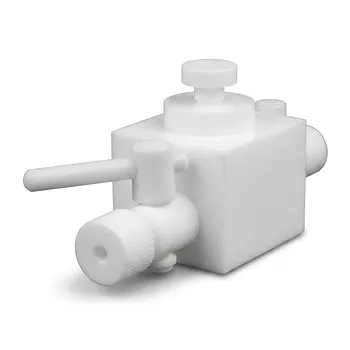
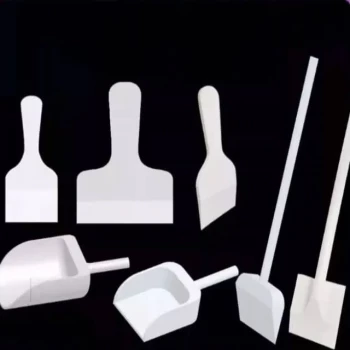
Maximize your condensation efficiency and chemical purity with KINTEK’s high-performance fluoropolymer solutions. From everyday basic labware like beakers, reagent bottles, and centrifuge tubes, to specialized fluid transfer components (tubing, fittings, valves) and sample prep tools (filters, pipettes, spatulas), we provide the durability your research demands.
Looking for something more specialized? KINTEK excels in advanced apparatus, including custom electrochemical cells, battery testing fixtures, and microwave digestion vessels. Backed by end-to-end custom CNC fabrication, we deliver everything from high-volume orders to bespoke, non-standard machined parts tailored to your unique specifications.
Ready to upgrade your laboratory setup? Contact KINTEK today to discover how our PTFE and PFA precision-crafted supplies can transform your results!
Related Products
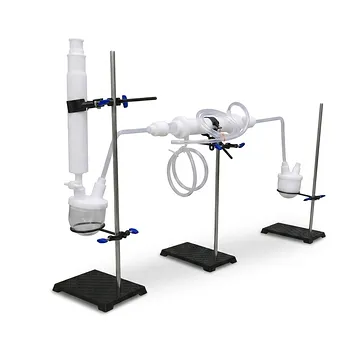
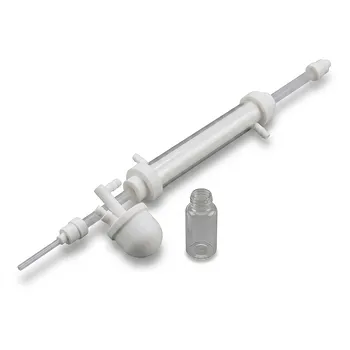
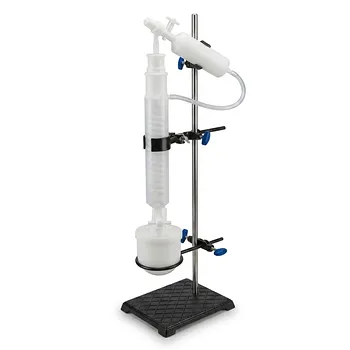
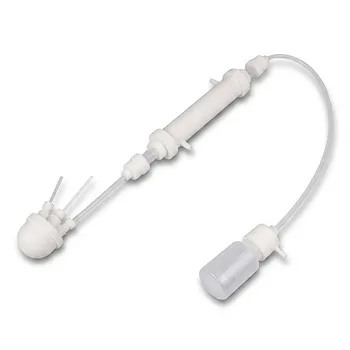
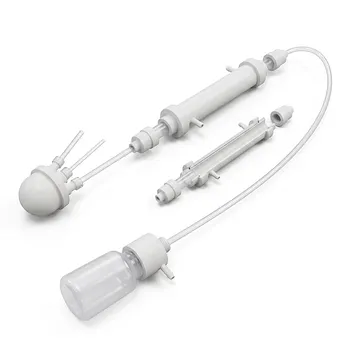
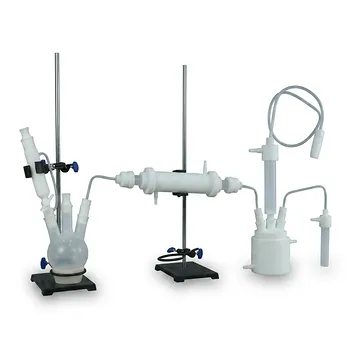
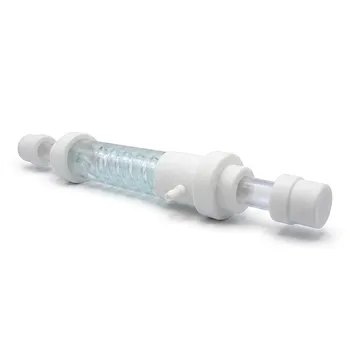
- Custom PTFE Condensation Device Reflux Condenser Tube Fluoropolymer Heat Exchanger Chemical Resistant Laboratory Apparatus
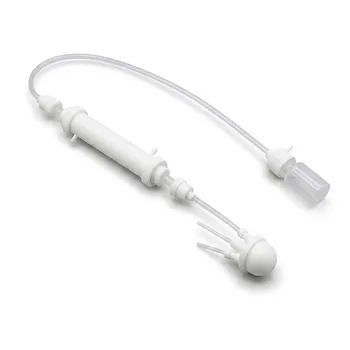
- Custom PTFE Volatile Matter Condensation Reflux Reaction Device Corrosion Resistant Pressure Resistant
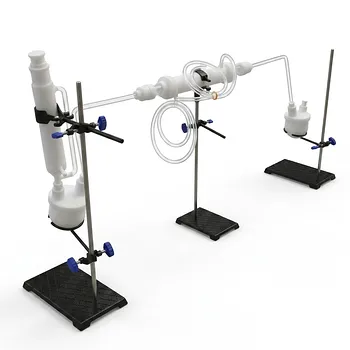
- Custom PTFE Condenser Tube Hydrofluoric Acid Resistant Reflux Device Constant Pressure Separatory Funnel
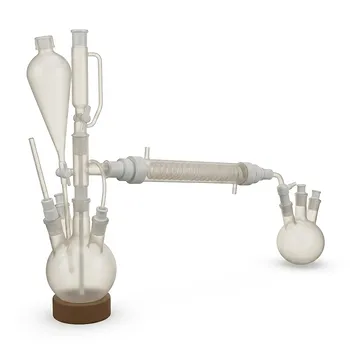
- PTFE Distillation Condensation Apparatus High Temperature Hydrofluoric Acid Resistant Fluorination Reaction Flask
- Custom PTFE Condenser Tube Reflux Reaction Condensation Purification Device Semiconductor Chemical Lab Equipment
People Also Ask
- What are the specific benefits of using PTFE condenser tubes in the chemical processing industry? Maximize Lab Purity
- What technical advantages do PTFE condenser tubes offer regarding fouling resistance and maintenance? Boost Efficiency.
- How do PTFE condenser tubes address the challenge of low thermal conductivity? Geometric Optimization & Thin-Wall Design
- What are the three steps of heat transfer involved in the operation of a PTFE condenser tube? Optimize Thermal Efficiency
- What is the primary function and composition of a PTFE condenser tube? High-Purity Thermal Management Solutions