All Questions
How Do Ptfe Condenser Tubes Contribute To The Purity Of Process Fluids? Ensure Zero Leaching For High-Stakes Labwork
Discover how PTFE condenser tubes prevent leaching and catalytic reactions to ensure ultra-high purity for pharmaceutical and semiconductor processes.
What Is The Operating Temperature Range For Ptfe Condenser Tubes In Industrial Service? Explore -268°C To 260°C Limits
Learn the operating temperature range of PTFE condenser tubes, from cryogenic -268°C to 260°C, ensuring safety and integrity in industrial service.
What Technical Advantages Do Ptfe Condenser Tubes Offer Regarding Fouling Resistance And Maintenance? Boost Efficiency.
Explore how PTFE condenser tubes prevent fouling and simplify maintenance with low-friction, hydrophobic surfaces and universal chemical resistance.
How Do Ptfe Condenser Tubes Perform In Flue-Gas Cleaning? High-Resistance Solutions For Waste-Treatment Efficiency
Learn how PTFE condenser tubes withstand HCl and SO2, prevent fouling, and ensure durability in corrosive flue-gas cleaning and waste-treatment apps.
What Role Do Ptfe Condenser Tubes Play In Semiconductor And Electronics Manufacturing? Ensure Ultra-High Purity
Learn how PTFE condenser tubes ensure ultra-high purity and chemical resistance in semiconductor manufacturing to protect wafer yields and efficiency.
Why Are Ptfe Condenser Tubes Preferred For Pharmaceutical And Biotech? Achieve High-Purity & Regulatory Compliance
Discover why PTFE condenser tubes are the gold standard for solvent recovery, ensuring zero contamination and full FDA/USP compliance.
What Are The Specific Benefits Of Using Ptfe Condenser Tubes In The Chemical Processing Industry? Maximize Lab Purity
Discover how PTFE condenser tubes offer universal chemical resistance, prevent fouling, and ensure high-purity results in chemical processing.
How Do Ptfe Condenser Tubes Address The Challenge Of Low Thermal Conductivity? Optimize Heat Transfer In Corrosive Labs
Learn how PTFE condenser tubes use thin-wall engineering and high surface area to overcome low thermal conductivity in corrosive environments.
What Are The Primary Applications And Characteristics Of Ptfe Condenser Tubes? Durable Corrosion Resistance Solutions
Explore the chemical resistance, thermal stability, and non-stick benefits of PTFE condenser tubes for high-purity and corrosive heat exchange.
What Maintenance Advantages Do Ptfe Condenser Tubes Provide Over Metallic Tubes? Reduce Downtime & Corrosive Failure
Learn how PTFE condenser tubes eliminate fouling and corrosion, reducing maintenance downtime and extending service life compared to metallic tubes.
How Do Hollow-Fiber Ptfe Condenser Modules Improve Heat-Exchange Efficiency? Boost Area & Reduce Thermal Resistance
Discover how PTFE hollow-fiber modules use high-density capillaries and thin-walled designs to maximize heat exchange in corrosive environments.
Why Are Ptfe Condenser Tubes Preferred In Semiconductor And Pharmaceutical Manufacturing? Ensure Ultra-High Purity
Discover why PTFE condenser tubes are vital for semiconductor and pharmaceutical purity, featuring chemical immunity and zero-ion leaching.
What Are The Temperature And Pressure Limitations For Ptfe Condenser Tubes? Master Ptfe Safety & Performance Limits
Understand PTFE condenser tube limits from -268°C to 260°C. Learn about pressure derating, material creep, and thermal expansion for safer lab setups.
What Are The Typical Configurations For Ptfe Condenser Tubes In Industrial Applications? Expert Design Guide
Explore Shell-and-Tube vs. Coiled PTFE condenser configurations. Learn how to maximize corrosion resistance and efficiency in chemical processing.
How Does The Low Surface Energy Of Ptfe Benefit The Condensation Process? Boost Heat Transfer And Prevent Fouling
Explore how PTFE’s low surface energy enables drop-wise condensation to maximize heat transfer, prevent fouling, and improve lab efficiency.
What Are The Three Steps Of Heat Transfer Involved In The Operation Of A Ptfe Condenser Tube? Optimize Thermal Efficiency
Learn the three essential steps of heat transfer in PTFE condenser tubes: external convection, solid conduction, and internal coolant convection.
How Do Ptfe Condenser Tubes Address The Challenge Of Low Thermal Conductivity? Geometric Optimization & Thin-Wall Design
Learn how PTFE condenser tubes overcome low thermal conductivity through thin-wall geometry and high-surface-area bundles for corrosive environments.
What Are The Specific Chemical Resistance Properties Of Ptfe Used In Condenser Tubes? Unrivaled Corrosive Protection
Explore the chemical resistance of PTFE condenser tubes, featuring universal pH compatibility and extreme inertness for aggressive laboratory processes.
What Is The Primary Function And Composition Of A Ptfe Condenser Tube? High-Purity Thermal Management Solutions
Explore the composition and functions of PTFE condenser tubes, the ideal solution for high-purity and corrosion-resistant heat exchange processes.
Related Products
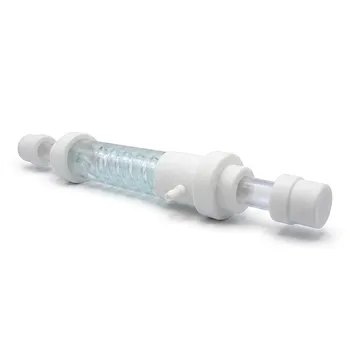
Custom PTFE Condenser Tube 100ml Serpentine and Straight Fluoropolymer Laboratory Heat Exchanger with Flask Adapters
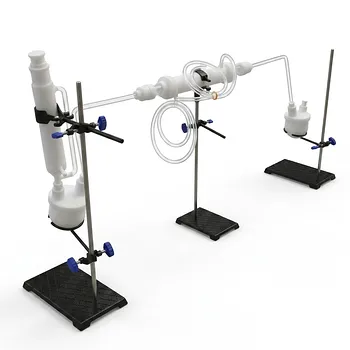
Custom PTFE Condenser Tube Hydrofluoric Acid Resistant Reflux Device Constant Pressure Separatory Funnel
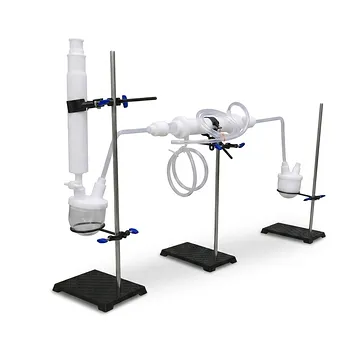
Custom PTFE Condensation Device Reflux Condenser Tube Fluoropolymer Heat Exchanger Chemical Resistant Laboratory Apparatus
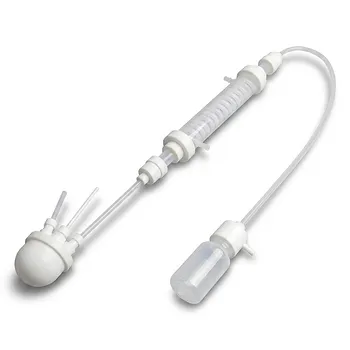
Corrosion Resistant Hydrogen Fluoride Reflux Apparatus PTFE Flask Condenser Separatory Funnel Collection Bottle High Temperature Laboratory System

PTFE Deep Evaporating Dishes Customizable Laboratory and Industrial Solutions