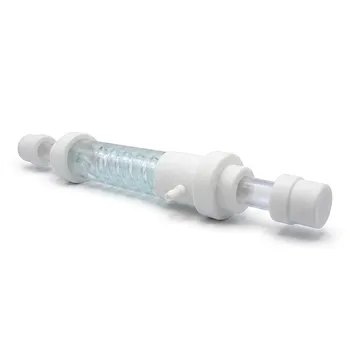
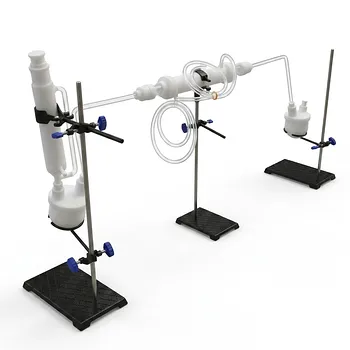
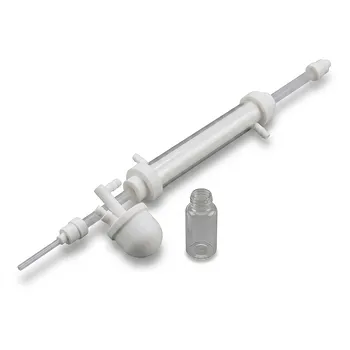
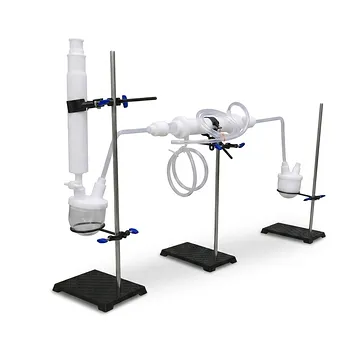
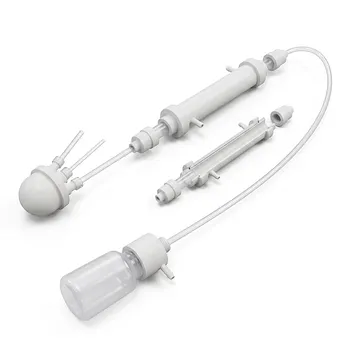
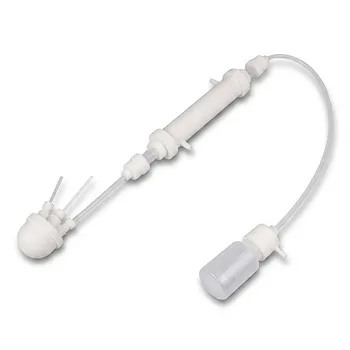
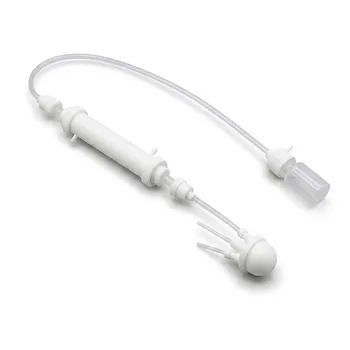
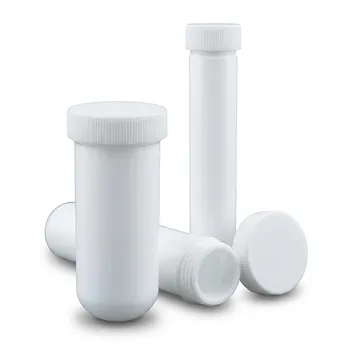
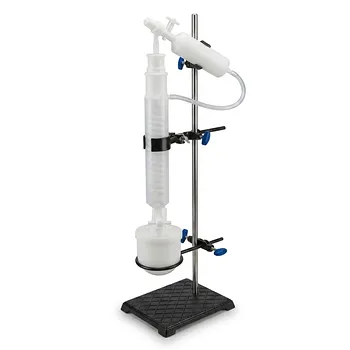
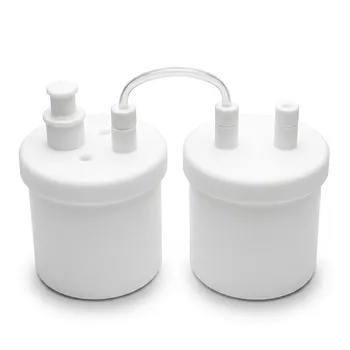
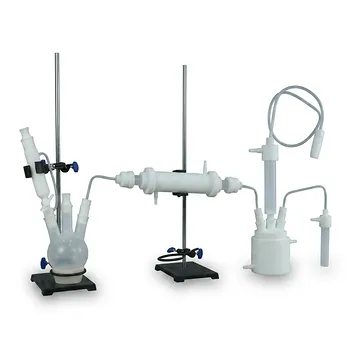
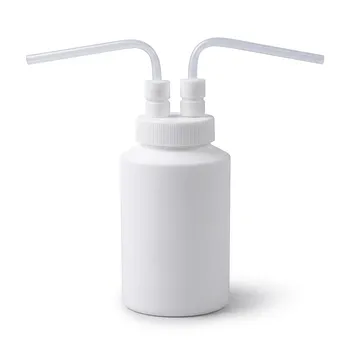
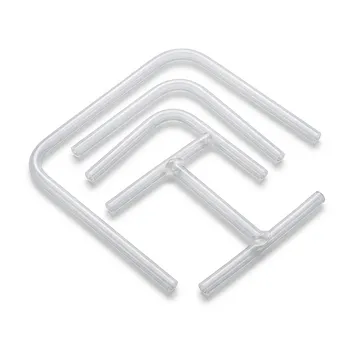
PTFE condenser tubes provide exceptional durability and chemical resistance in flue-gas cleaning systems. These tubes serve as primary heat-exchange components in gas-gas heat exchangers and acid-recovery condensers, where they must withstand hot, acidic, and particulate-heavy exhaust. Because they are chemically inert, they do not corrode when exposed to HCl or SO2, nor do they release toxic ions into the condensate.
Core Takeaway: PTFE condenser tubes solve the problem of rapid material failure in corrosive waste-treatment environments by combining universal chemical resistance with a non-stick surface that prevents fly ash buildup. This ensures consistent heat transfer and long-term reliability where traditional metal alloys would fail.
Resilience in Aggressive Chemical Environments
Superior Resistance to Acidic Vapors
Flue gases often contain high concentrations of hydrochloric acid (HCl) and sulfur dioxide (SO2), which rapidly degrade stainless steel or copper. PTFE is a linear fluoropolymer that is virtually unaffected by these aggressive acids, maintaining its structural integrity during continuous exposure.
Prevention of Toxic Ion Leaching
Unlike metallic heat exchangers, PTFE does not participate in catalytic side reactions or shed metallic ions. This is critical in environmental applications where the purity of the recovered acid or condensate must be maintained to avoid further contamination of the waste stream.
Handling Heavy-Metal Vapors
Waste-treatment processes often involve volatile heavy metals that can be highly reactive. PTFE’s chemical inertness ensures that these vapors do not bond with or corrode the tube surface, allowing for safer and more predictable condensation cycles.
Sustaining Thermal and Flow Efficiency
Resisting Fly Ash and Tar Deposition
One of the primary challenges in flue-gas cleaning is "fouling," where fly ash or tars stick to the heat exchanger surfaces. PTFE’s naturally low-friction, non-stick surface prevents these particulates from adhering, which minimizes maintenance downtime and keeps heat-transfer efficiency high.
Wide Operating Temperature Range
Environmental exhaust streams can experience significant thermal swings. PTFE condenser tubes remain stable from cryogenic levels up to 250°C (and occasionally 260°C), allowing them to handle the high heat of raw flue gas without softening or degrading.
Improved Fluid Dynamics
The low friction coefficient of PTFE minimizes pressure drops within the condenser system. This reduces the energy required to move fluids through the tubes, contributing to the overall energy efficiency of the waste-treatment facility.
Understanding the Trade-offs
Lower Thermal Conductivity
Compared to metals like copper or graphite, PTFE has significantly lower thermal conductivity. To compensate for this, engineers must often design systems with larger surface areas or thinner tube walls to achieve the required heat-exchange rates.
Mechanical Pressure Limits
While PTFE is thermally stable, it is a softer material than steel and can be susceptible to "creep" or deformation under high pressure and temperature combinations. It is essential to operate within the specified pressure-velocity (PV) limits to ensure the tubes do not lose their shape over time.
Initial Capital Investment
The cost of virgin or modified PTFE resins can be higher than standard metallic options. However, this is typically offset by the extended service life and reduced replacement frequency in environments where metals would fail within months.
How to Apply This to Your Project
When integrating PTFE condenser tubes into an environmental or waste-treatment system, your choice should be driven by the specific chemical and thermal profile of your exhaust stream.
- If your primary focus is extreme corrosion resistance: Use virgin PTFE tubes to ensure no metallic contamination and maximum resistance to HCl and SO2.
- If your primary focus is minimizing maintenance: Prioritize PTFE’s non-stick properties to handle high-particulate "dirty" gas streams, such as those found in coal-fired or incineration plants.
- If your primary focus is heat-transfer speed: Consider thin-walled PTFE tube designs or shell-and-tube configurations that maximize surface area to overcome the material's lower thermal conductivity.
By leveraging the unique inertness and non-stick nature of PTFE, you can build a more resilient waste-treatment system that withstands the harshest industrial conditions.
Summary Table:
| Feature | Advantage in Flue-Gas Cleaning | Engineering Consideration |
|---|---|---|
| Chemical Inertness | Resists HCl and SO2 without corrosion or leaching | Maintains high condensate purity |
| Non-Stick Surface | Prevents fly ash and tar deposition (fouling) | Reduces maintenance downtime |
| Thermal Stability | Stable performance from cryogenic to 260°C | Must manage thermal conductivity |
| Low Friction | Minimizes pressure drops within the system | Enhances overall energy efficiency |
Optimize Your Waste-Treatment Performance with KINTEK
Don't let corrosive exhaust streams compromise your efficiency. KINTEK offers a comprehensive range of high-performance fluoropolymer solutions tailored for the most demanding environments.
From everyday basic labware (beakers, measuring cylinders, crucibles, dishes, reagent/wash bottles, centrifuge and digestion tubes) and high-purity trace analysis instruments to comprehensive fluid transfer components (tubing, fittings, valves), sample prep and filtration tools (separatory funnels, burettes, filters, pipettes, tweezers, spatulas), and general consumables (stirring bars, O-rings, gaskets, seal tapes, caps, septa), we have you covered.
For complex requirements, we provide advanced derivative and reaction apparatus, including standard or custom electrochemical cells, battery testing fixtures, electrode accessories, hydrothermal synthesis liners, microwave digestion vessels, microchannel reactors, and condensation/reflux devices.
Why choose KINTEK?
- Unmatched Material Expertise: We manufacture virtually all laboratory supplies crafted exclusively from PTFE and PFA.
- Precision Engineering: Backed by end-to-end custom CNC fabrication, we deliver everything from complex non-standard machined parts to high-volume orders.
- Absolute Focus: We specialize in high-performance materials designed to withstand aggressive chemicals and extreme temperatures.
Ready to enhance your system's reliability? Contact us today to discuss your custom project or high-volume needs!
Related Products
- Custom PTFE Condenser Tube 100ml Serpentine and Straight Fluoropolymer Laboratory Heat Exchanger with Flask Adapters
- Custom PTFE Condenser Tube Hydrofluoric Acid Resistant Reflux Device Constant Pressure Separatory Funnel
- Custom PTFE Condenser Tube Reflux Reaction Condensation Purification Device Semiconductor Chemical Lab Equipment
- Custom PTFE Condensation Device Reflux Condenser Tube Fluoropolymer Heat Exchanger Chemical Resistant Laboratory Apparatus
- High Purity PTFE Digestion Tubes and Custom Centrifuge Tubes 100ml for Trace Analysis and Chemical Digestion
People Also Ask
- What are the temperature and pressure limitations for PTFE condenser tubes? Master PTFE Safety & Performance Limits
- How do PTFE condenser tubes address the challenge of low thermal conductivity? Geometric Optimization & Thin-Wall Design
- What are the typical configurations for PTFE condenser tubes in industrial applications? Expert Design Guide
- What are the three steps of heat transfer involved in the operation of a PTFE condenser tube? Optimize Thermal Efficiency
- What is the primary function and composition of a PTFE condenser tube? High-Purity Thermal Management Solutions