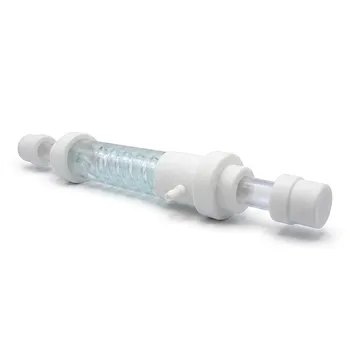
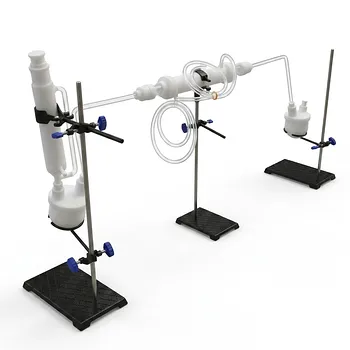
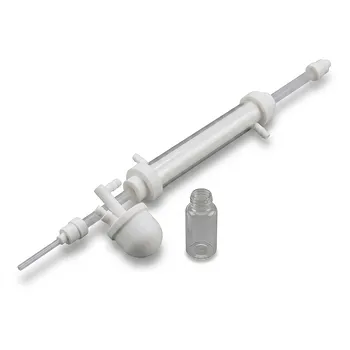
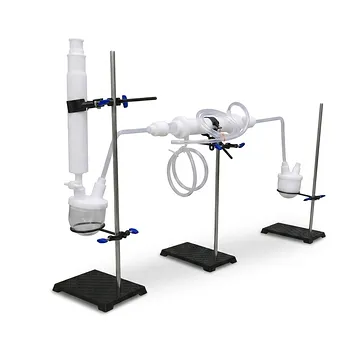
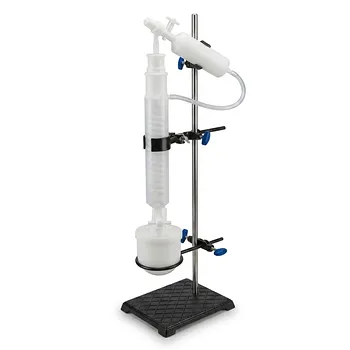
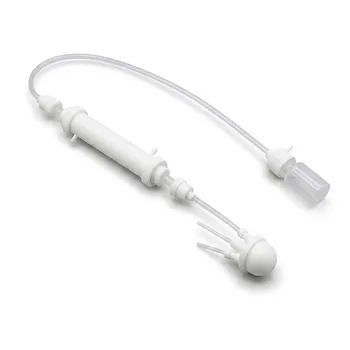
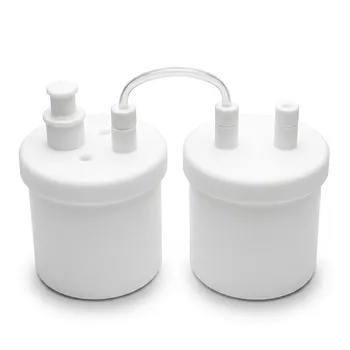
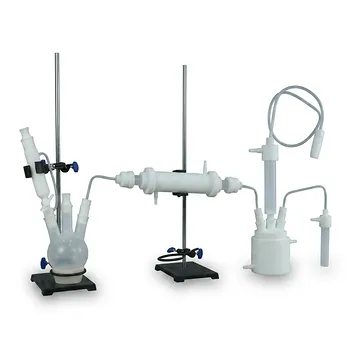
The heat transfer process in a PTFE condenser tube follows a precise tripartite sequence of thermal energy movement. To operate effectively, heat must first move from the external vapor or condensing film to the outer wall through convection, then pass through the solid PTFE material via conduction, and finally transfer from the inner wall to the internal coolant fluid through a second stage of convection. This continuous chain ensures that latent heat is efficiently removed from the process gas, allowing it to transition back into a liquid state.
The efficiency of a PTFE condenser is defined by a "sandwich" of heat transfer mechanisms: two convective steps surrounding a central conductive step. The overall performance is determined by how effectively the system overcomes the thermal resistance of the PTFE wall while maintaining the material's superior chemical resistance.
The Sequential Flow of Thermal Energy
Phase 1: External Convection and Film Formation
The process begins when hot vapor comes into contact with the exterior surface of the condenser tube.
Heat is transferred from the vapor (or the thin film of liquid that forms as it condenses) to the outer tube wall through convection.
The efficiency of this step depends heavily on the velocity of the vapor and the rate at which the condensed liquid drains away from the tube surface.
Phase 2: Solid-State Conduction Through the PTFE Wall
Once the heat reaches the outer surface of the tube, it must travel through the physical mass of the PTFE material itself.
This movement occurs via conduction, where thermal energy is passed between molecules within the solid structure of the plastic.
Because PTFE is a polymer, it possesses a higher thermal resistance than metal, making the thickness of the tube wall a critical factor in the speed of this transfer.
Phase 3: Internal Convection to the Coolant
In the final step, the heat that has reached the inner wall of the tube must be carried away by the circulating coolant fluid.
This transfer from the inner PTFE surface to the moving liquid (usually water or a specialized glycol mix) is the second instance of convection.
Maintaining a high flow rate and a significant temperature differential between the wall and the coolant is essential to prevent heat from "backing up" in the system.
Understanding the Technical Trade-offs
Chemical Inertness vs. Thermal Conductivity
The primary reason for using PTFE is its nearly universal chemical resistance, which allows it to handle highly corrosive vapors that would destroy metal tubes.
However, PTFE is an insulator by nature, meaning its thermal conductivity is significantly lower than that of materials like graphite or stainless steel.
Engineers must often choose between thinner walls to improve heat transfer and thicker walls to ensure structural integrity under pressure.
The Impact of Fouling and Film Resistance
While the three steps describe the ideal flow, real-world operation often introduces thermal resistance through "fouling" or buildup on the tube walls.
PTFE's naturally "non-stick" surface helps mitigate this, but any accumulation of scale or debris on the inner or outer walls will significantly slow the convection steps.
If the condensing vapor forms a thick liquid film on the outside of the tube, it creates an additional layer that heat must penetrate before even reaching the PTFE wall.
Optimizing Your Condensation Process
To maximize the performance of a PTFE-based heat exchange system, you must align your operational parameters with your specific chemical and thermal requirements.
- If your primary focus is Maximum Heat Recovery: Prioritize high coolant flow rates to maximize the temperature gradient during the final convection step.
- If your primary focus is Corrosion Resistance: Opt for high-quality, high-density PTFE resins that maintain structural integrity even at minimal wall thicknesses.
- If your primary focus is System Longevity: Ensure the vapor velocity is managed to prevent "impingement" or physical wear on the exterior of the PTFE tubes over time.
By understanding these three distinct stages of heat transfer, you can better diagnose bottlenecks and ensure your PTFE condenser operates at its peak theoretical efficiency.
Summary Table:
| Stage | Process | Description |
|---|---|---|
| Phase 1 | External Convection | Heat transfers from hot vapor or condensing film to the outer PTFE tube wall. |
| Phase 2 | Solid Conduction | Thermal energy moves through the solid PTFE material; thickness determines resistance. |
| Phase 3 | Internal Convection | Heat is absorbed and carried away from the inner wall by the circulating coolant fluid. |
Elevate Your Lab Efficiency with KINTEK Fluoropolymer Expertise
Achieving optimal heat transfer in corrosive environments requires the right materials and precision design. At KINTEK, we maintain an absolute focus on high-performance fluoropolymers to solve your toughest laboratory challenges.
From everyday basic labware (beakers, measuring cylinders, crucibles, dishes, reagent/wash bottles, centrifuge and digestion tubes), high-purity trace analysis instruments, and cleaning/storage tanks, to comprehensive fluid transfer components (tubing, fittings, valves), sample prep and filtration tools (separatory funnels, burettes, filters, pipettes, tweezers, spatulas), and general consumables (stirring bars, O-rings, gaskets, seal tapes, caps, septa), extending all the way to advanced derivative and reaction apparatus like standard or custom electrochemical cells, battery testing fixtures, electrode accessories, hydrothermal synthesis liners, microwave digestion vessels, microchannel reactors, and condensation/reflux devices, KINTEK manufactures virtually all imaginable laboratory supplies crafted from PTFE and PFA.
Backed by end-to-end custom CNC fabrication, we are equipped to deliver absolutely everything from complex non-standard machined parts and bespoke laboratory setups to high-volume orders. Contact KINTEK today to secure high-performance labware tailored to your exact specifications.
Related Products
- Custom PTFE Condenser Tube 100ml Serpentine and Straight Fluoropolymer Laboratory Heat Exchanger with Flask Adapters
- Custom PTFE Condenser Tube Hydrofluoric Acid Resistant Reflux Device Constant Pressure Separatory Funnel
- Custom PTFE Condenser Tube Reflux Reaction Condensation Purification Device Semiconductor Chemical Lab Equipment
- Custom PTFE Condensation Device Reflux Condenser Tube Fluoropolymer Heat Exchanger Chemical Resistant Laboratory Apparatus
- High Purity PTFE Digestion Tubes and Custom Centrifuge Tubes 100ml for Trace Analysis and Chemical Digestion
People Also Ask
- How do PTFE condenser tubes perform in flue-gas cleaning? High-Resistance Solutions for Waste-Treatment Efficiency
- What are the temperature and pressure limitations for PTFE condenser tubes? Master PTFE Safety & Performance Limits
- How do PTFE condenser tubes address the challenge of low thermal conductivity? Geometric Optimization & Thin-Wall Design
- What are the typical configurations for PTFE condenser tubes in industrial applications? Expert Design Guide
- What is the primary function and composition of a PTFE condenser tube? High-Purity Thermal Management Solutions