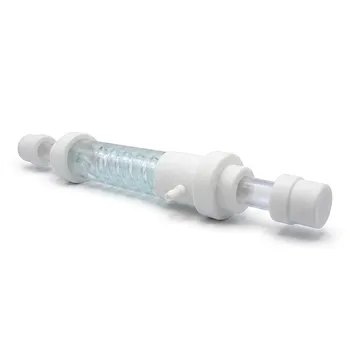
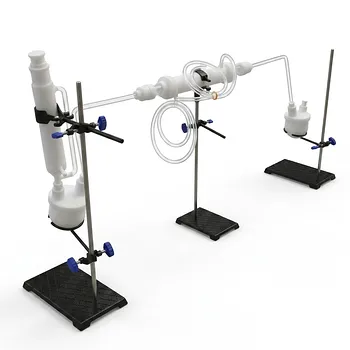
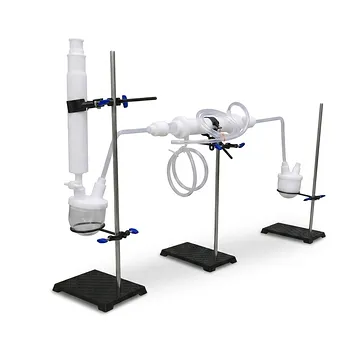
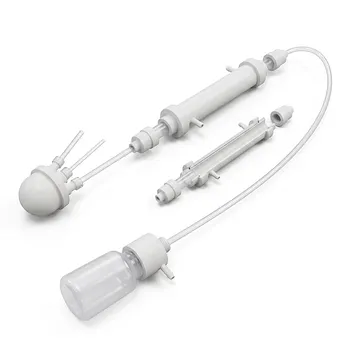
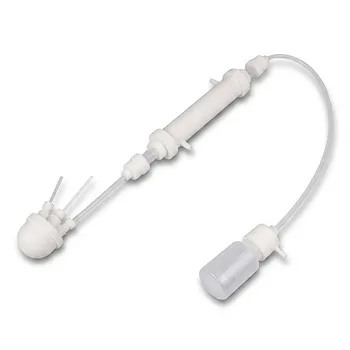
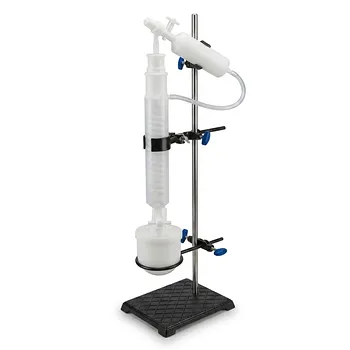
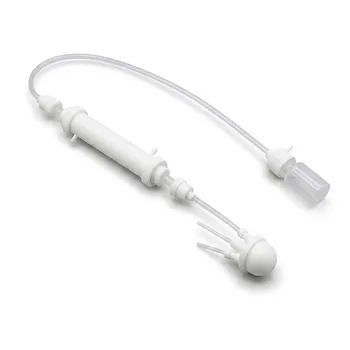
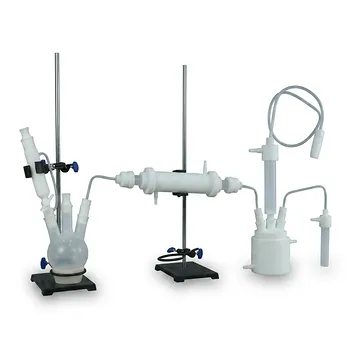
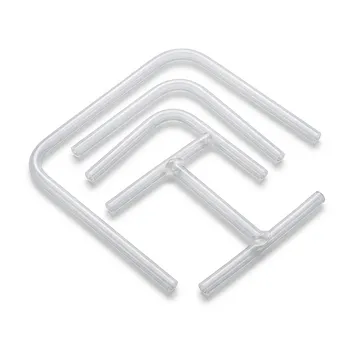
PTFE condenser tubes overcome low thermal conductivity through strategic engineering, primarily by utilizing ultra-thin wall designs and maximizing surface area. While PTFE’s inherent thermal conductivity is low at approximately 0.25 W/(m·K), engineers compensate for this by reducing wall thickness to between 0.5 mm and 1.0 mm and optimizing flow geometry. This approach minimizes conduction resistance while leveraging the material’s unmatched resistance to corrosion and fouling.
Core Takeaway: To make PTFE viable for heat transfer, engineers prioritize geometry over material properties, using thin-walled tube bundles to achieve practical heat-transfer coefficients (150–400 W/m²·K) in environments where metallic tubes would fail.
Minimizing Resistance through Thin-Wall Engineering
Reducing the Conduction Path
The primary strategy for addressing PTFE’s low conductivity is the use of thin-walled tubing. By keeping wall thickness between 0.5 mm and 1.0 mm, the distance heat must travel via conduction is significantly reduced.
Balancing Strength and Performance
Despite their thinness, these tubes are designed to maintain structural integrity under pressure and thermal cycling. This ensures the unit remains functional even when subjected to the mechanical stresses of industrial heat exchange.
The Three-Step Heat Transfer Process
Heat transfer in these tubes occurs through convection from the vapor to the outer wall, conduction through the PTFE, and convection from the inner wall to the coolant. By minimizing the middle conduction step, the overall efficiency of the system is maintained.
Optimizing System Geometry and Surface Area
Increasing Total Surface Area
Because the material itself is less efficient at moving heat, designers often use tube bundles. These bundles provide a high surface-to-volume ratio, allowing a larger area of the process fluid to interact with the cooling medium simultaneously.
Optimizing Flow Geometry
Engineers refine the flow geometry within the heat exchanger to maximize turbulence and contact. This optimization helps reach overall heat-transfer coefficients of 150 to 400 W/(m²·K), which is sufficient for many corrosive industrial applications.
Utilizing Non-Stick Properties
PTFE’s non-stick surface prevents the buildup of scales or deposits, a phenomenon known as fouling. In traditional metal tubes, fouling creates an additional layer of thermal resistance; PTFE’s ability to remain clean helps maintain consistent heat transfer over time.
Why PTFE is Essential Despite Thermal Limitations
Unmatched Corrosion Resistance
In environments involving highly reactive chemicals, traditional materials like stainless steel or copper fail due to rapid corrosion. PTFE’s chemical inertness allows it to operate where metals would be destroyed within weeks.
High-Purity Requirements
For applications where process fluid contamination must be avoided, PTFE is the gold standard. It does not leach ions or metallic particles into the fluid, making it ideal for semiconductor or pharmaceutical manufacturing.
Stability in Extreme Temperatures
PTFE maintains its properties across a broad temperature range. While specialty compounds can be used to further enhance thermal stability, the virgin or modified resin remains the foundation for reliable, long-term service in harsh conditions.
Understanding the Trade-offs
Thermal Efficiency vs. Structural Rigidity
The most significant trade-off is the move toward ultra-thin walls. While this improves heat transfer, it makes the tubes more susceptible to mechanical damage or collapse if pressure differentials are not carefully managed.
Cost and Complexity
Achieving the necessary surface area often requires a larger footprint or more complex tube bundle designs compared to highly conductive metal exchangers. This can lead to higher initial capital costs for the equipment.
Conductivity Limits
Even with optimal design, PTFE will never match the raw thermal conductivity of copper or silver. It is a specialty solution intended for specific problems—corrosion and purity—rather than a general-purpose replacement for high-efficiency metal exchangers.
How to Apply This to Your Project
Selecting the right heat exchanger requires balancing thermal requirements with the chemical realities of your process.
- If your primary focus is extreme corrosion resistance: Prioritize PTFE bundles with the thinnest possible walls to ensure chemical safety without sacrificing all thermal performance.
- If your primary focus is high-purity processing: Use virgin PTFE tubes to eliminate the risk of metallic leaching while using high surface-area designs to meet cooling targets.
- If your primary focus is maximizing thermal efficiency in non-corrosive environments: Stick with high-conductivity metallic tubes, as the engineering workarounds for PTFE add unnecessary cost in these scenarios.
By focusing on geometry and surface area, PTFE becomes a powerful tool for heat transfer in the world’s most demanding chemical environments.
Summary Table:
| Feature | Engineering Strategy | Operational Benefit |
|---|---|---|
| Wall Thickness | Reduced to 0.5 mm – 1.0 mm | Minimizes conduction resistance & path length |
| Design Geometry | High surface-to-volume tube bundles | Maximizes total heat exchange area |
| Surface Quality | Inherent non-stick properties | Prevents fouling and maintains consistent efficiency |
| Efficiency Range | Optimized flow geometry | Achieves 150–400 W/m²·K heat transfer coefficients |
| Durability | Chemical inertness | Long-term service in reactive/high-purity media |
Maximize Your Lab’s Performance with KINTEK Fluoropolymer Expertise
Don't let corrosive environments or thermal limitations compromise your results. KINTEK specializes in high-performance PTFE and PFA solutions designed for the most demanding applications. From everyday basic labware (beakers, measuring cylinders, crucibles, and reagent bottles) to specialized heat-transfer components like PTFE condenser tubes, we provide the durability and purity your research requires.
Our capabilities include:
- Comprehensive Range: Tubes, fittings, valves, sample prep tools, and filtration devices.
- Advanced Apparatus: Electrochemical cells, battery testing fixtures, and microwave digestion vessels.
- Custom Engineering: End-to-end CNC fabrication for bespoke laboratory setups and complex non-standard parts.
Ready to upgrade your setup with absolute focus on high-performance fluoropolymers? Contact us today to discuss your project or request a quote.
Related Products
- Custom PTFE Condenser Tube 100ml Serpentine and Straight Fluoropolymer Laboratory Heat Exchanger with Flask Adapters
- Custom PTFE Condenser Tube Hydrofluoric Acid Resistant Reflux Device Constant Pressure Separatory Funnel
- Custom PTFE Condenser Tube Reflux Reaction Condensation Purification Device Semiconductor Chemical Lab Equipment
- Custom PTFE Condensation Device Reflux Condenser Tube Fluoropolymer Heat Exchanger Chemical Resistant Laboratory Apparatus
- High Purity PTFE Digestion Tubes and Custom Centrifuge Tubes 100ml for Trace Analysis and Chemical Digestion
People Also Ask
- How do PTFE condenser tubes perform in flue-gas cleaning? High-Resistance Solutions for Waste-Treatment Efficiency
- What are the temperature and pressure limitations for PTFE condenser tubes? Master PTFE Safety & Performance Limits
- How do PTFE condenser tubes address the challenge of low thermal conductivity? Geometric Optimization & Thin-Wall Design
- What are the typical configurations for PTFE condenser tubes in industrial applications? Expert Design Guide
- What are the three steps of heat transfer involved in the operation of a PTFE condenser tube? Optimize Thermal Efficiency