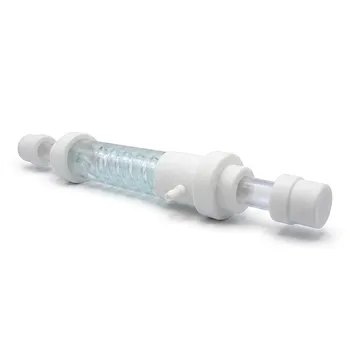
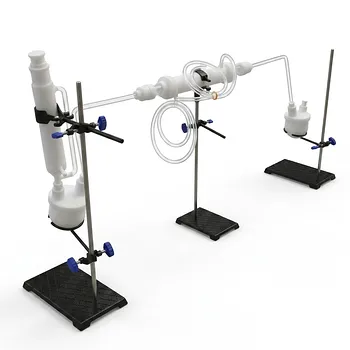
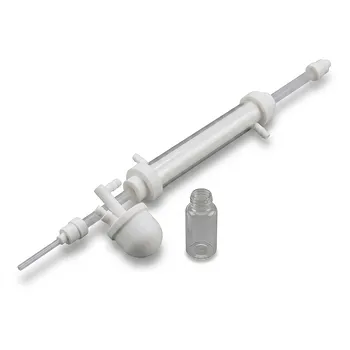
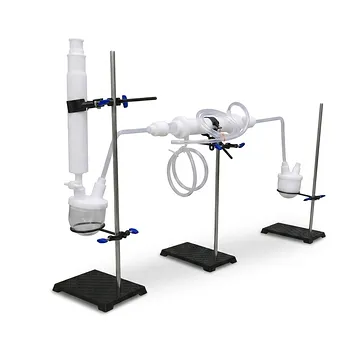
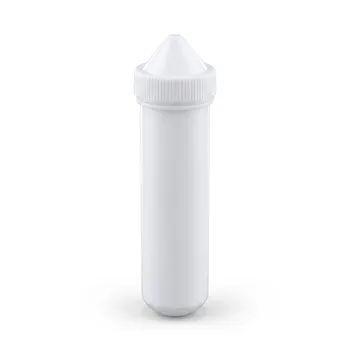
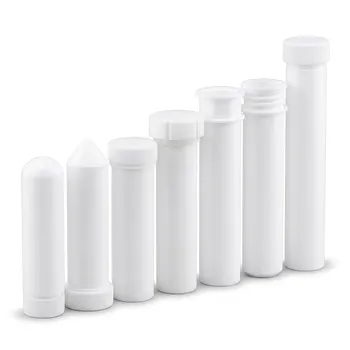
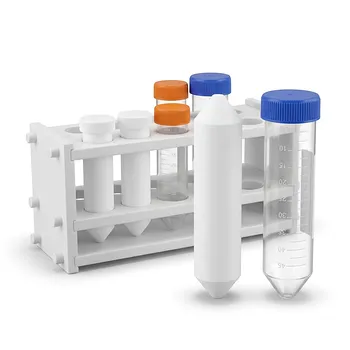
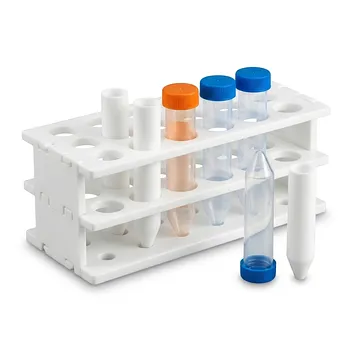
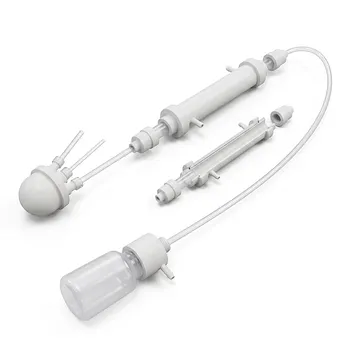
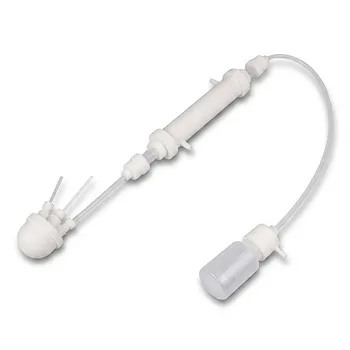
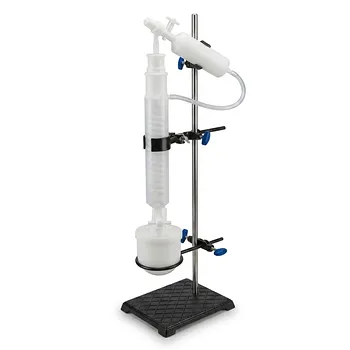
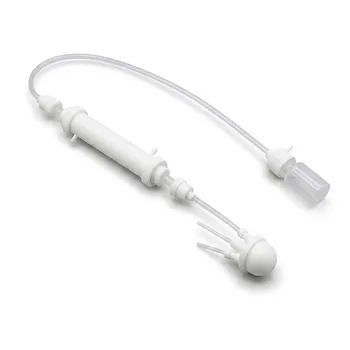
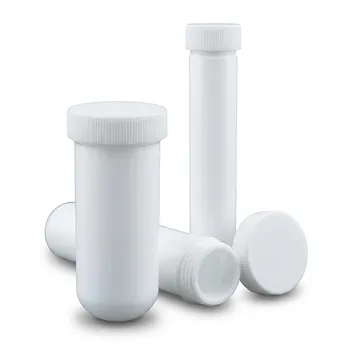
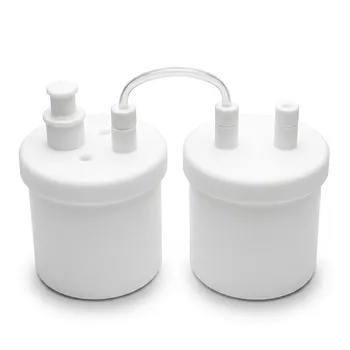
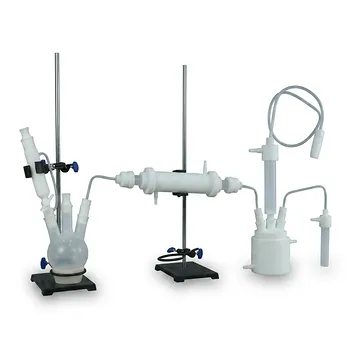
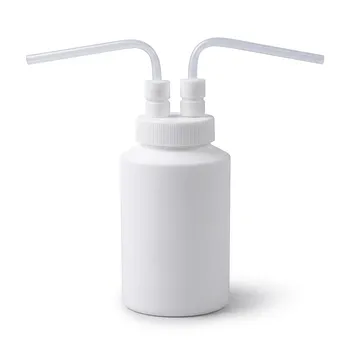
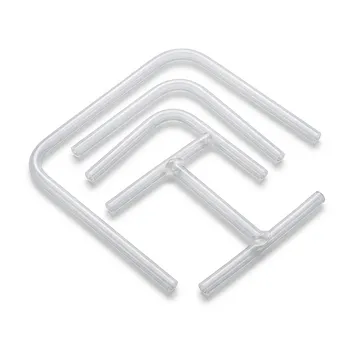
PTFE condenser tubes are the gold standard for high-purity solvent recovery in regulated industries. They are preferred because they provide an extractable-free, chemically inert contact surface that complies with stringent FDA and USP standards. This ensures that sensitive pharmaceutical ingredients and biotechnological products remain free from metallic ions or organic contaminants during the distillation and recovery process.
The preference for PTFE in solvent-recovery systems stems from its total chemical passivity and superior surface properties. It protects product potency by eliminating leaching while streamlining maintenance through advanced sterilization compatibility.
Safeguarding Product Purity and Regulatory Compliance
Elimination of Leachables and Extractables
The primary driver for using PTFE is its ability to maintain the integrity of the process stream. Unlike metallic tubes, PTFE does not leach metallic ions or organic contaminants into sensitive drug substances.
This "extractable-free" nature is critical for maintaining product potency. It ensures that the recovered solvents remain as pure as the virgin material, preventing cross-contamination in batch processing.
Compliance with FDA and USP Standards
PTFE is a highly regulated material that naturally aligns with FDA and USP Class VI requirements. This compliance simplifies the validation process for pharmaceutical manufacturers.
Because the material is biocompatible and non-reactive, it provides a "safe" contact surface for even the most sensitive biological products. This reduces the risk of regulatory hurdles during facility inspections.
Operational Efficiency and Sterilization Protocols
Facilitating CIP and SIP Cycles
The hydrophobic and low-friction surface of PTFE is a major operational advantage. It allows for efficient Clean-in-Place (CIP) and Steam-in-Place (SIP) cycles without leaving residue behind.
This non-stick quality ensures that no flavor or odor carry-over occurs between different product runs. It minimizes the downtime required for deep cleaning between batches.
Low Protein Binding and Fouling Resistance
In biotechnology, the low protein binding properties of PTFE are essential for handling shear-sensitive biologics. It prevents target molecules from adhering to the tube walls.
Additionally, the material's non-stick nature prevents scale or fouling buildup. This maintains consistent heat transfer rates and extends the interval between maintenance cycles.
Durability in Aggressive Chemical Environments
Universal Corrosion Resistance
PTFE offers near-universal resistance to aggressive solvents, acids, and bases. It is unaffected by concentrated sulfuric, hydrochloric, or hydrofluoric acids that would rapidly degrade stainless steel.
This resistance eliminates common failure points like tube-wall thinning and pitting. Consequently, PTFE systems often see a service life exceeding 10 to 20 years in corrosive environments.
Thermal Stability and Sterilization
With thermal stability up to 260°C, PTFE can withstand the most rigorous sterilization regimes. It remains stable under high-pressure steam without losing its structural integrity.
This broad temperature capability allows it to be used in both high-purity distillation and cryogenic recovery processes. The material does not become brittle or lose its non-reactive properties at these extremes.
Understanding the Trade-offs
Thermal Conductivity vs. Chemical Inertness
The most significant trade-off with PTFE is its lower thermal conductivity compared to metals like copper or stainless steel. To achieve the same cooling capacity, PTFE condensers may require a larger surface area or specialized thin-wall designs.
Structural Sensitivity
While chemically robust, PTFE is softer than metal and can be susceptible to mechanical damage if mishandled. Engineers must ensure the system design accounts for the material’s flexibility and potential for "creep" under extreme mechanical stress.
Making the Right Choice for Your Goal
How to Apply This to Your Project
Selecting the right condenser material depends on your specific purity requirements and the corrosivity of your solvents.
- If your primary focus is Ultra-High Purity: Use virgin PTFE tubes to ensure zero metallic ion contamination and full compliance with USP Class VI standards.
- If your primary focus is Operational Longevity: Leverage PTFE's universal chemical resistance to prevent the corrosion and leaking typically found in metallic shell-and-tube exchangers.
- If your primary focus is Processing Sensitive Biologics: Prioritize PTFE for its low protein binding and smooth flow characteristics to protect delicate molecular structures.
By prioritizing material inertness over raw heat transfer speed, PTFE ensures that the final pharmaceutical product remains pure, potent, and compliant.
Summary Table:
| Feature | Key Advantage | Impact on Pharma/Biotech |
|---|---|---|
| Chemical Inertness | Zero leachables or extractables | Maintains product potency and purity |
| Regulatory Status | FDA & USP Class VI compliant | Simplifies facility validation processes |
| Surface Properties | Low-friction & hydrophobic | Enables efficient CIP/SIP with no carry-over |
| Protein Binding | Minimal molecular adhesion | Protects integrity of sensitive biologics |
| Chemical Resistance | Resists acids, bases, & solvents | Extends service life to 10-20 years |
Upgrade Your Lab with High-Performance Fluoropolymer Solutions
Ensure the absolute purity of your pharmaceutical and biotechnological processes with KINTEK. We specialize in high-performance fluoropolymer materials (PTFE and PFA), providing everything from everyday basic labware—including beakers, measuring cylinders, and reagent bottles—to advanced components like high-purity trace analysis instruments and cleaning tanks.
Whether you require comprehensive fluid transfer systems (tubing, fittings, valves), sample prep tools (filters, pipettes, tweezers), or complex custom-engineered reaction apparatus like electrochemical cells and microwave digestion vessels, KINTEK is your ultimate partner. Our end-to-end custom CNC fabrication capabilities allow us to deliver bespoke laboratory setups and high-volume orders tailored precisely to your technical specifications.
Ready to eliminate contamination and optimize your solvent recovery?
Contact KINTEK Today to Discuss Your Custom Project
Related Products
- Custom PTFE Condenser Tube 100ml Serpentine and Straight Fluoropolymer Laboratory Heat Exchanger with Flask Adapters
- Custom PTFE Condenser Tube Hydrofluoric Acid Resistant Reflux Device Constant Pressure Separatory Funnel
- Custom PTFE Condenser Tube Reflux Reaction Condensation Purification Device Semiconductor Chemical Lab Equipment
- Custom PTFE Condensation Device Reflux Condenser Tube Fluoropolymer Heat Exchanger Chemical Resistant Laboratory Apparatus
- High Purity PTFE Digestion Tubes and Custom Centrifuge Tubes 100ml for Trace Analysis and Chemical Digestion
People Also Ask
- How do PTFE condenser tubes perform in flue-gas cleaning? High-Resistance Solutions for Waste-Treatment Efficiency
- What are the temperature and pressure limitations for PTFE condenser tubes? Master PTFE Safety & Performance Limits
- How do PTFE condenser tubes address the challenge of low thermal conductivity? Geometric Optimization & Thin-Wall Design
- What are the typical configurations for PTFE condenser tubes in industrial applications? Expert Design Guide
- What are the three steps of heat transfer involved in the operation of a PTFE condenser tube? Optimize Thermal Efficiency