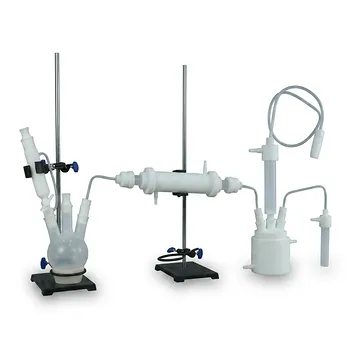
PTFE condenser tubes are rated for continuous service at temperatures up to 260°C (500°F) and can operate in cryogenic environments as low as -268°C. While they maintain chemical inertness across this range, their pressure capacity is not fixed; it is strictly dependent on tube diameter, wall thickness, and the operating temperature, as the material's mechanical strength decreases significantly at elevated levels.
Core Takeaway: PTFE offers an extraordinary thermal envelope for corrosive applications, but it is a "soft" polymer subject to creep (cold flow). To ensure safety, any pressure rating must be derated as temperatures rise, particularly above 150°C, to account for the material's loss of structural rigidity.
Thermal Performance Limits
Continuous Operating Range
PTFE is globally recognized for its ability to maintain stability in extreme environments, supporting continuous service from -268°C up to 260°C. This wide range allows a single condenser design to handle both cryogenic cooling and high-temperature distillation without material degradation.
Decomposition and Melting Points
While the material remains stable at 260°C, it reaches its melting point at approximately 327°C. Technical decomposition typically begins between 350°C and 400°C, at which point the material may release hazardous polymer fumes.
Thermal Expansion Challenges
PTFE has a high coefficient of thermal expansion, meaning it expands and contracts significantly more than metal housings. In long condenser tube bundles, designers must use expansion joints or flexible adapters to prevent the tubes from buckling or pulling out of fittings during thermal cycling.
Pressure and Mechanical Constraints
The Role of Geometry
There is no universal pressure limit for PTFE tubes because the rating is a function of the ratio between wall thickness and diameter. Thicker-walled, small-diameter tubes can handle significantly higher internal pressures than large-diameter, thin-walled variants.
Temperature-Induced Derating
The mechanical strength of PTFE drops as it warms, necessitating a pressure derating strategy. While a tube might handle high pressure at 25°C, that capacity is drastically reduced at temperatures exceeding 150°C to 200°C because the polymer becomes more "plastic" and prone to deformation.
Susceptibility to Creep (Cold Flow)
PTFE is unique because it can deform under a constant load even at room temperature, a phenomenon known as creep or cold flow. This effect is accelerated at high temperatures, meaning sustained pressure can cause the tube to thin or the seals at the fittings to leak over time.
Understanding the Trade-offs
Mechanical Vulnerability vs. Chemical Inertness
The primary trade-off is PTFE's nearly universal chemical resistance versus its low structural modulus. While it can handle almost any corrosive media, it lacks the "stiffness" of metal or glass, often requiring external braiding or support for high-pressure service at high temperatures.
Chemical Exceptions
Despite its reputation, PTFE is not invincible and can be attacked by molten alkali metals and certain extreme fluorinating agents. In these rare chemical environments, the temperature and pressure limits become irrelevant as the material will suffer a direct chemical breakdown.
Maintenance and Sealing
Due to material creep, connections in a PTFE system may require periodic inspection. Engineers often use Belleville washers or spring-loaded tensioners in flange designs to maintain a constant seal pressure as the PTFE "flows" under the load of the bolts.
How to Apply This to Your Project
Making the Right Choice for Your Goal
- If your primary focus is high-temperature distillation: Ensure your operating temperature stays below the 260°C threshold and use expansion joints to manage the high rate of thermal growth.
- If your primary focus is high-pressure safety: You must derate the manufacturer's room-temperature pressure specs by at least 50% if operating near the 200°C mark.
- If your primary focus is cryogenic processing: PTFE remains an excellent choice as it does not become brittle at extremely low temperatures, unlike many other polymers.
- If your primary focus is long-term reliability: Select heavy-wall tubing and consider reinforced fittings to mitigate the inevitable effects of material creep and cold flow.
By balancing the exceptional thermal range of PTFE with a conservative approach to mechanical loading, you can leverage its unmatched chemical resistance for even the most demanding condenser applications.
Summary Table:
| Parameter | Specification | Key Performance Insight |
|---|---|---|
| Continuous Temp Range | -268°C to +260°C | Supports both cryogenic cooling and high-heat distillation. |
| Melting Point | ~327°C | Material remains stable until decomposition at 350°C+. |
| Pressure Capacity | Variable | Dependent on wall thickness; requires derating above 150°C. |
| Mechanical Behavior | Creep (Cold Flow) | Subject to deformation under constant load; needs periodic inspection. |
| Chemical Resistance | Near-Universal | Inert to most chemicals except molten alkali metals and fluorine. |
Optimize Your Lab with KINTEK’s Precision PTFE & PFA Solutions
Need high-performance fluoropolymer equipment that stands up to extreme temperatures and corrosive environments? KINTEK specializes in manufacturing a comprehensive range of laboratory supplies crafted from premium PTFE and PFA to ensure your experiments remain safe and reliable.
From essential labware (beakers, crucibles, reagent bottles) and fluid transfer components (tubing, fittings, valves) to advanced reaction apparatus like electrochemical cells, microwave digestion vessels, and custom microchannel reactors—we provide it all. Backed by end-to-end custom CNC fabrication, we are uniquely equipped to deliver everything from complex, non-standard machined parts to high-volume orders with an absolute focus on high-performance materials.
Don't let material creep or thermal expansion compromise your results. Contact KINTEK today to get the exact bespoke laboratory setup or high-purity components your project demands!
Related Products
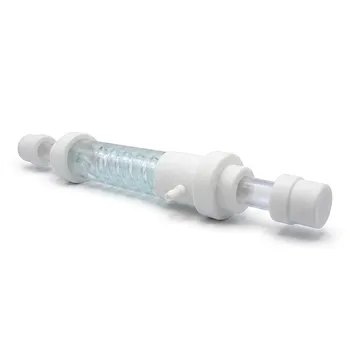
- Custom PTFE Condenser Tube 100ml Serpentine and Straight Fluoropolymer Laboratory Heat Exchanger with Flask Adapters
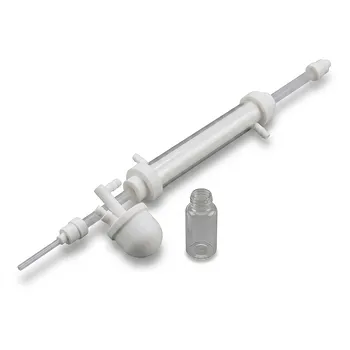
- Custom PTFE Condenser Tube Hydrofluoric Acid Resistant Reflux Device Constant Pressure Separatory Funnel
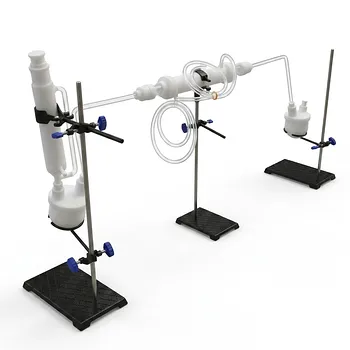
- Custom PTFE Condenser Tube Reflux Reaction Condensation Purification Device Semiconductor Chemical Lab Equipment
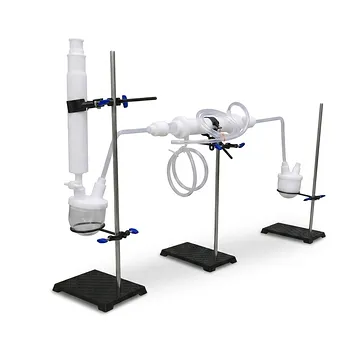
- Custom PTFE Condensation Device Reflux Condenser Tube Fluoropolymer Heat Exchanger Chemical Resistant Laboratory Apparatus
- High Purity PTFE Digestion Tubes and Custom Centrifuge Tubes 100ml for Trace Analysis and Chemical Digestion
People Also Ask
- How do PTFE condenser tubes perform in flue-gas cleaning? High-Resistance Solutions for Waste-Treatment Efficiency
- How do PTFE condenser tubes address the challenge of low thermal conductivity? Geometric Optimization & Thin-Wall Design
- What are the typical configurations for PTFE condenser tubes in industrial applications? Expert Design Guide
- What are the three steps of heat transfer involved in the operation of a PTFE condenser tube? Optimize Thermal Efficiency
- What is the primary function and composition of a PTFE condenser tube? High-Purity Thermal Management Solutions