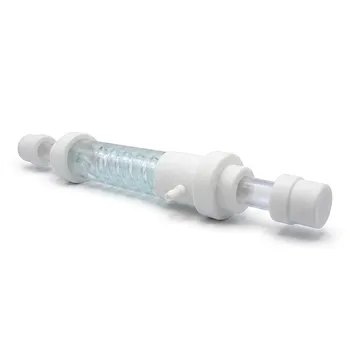
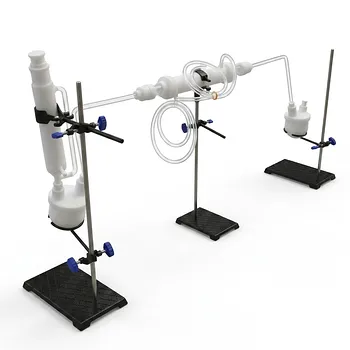
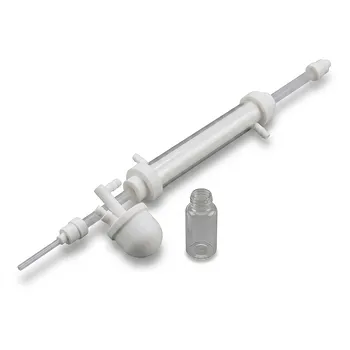
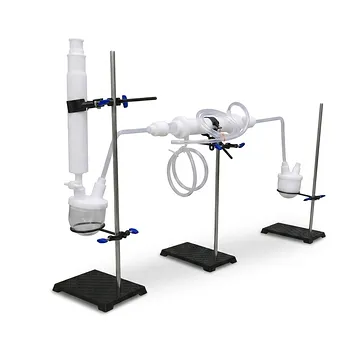
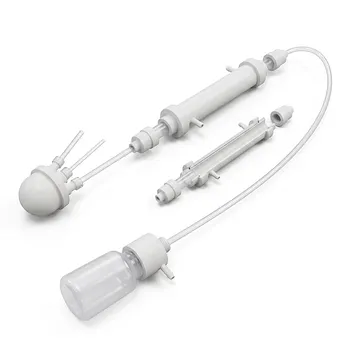
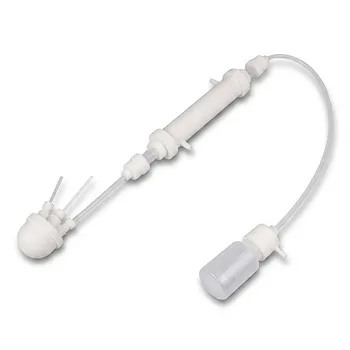
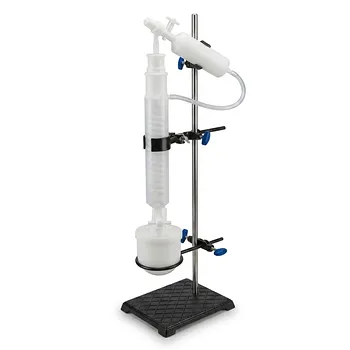
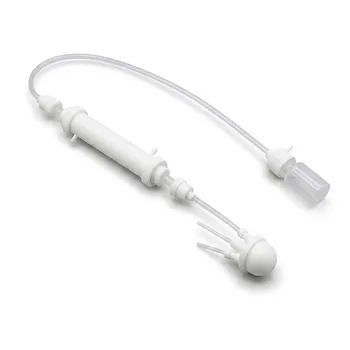
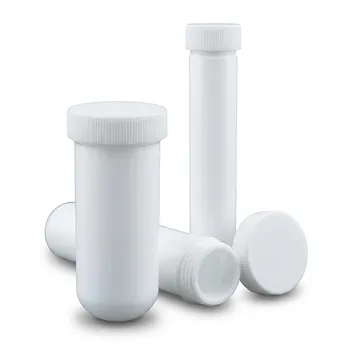
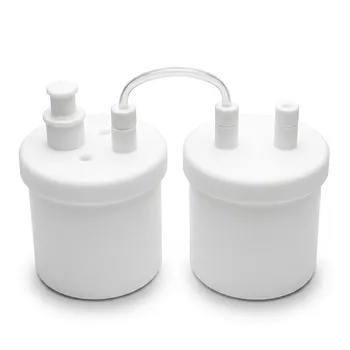
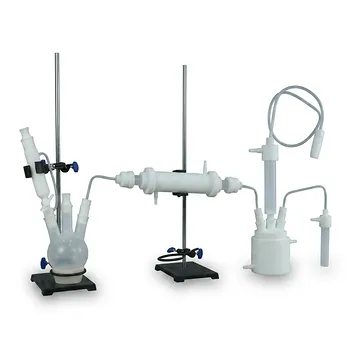
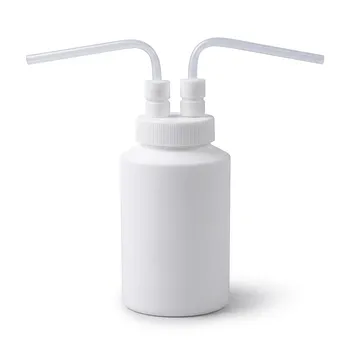
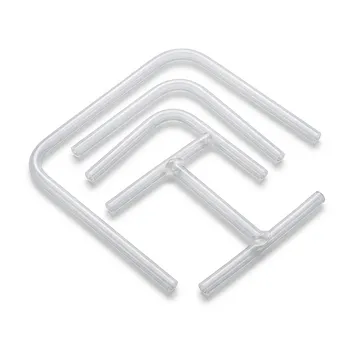
PTFE condenser tubes are the definitive solution for high-corrosion heat transfer. These specialized components are fabricated from virgin or modified Polytetrafluoroethylene (PTFE) and serve as the heart of condensers and heat exchangers in aggressive environments. They are specifically engineered to replace metallic tubes like copper or stainless steel in scenarios where rapid corrosion or fluid contamination would otherwise lead to system failure.
PTFE condenser tubes provide near-universal chemical resistance and a non-stick surface, ensuring long-term reliability in environments involving concentrated acids or high-purity requirements. Their ability to remain stable from cryogenic temperatures up to 260°C makes them a versatile choice for complex industrial thermal processes.
Primary Industrial Applications
Chemical Processing and Acid Handling
PTFE tubes are the industry standard for handling highly corrosive media, including concentrated sulfuric, hydrochloric, hydrofluoric, and nitric acids. They are also used extensively with organic solvents and halogenated compounds that would typically degrade other materials.
High-Purity and Laboratory Environments
In semiconductor manufacturing and pharmaceutical processing, maintaining product integrity is critical. Because PTFE is non-toxic, non-reactive, and does not leach contaminants, it is frequently used in lab-scale reflux operations and high-purity chemical production.
Heat Exchanger Configurations
These tubes are primarily deployed in two physical setups: shell-and-tube heat exchangers and immersion-style condensers. In shell-and-tube designs, vapors are typically condensed on the shell side while coolant flows through the PTFE tubes, whereas immersion designs involve submerged coils in chemical baths.
Essential Material Characteristics
Exceptional Chemical Inertness
PTFE is almost entirely chemically inert, meaning it does not react with the vast majority of industrial chemicals. This characteristic eliminates the risks of tube-wall thinning, pitting, and leaks that are common in metallic alternatives.
Thermal Stability and Range
These tubes maintain their mechanical properties across an extraordinary temperature range, from -196°C to +260°C. This stability allows them to function in both cryogenic applications and high-heat vapor recovery without cracking or melting.
Non-Stick and Hydrophobic Surface
With one of the lowest coefficients of friction of any solid material, PTFE naturally repels water and prevents the adhesion of solids. This "non-stick" quality minimizes scale buildup and fouling, which often extends the service life of the equipment to 10 or 20 years.
Electrical and Physical Resilience
PTFE possesses high dielectric strength and electrical resistance, acting as an excellent insulator within a system. Furthermore, its high flexural strength allows the tubes to remain pliable and resist mechanical fatigue, even in fluctuating temperature conditions.
Understanding the Trade-offs
Thermal Conductivity Limits
The most significant trade-off is that PTFE is a thermal insulator compared to metals like copper or graphite. To achieve the same heat transfer rates as a metallic condenser, a PTFE system may require a larger surface area or longer tube lengths.
Structural Pressure Constraints
While highly flexible, PTFE does not possess the same structural rigidity or pressure-bearing capacity as stainless steel. This requires careful engineering of tube sheets and support structures to prevent sagging or deformation under high-pressure or high-flow conditions.
Initial Investment vs. Lifespan
The upfront cost of PTFE components can be higher than standard metallic tubes. However, this is usually offset by the reduction in downtime and the elimination of frequent replacements required by corrosion-prone materials.
Making the Right Choice for Your Goal
To determine if PTFE condenser tubes are the right fit for your application, consider your primary operational priority:
- If your primary focus is corrosion resistance: PTFE is the superior choice for handling concentrated acids and halogens that would destroy stainless steel or copper within months.
- If your primary focus is product purity: Utilize PTFE to ensure there is no metallic contamination or leaching into your process fluid, which is critical for pharmaceutical or semiconductor grades.
- If your primary focus is reducing maintenance downtime: The non-stick properties of PTFE significantly reduce fouling and scaling, leading to a service life that often exceeds two decades.
- If your primary focus is maximum thermal efficiency in a compact space: You may need to evaluate exotic metals or graphite, as PTFE's insulating properties require a larger footprint for the same heat load.
By aligning material properties with the specific demands of your process fluid, you can ensure a reliable, long-term solution for your heat-exchange needs.
Summary Table:
| Feature | Material Advantage | Key Application |
|---|---|---|
| Chemical Resistance | Inert to concentrated acids & solvents | Chemical Processing |
| Thermal Stability | Operates from -196°C to +260°C | Cryogenic & High-Heat Recovery |
| Surface Property | Non-stick & hydrophobic (prevents fouling) | Maintenance-Heavy Systems |
| Purity Grade | Non-toxic, zero leaching | Pharma & Semiconductor Labs |
| Physical Resilience | Flexible and resistant to mechanical fatigue | Complex Heat Exchangers |
Optimize Your Lab’s Performance with KINTEK’s Fluoropolymer Expertise
When your processes demand absolute chemical resistance and high-purity results, KINTEK delivers. We specialize in high-performance fluoropolymers, providing an exhaustive range of laboratory solutions crafted from PTFE and PFA.
Whether you require everyday basics like beakers, crucibles, and reagent bottles, or specialized fluid transfer components including tubing, valves, and fittings, our catalog is built for durability. For advanced research, we offer everything from standard electrochemical cells and battery testing fixtures to custom-machined microwave digestion vessels and microchannel reactors.
Why choose KINTEK?
- End-to-End Customization: Our full-scale CNC fabrication capabilities allow us to produce bespoke laboratory setups and complex non-standard parts.
- Comprehensive Range: From sample prep tools like filters and spatulas to advanced reaction apparatus, we supply virtually every lab consumable imaginable.
- Material Focus: We maintain an exclusive focus on high-performance materials to ensure your equipment survives the most aggressive environments.
Don't let corrosion compromise your research. Contact us today to discuss your custom project or high-volume order and experience the KINTEK precision difference.
Related Products
- Custom PTFE Condenser Tube 100ml Serpentine and Straight Fluoropolymer Laboratory Heat Exchanger with Flask Adapters
- Custom PTFE Condenser Tube Hydrofluoric Acid Resistant Reflux Device Constant Pressure Separatory Funnel
- Custom PTFE Condenser Tube Reflux Reaction Condensation Purification Device Semiconductor Chemical Lab Equipment
- Custom PTFE Condensation Device Reflux Condenser Tube Fluoropolymer Heat Exchanger Chemical Resistant Laboratory Apparatus
- High Purity PTFE Digestion Tubes and Custom Centrifuge Tubes 100ml for Trace Analysis and Chemical Digestion
People Also Ask
- How do PTFE condenser tubes perform in flue-gas cleaning? High-Resistance Solutions for Waste-Treatment Efficiency
- What are the temperature and pressure limitations for PTFE condenser tubes? Master PTFE Safety & Performance Limits
- How do PTFE condenser tubes address the challenge of low thermal conductivity? Geometric Optimization & Thin-Wall Design
- What are the typical configurations for PTFE condenser tubes in industrial applications? Expert Design Guide
- What are the three steps of heat transfer involved in the operation of a PTFE condenser tube? Optimize Thermal Efficiency