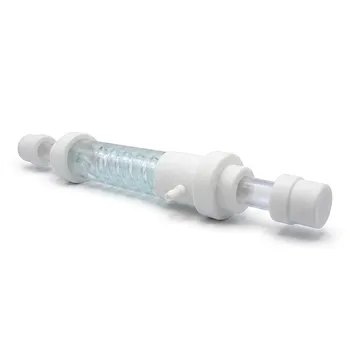
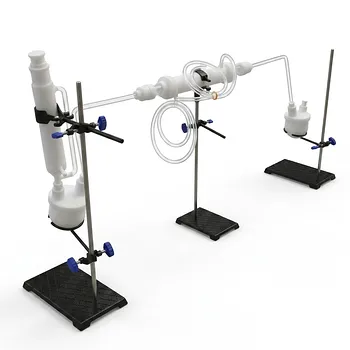
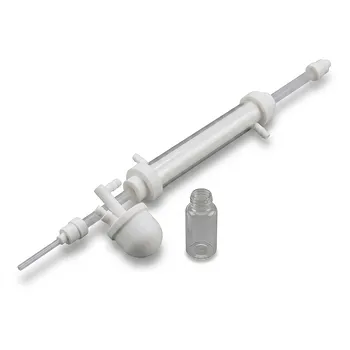
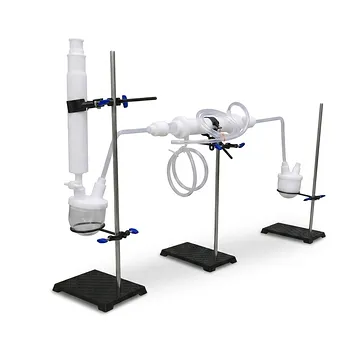
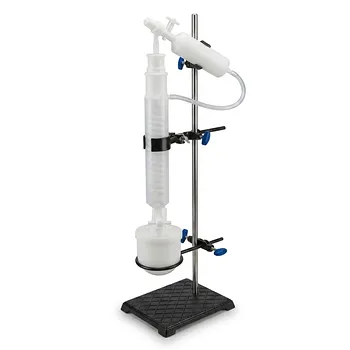
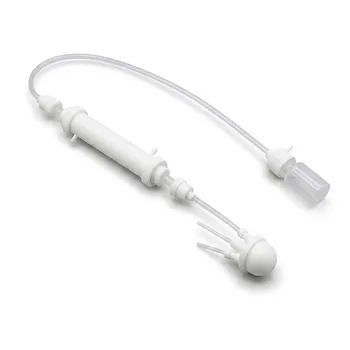
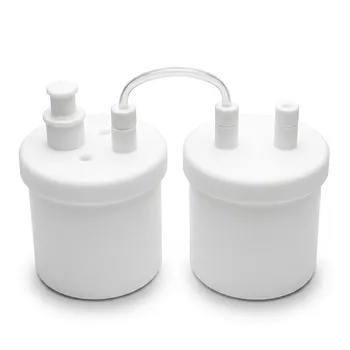
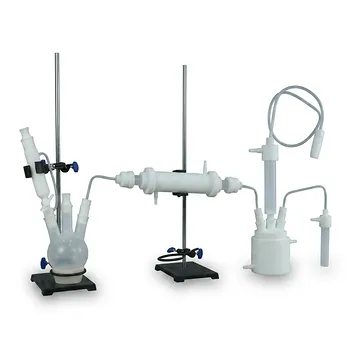
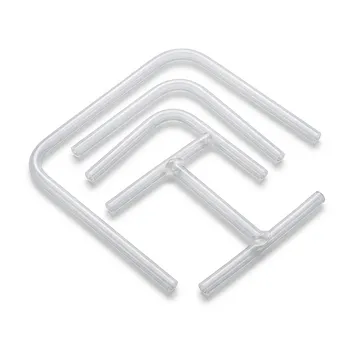
Industrial PTFE condenser tube configurations are primarily categorized into two distinct designs: shell-and-tube heat exchangers and immersed or coiled-tube systems. In shell-and-tube setups, multiple parallel PTFE tubes are secured between tube sheets to handle large-scale cooling, while immersed configurations utilize single coils for smaller, specialized tasks. These designs leverage PTFE’s extreme chemical resistance to manage fluids that would destroy traditional metallic condensers.
PTFE condenser configurations prioritize chemical integrity over thermal efficiency, using shell-and-tube designs for high-volume industrial processing and coiled or immersion designs for precise, small-scale applications. Their selection is driven by the need to eliminate corrosion and contamination in aggressive environments where metallic alternatives fail.
The Shell-and-Tube Configuration
This is the most common configuration for large-scale industrial chemical processing. It is designed to maximize surface area and throughput while maintaining a compact footprint.
Parallel Tube Bundles
In this design, a large bundle of parallel PTFE tubes is fixed securely between two tube sheets. This arrangement allows for high-volume fluid movement and maximizes the contact area between the hot vapor and the cooling medium.
Flow Dynamics and Media Placement
Standard operation typically places the corrosive vapor on the "shell side" (the space surrounding the tubes) and the coolant inside the tubes. This configuration protects the outer vessel from the corrosive media if the shell is also lined with a protective material.
Scalability for Industrial Output
Shell-and-tube designs are highly scalable, making them the standard choice for heavy industrial manufacturing. They are specifically employed in environments dealing with concentrated acids, such as sulfuric or nitric acid, where tube-wall thinning is a primary concern.
Immersed and Coiled-Tube Designs
These configurations are typically found in specialized or smaller-scale environments. They offer simplicity and direct contact with the process media.
Single-Tube Architecture
Unlike the bundle approach, this configuration often utilizes a single, continuous long tube or a tightly wound coil. This design is less complex to manufacture and is ideal for lower-volume operations.
Laboratory and Small-Scale Processing
These units are frequently used in laboratory reflux operations or small batch chemical processing. They provide highly controlled cooling for specific chemical reactions where purity is the highest priority.
Direct Submersion Benefits
The coil is often submerged directly into a chemical bath or a dedicated vapor space. This allows for efficient heat exchange in "dirty" environments where a standard shell-and-tube unit might be prone to external clogging.
Understanding the Trade-offs
While PTFE offers unparalleled chemical resistance, it presents specific engineering challenges that must be managed during the configuration process.
Thermal Conductivity vs. Chemical Resistance
PTFE is an inherent thermal insulator compared to metals like copper or stainless steel. This means PTFE condensers often require a larger surface area or longer tubes to achieve the same cooling effect as a smaller metallic unit.
Mechanical Strength and Pressure Limits
PTFE is a relatively soft polymer, which limits the internal pressure these tubes can handle compared to alloy tubes. Engineers must carefully balance flow rates and temperatures to prevent tube deformation or "creep" over time.
Capital Cost and Long-Term Value
The initial investment for PTFE configurations is generally higher than for standard metallic units. However, this is offset by a service life that often exceeds 10 to 20 years in environments where metal tubes would fail in months.
Making the Right Choice for Your Goal
The selection of a PTFE condenser configuration depends on the scale of your operation and the specific nature of your process fluids.
- If your primary focus is high-volume chemical production: Utilize a shell-and-tube configuration to maximize heat transfer surface area and handle large vapor loads.
- If your primary focus is high-purity laboratory reflux: Choose an immersed or coiled-tube design for its simplicity and ease of integration into batch processing equipment.
- If your primary focus is operating in extreme temperature ranges: Leverage PTFE's broad capability from -268°C to 260°C, ensuring the tube wall thickness is calibrated for the specific thermal load.
- If your primary focus is minimizing maintenance and fouling: Opt for PTFE’s non-stick surfaces to prevent scale buildup, which is particularly effective in designs where cleaning access is limited.
By matching the configuration to the specific chemical aggressiveness and volume of your process, you ensure a reliable, contamination-free cooling solution that lasts for decades.
Summary Table:
| Configuration Type | Ideal Application | Key Feature | Primary Advantage |
|---|---|---|---|
| Shell-and-Tube | High-volume industrial processing | Parallel tube bundles | Maximum surface area and scalability |
| Immersed / Coiled | Laboratory & small batch tasks | Single continuous coil | High purity and simple integration |
| Custom Submerged | "Dirty" or fouling environments | Direct vapor/bath contact | Prevents external clogging and scale buildup |
Elevate Your Lab Efficiency with KINTEK’s Fluoropolymer Expertise
Maximize the lifespan of your chemical processing systems with high-performance PTFE and PFA solutions from KINTEK. We specialize in manufacturing a comprehensive range of laboratory supplies, from everyday basics like beakers, crucibles, and reagent bottles to advanced fluid transfer components including tubing, valves, and fittings.
Whether you require high-purity trace analysis instruments, sample prep tools, or complex derivative apparatus like standard/custom electrochemical cells, battery testing fixtures, and microwave digestion vessels, our end-to-end custom CNC fabrication ensures precision for even the most non-standard machined parts.
Why choose KINTEK?
- Absolute Focus: Exclusive expertise in high-performance fluoropolymers (PTFE/PFA).
- Bespoke Engineering: Custom laboratory setups tailored to your specific thermal and chemical requirements.
- Scalable Production: From individual specialized parts to high-volume industrial orders.
Ready to eliminate corrosion and contamination in your workflow? Contact KINTEK today to discuss your custom project and discover the value of precision-engineered fluoropolymer labware.
Related Products
- Custom PTFE Condenser Tube 100ml Serpentine and Straight Fluoropolymer Laboratory Heat Exchanger with Flask Adapters
- Custom PTFE Condenser Tube Hydrofluoric Acid Resistant Reflux Device Constant Pressure Separatory Funnel
- Custom PTFE Condenser Tube Reflux Reaction Condensation Purification Device Semiconductor Chemical Lab Equipment
- Custom PTFE Condensation Device Reflux Condenser Tube Fluoropolymer Heat Exchanger Chemical Resistant Laboratory Apparatus
- High Purity PTFE Digestion Tubes and Custom Centrifuge Tubes 100ml for Trace Analysis and Chemical Digestion
People Also Ask
- How do PTFE condenser tubes perform in flue-gas cleaning? High-Resistance Solutions for Waste-Treatment Efficiency
- What are the temperature and pressure limitations for PTFE condenser tubes? Master PTFE Safety & Performance Limits
- How do PTFE condenser tubes address the challenge of low thermal conductivity? Geometric Optimization & Thin-Wall Design
- What are the three steps of heat transfer involved in the operation of a PTFE condenser tube? Optimize Thermal Efficiency
- What is the primary function and composition of a PTFE condenser tube? High-Purity Thermal Management Solutions