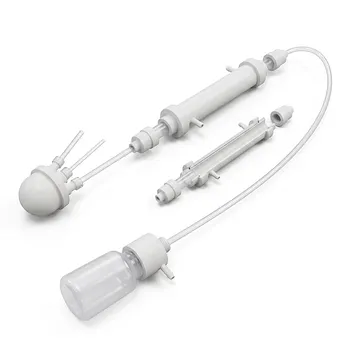
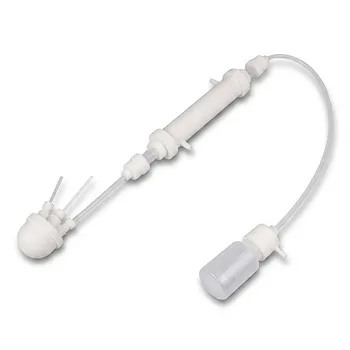
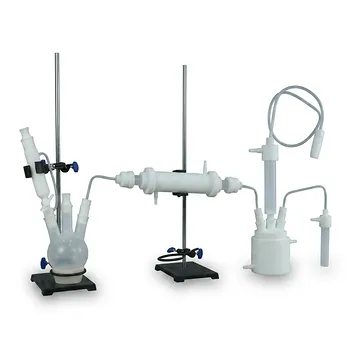
PTFE condenser tubes overcome their inherent low thermal conductivity through precise geometric optimization, specifically by employing ultra-thin wall thicknesses and maximizing surface-to-volume ratios within tube bundles. By reducing the wall thickness to between 0.5 mm and 1.0 mm, engineers significantly lower conduction resistance, allowing these systems to achieve practical heat-transfer coefficients of 150 to 400 W/(m²·K).
Core Takeaway: While PTFE is a natural thermal insulator, design engineers bypass this limitation by using thin-material geometries and high-surface-area configurations, allowing the material’s extreme chemical resistance to be utilized in heat exchange applications without a total loss of efficiency.
The Strategy of Geometric Optimization
Minimizing Conduction Resistance
The primary hurdle for Polytetrafluoroethylene (PTFE) is its low thermal conductivity, which ranges from approximately 0.20 to 0.25 W/(m·K).
To counteract this, tubes are engineered with walls as thin as 0.5 mm to 1.0 mm.
This thin-wall design minimizes the physical distance heat must travel through the polymer, effectively reducing the conduction resistance that would otherwise stall the heat exchange process.
Maximizing Surface-to-Volume Ratios
Because a single PTFE tube is less efficient than a metal one, engineers utilize tube bundles to increase the total available surface area.
By packing a high number of small-diameter tubes into a single shell-and-tube or immersion-type exchanger, the total surface area is increased relative to the volume of fluid.
This "strength in numbers" approach allows the system to meet industrial cooling requirements that would be impossible with a standard pipe configuration.
Optimizing Flow Geometry
In addition to wall thickness, engineers often optimize the flow geometry within the heat exchanger to enhance turbulence.
Increased turbulence at the tube surface helps to break up the boundary layer of the fluid, further compensating for the material's lower heat-transfer coefficient.
These design choices ensure that the thermal performance remains viable for demanding industrial condensers and specialty heat exchangers.
Understanding the Trade-offs
Mechanical Strength vs. Thermal Efficiency
The move toward thinner walls creates a delicate balance between thermal performance and structural integrity.
While thinner walls improve heat transfer, they are more susceptible to damage from pressure spikes or mechanical stress during thermal cycling.
Designers must ensure the PTFE resin—whether virgin or modified—is high-quality to maintain its shape and seal under the operational pressures of the condenser.
Conductivity vs. Corrosion Resistance
PTFE is roughly 100 to 1,000 times less conductive than common heat-exchanger metals like copper or stainless steel.
However, the trade-off is made because PTFE can operate in highly corrosive environments where metallic tubes would suffer rapid failure or contaminate the process fluid.
The goal is not to outperform metal in heat transfer, but to provide a reliable, long-term solution in environments where metals are chemically unsuitable.
Why PTFE is Chosen Despite Thermal Limits
Unmatched Chemical Inertness
PTFE is primarily selected for its inherent chemical inertness, allowing it to handle aggressive acids and bases that would destroy traditional alloys.
This makes it the standard choice for high-purity services and industries where process fluid contamination is a critical risk.
The material's ability to resist "fouling" due to its non-stick surface also helps maintain consistent heat transfer over time, as scale and deposits struggle to adhere to the tube walls.
Broad Temperature Capability
Unlike many other polymers, PTFE maintains its physical properties across a broad temperature range.
This stability ensures that the tubes do not become brittle or lose their sealing capabilities during the thermal cycling common in condenser operations.
Specialty PTFE compounds can further enhance this thermal stability, prolonging the service life of the equipment in specialized industrial applications.
How to Apply This to Your Project
When selecting or designing a PTFE-based heat exchange system, your priorities will dictate the specific tube configuration required.
- If your primary focus is maximum thermal efficiency: Specify the thinnest possible wall thickness (closer to 0.5 mm) and maximize the number of tubes in the bundle to increase the surface-area-to-volume ratio.
- If your primary focus is high-pressure safety: Opt for a slightly thicker wall (closer to 1.0 mm) or modified PTFE resins that offer better creep resistance at the cost of a slight reduction in heat transfer rate.
- If your primary focus is avoiding contamination: Use virgin PTFE resin to ensure the highest level of purity and take advantage of the material's non-stick properties to reduce maintenance downtime.
By focusing on geometric optimization rather than material conductivity alone, you can successfully deploy PTFE in demanding thermal environments.
Summary Table:
| Feature | Engineering Strategy | Performance Impact |
|---|---|---|
| Wall Thickness | 0.5 mm – 1.0 mm ultra-thin walls | Significantly lowers conduction resistance |
| Surface Area | High-density tube bundle configuration | Maximizes heat exchange surface-to-volume ratio |
| Flow Dynamics | Optimized geometry for turbulence | Disrupts boundary layers to enhance heat transfer |
| Coefficient | Achieves 150 - 400 W/(m²·K) | Delivers reliable cooling in corrosive media |
Elevate Your Lab’s Performance with KINTEK Fluoropolymer Solutions
Don’t let corrosive environments compromise your research efficiency. KINTEK specializes in high-performance laboratory supplies crafted exclusively from PTFE and PFA. Whether you need everyday basic labware (beakers, crucibles, reagent bottles) or specialized fluid transfer components (tubing, fittings, valves), we provide the chemical inertness your applications demand.
Our expertise spans from high-purity trace analysis instruments and sample prep tools to advanced reaction apparatus, including standard or custom electrochemical cells, battery testing fixtures, and microwave digestion vessels. Backed by end-to-end custom CNC fabrication, we are equipped to deliver everything from complex non-standard machined parts to high-volume orders with an absolute focus on fluoropolymer performance.
Ready to optimize your thermal processes with the ultimate in chemical resistance? Contact our experts today to source the perfect components for your lab.
Related Products
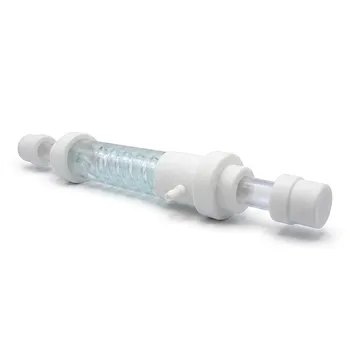
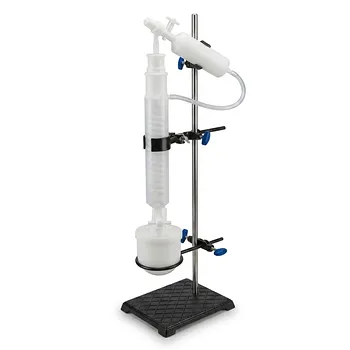
- Custom PTFE Condenser Tube 100ml Serpentine and Straight Fluoropolymer Laboratory Heat Exchanger with Flask Adapters
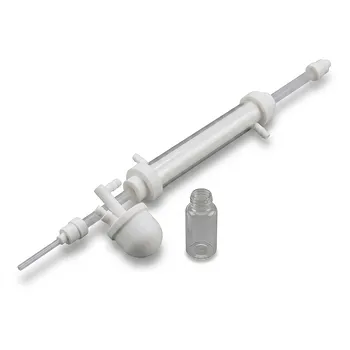
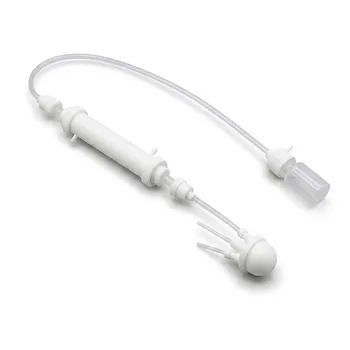
- Custom PTFE Condenser Tube Hydrofluoric Acid Resistant Reflux Device Constant Pressure Separatory Funnel
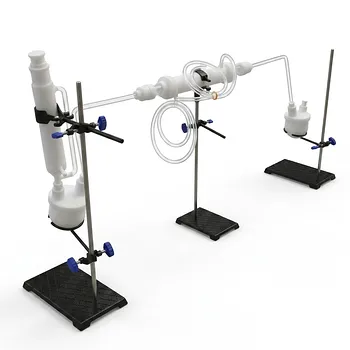
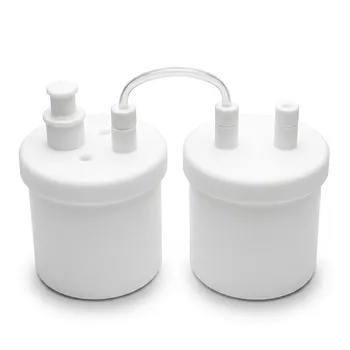
- Custom PTFE Condenser Tube Reflux Reaction Condensation Purification Device Semiconductor Chemical Lab Equipment
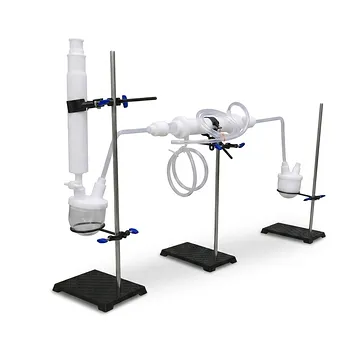
- Custom PTFE Condensation Device Reflux Condenser Tube Fluoropolymer Heat Exchanger Chemical Resistant Laboratory Apparatus
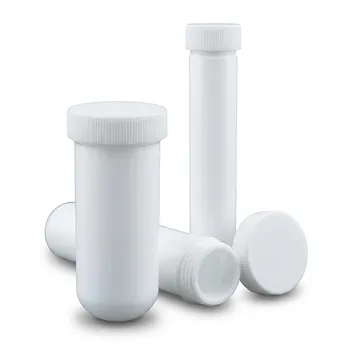
- High Purity PTFE Digestion Tubes and Custom Centrifuge Tubes 100ml for Trace Analysis and Chemical Digestion
People Also Ask
- How do PTFE condenser tubes perform in flue-gas cleaning? High-Resistance Solutions for Waste-Treatment Efficiency
- What are the temperature and pressure limitations for PTFE condenser tubes? Master PTFE Safety & Performance Limits
- What are the typical configurations for PTFE condenser tubes in industrial applications? Expert Design Guide
- What are the three steps of heat transfer involved in the operation of a PTFE condenser tube? Optimize Thermal Efficiency
- What is the primary function and composition of a PTFE condenser tube? High-Purity Thermal Management Solutions