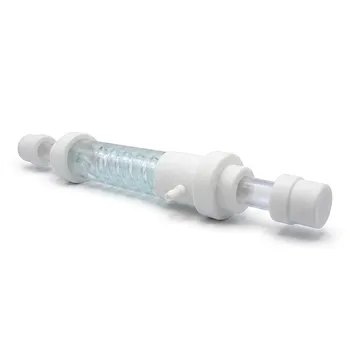
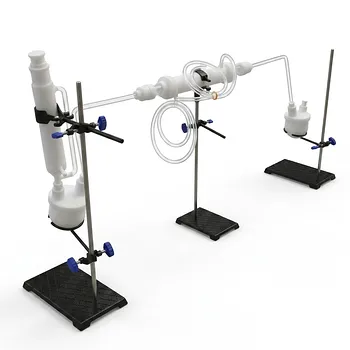
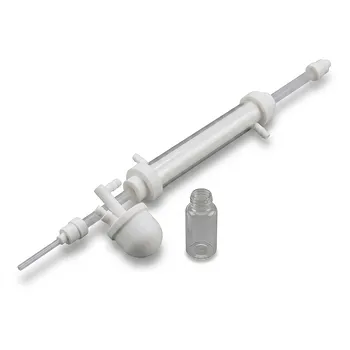
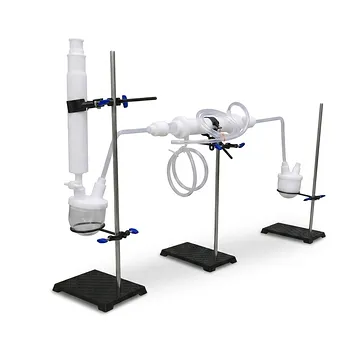
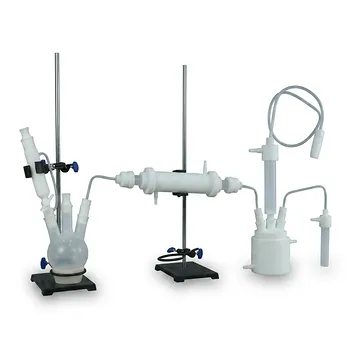
PTFE condenser tubes revolutionize maintenance cycles by virtually eliminating the two primary causes of metallic tube failure: corrosive degradation and surface fouling. Because PTFE is chemically inert and possesses a naturally low-friction surface, maintenance shifts from labor-intensive chemical descaling and tube plugging to simple, infrequent flushing procedures.
Core Takeaway: The transition to PTFE condenser tubes replaces reactive maintenance and aggressive chemical cleaning with a "preventative-by-design" approach that leverages chemical immunity and non-stick properties to extend service life and reduce downtime.
Eliminating Fouling and Scaling Build-up
Low-Friction Surface Dynamics
PTFE possesses an exceptionally low coefficient of friction, typically between 0.05 and 0.10. This "non-stick" characteristic prevents particulates, scale, and biofilms from anchoring to the tube walls, which is a common failure point in metallic systems.
Simplified Cleaning Procedures
Because contaminants cannot easily adhere to the hydrophobic surface, cleaning is often reduced to a simple water flushing process. This eliminates the need for the aggressive mechanical scrubbing or hazardous chemical descaling agents required to restore heat transfer in copper or stainless steel tubes.
Preservation of Heat Transfer Efficiency
By inhibiting the growth of scale and biofilms, PTFE tubes maintain their design heat-transfer coefficients for significantly longer periods. This consistency reduces the frequency of maintenance-related shutdowns and ensures the system operates at peak performance between scheduled inspections.
Immunity to Corrosive Degradation
Universal Chemical Resistance
PTFE provides near-universal resistance to highly corrosive media, including concentrated sulfuric, nitric, and hydrochloric acids. Unlike metallic tubes that suffer from oxidation or chemical attack, PTFE does not react with the process fluid, maintaining its structural integrity.
Elimination of Wall Thinning and Pitting
Metallic tubes are susceptible to localized "pitting" and gradual wall thinning, which eventually leads to leaks and the need for tube plugging. PTFE’s inert nature removes these risks entirely, ensuring that the original wall thickness remains constant over decades of service.
Longevity in Aggressive Environments
In environments where stainless steel or copper might fail within years, PTFE tubes often achieve a service life exceeding 10 to 20 years. This long-term stability drastically reduces the lifecycle cost and the frequency of full-bundle replacements.
Understanding the Trade-offs
Thermal Conductivity Constraints
The most significant trade-off with PTFE is its lower thermal conductivity compared to metals like copper or titanium. To achieve equivalent heat transfer, systems may require a larger surface area or specialized thin-walled tube designs, which can impact the initial footprint of the equipment.
Structural and Temperature Limits
While PTFE is thermally stable, it does not possess the same mechanical strength as metal. It is subject to pressure and temperature limitations, meaning it may not be suitable for high-pressure steam applications where metallic alloys are specifically engineered for structural rigidity.
Applying PTFE Technology to Your Facility
How to Apply This to Your Project
Choosing between PTFE and metallic tubing depends on the specific stressors of your chemical process and your long-term maintenance budget.
- If your primary focus is handling highly corrosive acids: PTFE is the superior choice, as it eliminates the risk of leaks, contamination, and frequent tube bundle replacements.
- If your primary focus is reducing downtime from fouling: Opt for PTFE to utilize its non-stick properties, which allow for rapid flushing instead of time-consuming mechanical cleaning.
- If your primary focus is maximum heat transfer in a compact space: Metallic tubes may still be necessary, though they will require a more robust chemical treatment and maintenance program to manage scale.
By prioritizing material inertness over traditional metallic strength, operators can achieve a maintenance-free cooling solution that lasts for decades.
Summary Table:
| Feature | PTFE Condenser Tubes | Metallic Condenser Tubes |
|---|---|---|
| Fouling Resistance | High (Low-friction surface) | Low (Prone to scale & biofilms) |
| Cleaning Method | Simple water flushing | Aggressive chemical descaling |
| Corrosion Resistance | Universal chemical immunity | Susceptible to pitting & thinning |
| Service Life | 10 - 20+ years | Often requires replacement in <5 years |
| Maintenance Type | Preventative & minimal | Reactive & labor-intensive |
Upgrade to Maintenance-Free Fluoropolymer Excellence with KINTEK
Stop battling corrosive degradation and costly downtime. At KINTEK, we specialize in high-performance fluoropolymer solutions tailored to the most demanding laboratory and industrial environments.
Whether you need everyday basic labware (beakers, measuring cylinders, crucibles, reagent bottles, and digestion tubes), high-purity trace analysis instruments, or comprehensive fluid transfer components (tubing, fittings, and valves), we have you covered. Our capabilities extend to:
- Sample Prep & Filtration: Separatory funnels, burettes, filters, and high-precision tweezers.
- General Consumables: Stirring bars, O-rings, gaskets, and seal tapes.
- Advanced Reaction Apparatus: Custom electrochemical cells, battery testing fixtures, and microwave digestion vessels.
From standard supplies to complex non-standard machined parts via our end-to-end custom CNC fabrication, KINTEK delivers the absolute chemical immunity of PTFE and PFA.
Ready to optimize your equipment life cycle? Contact our experts today to discuss your custom project or high-volume order!
Related Products
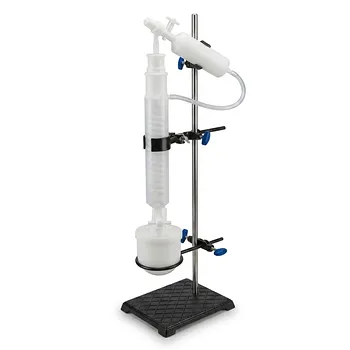
- Custom PTFE Condenser Tube 100ml Serpentine and Straight Fluoropolymer Laboratory Heat Exchanger with Flask Adapters
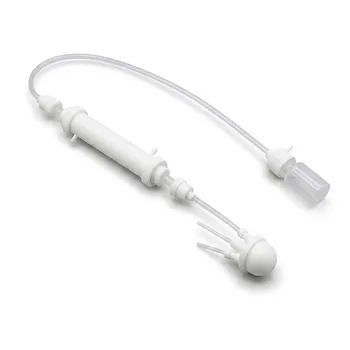
- Custom PTFE Condenser Tube Hydrofluoric Acid Resistant Reflux Device Constant Pressure Separatory Funnel
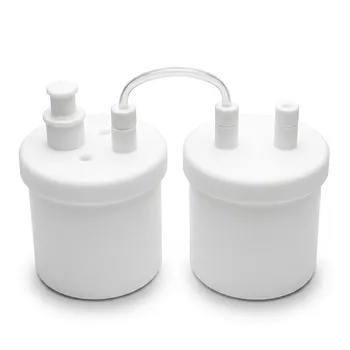
- Custom PTFE Condenser Tube Reflux Reaction Condensation Purification Device Semiconductor Chemical Lab Equipment
- Custom PTFE Condensation Device Reflux Condenser Tube Fluoropolymer Heat Exchanger Chemical Resistant Laboratory Apparatus
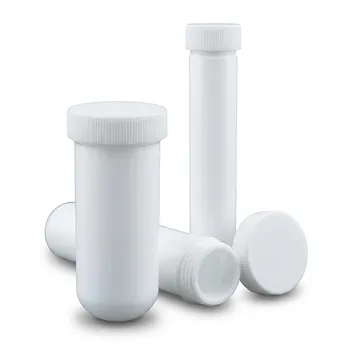
- High Purity PTFE Digestion Tubes and Custom Centrifuge Tubes 100ml for Trace Analysis and Chemical Digestion
People Also Ask
- How do PTFE condenser tubes perform in flue-gas cleaning? High-Resistance Solutions for Waste-Treatment Efficiency
- What are the temperature and pressure limitations for PTFE condenser tubes? Master PTFE Safety & Performance Limits
- How do PTFE condenser tubes address the challenge of low thermal conductivity? Geometric Optimization & Thin-Wall Design
- What are the typical configurations for PTFE condenser tubes in industrial applications? Expert Design Guide
- What are the three steps of heat transfer involved in the operation of a PTFE condenser tube? Optimize Thermal Efficiency